
 +62 895 001 924 667


A villa with 15 years remaining on the lease looks very different depending on what the contract actually says about what comes next. Some buyers inherit a well-drafted option that specifies a price and a process. Others find a phrase that promises nothing more than the right to have a conversation. And a growing number of long-term holders are discovering — often too late — that the person who originally signed the other side of the agreement is no longer the one with authority to extend it.
Bali leasehold extension is one of the most practically important topics in Indonesian property, and one of the least well understood. Whether you are reviewing a contract before making an offer, planning a renewal for a villa you already hold, or trying to work out whether a property is worth buying at all, the answers hinge on three separate uncertainties: whether extension is contractually available to you, how the price will be determined, and what happens to the value of your investment in either scenario.
Quick Answer: Extending a Bali leasehold — typically held under a private contractual arrangement known as Hak Sewa — depends on the terms of the original agreement and the landowner’s consent, unless a clearly worded and enforceable extension clause establishes specific obligations. There is no automatic statutory right to renew a private lease. Extension cost is either pre-agreed, calculated by a formula, or negotiated at the time. Start by reviewing the contract, verifying land title and current ownership, and confirming any notice deadlines well before the expiry date.
Bali Leasehold Extension: Key Facts at a Glance
| Question | What buyers should know |
|---|---|
| Is extension automatic? | No guaranteed automatic extension of the original fixed term |
| Typical advertised initial term | Often 25–30 years, but there is no universal statutory term for private Hak Sewa |
| Additional years | As agreed in the contract or negotiated with the landowner |
| When to start planning | Review the clause early; contractual notice deadlines take priority |
| Extension price | Fixed price, contractual formula or fresh negotiation |
| Common quotation unit | IDR per are per year; 1 are = 100 m² |
| Example: 300 m² for 20 years | IDR 900 million at an assumed IDR 15 million per are per year |
| Rental-income tax | Generally 10% PPh Final on gross qualifying land/building rental income, subject to the applicable tax rules |
| Notary and legal fees | Additional costs; obtain transaction-specific quotations |
| BPN registration | Not automatically required for every private Hak Sewa extension |
| What happens at expiry? | Depends on the contract and applicable law, including the treatment of buildings and continued occupation |
The figures above are general explanations or hypothetical calculations, not a quotation for a particular villa. A buyer should verify the land certificate, extension rights, rental price, tax treatment and signing authority before making a non-refundable payment.
How Bali Leasehold Extensions Work
When a foreign buyer acquires a villa on Bali through a leasehold structure, what they typically receive is a contractual right to use the land and any buildings on it for a defined period. In many private Bali land leases, the underlying plot is held under Hak Milik (SHM) by an eligible Indonesian owner. The exact land right must be confirmed from the current certificate; arrangements involving other land-right categories require separate legal analysis.
The legal framework for this kind of rental arrangement draws from Law No. 5 of 1960 (the Basic Agrarian Law), specifically Articles 44 and 45, which establish Hak Sewa untuk Bangunan — the right to use another person’s land for building purposes in exchange for payment. Hak Sewa untuk Bangunan is expressly listed as a land right in Article 16(1)(e) of Law No. 5/1960, although it should not be confused with a certificated Hak Milik, HGB or Hak Pakai title. Its practical enforcement and documentation differ from those registered rights. The contract governs almost everything: the duration, the permitted uses, the extension mechanism, the obligations of both parties, and what happens when the term ends.
This distinction matters enormously. When you “extend” a Bali leasehold, you are not renewing a statutory land title through a government agency. You are either exercising an option written into the original private contract, or you are negotiating and signing a new private agreement with the landowner. The process and outcome depend on the contract together with applicable Indonesian law, the parties’ legal capacity, land status and relevant facts.
Consider a concrete example. A buyer acquires a villa with 22 years remaining on the lease. The selling agent mentions “an additional 25-year extension.” That sounds like a 47-year effective tenure — but the contract determines whether any such extension is binding. If the clause simply states that the parties “may discuss renewal,” the buyer has no enforceable right to additional time. If it sets a fixed price per are per year and requires only a written notice 12 months before expiry, the legal position is materially different.
What Does “25 + 25 Years Leasehold” Actually Mean?
A villa advertised with a “25 + 25 years” lease may have an initial 25-year term and a proposed option for 25 more years. It does not necessarily give the buyer 50 guaranteed years of occupation.
Before relying on the advertised total, confirm:
- The actual lease commencement and expiry dates.
- Whether the first 25-year term has already started.
- Whether the additional 25 years are an enforceable contractual option or only subject to future agreement.
- The renewal price or its calculation method.
- Whether the option transfers to a future buyer.
- The notice deadline and the identity of the party required to receive notice.
For example, if an existing lease expires in 2048, a buyer in 2026 is considering approximately 22 remaining years, not a fresh 25-year term. An advertised further extension to 2073 should be treated as conditional until the supporting contract has been reviewed.
Always compare the legally documented expiry date with the marketing description. An advertised combined tenure should not be treated as guaranteed ownership or occupation for the full period.
Hak Sewa is recognised as a land right under Article 16 of Indonesia’s Basic Agrarian Law, but it is generally documented through a lease agreement rather than a separate registered title certificate comparable to Hak Milik, HGB or Hak Pakai. It cannot be approached the same way as registered land-use rights such as Hak Pakai or Hak Guna Bangunan (HGB), which are processed through the National Land Agency (ATR/BPN) under separate statutory procedures. Confusing these mechanisms leads buyers to rely on the wrong checklist and ask the wrong questions.
For more on how leasehold compares to freehold structures on Bali, see “Leasehold vs Freehold in Bali“.

Can Foreigners Extend a Bali Lease?
In principle, a foreign party who holds a leasehold under Hak Sewa can extend it — but the phrase “can extend” requires careful qualification. There is no law that automatically grants any lessee the right to demand additional years from an unwilling landowner. The ability to extend rests on either the terms already written into the agreement or a new deal negotiated from scratch.
Under Article 45 of Indonesia’s Basic Agrarian Law, foreign individuals domiciled in Indonesia are among those eligible to hold Hak Sewa. A foreign buyer should have Indonesian counsel verify whether their personal status and proposed lease structure meet the applicable requirements; a PT PMA arrangement must be reviewed separately. Foreign buyers typically approach Bali leaseholds either as an individual signatory to the lease agreement, or through an Indonesian legal entity such as a PT PMA (a foreign-invested company), which enters the contract as the lessee. The type of structure affects who must sign an extension, which consents are required, and how the arrangement is documented. For a detailed overview of foreign ownership structures, see “How a foreigner can buy property in Bali“.
When the lease includes a contractual extension option, the foreign lessee may have the right to trigger that option by serving notice within the specified time window. When no such option exists — or when the clause is too vague to be enforceable — the extension requires the landowner’s fresh agreement, which cannot be compelled.
Registered rights such as Hak Pakai and HGB follow different procedures governed by Government Regulation No. 18 of 2021, administered through ATR/BPN. These are not private contractual arrangements, and the extension process — including applicable timelines and eligibility — is determined by the statutory framework, the land category, and the holder’s status. Treating these as equivalent to a Hak Sewa renewal is a common and potentially expensive mistake.
| Legal arrangement | What it represents | How extension works | Key check |
|---|---|---|---|
| Hak Sewa | Contractual lease right to use land | Contractual clause or new private agreement | Original lease terms; landowner consent |
| Hak Pakai | Registered land-use right (certain individuals and entities) | Applicable statutory procedure via ATR/BPN | Holder eligibility; land category; applicable regulation |
| HGB | Registered building-use right (typically legal entities) | Applicable statutory procedure via ATR/BPN | Holder status; land classification; current regulation |
The distinction between these arrangements changes which documents need reviewing, who must be present at signing, and whether any formal registration step applies. Hak Sewa extensions remain private contractual matters. Hak Pakai and HGB extensions involve government procedures that depend on specific eligibility rules and land status and require case-by-case legal assessment. Buyers who receive advice built around registered-title procedures when their agreement is actually a private Hak Sewa lease may be acting on the wrong framework entirely.
Explore Bali Villas and Residential Projects


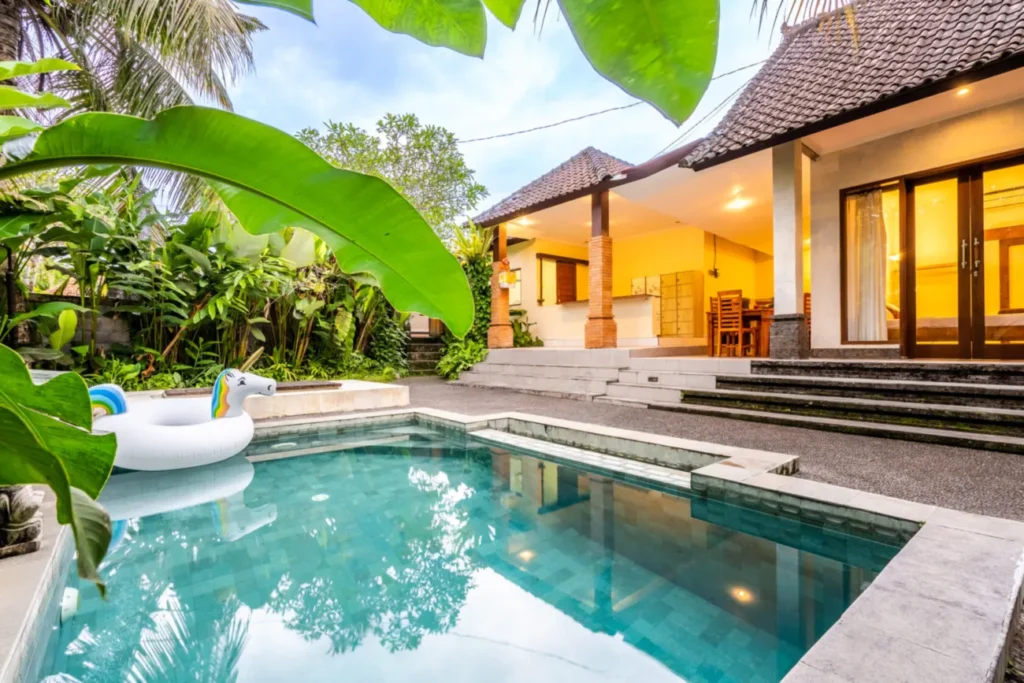

 Bali, Ubud
 from 120м²
 Bali, Canggufrom 80м²


Understanding Your Extension Clause
The single most important factor in any Bali leasehold extension is not how many years are left on the contract — it is what the extension clause actually says. The quality of this clause determines whether you hold a contractual right, a procedural preference, or merely a hope.
Extension clauses in Bali villa leases come in several distinct forms, each with different practical implications:
Fixed extension price. The contract specifies an agreed price — often expressed as an annual amount per are — for the additional period. A clearly drafted fixed-price option may reduce exposure to future rental-rate increases, but its practical value still depends on enforceability, valid exercise, party authority and the full contract.
Objective price formula. The extension price is calculated according to a formula tied to a reference point — a percentage of the officially assessed land value (NJOP), for example, or an indexed multiple of the original lease rate. This provides clarity on method without locking in a specific number.
Market-value-based renewal. The contract states that the extension price will reflect “prevailing market rates” at the time of renewal. This sounds reasonable but offers limited practical protection, since market value is contested, location-specific, and determined partly by whoever has more information at the negotiating table.
What If the Landowner and Lessee Disagree on Market Rent?
A reference to “market rent” may still leave important questions unanswered. Before signing, consider whether the agreement should identify:
- The date on which the market rent will be assessed.
- Whether the valuation concerns land rent rather than the completed villa’s selling price.
- The qualifications and independence of the appointed valuer.
- Whether one valuation or several valuations will be used.
- The method for resolving materially different assessments.
- Who pays for valuations and dispute-resolution procedures.
- What happens if the parties cannot agree before the option deadline.
A valuation-based mechanism can reduce uncertainty if the methodology is sufficiently defined. It does not guarantee agreement or eliminate litigation risk.
Right of first negotiation or priority renewal. The lessee has the right to be offered an extension before the landowner approaches other parties, but no guarantee of agreeing a price. This is a procedural protection, not a substantive entitlement.
Extension subject to mutual agreement. The parties agree to discuss renewal closer to expiry. A clause requiring only future mutual agreement generally does not establish a definite right to an additional lease term. Whether it creates any narrower procedural obligation depends on its wording and Indonesian contract law.
No extension clause. The contract is silent on the matter. Any extension requires a new agreement built from scratch.
Beyond the type of clause, the mechanics of execution matter equally. A well-drafted option typically specifies: the notice period and method, the timeframe within which the landowner must respond, whether the option binds the landowner’s heirs and successors in title, and what happens if the landowner is unreachable or unresponsive. The absence of these details in an otherwise attractive clause reduces its practical value considerably.
| Clause type | What it gives the tenant | Main uncertainty | What to verify |
|---|---|---|---|
| Fixed price | Reduced exposure to future rate increases | Enforceability; valid exercise; party authority | Original agreed rate; any indexation; heirs bound? |
| Objective formula | Certainty on method, not final amount | Whether reference data is accessible and agreed | Formula inputs; reference source; calculation timing |
| Market-value renewal | Process clarity | Price dispute risk; definition of “market value” | Who determines value; dispute resolution mechanism |
| Right of first negotiation | Queue position only | No price or acceptance obligation | Notice mechanics; time limits on landowner’s response |
| Mutual agreement | Right to open a conversation | No guaranteed additional lease term; any procedural obligations depend on the clause and applicable law. | Practical negotiating leverage at the relevant time |
| No clause | Nothing contractually assured | Entirely dependent on landowner’s willingness | Whether new agreement is feasible; current landowner’s position |
Illustrative wording — weak clause: “The parties may consider an extension of this lease upon terms to be agreed at the time.”
Illustrative wording — more defined clause: “The Lessee shall have the right to extend this agreement for a further period of [X] years by serving written notice on the Lessor not less than [12] months prior to the expiry date. The extension rental shall be calculated at IDR [Y] per are per year, adjusted by [Z]%.”
These examples are illustrative wording only — not legal templates and not a guarantee of enforceability under Indonesian law. Whether a specific clause is enforceable depends on the full agreement, the parties’ circumstances, and applicable legal principles.
A right to discuss an extension is not the same as a clearly defined, enforceable option to extend. The distinction only becomes apparent when one party is unwilling.
Whether a particular extension clause would withstand challenge is a question that requires qualified Indonesian legal advice on the specific contract text and circumstances.
Example of a Written Lease Extension Notice
Subject: Notice Regarding Lease Extension — [Property Reference]
Dear [Landowner’s Name],
I refer to the lease agreement dated [Date] concerning the property identified as [Property Details], currently scheduled to expire on [Expiry Date].
In accordance with Clause [Number], I am providing written notice regarding the extension of the lease for the additional period specified in that clause.
Please confirm receipt of this notice and the next steps required under the agreement.
Kind regards,
[Lessee’s Name]
This example is for illustration only and should not be used to exercise a contractual option without legal review. The agreement may require specific wording, recipients, notice methods, deadlines or supporting documents. A generic email may not constitute valid notice.
Not Sure Which Leasehold Terms Are Right for You?
Compare Bali villas by location, budget, remaining lease period and your intended use. ULU Homes can help you shortlist suitable properties and identify which lease documents need independent legal review.
When Should You Start Negotiating?
Timing has a direct effect on negotiating leverage, and many holders underestimate how quickly their position weakens as expiry approaches. The framework below is a planning guide — it reflects common-sense logic about preparation and timing, not legally prescribed Indonesian deadlines or an established empirical optimum:
- More than 10 years remaining. Read the original contract carefully. Identify the extension clause type. Verify the current registered land right and identify the person or entity legally authorised to grant or extend the lease. Note any notice deadlines. No urgent action required, but understanding your position now costs very little.
- 5–10 years remaining. Assess whether the extension clause gives you a genuinely enforceable right or merely a preference. Model the cost of extension against the cost of acquiring a comparable alternative. If you plan to resell, understand how the current market treats residual lease terms below 10 years.
- 2–5 years remaining. With two to five years remaining, some owners may find it useful to begin active discussions, depending on notice requirements, resale plans and the landowner’s position. This is a planning illustration, not an established market optimum. Due diligence on the landowner’s current status — ownership, authority, heirs — is especially important at this stage.
- Under 2 years remaining. Check notice deadlines immediately. If the contract requires 12 or 18 months’ written notice and that window has closed, the contractual option may already be compromised. Seek legal advice before making any payment or taking any formal position.
If the contract specifies a particular notice window, that deadline takes precedence over any general planning framework. Missing a contractual notice deadline can convert a binding option into a request that the landowner may accept or decline as they choose.
Starting early also protects against unexpected complications: a landowner who has passed away, a dispute among heirs, or a recent change in land ownership can each add months to any resolution. Approaching expiry with no settled renewal can reduce a tenant’s negotiating flexibility, although outcomes depend on the existing option, market conditions and the parties’ leverage.

How to Extend a Leasehold in Bali
The process of extending a Bali villa leasehold involves three overlapping stages: reviewing what you already hold, negotiating terms with the landowner, and formalising the agreement properly. Each stage contains real complexity that rewards preparation and the right professional input.
How Long Can a Bali Leasehold Extension Take?
| Stage | Illustrative planning estimate |
|---|---|
| Reviewing the original lease and title documents | Around 1–2 weeks |
| Negotiating with the landowner | Around 2–8 weeks; potentially longer |
| Drafting the extension agreement | Around 3–7 days after terms are agreed |
| Signing and notarial formalities | Potentially 1–2 days once documents are ready |
| Straightforward extension overall | A Bali legal practice reports approximately 4–10 weeks |
| Complicated cases involving heirs or disputes | May take several months or longer |
These estimates are drawn from one Bali legal practice’s published experience and are not statutory deadlines, guaranteed processing times or a representative market survey. Actual timing depends on document availability, landowner cooperation, legal complexity and the agreed signing procedure.
Review the Lease and Title
Before entering any negotiation, understand exactly what rights you currently hold and what the agreement permits. A thorough pre-negotiation review should cover:
- The original lease agreement: start date, expiry date, permitted uses, transfer rights, and any subletting conditions.
- The extension clause: its type, the required notice period, the pricing mechanism, and any conditions that must be met before the option can be exercised.
- The underlying land title: confirm the registered land right (typically Hak Milik, Sertifikat Hak Milik — SHM, where applicable) for the relevant plot.
- The identity of the current registered owner: this may have changed since the original signing through sale, inheritance, or other transfer.
- Any existing encumbrances or third-party interests recorded against the land.
- The authority of whoever signed the original lease — whether they were the sole registered owner or acting under a power of attorney.
- Rights relating to the building and any improvements: what happens to them at the end of the term.
- Permitted use and any relevant zoning or licensing requirements, particularly if the villa is operated as a short-term rental.
A full title and document review conducted by an independent Indonesian lawyer is the appropriate standard for this stage. See “Bali Property Due Diligence Checklist” for a broader framework.

Negotiate the Extension Terms
Once you understand what the contract provides, the negotiation can be approached with a clear brief:
- Confirm who has legal authority to sign an extension on behalf of the landowner. If the original signatory has died, a valid heir or estate representative must be identified and their authority verified through appropriate documentation.
- Agree on the additional years sought. The parties may negotiate an additional term of varying length; the appropriate duration depends on the original contract and their commercial agreement. The landowner’s position may have changed materially if land values in the area have shifted since the original agreement.
- Settle the pricing mechanism explicitly before committing to any payment. Whether the price is a lump sum, scheduled instalments, or an annual payment, document it clearly with amounts and due dates.
- Agree on future use of the land and buildings, and note any obligations regarding maintenance or permitted activity.
- If the landowner’s ownership status has changed — through partial inheritance, for example — all necessary parties should be identified and included before any agreement is signed.
- Do not release a substantial non-refundable extension payment before independent counsel has verified the parties’ authority and the binding documentation. Any deposit or staged payment should have clear written conditions and appropriate safeguards.
Sign and Secure the Agreement
Properly documenting a lease extension can help clarify the parties’ rights and obligations. Any subsequent transfer, financing arrangement or commercial use remains subject to the contract, applicable law and relevant third-party requirements.
The documentation process typically involves an independent Indonesian lawyer and, depending on the transaction structure, a Notaris (public notary). Ask Indonesian counsel and the Notaris to ensure the lease extension complies with the Indonesian-language requirements under Article 31 of Law No. 24/2009 and Article 26 of Presidential Regulation No. 63/2019. Where the agreement involves an Indonesian party and a foreign party, Article 26 of Presidential Regulation No. 63/2019 calls for Indonesian and also the foreign party’s national language and/or English. The parties should specify the agreed language for resolving interpretive differences.
A Notaris and a PPAT (Pejabat Pembuat Akta Tanah — a Land Deed Official) serve different legal functions, though one professional may hold both qualifications. Not every leasehold extension requires PPAT involvement — that depends on the transaction structure and whether any registered land rights are affected. Do not assume that a private Hak Sewa extension automatically requires or triggers BPN registration. Registration procedures apply to registered land rights such as Hak Pakai and HGB, not automatically to private contractual leases. Legal advice specific to the transaction structure is essential here.
An Akta Sewa (notarial lease deed) prepared by a qualified Notaris provides formal documentation of the terms and the identities of the parties. For a notarial deed, clarify which original instrument (minuta akta) remains in the Notaris’s protocol and which authenticated copies are issued to the parties. Each party should securely retain its executed documents and supporting records. The allocation of tax obligations, notarial fees, and administrative costs should be confirmed in the written agreement itself.
Extension Document Review Checklist
- Original signed lease agreement with all addenda and annexes
- Current land certificate (SHM or other applicable title document) for the relevant land parcel
- Identity documents of the registered landowner (KTP or passport, as applicable)
- Authority documentation if signing is through a representative or heir (power of attorney, inheritance documentation, or court order as required)
- Any existing encumbrance records or mortgage documentation on the land
- Confirmation of PBB (land and building tax) payments up to date
- Building permits (PBG) and occupancy certificates (SLF), particularly if the villa is operated commercially
- Any prior addenda that modified the original lease terms
- Written confirmation of notice served under any extension option (if applicable, with proof of delivery)
- Draft extension agreement reviewed by independent Indonesian counsel before signing, confirming compliance with applicable language requirements
Example: Buying a Villa With 15 Years Remaining
Suppose you are considering a villa with a lease expiring in 2041, and the seller advertises an option to extend for another 20 years.
| Step | Buyer action | What you should obtain |
|---|---|---|
| 1 | Request the complete original lease and all amendments | Signed documents and the actual expiry date |
| 2 | Ask for the exact extension clause | Additional term, pricing mechanism and notice requirements |
| 3 | Check whether the lease and option can be assigned | Contractual transfer provisions and required consents |
| 4 | Commission independent legal checks | Land certificate, owner identity, encumbrances and authority |
| 5 | Confirm the extension price | Fixed contractual amount, applicable formula or documented offer |
| 6 | Compare alternatives | Cost of the villa, extension, taxes and another property with a longer term |
| 7 | Negotiate conditional payment terms | Written provisions protecting the buyer if checks fail |
| 8 | Complete the appropriate documentation | Properly executed transfer or extension documents, as applicable |
If the option does not transfer with the lease, the buyer may need a new arrangement with the landowner. A seller’s verbal promise of additional years is not a substitute for reviewing the underlying contract.
Bali Leasehold Extension Costs
There is no official published price for extending a private Hak Sewa agreement on Bali. The cost is entirely a product of the contract and the negotiation — influenced by the land area, the location, the number of additional years, the prevailing land value in the area, the agreed pricing mechanism, and the relative positions of the parties at the time.
The main variable is the land rental rate, typically expressed as an annual amount per are (1 are = 100 m²). This rate, multiplied by the land area and the number of additional years, gives a working figure for the lease payment component of the extension. Rates vary widely across Bali’s submarkets and between individual landowners, reflecting location demand, parcel size, commercial use, and local negotiation norms.
A simple illustrative pricing model:
Extension lease payment = land area (are) × annual rate per are × additional years
This formula is used only where the parties agree to this pricing structure. It does not represent any official or regulatory calculation method, and it is not applicable where a different mechanism — a lump sum based on land valuation, for example — has been agreed.
Bali Leasehold Extension Costs by Area in 2026
Leasehold extension costs in Bali vary considerably by location. Land in established tourist areas such as Canggu and Seminyak generally commands higher asking rents than land in less developed parts of Tabanan.
The table below shows indicative land lease asking rates published in 2026. These are not verified average renewal prices or guaranteed rates for existing leaseholders.
| Bali location | Indicative annual rate per are | Estimated cost: 300 m² for 20 years |
|---|---|---|
| Canggu / Seminyak (prime areas) | IDR 35–50 million | IDR 2.1–3.0 billion |
| Ubud / Jimbaran | IDR 10–25 million | IDR 600 million–1.5 billion |
| Selected lower-priced areas of Tabanan (not representative of coastal Kedungu) | IDR 3–10 million | IDR 180–600 million |
Calculation: 3 are × annual rate per are × 20 years.
Important: Actual extension costs depend on the original agreement, the landowner’s consent, the property’s exact location, land zoning, the additional term and the agreed pricing mechanism. The estimates exclude legal fees, notarial charges and applicable taxes.
A contractual fixed-price extension may produce a substantially different result from the market-based illustrations above.
Hypothetical example (all figures are model assumptions, not verified market quotes):
- Land area: 300 m² = 3 are
- Assumed annual rate per are: IDR 15,000,000
- Additional years: 20
- Result: 3 × 15,000,000 × 20 = IDR 900,000,000
| Assumed annual rate per are | Land area | Additional years | Illustrative lease payment |
|---|---|---|---|
| IDR 8,000,000 | 3 are | 20 | IDR 480,000,000 |
| IDR 15,000,000 | 3 are | 20 | IDR 900,000,000 |
| IDR 25,000,000 | 3 are | 20 | IDR 1,500,000,000 |
All figures above are hypothetical model scenarios only. They are not market averages, not area-specific benchmarks, and not regulatory standards. The actual rate for any given property reflects the specific negotiation and the existing contractual terms.
Additional Legal and Documentation Costs
The payment to the landowner is not the only cost. Legal work becomes more complex when the original agreement contains no extension option, the landowner has died, or ownership documents require additional investigation.
| Transaction situation | Published indicative legal fee |
|---|---|
| Straightforward extension with an existing clause | USD 500–1,500 |
| Renegotiation without an agreed extension clause | USD 1,000–3,000 |
| Complicated case involving heirs | USD 2,000–5,000+ |
| Notarial documentation | Quotation required |
| Certificate verification and administrative checks | Confirm individually |
The USD ranges are indicative fees published by The Bali Lawyer — Extending a Land Lease in Bali: Costs & Timeline, not official tariffs or independently verified Bali-wide averages. The scope of legal services differs between firms, and notarial fees may be charged separately. Obtain an itemised written quotation before budgeting.
Beyond the lease payment itself, a complete cost picture includes several additional items:
- Legal due diligence and review: fees for an independent Indonesian lawyer to review the lease, title, and extension terms before signing. Scope and cost vary by firm and transaction complexity.
- Notarial documentation: if the extension is recorded in a notarial deed, notarial fees apply. These are not standardised at a single uniform percentage, and the basis for fees should be confirmed with the Notaris directly.
- Tax obligations: under Indonesian tax law, rental income from land and/or buildings may be subject to Final Income Tax (PPh Final) under Article 4(2) of the Income Tax Law. The Directorate General of Taxes (DJP) cites a rate of 10% of the gross rental amount for this category. When the lessee is a designated withholding agent, that lessee withholds and remits the tax; otherwise the lessor generally pays it directly. Contractual allocation of the economic burden does not override statutory reporting or remittance duties. Confirm treatment of the particular extension payment with an Indonesian tax adviser.
- Currency exposure: if the lease payment is denominated in Indonesian Rupiah, fluctuations against the buyer’s home currency affect the real cost at the time of payment.
- Additional costs in complex situations: where there are disputes over landowner identity, inheritance complications, or contested rights, professional and legal costs can be substantial and are difficult to estimate in advance.
Example: How Taxes Can Affect a Lease Extension Budget
Assume the agreed gross extension rent is IDR 900 million for 20 additional years.
| Budget item | Illustrative amount |
|---|---|
| Gross agreed extension rent | IDR 900,000,000 |
| PPh Final at 10%, where applicable | IDR 90,000,000 |
| Net amount received by the lessor after withholding, if applicable | IDR 810,000,000 |
| Legal and notarial fees | Additional, quotation-based |
| Other applicable taxes or charges | Subject to transaction-specific review |
The IDR 90 million tax is not necessarily an additional amount payable on top of the IDR 900 million gross rent. If the lessee is legally required to withhold the tax, it may be deducted from the agreed gross payment and remitted to the tax authority.
If the lessor negotiates an amount net of tax, the total contractual cost may be different. The agreement should clearly state whether the rental amount is gross or net of applicable withholding taxes.
A qualified Indonesian tax adviser should confirm the actual tax base, withholding obligations, contractual allocation and any other applicable taxes before payment.
For a broader overview of property tax obligations in Bali, see “Property Taxes in Bali“.
The extension price is only one part of the transaction. Buyers should compare the full cost, legal certainty and remaining investment horizon before committing to a renewal.

Compare Bali Investment Villas




 Seminyakfrom 124м²

Negotiating with the Landowner
In practice, most Bali leasehold extensions come down to a negotiation — even where a contractual option exists, the parties still need to reach final terms, sign documents, and complete payment. The quality of that negotiation depends heavily on preparation.
Verify authority before discussing price. Confirm that the person communicating on the landowner’s side has actual legal authority to agree and sign an extension. Check that the landowner named in the original contract matches the current land certificate registration. If the land has been sold or inherited since the original lease was signed, the new registered owner must be involved. Where multiple heirs are present, all relevant parties may need to consent, depending on their legal relationship to the property.
Keep negotiations in writing wherever possible. Verbal commitments — however sincere they appear — are difficult to enforce. Document agreed terms in a written heads of agreement or term sheet before moving to formal drafting. This also creates a record if the landowner’s position changes.
When comparing the cost of an extension against alternatives, distinguish clearly between the annual rate per are, the total lease payment, the payment schedule, and any other conditions attached to the extension. A lower rate spread over more years can cost more in total than a slightly higher rate over a shorter additional period. Running these figures explicitly — rather than comparing headlines — produces more reliable decisions.
Leasehold Extension Negotiation Checklist
- Obtain a certified copy of the current land certificate before entering substantive discussion
- Confirm the registered owner’s identity against the person with authority to sign — do not rely on the original contract alone
- If the landowner has died or transferred the land, identify all parties with signing authority and obtain appropriate documentation of their status
- Put agreed extension terms in a written heads of agreement or term sheet before instructing a notary or making any payment
- Confirm in writing how taxes, notarial fees, and administrative costs are allocated between the parties
- Agree explicitly on the permitted uses covered by the extended lease — especially if commercial operation is intended
- Confirm whether the extended agreement covers the same land area as the original, and document any boundary or plot changes
- Engage an independent Indonesian lawyer representing your interests — not the same adviser acting for the landowner
Three scenarios worth considering:
Scenario 1: The landowner agrees and the terms are reasonable. The most straightforward outcome. Proceed to formal documentation with a qualified notary, ensuring all necessary parties sign, witnesses are present, and both parties retain their respective instruments and copies.
Scenario 2: The landowner wants substantially more than the contracted price. This situation may arise where land values have increased since the original agreement, particularly if the extension price is not clearly fixed. If you hold a fixed-price option, seek legal advice on your enforcement position. If the clause was vague or open to price negotiation, you are effectively starting from scratch. Evaluate whether the revised terms remain economically justified against the alternative of acquiring a different property.
Scenario 3: The landowner refuses to sign. An enforceable option clause may provide a legal remedy, though pursuing it through Indonesian courts or arbitration takes time and money. In the absence of a clear and documented option, the lessee’s legal position is more limited. Understand what the existing contract says about operating, subletting, or transferring the remaining contractual interest before making any further decisions.
Is Your Lease Extension Becoming Too Expensive?
Before committing to a costly renewal, compare the total budget with villas offering longer remaining lease terms. ULU Homes can help you explore available alternatives based on your location preferences and purchase budget.
Common Risks and Red Flags
Leasehold extensions can involve title, authority and contract risks. Early preparation may improve the tenant’s options, but outcomes vary with the contract and negotiating circumstances. The situations below are plausible legal and transaction risks that buyers should assess; they deserve attention precisely because they can be addressed when identified early.
| Red flag | Why it matters | What to check | Possible response |
|---|---|---|---|
| Vague extension clause | No enforceable right to extend | Read exact wording with a lawyer | Negotiate a clearer addendum before buying; price the risk into the offer |
| No agreed price mechanism | Exposure to future price dispute | Does the clause define how price is set? | Seek agreed formula or fixed rate before committing |
| Unverified landowner | Risk of signing with the wrong party | Cross-check contract name against current land certificate | Require certified copy of current land certificate |
| Landowner deceased | Extension unclear without heir involvement | Who are the legal heirs? Are they accessible and willing? | Identify heirs; obtain legal advice on their authority to sign |
| Heir disputes | Extension may be contested or unenforceable | Is there a clear appointed representative with authority? | Independent legal advice; may require court-issued documentation |
| Land sold to a third party | Article 1576 generally preserves an existing lease following a sale, subject to an express contractual exception. The impact of the sale on an unexercised extension option requires separate review of the lease, any sale-related termination provision and applicable law. | Does the lease clause bind successors in title? What do the contract and transaction terms say? | Seek legal opinion on enforceability against the new owner |
| Encumbrance on the land | Mortgage or other interest could affect the extension | Any registered encumbrances on the land parcel? | Require clearance confirmation or legal advice before signing |
| Missed notice deadline | Option may have lapsed | When is the deadline? Has it passed? | Immediate legal advice; do not assume the option survives |
| Building ownership unclear at expiry | Potential dispute over structures | What does the contract say about buildings and improvements? | Clarify in the extension agreement; do not leave it open |
| Non-refundable payment without signed agreement | No contractual protection if the extension fails | Is there a binding signed and witnessed agreement in place? | Do not release substantial non-refundable funds without verified documentation and authority |
| Villa use inconsistent with permits | Operational risk compounding the lease risk | Do PBG, SLF and zoning match actual commercial use? | Legal review of permits; see Bali Villa Rental Licence guidance |
Some of these risks can be resolved through careful documentation and professional advice. A vague clause is a known limitation that can be priced into a buying decision or improved through a well-drafted addendum. Others — a genuine heir dispute over a high-value parcel, for example — may require legal proceedings whose outcome and timeline are uncertain. The key distinction is between risks that are documentable and manageable, and risks that go to the root of the transaction. A situation where no one has clear authority to sign an extension may be fundamental enough to warrant reconsidering the transaction entirely, rather than proceeding and hoping the issue resolves itself.
How Extension Affects Villa Value
The number of years remaining on a lease is one of the most direct inputs to a villa’s investment value — not because there is a fixed depreciation rate per year, but because the residual term directly affects the investment horizon, the buyer pool on resale, and the economics of operating the property. Any figure presented as a standard annual value reduction should be treated with caution: location, use, contract quality, extension terms, and market conditions all influence the relationship.
A buyer considering a villa with 12 years remaining faces a materially different calculation than one looking at a villa with 25. In the former case, the available period for rental income is constrained, and the question of what happens to the building at expiry becomes pressing within a normal planning horizon. In the latter, the investor has a longer operating window and more time to recover capital.
A shorter remaining lease may reduce appeal to some buyers and affect pricing, particularly if renewal is uncertain. The size of any discount cannot be assumed without comparable transaction evidence and a review of the extension terms.
An enforceable extension option may increase a villa’s economic appeal, but the size and even the net value of that benefit depend on the renewal price, costs, market demand and legal risks. A vague clause, by contrast, adds very little.
Illustrative comparison framework:
Scenario A: Villa with 12 years remaining, no agreed extension mechanism. Rental income available for 12 years. Exit risk: a shorter remaining term may limit interest from some buyers, while future land use after expiry depends on the contract and applicable law.
Scenario B: A lease with 12 years remaining and a valid option for 20 further years could create a potential contractual horizon of 32 years if the option is duly exercised. Any rental income remains conditional on lawful operation, demand, costs and other risks. Exit risk: depends on whether buyers treat the option as reliable and how much value they assign to it.
Scenario C: Villa with 25 years remaining. Longer operating window with less immediate dependence on extension negotiations. A longer remaining term may be more attractive to certain buyers, but any valuation premium requires comparable evidence and an assessment of renewal costs.
Example: Extend the Current Lease or Buy a Longer One?
The following figures are hypothetical and are intended to demonstrate the decision process, not to represent actual market prices or investment returns.
| Factor | Villa A: shorter remaining lease | Villa B: longer remaining lease |
|---|---|---|
| Asking price | IDR 2.0 billion | IDR 3.1 billion |
| Remaining lease term | 12 years | 25 years |
| Additional extension option | 20 years, subject to the contract | Not assumed |
| Illustrative extension payment | IDR 900 million | Not included |
| Price plus assumed extension payment | IDR 2.9 billion | IDR 3.1 billion |
| Potential contractual horizon | Up to 32 years if validly extended | 25 years |
| Key uncertainty | Extension enforceability and full renewal costs | Future value, operating economics and expiry conditions |
At first glance, Villa A may appear cheaper. However, the comparison remains incomplete without legal fees, taxes, payment timing, property condition, rental income, maintenance costs, financing assumptions and the value of money over time.
The example also assumes that the advertised extension can legally be exercised by the buyer. If it cannot, Villa A’s investment profile changes substantially.
Never compare leasehold villas solely by dividing the asking price by the advertised number of years. Use comparable properties, contract-specific rights and a full cash-flow model.
The factors worth modelling in each scenario include: gross rental income, operating expenses, the full extension payment and transaction costs, the effective remaining investment period, exit assumptions based on remaining term at point of sale, and the tax treatment of income. None of these produces a precise figure without specific data, but working through them explicitly — rather than relying on a generalised annual value reduction — gives a considerably more honest picture.
For investors running short-term rentals, confirm that the permitted use in the lease agreement, the zoning designation, and any operating licences are consistent with actual commercial use. Operating a rental villa on a lease that does not authorise commercial activity adds a layer of legal exposure that no extension of the lease term resolves on its own. See “Bali Villa Rental Yield” for a broader discussion of investment return considerations.
What Happens When Your Lease Expires?
At the end of a fixed lease term, the tenant should not assume continued rights of use. Any extension, new agreement or legally relevant continued occupation must be assessed under the contract and applicable Indonesian Civil Code provisions, including Article 1573, which addresses what may arise when a tenant remains in possession after a written term expires. What happens next depends on three things: what the contract says, what Indonesian law provides in the relevant circumstances, and what the parties have agreed — or failed to agree — in advance.
The building and improvements are frequently the most contested element at lease end. Many buyers assume that a villa they financed, built, or substantially refurbished will remain theirs after the lease expires. The treatment of buildings and improvements depends on the agreement and applicable Indonesian law, including the circumstances in which the structures were erected and any relevant rights over them. Some contracts specify that structures revert to the landowner on expiry; others provide for compensation, purchase options, or removal rights. In the absence of a clear contractual provision, applicable legal principles — not general assumptions — determine the outcome, and these principles may not favour the former lessee.
Moveable furniture and equipment that the tenant owns and can remove is a separate question from the building itself, but again the contract language and practical circumstances matter. Do not assume that all contents follow the same treatment as the structure.
If renewal is not achieved or pursued, the options available to the leaseholder include:
What to Do If Renewal Fails
- Review the original contract immediately to understand end-of-term obligations and rights over buildings, improvements, and contents
- Assess whether the remaining contractual interest can be legally transferred or sublet to a third party before expiry, if the agreement permits this
- Avoid committing additional discretionary capital without assessing the remaining lease term, contractual obligations, legal requirements, expected recovery and available alternatives
- Prepare an orderly handover plan, including documentation of what is permanently affixed to the structure and what is removable
- Explore whether the landowner is willing to offer a shorter bridging agreement while a longer-term alternative is identified and evaluated
- Seek a legal opinion on any rights or remedies available — including whether Article 1573 of the Indonesian Civil Code or the landowner’s conduct during extension discussions creates any relevant obligations
- Consider whether a comparable villa with a longer or better-documented lease term represents a financially sound alternative
The cost of not planning for this scenario can be significant. Leaseholders who reach the final year of a contract without an agreed extension typically face fewer options than those who started discussions years earlier, though outcomes depend on the contract and negotiating circumstances.
Choosing a Villa with Extension Potential
For buyers currently evaluating villas on Bali, the extension question should be part of the initial assessment — not something investigated after an offer has been accepted. A property’s headline lease term tells you one thing; the contractual quality underlying it tells you something quite different.
Before making a deposit on any leasehold villa, consider asking:
- How many years remain on the lease — and from precisely what start date does the original term run?
- Is there a documented extension clause, and if so, what type is it: fixed price, formula-based, market-value determination, right of first negotiation, or mutual agreement only?
- Who is the current registered landowner, and are they the same person as named in the original lease?
- Can the lease be transferred or sublet if your circumstances change?
- What does the agreement say about the building and improvements at expiry?
- Are the villa’s permitted uses — including any short-term rental operation — consistent with the lease terms, zoning, and relevant licences?
- What documentation is available to confirm the land title, any encumbrances, and the authority of the parties?
These questions are not procedural formalities. They determine how much of the villa’s value is backed by legal substance and how exposed you are if the extension conversation does not go as expected.
Can the Extension Option Be Transferred to a New Buyer?
A lease agreement may permit the transfer of the remaining lease term without necessarily giving every future buyer the same extension rights.
Before purchasing or reselling a leasehold villa, check whether:
- The lessee can assign the existing lease.
- The extension option is transferable together with that lease.
- The landowner’s prior consent is required.
- Any transfer fee or additional conditions apply.
- The option is personal to the original lessee.
- The agreement addresses heirs and successors.
The legal effect of these provisions should be reviewed under Indonesian law. Buyers should not assume that an advertised extension automatically passes to them merely because they acquire the seller’s remaining lease interest.
Find a Bali Villa That Fits Your Budget and Lease Preferences
Whether you are looking for a private residence or an investment property, compare villas by location, price and remaining lease term. Tell ULU Homes what matters most, and receive a shortlist of potentially suitable properties.
Final Thoughts
Three things matter most in any Bali leasehold extension situation, and none of them requires waiting until the lease is about to expire to address.
Read the original contract with qualified Indonesian legal help. The extension clause — its exact wording, its pricing mechanism, and its notice conditions — determines your legal position more than any verbal assurance or marketing description. Understanding what you actually hold is the starting point for every other decision. This applies equally to buyers evaluating a property and to holders planning ahead for a lease they already own.
Model the full economic picture. The lease payment to the landowner is usually the largest single figure, but the total cost of extension includes legal fees, notarial charges, applicable taxes, and the opportunity cost of capital committed to additional years on a specific asset. Comparing extension against acquiring a villa with a longer remaining term, or a different legal structure, is a rational exercise that produces more grounded investment decisions than simply accepting a headline offer.
Start early. Whether you are buying or already hold a leasehold villa on Bali, the question of what happens when the lease ends belongs on your planning agenda now — not in the year before expiry. Landowner relationships, heir identification, document preparation, and legal review all take longer than buyers typically expect.
The quality of the contractual terms you hold — or are about to acquire — matters more than the number of additional years promised in a sales pitch. A more precisely drafted extension option may be more attractive to buyers and lenders than a nominally longer “option” that amounts to a right to ask politely, but any valuation difference requires comparable evidence and an assessment of renewal costs.
If you are reviewing an existing lease or considering a villa purchase on Bali, the most useful next step is a qualified independent assessment of the specific agreement — conducted by an Indonesian lawyer who represents your interests.
 Real estate in Georgia
 Real estate in Cyprus
 Real estate in the UAE
 Real estate in Montenegro
 Real estate in Thailand
 Real estate in Spain
 Real estate in Saudi Arabia
 Real estate in Turkey
 Real estate in Zanzibar
 +62 895 001 924 667
 hello@ulu-homes.id
 Tibubeneng, Canggu, Kuta Utara, Badung Regency, Bali 80361, Indonesia




 Get catalogue of TOP-7 objects