
 +62 895 001 924 667



Leasehold and freehold are not two equally available options for a foreign buyer in Bali. Freehold in the full sense, Hak Milik, is reserved for Indonesian citizens, so a foreign national cannot simply register it in their own name. What qualifying foreigners can use are other structures: a contractual leasehold (Hak Sewa), a registered right of use (Hak Pakai), or a building right (HGB) held through a properly established Indonesian company such as a PT PMA. The real question is therefore not “which is better?” but “which right can I legally hold, for how long, and what happens at the end?”
The answer depends on your legal status, the type of land, how you plan to use the property and how long you intend to keep it. This guide explains each right, what a buyer actually receives, and how to check a deal before paying a deposit.
Key Takeaways
- Hak Milik is the strongest land title in Indonesia, and it is not available to foreign individuals.
- A listing that says “freehold” does not tell you which registered right will be held by you.
- Leasehold is a contract with a landowner. Its value sits in the wording: term, extension, transfer and end-of-lease clauses.
- Hak Pakai and HGB are separate registered rights with their own eligibility rules, and a PT PMA is a company, not a land title.
- Remaining lease term affects resale, but so do location, condition, contract quality and demand.
- Verify the land, the seller, the permits and the contract before you sign anything.
Bali property rights at a glance
| Structure | Can a foreign individual hold it? | Typical / statutory term | What you actually hold |
|---|---|---|---|
| Hak Milik (Freehold) | No | No fixed term | Registered ownership title reserved for eligible Indonesian holders |
| Hak Sewa (Leasehold) | Potentially, subject to eligibility | Contractual; Bali deals are commonly marketed around 20–30 years | Contractual right to use the property |
| Hak Pakai | Yes, if eligibility requirements are met | Depends on the underlying land. For qualifying Hak Pakai structures, Indonesian regulations provide an initial term followed by possible extension and renewal; the total potential period can reach several decades. The exact term must be checked for the specific land category. | Registered right of use |
| HGB via PT PMA | Held by the Indonesian company, not personally by the foreign shareholder | On qualifying land, commonly structured as an initial 30-year term, potentially followed by extension and renewal under the regulations | Registered building right held by the company |
For a foreign buyer, “leasehold vs freehold” is therefore not literally a choice between Hak Sewa and personal Hak Milik. The practical comparison is usually between a lease, Hak Pakai where available, and a properly structured company holding an eligible land right such as HGB.
Freehold and Leasehold Explained
Most of the confusion comes from English words being applied to Indonesian legal concepts. “Freehold” and “leasehold” are market shorthand. The underlying rights come from Indonesia’s Basic Agrarian Law, Law No. 5 of 1960, and later implementing regulations.
Freehold: Hak Milik
Hak Milik is the most complete right over land under Indonesian law. It is considered “freehold” because it has no fixed contractual term like a lease. It can be inherited, sold and, subject to the rules, encumbered.
The catch is who may hold it. In general, Hak Milik is intended for Indonesian citizens, and a foreign individual should not be described as a direct Hak Milik owner. That is why a “freehold villa” advertisement needs a follow-up question. The listing may refer to the land’s existing title, held by an Indonesian owner, without saying what right you would receive.
Leasehold: Hak Sewa
Hak Sewa Untuk Bangunan is a statutory land-use concept under the Basic Agrarian Law. It allows a person or legal entity to use another person’s privately owned land for building purposes in return for rent. In Bali transactions, the practical rights and obligations are then heavily shaped by the lease agreement. The landowner keeps the land title, and you hold a contractual right, usually documented in a notarial deed, that lets you occupy and often build on or operate the property.
Leasehold in Bali is not comparable to renting an apartment for a year. Depending on the deal, a substantial part or all of the lease consideration may be paid upfront, buyers may fund construction, and they may expect to transfer or resell their remaining contractual rights, where the agreement permits it. That makes the contract the core asset. The initial term, the extension mechanism and the transfer rights are all defined by the agreement, not by a standard statutory package.
Eligibility also needs care. The Basic Agrarian Law includes foreigners domiciled in Indonesia among possible Hak Sewa holders, but a buyer’s immigration status and the proposed structure should be checked for each specific transaction.
| Feature | Leasehold / Hak Sewa | Freehold / Hak Milik |
|---|---|---|
| Nature of right | Contractual right to use land for building purposes for an agreed period | Strongest registered land title |
| Land ownership | Stays with the landowner | Held by the title holder |
| Typical holder | Indonesian parties and qualifying foreign parties, subject to eligibility rules and the specific transaction | Indonesian citizens |
| Foreign individual eligible? | Potentially. Indonesian law recognises qualifying foreigners among possible Hak Sewa holders, but immigration/status requirements and the specific structure should be checked before signing | No, not directly |
| Duration | Set by the agreement | No fixed lease term |
| Extension required? | Yes, if you want to stay beyond the term | Not applicable |
| Transfer/resale | Depends on assignment clauses and landowner consent | Sale of title under land law rules |
| Upfront cost tendency | Often marketed at a lower upfront price, but this varies by property and structure | Varies; usually involves acquiring the land title itself |
| Key risk | Weak contract, uncertain extension, short remaining term | Eligibility, title defects, structuring errors |
| Typical Bali use case | Villas for residents and investors who qualify | Land held by Indonesian owners |
| Registration | Contractual interest; not the same as holding a registered land title | Registered land title held by the eligible Hak Milik holder |
Check out available properties in Bali


 Bali, Ubud
 from 175м²
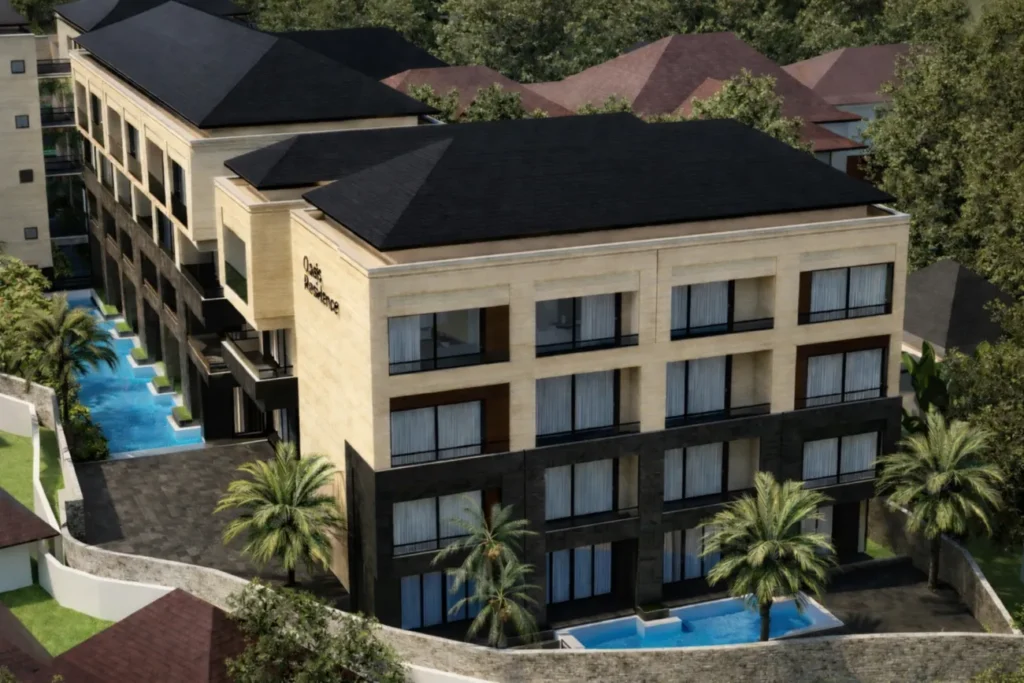 Bali, Ubudfrom 27м²
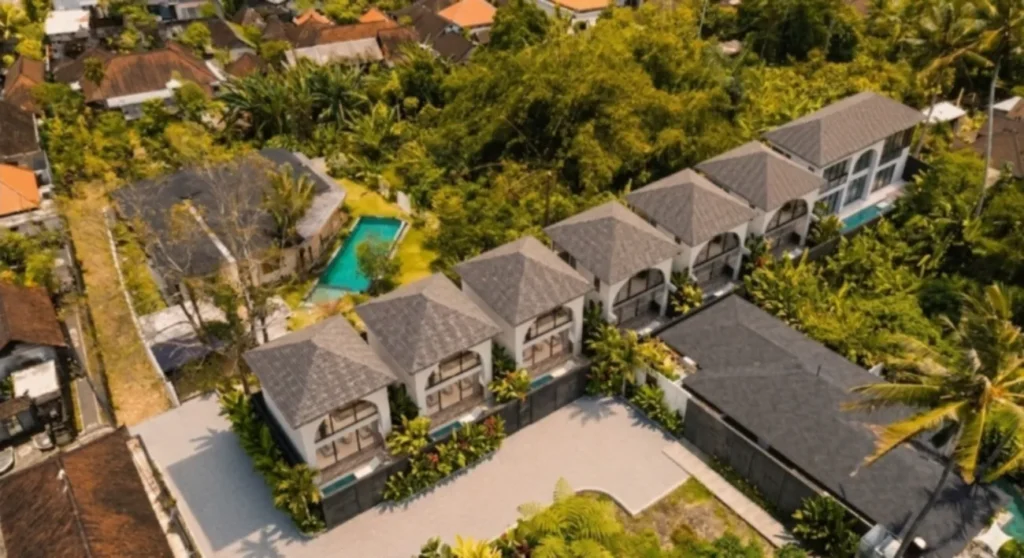 Bali, Ubudfrom 72м²
 Bali,Canggufrom 58м²

Can Foreigners Own Freehold in Bali?
Not in the direct sense. A foreign individual cannot hold Hak Milik in their own name. This is the point on which most misunderstandings rest, so it is worth separating three things that people often merge: buying a building, holding a right to land, and controlling a property in practice.
A qualifying foreigner can lawfully pay for a villa and hold rights that allow them to live in it, rent it out where permitted and sell the remaining rights. What they cannot do is become the registered Hak Milik owner of the land beneath it.
Listings add to the confusion. An agent may write “freehold” because the land is Hak Milik in the current owner’s name, because the seller intends to sell the land to an Indonesian buyer, or simply as a marketing label. None of these tell you what you will hold.
If a Bali property is marketed as “freehold,” ask which registered land right will be held by you, in whose name, after the transaction closes.
The sections below cover the structures that exist. If an offer promises a foreigner personal Hak Milik with no explanation of the legal mechanism, treat it as an unanswered question, not a solved one.
Other Property Rights for Foreign Buyers
Two other rights appear regularly in conversations about foreign ownership. They are frequently blurred together, so it helps to keep them apart.
Hak Pakai
Hak Pakai is a registered right over land. Under the current framework, qualifying foreigners may also own specified residential property where the relevant land-right and immigration requirements are met. It is a formal right in the national land system, regulated by the Basic Agrarian Law and, more recently, by Government Regulation No. 18 of 2021. Foreigners who meet legal conditions can be among the permitted holders.
The words “meet legal conditions” carry weight. Eligibility depends on the buyer’s status and immigration documents, the kind of property and the type of underlying land. The rules also include minimum price thresholds for residential property held by foreigners, set by the land ministry and revised from time to time. The current ministerial decision is Keputusan Menteri ATR/BPN No. 1241/SK-HK.02/IX/2022, and you should check the current version before relying on any threshold. The wider ATR/BPN catalogue of regulations on land rights for foreigners shows what else applies.
Because of this, you cannot assume that any villa in Bali can be structured as Hak Pakai. A specific property has to be checked against the land’s status, the seller’s rights and the buyer’s eligibility. Periods of validity, extension and renewal are set out in the regulation and vary by land type, so confirm them against current text with a qualified adviser instead of relying on a marketing summary.
HGB and PT PMA
Hak Guna Bangunan (HGB) is a right to construct and hold buildings on land for a limited period. It is a registered land right, and it is not Hak Milik. Eligible holders include Indonesian legal entities, which can include a foreign-investment company established in Indonesia.
That company is the PT PMA. A PT PMA is a corporate structure, not a type of land title. It can, if properly set up and compliant, hold certain land rights such as HGB in line with its purpose and licences. It does not receive Hak Milik.
For that reason, describing a PT PMA as “a way to get freehold” misstates the system. A PT PMA may be relevant where the buyer is genuinely operating a properly licensed business, but whether it is appropriate depends on the business activity, investment requirements, licensing, tax position and the land right involved. It comes with incorporation, reporting and tax obligations that continue for as long as the company exists. It is a business decision first and a property decision second.
| Structure | Who can hold it | Registered land title? | Duration basis | Common use | Main consideration |
|---|---|---|---|---|---|
| Hak Milik | Indonesian citizens | Yes | No fixed lease term | Land held long term by citizens | Not available to foreign individuals |
| Hak Sewa | Indonesian parties and qualifying foreign parties, subject to eligibility rules | No, it is a contractual right | Set by the lease agreement | Villas and land for residence or rental | Contract wording, holder eligibility and landowner reliability |
| Hak Pakai | Eligible parties, which may include foreigners in defined cases | Yes | Initial period, extension and renewal under the regulation, depending on land type | Residence in qualifying property | Eligibility and property suitability |
| HGB via eligible Indonesian company / PT PMA | Indonesian legal entities, including a properly established PT PMA | Yes | Initial period, extension and renewal under the regulation, depending on land type | Business, hospitality and structured investment | Corporate compliance, licensing and tax |
How Bali Leasehold Works
Because leasehold is a contract, no two agreements are identical. A useful way to read one is to follow the life of the lease from signature to expiry.
Start and duration. The agreement should state the commencement date, the initial term and, therefore, the exact end date. A lease that “runs 25 years” from an unclear date is a lease you cannot value. The remaining term matters most when you resell, because the next buyer purchases only what is left.
Extension. Many Bali contracts advertise a term such as “30 + 20 years.” That formula means little on its own. It might describe a firm right for you to extend, an option that depends on the landowner’s agreement, or a hope to renegotiate at market price. Clarity on four points separates these: how long the extension lasts, who must sign it, when notice must be given, and how the price is calculated.
Does “25 + 25 years” mean you own a 50-year lease?
Not necessarily. It may mean 25 years are secured now and another 25 years are available only if specified conditions are met. Check whether the additional term is a binding option or merely a future negotiation, whether the landowner must grant it, when it can be exercised and whether its price is fixed, formula-based or left to future market negotiations.
A promised extension has little value unless the agreement states how long it lasts, who must grant it, when it can be exercised and how the price will be set.
“Renewable,” “extendable” and “extension at a fixed price” are three different contractual concepts. A clearly drafted fixed-price extension may provide substantially greater price certainty, provided that the clause is valid, enforceable and capable of being exercised under its stated conditions.
Transfer, assignment and subletting. Ask whether you can sell your remaining rights, whether the landowner’s consent is needed, and whether fees apply. Ask the same about subletting or renting the villa out. A lease that forbids assignment can limit your exit no matter how attractive the property is.
Sale of the land and death. The contract should address what happens if the landowner sells the land or dies. It should also cover what happens if the leaseholder dies, including whether heirs can take over the remaining term. A sale of the underlying land should not automatically be treated as meaning that your lease disappears. The effect depends on the applicable Indonesian rules and the agreement, so your lawyer should confirm whether the existing lease and any separate extension rights will bind a successor owner. Treat the current lease term and a future extension option as separate questions. Do not assume rights pass to heirs automatically. Confirm the position in the drafting and with an Indonesian legal adviser.
Buildings and end of term. Clarify who owns any structure you build or renovate and what happens at expiry: removal, transfer to the landowner, compensation or a new agreement. If the agreement is silent, the outcome becomes materially less certain and may depend on applicable law, other transaction documents and any later dispute resolution.
What happens as a lease runs down?
| Situation | What the buyer should expect |
|---|---|
| Lease still has many years remaining | You continue using the property subject to the agreement |
| You want to sell before expiry | Check whether assignment is permitted and whether landowner consent or a fee is required |
| Extension option exists | Check when it can be exercised, who must grant it and how the extension price is calculated |
| Extension says “at market price” | Future cost is uncertain and may require negotiation |
| No enforceable extension exists | Do not assume the landowner must offer another term |
| Lease reaches expiry | The contractual right ends unless it has been extended or replaced |
| Building remains on the land | The contract should state what happens to it; do not assume compensation or continued ownership |
A strong lease agreement should clearly address:
- the exact start date, initial term and end date;
- the extension: length, notice period, conditions and price mechanism;
- who signs the extension and what happens if they refuse or cannot be found;
- your right to assign, sell, sublet or rent out, and any consent or fees;
- what happens if the land is sold, mortgaged or inherited;
- what happens if either party dies;
- ownership and treatment of the building at expiry;
- permitted use, access, utilities and responsibility for taxes and fees.
Leasehold vs Freehold for Investment
Investing in Bali property can be sensible for some buyers and poor for others. Nothing here is a promise of returns, and market figures quoted in agency material should be treated as claims to be tested, not as established facts.
The economic logic is fairly straightforward. A leasehold is often marketed with a lower upfront price than a comparable transaction involving a longer-term registered land right, but pricing varies substantially by property and structure. In return, you accept an expiry, and you rely on the contract for any rights beyond it. The leaseholder does not own the underlying land title, so any increase in the land’s value does not automatically accrue to the leaseholder. The market value of the leasehold interest can nevertheless rise or fall.
Remaining lease life is one of the factors buyers weigh at resale. It is not the only one, and it does not translate into a tidy annual percentage. Location, build quality, permits, the strength of the extension clause, demand in the area and general market conditions all affect price. Treat any formula that “depreciates” a lease by a fixed amount each year with scepticism.
Example: suppose a villa was originally leased for 30 years. The first leaseholder sells their contractual interest after eight years. A new buyer should not think of this as a “30-year leasehold villa”: roughly 22 years of the original term remain, unless a separate extension is validly available. That remaining term should be considered when assessing the purchase price, resale horizon and extension risk.
A simple hypothetical shows the effect. Buyer A is considering a villa with 27 years left on its lease. Buyer B is looking at a similar villa nearby with far fewer years remaining. Assuming everything else is equal, Buyer A gets a longer period of use and, if rental use is legally permitted and properly licensed, a longer potential income horizon. The villa may also be more attractive to some future buyers because more of the lease term remains. Buyer B may pay less, but has a shorter horizon, faces the extension question sooner and may find resale harder. Neither is automatically the better deal: it depends on price, on the extension terms and on how each buyer intends to use the property.
Other items belong in any investment model:
- rental cash flow, after management costs, taxes, maintenance and periods of vacancy, and only where rental use is permitted and licensed;
- capital spending on refurbishment or furniture;
- extension costs, if the contract does not fix the price;
- exit value, which depends on remaining term, transfer rights and buyer demand.
Set out the numbers on your own assumptions and test them against a shorter-than-expected holding period.
| Buyer scenario | Structure to investigate | Why | Questions to verify |
|---|---|---|---|
| Holiday home for 10–15 years | Leasehold (Hak Sewa) | May suit a defined holding period, and is often marketed at a lower upfront price | Is the remaining term comfortably longer than your plan? Can you sell or assign? Do you qualify as a holder? |
| Rental villa investor | Leasehold, or a licensed business structure where a business is being run | Depends on the holding period and on rental permissions | Is rental use permitted by zoning and licensing? Who handles taxes? |
| Long-term resident | Leasehold with a strong extension, or Hak Pakai where eligible | Residence over many years needs term certainty | Which term is guaranteed and which depends on consent? Do you and the property qualify? |
| Business/operator | Appropriate licensed business structure and compatible land right | Commercial operation may trigger business-licensing and entity requirements depending on the activity | Does any licence cover the activity? What are the ongoing compliance and tax costs? |
| Buyer focused on intergenerational holding | Worth investigating Hak Pakai or a structured company holding, with legal advice | Heirs’ rights and estate planning need a defined framework | What happens on death? Can heirs inherit the right? |
| Buyer prioritising low entry cost | Leasehold | Often marketed at a lower upfront price, though this varies | Is the lower price offset by a short term or weak clauses? |
Compare Bali properties by budget and intended use




Risks Buyers Often Miss
Bali property transactions can encounter recurring legal and practical problems involving title, contract terms, permits, land use and incomplete due diligence. Many come down to things nobody asked about at the start.
Common risks include:
- Nominee arrangements: a foreigner relying on an Indonesian individual to hold title on their behalf.
- A weak extension clause: a hopeful phrase in place of an enforceable mechanism.
- Verbal promises: assurances from the seller or agent that do not appear in the signed deed.
- Land certificate problems: unclear ownership, mismatched boundaries or inconsistent records.
- Existing mortgages or encumbrances registered against the land.
- Zoning mismatch: the intended use is not allowed in that zone.
- Building permits and approvals that are missing or do not match what was actually built.
- Seller authority: the person signing may not be the person entitled to sign.
- Family rights: heirs or spouses may hold interests in the land where the law gives them one.
- Unclear transfer or sublease rights that limit your exit.
- Commercial use versus ownership: holding a right to a property is different from having permission to run it as a rental business.
- Assuming legality of short-term rental or property management follows automatically from your rights in the property.
Red flags in a Bali property listing
Pause and ask for documents if a listing or salesperson claims:
- “freehold for foreigners” without naming the registered land right;
- “guaranteed extension” without showing the extension clause and price mechanism;
- “30 + 30 years” without explaining which period is already secured;
- “commercial rental allowed” without checking zoning and operating permissions;
- “no lawyer needed because the notary checks everything”;
- “nominee ownership is the same as owning the land yourself”;
- “you can always resell” when the lease has not been checked for assignment restrictions.
Marketing terminology is not evidence of the legal structure. Ask to see the title, contract and relevant permits.
Nominee arrangements
Some buyers are offered a structure where an Indonesian individual holds Hak Milik on their behalf, supported by side agreements. This guide does not describe how such arrangements are built, and it does not treat them as a legitimate route around the eligibility rules.
The legal position is stark. Nominee arrangements designed to give a foreigner beneficial control over Hak Milik can conflict with Articles 21 and 26(2) of the Basic Agrarian Law, which address direct and indirect transfers of Hak Milik to foreigners, and may be treated as null and void. Private side agreements do not make the foreigner the registered Hak Milik owner. If a dispute, a death, a sale or a change of relationship arises, you would be relying on those documents against the person whose name is on the certificate.
If the land certificate carries someone else’s name and your protection is a private side agreement, you are relying on that person, not on the register.
Anyone offered this route should get independent legal advice before paying anything, from a lawyer who does not benefit from the transaction.
Due Diligence Before You Sign
Due diligence is the difference between a contract you understand and one you merely signed. No single professional checks everything, so it helps to split the work.
A notary and a PPAT perform different legal functions. A notary may prepare authentic deeds and other instruments within the notary’s statutory authority, while a PPAT (land deed official) is specifically authorised to prepare certain deeds relating to land rights and land-registration transactions. Depending on the deal, one professional may hold both appointments, but the roles should not be treated as interchangeable. An independent lawyer reviews your legal risks, the contract and the transaction structure on your behalf. An accountant or tax adviser covers taxes and, if relevant, company compliance. In some cases you will also want a surveyor or an architect. A notary’s involvement does not, by itself, make a poor deal safe.
Documents to request before paying a deposit
Ask for copies of the documents relevant to the transaction before committing funds. Depending on the property and structure, your adviser may need to review:
- the current land certificate and details of the registered holder;
- identification and authority of the person signing for the owner;
- the proposed lease or transfer agreement;
- cadastral/parcel information and site boundaries;
- applicable zoning and permitted-use information;
- building approvals and documents for the villa as actually constructed;
- evidence of registered mortgages or other encumbrances, where applicable;
- documents governing road access where access crosses other land;
- corporate and licensing documents if a PT PMA or operating business is involved.
The exact document set depends on the land right, the property and the transaction. Copies supplied by a seller should be independently verified rather than accepted at face value.
Work through the checks in order:
- Identify the registered landowner. Confirm who is named on the land certificate and that the person selling or leasing is that person, or is properly authorised to act for them.
- Read the land certificate and title. Check the type of right, the cadastral details and the boundaries, and compare them with the plot you have visited.
- Look for encumbrances. Ask about mortgages, disputes, claims by relatives and any other registered burdens. The land office (BPN) is the relevant authority for land records.
- Confirm zoning and permitted use. The land must be zoned for what you plan to do, whether residential, tourist accommodation or commercial.
- Check building approvals. Make sure permits exist and that the villa as built matches them.
- Confirm access and utilities. Road access, water, electricity and drainage should be documented, not assumed.
- Review the lease terms. Start and end dates, extension mechanics and the extension price formula should all be written down.
- Review transfer rights. Look at assignment, subletting and resale conditions, including consent and fees.
- Test the “what if” clauses. What happens if the land is sold? If either party dies? Who owns the building at expiry?
- Clarify taxes and costs. Ask a tax adviser which taxes and fees apply to your purchase and to future income.
- Check operating permissions. If you intend to rent or manage the property commercially, confirm what licences apply.

Also confirm your own eligibility and the current price thresholds for foreign-held residential property, since these are revised. The ATR/BPN sources linked above are the official starting point.
| Clause | What to verify | Why it matters |
|---|---|---|
| Term and dates | Exact start date, initial term and end date | Defines what you are actually buying |
| Extension | Length, notice period, who signs, conditions | Turns a hope into an enforceable right |
| Extension price | Fixed sum, formula or “to be agreed” | Avoids a surprise cost or a stalemate |
| Assignment and resale | Consent, fees and any restrictions | Determines your exit options |
| Subletting and rental use | Whether allowed, and under what conditions | Affects income plans |
| Sale of the land | Whether the lease binds a new owner | Protects you if the landowner sells |
| Death or incapacity | Treatment if landowner or leaseholder dies | Prevents disputes with heirs |
| Building ownership | Who owns improvements, and at expiry | Governs your construction investment |
| Payment schedule | Instalments, deposit and release conditions | Limits exposure before documents are complete |
| Dispute resolution | Governing law, forum and language | Sets how problems get resolved |
Not sure which properties fit your budget and preferred ownership structure?
Answer 4 questions about your budget, intended use and preferred Bali area to receive a tailored property selection.
[Find suitable Bali properties →]
Which Bali Property Structure Fits Your Situation?
A useful decision starts with facts about you, not with the label on the listing. Your citizenship and residency status determine which rights you can hold. Your purpose, whether personal use, rental income or a running business, determines how much term certainty and licensing you need. Budget and holding period determine whether a finite term makes sense at the price on offer.
Then come exit and succession: how easily you need to resell, and whether you want the right to pass to family. Finally, consider how much uncertainty you can tolerate. A strong, fixed extension is different from a promise that depends on the landowner.
Choose the structure only after answering these questions:
- What is my legal status, and which land rights can I lawfully hold?
- Will I live here, rent the property out or operate a business?
- How long do I realistically plan to hold it?
- What is my budget, including taxes, fees and running costs?
- How will I sell or hand over the property, and to whom?
- How comfortable am I with an extension that is not fully secured?
- Do I need a registered land right, or is a contractual right enough?
- Do I need a company, and can I sustain its compliance costs?
Readers who want the full purchase process rather than only the ownership structures can continue with our guide to “How a foreigner can buy property in Bali“.
Not sure which Bali properties fit your budget, preferred area and ownership structure? Answer a few questions and receive a tailored property selection.
Buying From Abroad
Parts of the process can be handled at a distance, including viewings by video, document review and signing through representatives, where the law and the notary allow it. That convenience does not lower the standard of checking. If anything, it raises the importance of independent verification, because you cannot see the plot, the neighbours or the access road yourself.
Use your own lawyer and, where possible, an independent inspection of the site and the building. Keep money and documents moving in step, so that payments are tied to verified milestones. For a practical walkthrough of the steps, see our guide on “Buying property in Bali remotely“.
Buying from outside Indonesia?
Tell us your budget, preferred area and intended use, and we can shortlist properties that match those criteria before you arrange viewings.
[Get a property shortlist →]
A Safer Way to Approach Bali Property
The order of decisions matters. First work out which structure you are legally able to use. Then examine the specific land title, the seller’s authority and the contract. Only after that should you compare prices and judge whether the deal makes sense as an investment. Reversing that order is how buyers end up with an attractive villa and an unworkable legal position.
Keep one point in mind throughout: the word “freehold” in a listing tells a foreign buyer very little about the right that will be registered in their favour. Ask for the specific right, the name of the holder, the term and the clauses that govern extension, transfer and expiry, and have them checked independently before money changes hands.

This article is for general information only. It is not legal, tax or investment advice. Indonesian rules depend on your status, the property, the land and current legislation, so any specific transaction should be reviewed by qualified Indonesian professionals.
 Real estate in Georgia
 Real estate in Cyprus
 Real estate in the UAE
 Real estate in Montenegro
 Real estate in Thailand
 Real estate in Spain
 Real estate in Saudi Arabia
 Real estate in Turkey
 Real estate in Zanzibar
 +62 895 001 924 667
 hello@ulu-homes.id
 Tibubeneng, Canggu, Kuta Utara, Badung Regency, Bali 80361, Indonesia



 Get catalogue of TOP-7 objects