
 +62 895 001 924 667


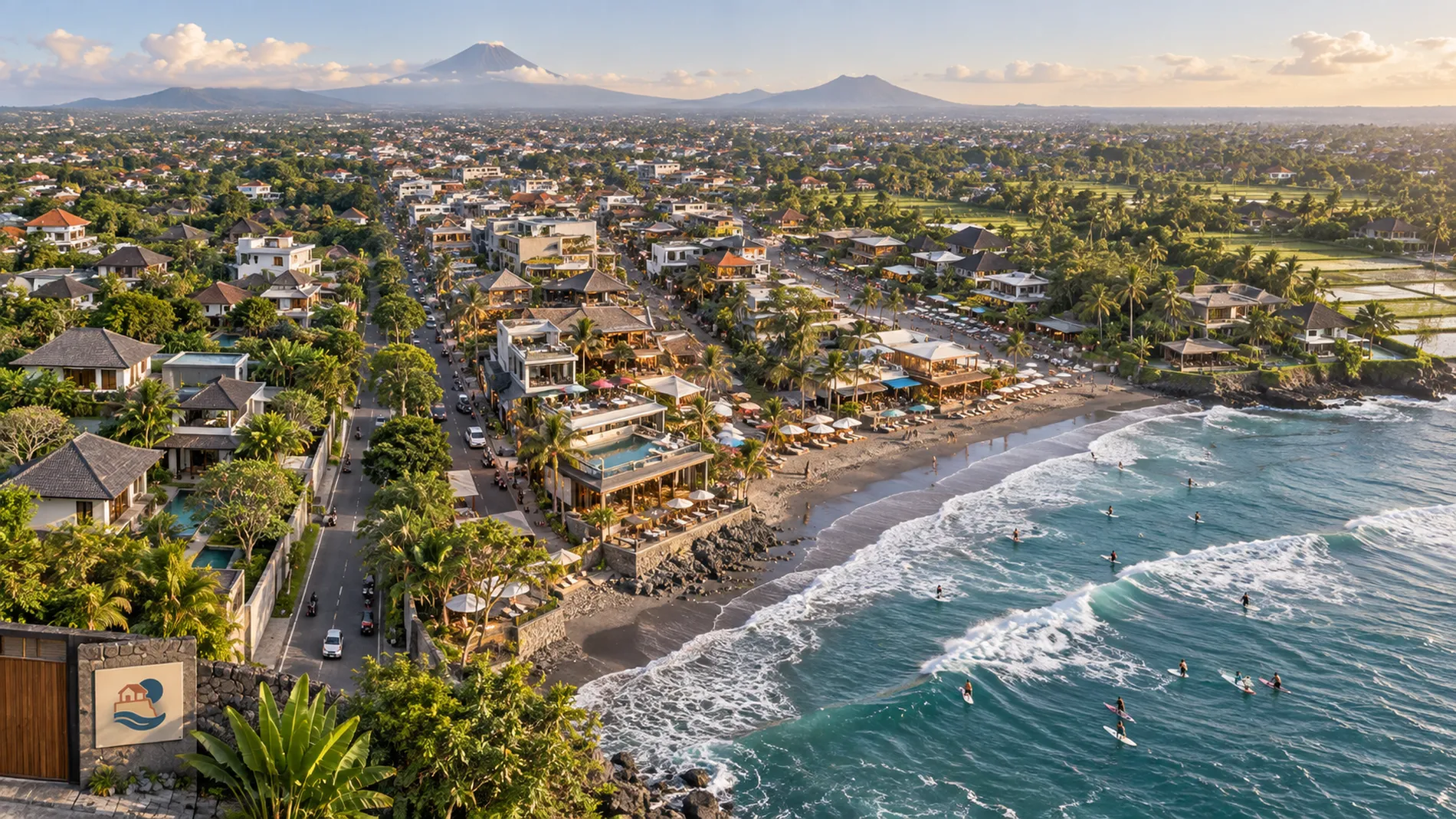
Kerobokan stretches across the area between Seminyak and Canggu, two of the best-known destinations in southern Bali. Administratively, it forms part of the Kuta Utara district in Badung Regency, but in real estate listings the name is often used loosely and can extend into neighboring areas. For anyone considering Kerobokan as a place to live or invest, this is the first thing to understand: it is not a compact resort village with clearly defined boundaries, but a large residential area where density, traffic, atmosphere, and property prices can vary dramatically from one street to another, even within the same postal area.
Kerobokan rarely appears in typical tourist roundups. It has no distinct beach identity of its own, no famous strip of beach clubs, and its best-known association is still the prison, which has little to do with the residential neighborhoods themselves. That relative lack of tourist visibility kept Kerobokan in the shadow of its better-known neighbors for years and gradually shaped it into what it is today: an area favored by people who have already spent time living in Bali and are choosing practicality over postcard appeal.
Kerobokan is particularly attractive to buyers and residents who want easy access to the amenities of Seminyak and Canggu but prefer a more residential environment—and who can often get more property for a comparable budget. The area should never be judged by the name alone. In many cases, the exact street, traffic conditions, road access, and legal status of a property matter far more than whether the listing simply says “Kerobokan.”
Kerobokan at a glance
| Question | Short answer |
|---|---|
| Best for | Long-term living, families, couples, remote workers and villa buyers |
| Character | Residential, mixed and generally quieter than the busiest parts of Seminyak and Canggu |
| Beach access | Depends on the exact location; inland Kerobokan requires transport, while Kerobokan Kelod reaches toward Batu Belig |
| Main property type | Private villas |
| Getting around | Scooter, car or ride-hailing is usually more practical than walking |
| Investment angle | Particularly relevant for long-stay and residential demand; short-term rental potential is highly property-specific |
The main rule: do not evaluate a Kerobokan property by the district name alone. Micro-location, access, legal use, remaining lease term and surrounding development can matter more than a few hundred metres on the map.
Where Kerobokan Is Located
Kerobokan is located in southwestern Bali, in Badung Regency, north of Seminyak and east of the Canggu coastal area. In property marketing, ‘Kerobokan’ is often used as a broad location name. Administratively, Kerobokan, Kerobokan Kelod, and Kerobokan Kaja are separate kelurahan within Kecamatan Kuta Utara, and their character, access, and proximity to the coast differ significantly. In practice, however, agents and landlords rarely use these distinctions consistently. A property advertised simply as “Kerobokan” might be ten minutes from Petitenget or considerably farther inland.
The area is best understood in relation to the surrounding neighborhoods. To the south, the main roads lead toward Seminyak and Petitenget, the nearest major hub for restaurants, beach clubs, shops, and nightlife. To the west and northwest lies Canggu, with its beaches, cafés, and surf infrastructure, with Batu Belig in between. To the northeast is Umalas, a quieter, greener residential area dominated by villas. To the east and southeast lies Denpasar, the provincial capital, where many of Bali’s major hospitals, government offices, and shopping centers are located. Ngurah Rai International Airport is farther south, beyond Kuta.
Distances may look short on the map, but travel times are another matter. Without heavy traffic, Seminyak can be just a few minutes away. During the evening rush hour, however, the same trip can become highly unpredictable because of narrow roads, bottlenecks, and one-way streets. Any estimate of travel time in Bali should be tested in person, at the same time of day and in the same direction you would actually be traveling. A map shows distance, not the capacity of a single congested road.
Another complication is the mismatch between tourism-oriented names and official administrative boundaries. This distinction matters particularly around Kerobokan Kelod, Batu Belig, Petitenget, and Umalas, where the location name used in a listing may reflect marketing convention rather than the exact administrative boundary. In marketing, the borders between Umalas, Petitenget, Batu Belig, and Kerobokan are often blurred. A property near the boundary may be marketed as “Umalas” to one buyer and “Seminyak Kerobokan” to another, simply because the latter sounds more premium. Before arranging a viewing, it is worth checking the exact pin on the map and assessing the real surroundings rather than relying on the location name used in the listing.
| Direction | What’s There | Practical Relevance for Residents |
|---|---|---|
| South | Seminyak, Petitenget | Restaurants, beach clubs, shops, and spas; the main leisure destination and a major source of evening traffic |
| West / northwest | Batu Belig, Canggu | The nearest beaches, cafés, surfing, and coworking spaces; travel time depends heavily on which route you use |
| Northeast | Umalas | A quieter residential alternative with villas and schools; often considered together with Kerobokan |
| East / southeast | Denpasar | Major hospitals, banks, government services, shopping centers, and wholesale stores |
| Farther south | Kuta, Ngurah Rai Airport | Arrivals and departures; journey times vary significantly depending on traffic on the main roads |
How Kerobokan Is Laid Out
The differences within Kerobokan can feel more pronounced than the differences between Kerobokan and the neighboring areas. One street may be a busy commercial corridor with a constant stream of scooters, while a few turns away you can find narrow residential lanes that become quiet after nine in the evening. Elsewhere, entire pockets are made up of villas hidden behind high walls. These very different environments sit side by side, which is why buyers are better off thinking in terms of individual streets and access roads rather than the district as a whole.
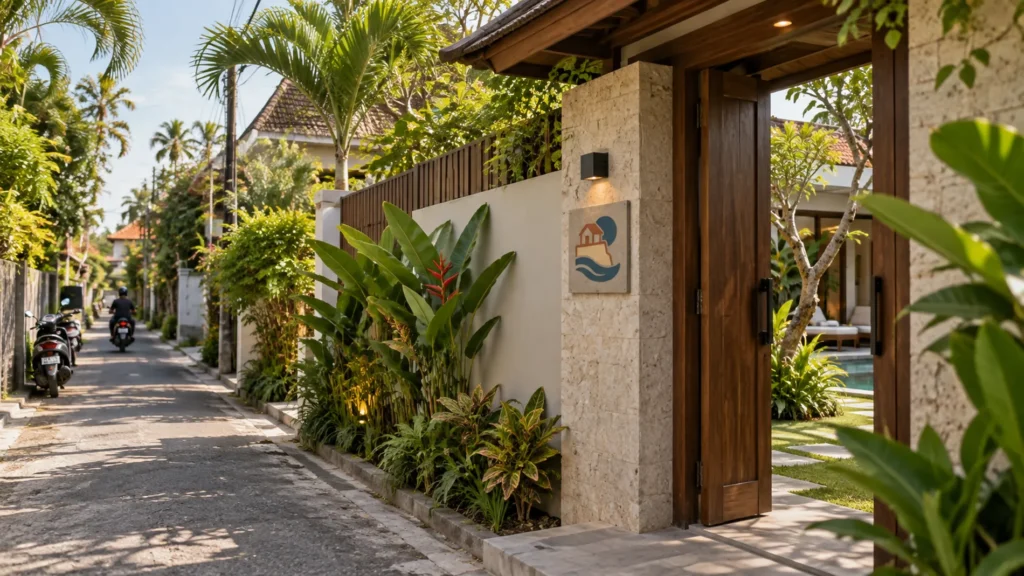
Jalan Mertanadi is the most commercial and recognizable stretch of Kerobokan. Furniture and interior stores, cafés, bakeries, small offices, and service businesses are concentrated along the road. Living within walking distance can be convenient for everyday errands, but that convenience comes with noise, heavy traffic, and limited parking. Properties directly on major roads may trade differently from comparable villas on quieter internal streets because buyers and tenants value access, visibility, noise, and privacy differently. Their suitability for residential or commercial use should be assessed property by property and against the permitted use of the site.
Jalan Raya Semer and the surrounding streets have a more local character, with warungs, small workshops, schools, local families, and the rhythms of ordinary Balinese urban life. This is one reason Kerobokan still feels like a real neighborhood rather than a tourist set. Development is denser here, plots tend to be smaller, and land prices are usually lower than in areas closer to Petitenget.
Kedampang and the internal streets to the north and west offer the greatest sense of privacy. Detached villas with gardens are more common here, and in some places there are still views across remaining rice fields, with a noticeably calmer atmosphere overall. The trade-off is greater dependence on transport. Almost every daily errand requires a trip, and the quality of the access road becomes a critical consideration.
The transition zones toward Umalas, Petitenget, and Batu Belig deserve particular attention because this is where naming confusion is most common. Not all of Umalas or Petitenget falls administratively within Kerobokan, and it would be inaccurate to suggest otherwise. For a buyer, however, the more important point is that the character of the area can change within a single block. Even very small differences in access, traffic, noise, surrounding development, and proximity to amenities can materially affect the attractiveness and asking price of otherwise similar properties.
In Kerobokan, the specific street can matter more than the district name itself: noise, access, traffic, and the surrounding development all have a direct impact on both day-to-day comfort and a property’s appeal to tenants.
Two villas less than a kilometer apart can differ dramatically in attractiveness. One may sit at the end of a quiet gang barely wide enough for a single car. It is peaceful once you are inside, but passing another vehicle can be difficult, furniture deliveries become a logistical challenge, and some tenants may rule it out as soon as they look at the map. Another villa may open directly onto a through-road: access is excellent, but there is a constant stream of traffic outside in the morning, while a nearby café plays music in the evening. A third villa may face an empty plot that turns into a construction site a year later. These factors can influence rental appeal and future resaleability, although their actual effect depends on the property, asking price, tenant profile, and market conditions.
Life in Kerobokan

Kerobokan is not a place you really understand in three days. It makes much more sense after three months. Daily life here is built around short trips: to a café, the supermarket, the gym, or school. Walking, at least in the way most Europeans are used to, is rarely practical. Sidewalks are inconsistent, and where they do exist, they are often blocked by parked scooters. That is one of the first adjustments newcomers have to make.
When it comes to food, Kerobokan can cover almost every need without requiring a trip into Seminyak. Along Mertanadi and the surrounding streets, you will find specialty coffee shops, bakeries, Asian and European restaurants, vegetarian concepts, and places aimed more at long-term residents than at passing tourists. At the same time, there is a dense network of local warungs, where a meal can cost several times less. These are a big part of what makes the area financially comfortable for long-term living. This mix of local and international options is one of the clearest differences from Seminyak, where the share of higher-priced tourist-oriented venues is noticeably greater.
Everyday infrastructure is solid and well distributed: mid-sized supermarkets, Circle K and Indomaret convenience stores on almost every major corner, pharmacies, laundries, repair shops, building-supply stores, and interior showrooms. For larger shopping trips, residents are more likely to head toward Denpasar. Food and grocery delivery through GoJek and Grab works throughout the area and goes a long way toward compensating for the poor walkability.
Fitness and wellness options are equally varied, ranging from large gyms and CrossFit boxes to yoga studios, boxing clubs, and spas. Some of this infrastructure technically falls within Umalas or Seminyak, but it is only a short drive away, and in day-to-day life residents tend to treat the whole area as one connected environment.
For families, Kerobokan often makes more sense than many of the alternatives. Across the broader northwestern corridor, stretching from Kerobokan through Umalas to Canggu, there is a high concentration of Bali’s international and bilingual schools. These include the French school in Kerobokan Kelod, along with kindergartens, early-learning centers, and pediatric practices. Specialist clinics and major hospitals are located mostly in Denpasar and along Sunset Road, while Kerobokan itself has private general clinics and dental practices. Fiber-optic internet is available on most streets, but connection quality can vary from one block to another, so this is something to test in person rather than rely on a coverage map.
For most inland Kerobokan addresses, reaching the beach requires a scooter, car, or ride-hailing service. Properties in and around Kerobokan Kelod can be considerably closer to the Batu Belig coastline, so beach accessibility should be judged from the exact map pin. Batu Belig, Petitenget, and Berawa, with its beach clubs and coastal development, are all a short scooter ride away. Most inland parts of Kerobokan are not within practical walking distance of the beach. However, the broader Kerobokan area includes Kerobokan Kelod, which extends toward the coast around Batu Belig, so proximity to the sea depends heavily on the exact address. Nightlife follows a similar pattern: the bars, clubs, and beach clubs of Seminyak are nearby, but the residential streets inside Kerobokan are usually quiet in the evenings. For some people, that is one of the area’s biggest advantages. For others, it is a reason to live somewhere else.
Traffic remains the most commonly discussed downside. Narrow roads, a limited number of through routes, and the growing number of cars mean that travel times can increase sharply during peak periods because narrow roads and a limited number of through routes create bottlenecks.The practical takeaway is simple: judge a location not by distance alone, but by how many access roads serve the neighborhood and how congested they become.
Kerobokan is particularly well suited to people who:
- spend months at a time in Bali and value day-to-day convenience more than a tourist atmosphere;
- want to stay close to Seminyak and Canggu while still sleeping somewhere quiet;
- want more house and land for the same budget than they would get in coastal locations;
- are relocating with children and are focused on the Kerobokan–Umalas–Canggu school corridor;
- work remotely and need reliable internet, cafés, and coworking spaces nearby;
- plan to use a scooter or car and do not expect to rely on walking for everyday trips.
Pros and Cons of the Area
Kerobokan’s strengths and weaknesses stem from the same defining characteristic: it is a residential area rather than a resort destination. Its strengths are everyday convenience, residential streets and access to several neighboring hubs. Its weaker points are limited walkability in many pockets, traffic bottlenecks and, for most inland addresses, the need to travel to the beach. The table below breaks the area down by practical criteria, each of which affects both quality of life and the investment appeal of a property.
| Factor | Advantage | Potential Drawback |
|---|---|---|
| Location | Central position between Seminyak, Canggu, and Umalas, with relatively short drives in multiple directions | No real “center of gravity” of its own; much of daily life still happens in neighboring areas |
| Infrastructure | Shops, services, schools, gyms, and clinics are all within a short drive | Major hospitals and larger shopping centers are mainly in Denpasar |
| Cost | Compared with some of the most expensive coastal pockets, Kerobokan can offer larger houses or plots at similar asking budgets, although this varies substantially by micro-location, condition, tenure, and remaining lease term | Prices vary enormously within the area, and choosing the wrong street can be an expensive mistake |
| Privacy | Many detached villas with private plots and gardens | Dense development in some pockets means views and quiet cannot be assumed to last |
| Beaches | Batu Belig, Petitenget, and Berawa are all reachable by a short drive | Most residential properties marketed simply as Kerobokan are inland and require a scooter or car to reach the beach, although some locations in Kerobokan Kelod are considerably closer to the coast. |
| Nightlife | Bars and clubs are nearby without being directly outside your door | Anyone who wants nightlife on their doorstep may find the area too quiet |
| Transport | Multiple access routes and widespread ride-hailing coverage | Narrow roads, rush-hour congestion, and limited parking along commercial stretches |
| Walkability | Some individual neighborhoods are pleasant and safe to walk around | Living here comfortably without a scooter or car is difficult in practice |
| Villa Supply | Broad choice of one- to four-bedroom villas, both completed and under construction | Build quality and age vary significantly, so technical condition should be checked property by property. |
| Families | School corridor, quieter streets, and larger homes | Few parks and public spaces designed for children |
| Rental Investment | Demand from long-term residents forms an important part of the local rental market | Kerobokan generally has less direct exposure to beach-driven tourist demand than the busiest parts of Seminyak and Canggu, so short-term rental performance should be assessed at property level rather than assumed from the district name |
The key takeaway is clear: Kerobokan is not a one-size-fits-all market. It works well for a “live here and rent long-term” strategy, but is noticeably less compelling for a “buy near the beach and maximize peak-season tourist income” model. Buyers should be honest about which of those scenarios actually fits their goals before they start viewing properties.
Real Estate in Kerobokan
Kerobokan is primarily a villa-oriented market. Apartment developments do exist, but they make up a relatively small share of supply, and comparing the area with apartment markets purely on the basis of average price per square meter is methodologically misleading. In a villa, value is shaped not only by the building’s usable floor area, but also by the land, plot size, pool, and overall layout.
The market can broadly be divided into several property types. One-bedroom villas are compact homes on smaller plots, often built as part of mini-developments containing several units with a shared access road. They are commonly purchased as rental properties or as a first step into the Bali market. Two-bedroom villas are widely represented in listings and appeal to several buyer and renter profiles, including couples, remote workers, and smaller groups. Three- and four-bedroom family villas with proper gardens and swimming pools are popular with expatriate families and some larger tourist groups; supply is noticeably thinner in this segment, while quality varies more widely.
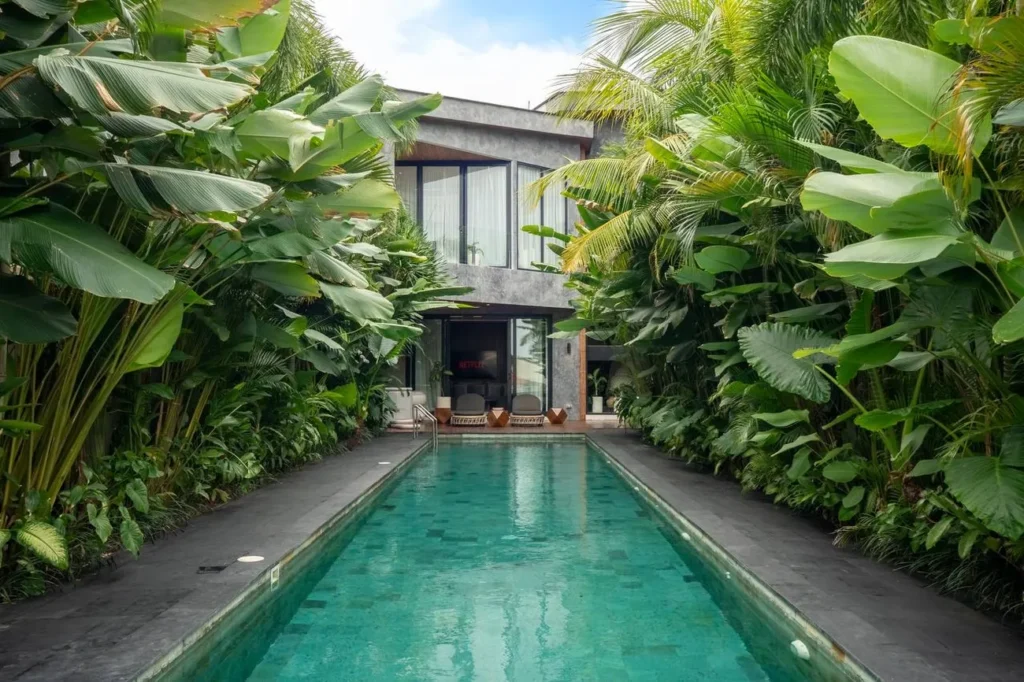

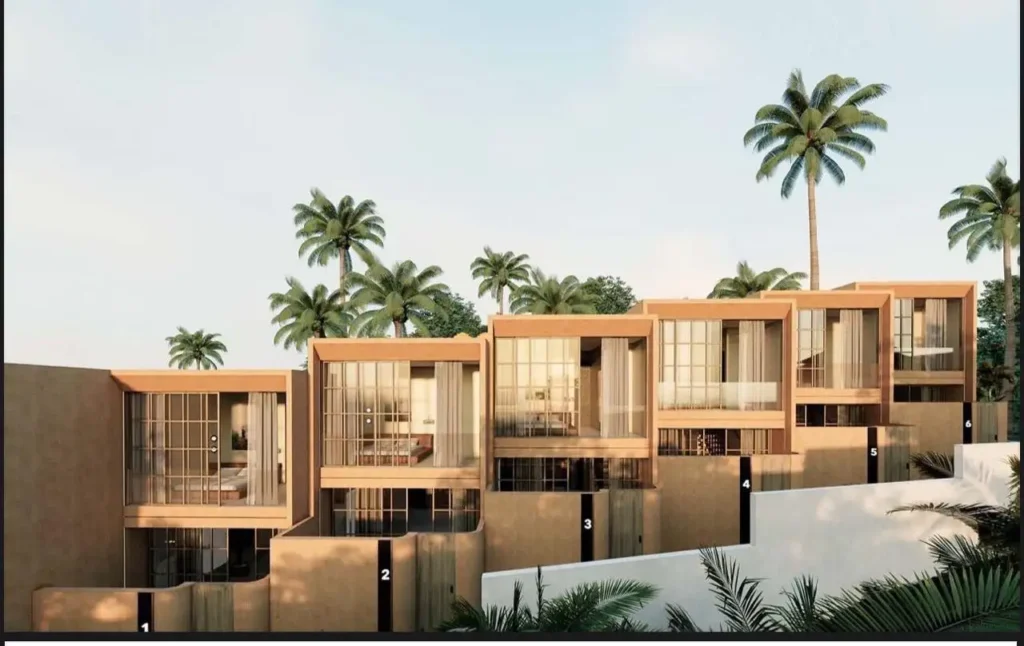

 Bali,Pererenan
 from 100м²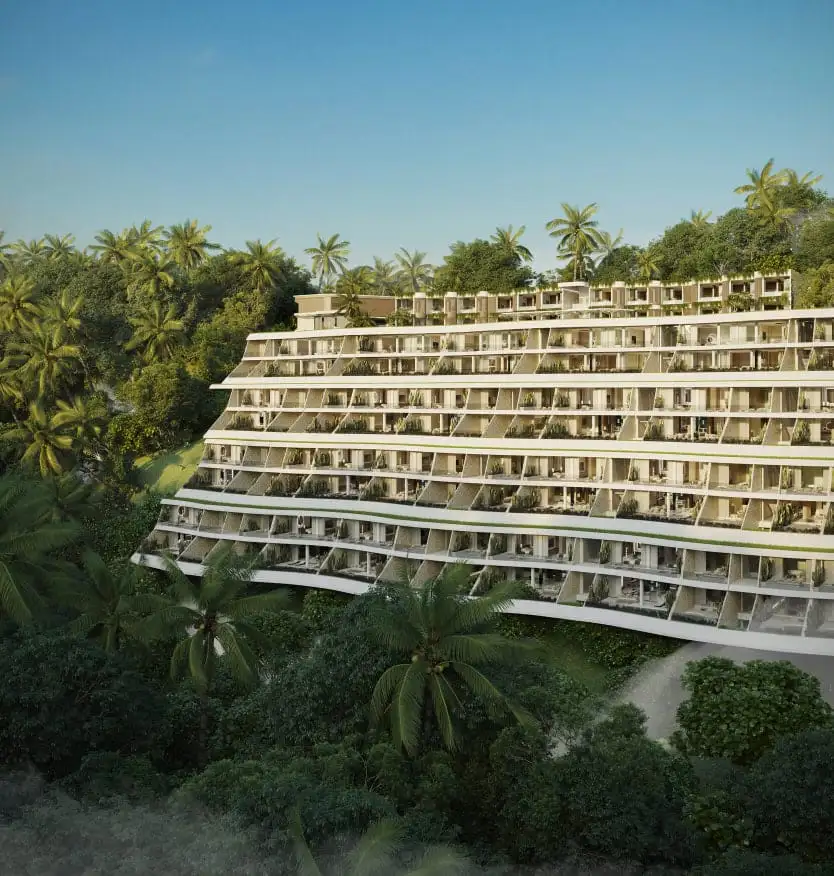
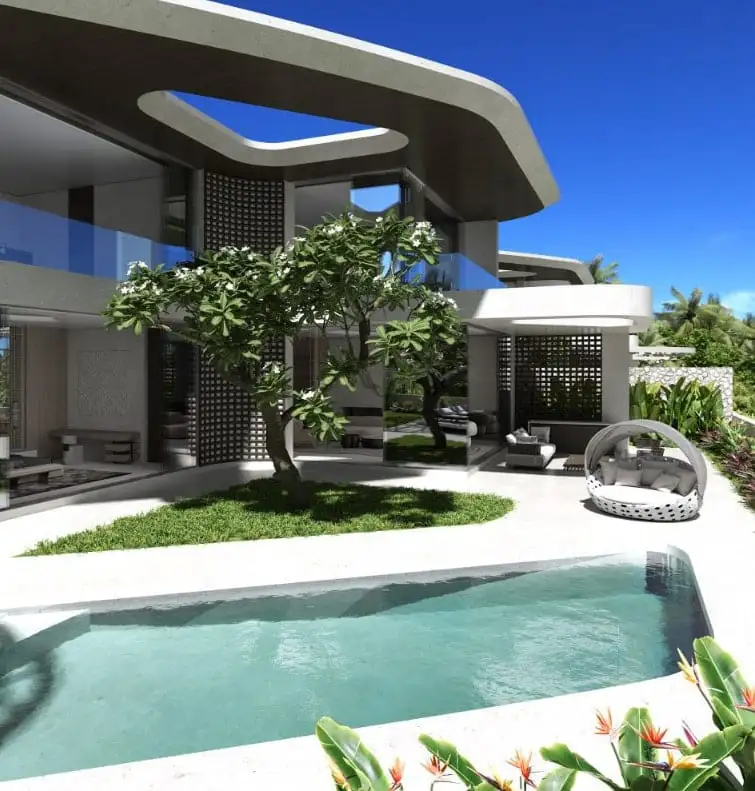 Bali,Ubudfrom 569м²
A separate category consists of modern boutique developments, typically built in small phases of four to twelve units with a consistent architectural concept and centralized management. These projects may offer a more standardized product and centralized management, but build quality, management terms, developer reliability, and the remaining land-right term still need to be checked individually. Apartments in Kerobokan are available only selectively, usually within mixed-use or hybrid residential projects, so buyers should not expect a broad range of options in this format.
In terms of completion stage, the market is split between finished properties and off-plan projects. A completed villa allows a buyer to inspect the actual condition of the structure, measure noise levels, test water pressure, and assess the surrounding environment as it really is. An off-plan project may be offered at a lower entry price than a comparable completed property and may include installment payments, but this is not universal. In Bali’s off-plan market, a developer’s reputation and legal transparency matter more than the visuals in the sales presentation.
The legal ownership structures differ fundamentally, and they are covered in a separate section below. In listings, the most common structure is leasehold, meaning a long-term lease for a defined period. Less commonly, buyers may encounter other structures whose availability depends on the purchaser’s status, the type of property, and the underlying land title.
What determines the price of a specific villa in Kerobokan:
- micro-location: the street, immediate neighborhood, surroundings, and outlook;
- the quality and width of the access road, including whether cars can pass and park comfortably;
- actual peak-hour travel time to Seminyak, Canggu, and local schools;
- plot size in are (1 are = 100 m²);
- building size and layout, including the number of bedrooms and bathrooms;
- year of construction, structural quality, and engineering systems;
- whether the villa is furnished, the quality of the furniture, and what appliances are included;
- the swimming pool, including its size, equipment, and condition;
- the site’s zoning and permitted use;
- the completeness and accuracy of land and building documentation;
- the remaining leasehold term at the time of purchase;
- the extension terms and extension price stated in the contract;
- whether the property has the necessary license for short-term rentals, if that is part of the intended strategy.
The first and last items on that list explain much of the unusual pricing seen across the area. Two visually similar villas can have materially different values when their remaining lease terms and extension rights differ. A longer remaining term with clearly documented extension provisions is not directly comparable with a shorter lease whose extension is subject to future agreement.
How Much Does Property Cost?
There is no official transaction-price data published specifically for Kerobokan, so any “average price for the area” should be treated as an estimate rather than a hard fact. A more reliable approach is to work with asking-price ranges and separate the different metrics that are often blurred together in property marketing.
Asking prices should not be treated as confirmed transaction prices. Final terms may differ after negotiation, but there is no sufficiently transparent public Kerobokan transaction database to quantify that difference reliably. The actual transaction price is not publicly disclosed and is generally known only to the parties involved and their agents. A leasehold price is the price paid for the right to use a property for a fixed period, not the price of owning the property outright; this is a crucial distinction when comparing Bali with freehold markets. Land pricing is usually calculated separately, typically per are and per year of lease. Monthly and annual rental rates are not interchangeable either: Annual contracts are often offered at a lower effective monthly rate than month-to-month rentals, although the difference depends on the property, landlord, payment terms, and season.
Current Kerobokan listings show a very wide spread of leasehold asking prices. Compact villas can appear in the lower end of the market, while larger, newer, or better-located properties can cost several times more. These advertised prices should be compared only between properties with broadly similar plot size, condition, micro-location, and remaining lease term.
| Property Type | Typical Format | Main Price Drivers | Best Suited To |
|---|---|---|---|
| 1-bedroom villa | 60–110 m² of internal space, compact plot, often within a small managed complex | Remaining lease term, quality of the complex, short-term rental potential | First-time market entry, budget-conscious investor, solo resident |
| 2-bedroom villa | 120–200 m² house, 1.5–3 are of land, private pool | Micro-location, access road, condition, year built | Couples, digital nomads, investors seeking a format that appeals to several renter profiles |
| 3–4-bedroom villa | 200–350 m² house, plot from 3 are, garden | Plot size, privacy, proximity to schools, construction quality | Families staying long-term, rentals to family tenants |
| Boutique off-plan project | Small multi-unit development with centralized management | Developer reputation, lease term and extension conditions, zoning | Investors looking for a ready-made operating model |
| Older villa for renovation | 10–20-year-old building with dated systems | Land value, remaining rights, renovation budget | Buyers with construction experience and a contingency reserve |
Rental demand in Kerobokan operates across three different models. Rental-price references in this guide are asking prices rather than completed rental transactions. Where figures are quoted, they should be understood as a dated snapshot of active listings and not as an official market average. Short-term daily rentals target tourists, are highly seasonal, and require the appropriate licensing and management setup. Monthly rentals are a common choice for people staying one to three months; Current rental listings show a wide spread of prices depending on villa size, furnishing, exact location, lease length, and whether utilities and services are included. Monthly rentals generally command a higher effective monthly rate than longer contracts, while annual leases may involve substantial upfront payment. For a meaningful comparison, use several current listings with matching bedroom count, location, condition, and contract length. Annual leases are often offered at a lower effective monthly rate than month-to-month rentals. Many are quoted on an upfront-payment basis, although payment schedules vary by landlord and contract.
Long-term rentals in Kerobokan are generally cheaper than comparable properties in the most sought-after parts of Seminyak. The gap is not fixed, however; it varies by street, year of construction, furnishing standard, and the season in which the lease is signed. It should be checked against specific comparable listings rather than broad claims made in articles.
Kerobokan as an Investment
The investment case for Kerobokan depends on the structure of demand, not on general optimism about Bali. Tourism has indeed continued to grow: according to BPS, Indonesia’s official statistics agency, Bali recorded 6,948,754 direct international arrivals in 2025, up 9.72% from 2024 (BPS Bali, Statistik Wisatawan Mancanegara 2025). Growth in visitor numbers describes demand for the island as a whole; it does not prove that the value of a particular villa in a particular part of Kerobokan will rise. Tourism growth should therefore be assessed separately from property-level economics. For an investor, the relevant question is whether demand for the specific villa type and micro-location is sufficient relative to competing supply.
Kerobokan tends to appeal to long-stay residents, couples, families, remote workers, entrepreneurs, and visitors staying for several weeks or months. The exact tenant mix varies considerably by micro-location, villa size, price, and operating model. Short-term tourist demand is also present, but its importance varies substantially between inland residential streets and locations closer to Seminyak, Petitenget, Batu Belig, and the main visitor corridors.
Long-Term Rentals
An annual lease can reduce tenant turnover and day-to-day operational work compared with nightly rentals. Vacancy risk may also be lower when the property is competitively priced, but it cannot be assumed. Management is largely limited to monitoring the condition of the property and dealing with maintenance issues. The trade-off is a ceiling on returns: the effective daily rate is lower than that of a well-performing short-term villa, and there is no opportunity to raise rates during peak season. For inland properties with weaker tourist appeal or difficult road access, a long-term rental strategy may be more suitable than nightly accommodation, but the choice should be tested against comparable rental demand.

Short-Term Rentals
Daily rentals can generate higher gross revenue, but the economics are fundamentally different. Platform commissions, management fees, housekeeping, consumables, heavier wear and tear, marketing, professional photography, seasonality, and vacancy all enter the equation, and many of these costs rarely appear in sales presentations. There is also the question of legality: Operating a villa as short-term tourist accommodation is a regulated business activity. The applicable requirements depend on the operator, the relevant KBLI classification, spatial-planning rules, the approved function and documentation of the building, including PBG and SLF where applicable, and the business licences or supporting approvals required through Indonesia’s OSS system. The exact requirements should be verified for the specific property before purchase. An informal operating model should not be assumed to be legally acceptable simply because similar properties appear to be operating nearby.
How to Calculate Returns
The basic formula is simple and sufficient for initial screening:
Net yield = (annual income − operating expenses) / total capital invested × 100%.
Gross yield looks only at revenue and will always appear more attractive. Net yield shows what actually remains after expenses. ROI is a broader measure of investment performance and can be calculated in different ways depending on which income, costs, financing, and eventual sale proceeds are included. Any ROI figure should therefore be accompanied by the assumptions used. Capital appreciation refers to the change in the value of the asset itself, and with leasehold property this requires separate consideration: A declining remaining lease term can place downward pressure on value and reduce the future buyer pool. Market appreciation or improvements to the property may offset some of that effect, so lease decay should be assessed together with the wider market and extension terms. Project marketing materials often show projected returns in the high single digits or even double digits, but these are seller assumptions, not outcomes investors can rely on.
Projected figures should therefore be stress-tested against lower occupancy, lower nightly rates, higher management costs, maintenance reserves, and periods when the property produces no rental income.
Consider an illustrative scenario; the figures below are hypothetical and are included only to demonstrate the method. The example is purely mathematical and should not be interpreted as a forecast of typical Kerobokan occupancy, ADR, expenses, or investment returns. A two-bedroom villa is purchased for USD 250,000. Entry costs, including legal due diligence, notary fees, taxes, and furnishing upgrades, add another USD 20,000, bringing total invested capital to USD 270,000. Under a short-term rental model, an average daily rate of USD 160 with 60% occupancy produces gross annual revenue of roughly USD 35,000. Expenses include management at 20% of revenue, booking-platform commissions, utilities, pool and garden maintenance, housekeeping, minor repairs, taxes, insurance, and a reserve for replacing furniture and appliances. Together, these total around USD 15,000. Net cash flow is therefore approximately USD 20,000, giving a net yield of about 7.4%. A decline in occupancy can reduce net cash flow disproportionately because some operating costs remain fixed even when the property generates fewer bookings. The key factor in the resilience of the investment is therefore sensitivity to occupancy, not the headline nightly rate.
A high advertised yield says very little about the quality of an investment on its own. What matters is the net cash flow, the remaining term of the property rights, and the cost of exiting the investment.
Key Investment Risks
A significant share of property-specific risks can arise during acquisition and due diligence, independently of broader market movements. Many property-specific risks can be investigated before the transaction through legal, technical, and financial due diligence, although no review can eliminate every future market or operational risk.
The legal review begins with the land itself. The land category and zoning determine what is legally permitted on the site. Residential zoning does not automatically allow commercial guest accommodation, and verbal assurances from a seller do not change that. If an existing building lacks the correct construction permits, that problem passes to the buyer with the property. And if the lease agreement permits residential use only, favorable zoning will not override the contractual restriction; the terms of the transaction still govern.
The remaining term of the property rights is another important factor that can affect both value and future resaleability. A leasehold with a relatively short remaining term can narrow the future buyer pool and affect resale value, particularly when extension terms are uncertain. Buyers in the secondary market look not only at floor area but at the number of years remaining. Extension provisions should be specific: duration, pricing mechanism, notice procedure, and what happens if the landlord dies or becomes insolvent. A clause stating that an extension is “possible at market price” provides little legal protection.
Physical due diligence is equally important. The right of access and the actual width of the road determine whether a car can reach the property and whether delivery trucks can bring in construction materials. Drainage should be checked during the rainy season, not in August. Drainage conditions and any history of flooding should be checked for the specific plot, particularly in low-lying locations and during the rainy season. A vacant neighboring plot, construction across the road, a planned road-widening project, or a new commercial building can materially change both living conditions and rental rates within a year. Noise from a generator, café, or mosque can only be assessed on site and at the relevant time of day.
Operational and financial risks are mostly driven by unrealistic assumptions. Inflated occupancy forecasts, presenting gross yield as if it were net yield, and ignoring vacancy or replacement reserves produce models that look attractive in a spreadsheet but fail in practice. Any advertised ‘guaranteed return’ should be reviewed as a contractual obligation rather than accepted at face value. Buyers should verify who provides the guarantee, its duration, conditions, exclusions, security, and the remedies available if payments are not made. Dependence on a single management company with no practical ability to switch operators is another common trap. Finally, overpaying at the point of entry directly creates an exit problem: a property bought at a high price relative to comparable listings, particularly with a short remaining lease or weaker micro-location, may face a smaller future buyer pool and greater pricing pressure on resale.
What to check before paying a deposit:
- the land certificate, type of title, plot size, and whether the registered boundaries match the physical site;
- zoning and permitted use for your intended scenario;
- building permits and whether they match what has actually been constructed;
- the lease agreement, including the exact remaining term, extension conditions and pricing, and assignment rights;
- the existence and status of any accommodation license if short-term rentals are planned;
- actual access to the property, road width, and the legal right of way;
- real operating costs for the previous 12 months, supported by invoices;
- verified occupancy and revenue history rather than forecasts in a sales presentation;
- the condition of the structure, roof, electrical systems, water supply, and pool based on an independent technical inspection.
This checklist does not replace legal due diligence. It simply shows what to ask an independent lawyer and technical specialist, both of whom should ideally be hired separately from the seller and the seller’s agent.
Can a Foreigner Buy Property?

Indonesia has several different forms of land and property rights, and they cannot be understood through the simple freehold logic of “I bought it, so I own it forever.” Hak Milik, the strongest form of land ownership, is generally reserved for Indonesian citizens. HGB, or Hak Guna Bangunan, is a right to build and hold structures on land for a fixed period with the possibility of extension and is used, among others, by legal entities. Hak Pakai is a right of use that may, under certain conditions, be available to foreigners. In Bali property marketing, ‘leasehold’ is commonly used as a broad English-language term for contractual rights to use or lease property for a defined period. The precise legal structure and rights should be established from the underlying agreement rather than from the marketing label alone. These terms are not interchangeable, and if a sales presentation treats them as though they were, that alone should raise a red flag.
The rights of foreigners to certain residential properties are regulated at government level. Articles 69–71 of Government Regulation of the Republic of Indonesia No. 18 of 2021 describe the circumstances in which a foreigner lawfully residing in Indonesia may hold a residential house or unit and the types of rights that may apply (ATR/BPN, PP No. 18/2021). The specific requirements concern immigration status, the type of property, and the form of legal right, and they can change as implementing regulations evolve.
These provisions should not be read in isolation. Additional restrictions and implementing rules may apply, including requirements related to property type, minimum value, land area, number of properties, immigration status, and the specific right being acquired.
For certain genuine business activities, investors may also encounter structures involving an Indonesian foreign-investment company, or PT PMA. A PT PMA is a regulated corporate and investment vehicle with licensing, capital, reporting, and operational requirements; it should not be presented simply as a method for a foreign individual to hold one residential villa. This type of entity is used for commercial activity, including property rental operations, and may hold certain types of land rights. It does not make a foreign shareholder the owner of land under Hak Milik, nor does it provide automatic access to every type of plot. What is possible depends on the company’s licensed activities, the zoning, and the characteristics of the property itself. Maintaining the company also involves reporting obligations and ongoing costs that should be included in the investment model.
Using an Indonesian citizen as a nominee owner is frequently discussed in the market, but it is not a safe way to bypass ownership restrictions. Such arrangements are legally vulnerable, and the risk ultimately sits with the buyer. The practical approach is the opposite: first define the property and intended use, then choose a lawful structure that fits both, with advice from an independent lawyer appointed by the buyer.
The legal structure of the transaction should be chosen for the specific property and the buyer’s status, not because a seller says, “this is how everyone does it.
Kerobokan vs. Nearby Areas
Choosing between these four neighboring locations is rarely a matter of deciding which one is simply “better.” The right choice depends on what you want the property to do: serve as a home, generate long-term rental income, or earn from tourists.
| Criteria | Kerobokan | Seminyak | Canggu | Umalas |
|---|---|---|---|---|
| Atmosphere | Residential, mixed, everyday | Resort-like, urban, upscale | Energetic, youthful, creative | Quiet, green, private |
| Tourist traffic | Moderate | High | High visitor activity in the main tourism-oriented pockets | Low |
| Beach | Mostly inland; Kerobokan Kelod extends toward the Batu Belig coast | Direct beach access | Several surf beaches | No beach of its own; short drive to the coast |
| Infrastructure | Strong everyday infrastructure, shops, and services | Restaurants, spas, and premium shopping | Cafés, coworking spaces, studios, fitness | Schools, clinics, and a quieter residential setup |
| Nightlife | Limited within the area, but close by | Extensive | Extensive and varied | Virtually nonexistent |
| Traffic | Narrow roads and rush-hour congestion | Main roads are consistently busy | Heavy, especially in high season | Moderate, though access roads can be congested |
| Villa supply | Broad range of ages, sizes, and quality levels | Plenty of villas, but generally denser and more expensive | Very large supply, including substantial new development | Moderate, geared more toward residential use |
| Long-term rentals | Important residential and long-stay demand | More expensive, with demand more heavily influenced by seasonality | Strong demand, but also strong competition | Strong demand from families |
| Families | A good fit, with the school corridor nearby | Partly suitable, but often noisy | Can work depending on the micro-location | One of the most convenient options |
| Short-term rentals | Viable, but weaker than coastal locations | Strong exposure to established short-term tourism; high competition in many villa segments | Strong short-term tourism exposure with substantial competing villa supply | More residential demand profile; short-term potential varies strongly by property and access |
| Investor angle | Balance between entry price and stable long-term demand | Premium segment with a high entry cost | Greater exposure to short-term tourist demand, alongside strong competition | A bet on residential demand rather than tourism |
In practical terms, Kerobokan suits buyers who value a central position between several major hubs, a residential environment, and access to a broad villa market. Compared with premium coastal pockets, some Kerobokan micro-locations can offer more space at a similar asking budget, but the difference is highly property-specific. Seminyak is for buyers who prioritize the beach, a prestigious address, and heavy tourist traffic, and who are prepared to pay a premium for those advantages; we look at that market in detail in our Seminyak guide. Canggu has strong exposure to short-term tourism and substantial new development. For investors, competition and potential oversupply should therefore be assessed at the level of the specific micro-location and property segment. If that model is closer to what you are looking for, start with our overview of Canggu’s prices and key attractions. Umalas generally has a quieter, more residential character than the busiest parts of Seminyak and Canggu and is frequently considered by families and owner-occupiers.
The same comparison framework applies beyond these four areas. Buyers willing to move farther away from Seminyak in exchange for a quieter environment and a different price point are often shown Pererenan to the northwest. Investors who care more about tourist demand and dramatic views tend to look toward the southern peninsula, particularly Uluwatu and the surrounding locations. These are fundamentally different markets with different seasonal patterns, so conclusions drawn about Kerobokan should not be carried over to them automatically.
How to Choose a Property in Kerobokan
It makes sense to start viewing properties only after answering six questions, not before. The first is whether you are buying for yourself or for income, because that answer affects almost everything, including how far from a school you are willing to live. The second is which rental model you are considering: long-term or daily/short-term. The latter immediately narrows the search because of zoning and licensing requirements. The third is your true budget, including acquisition costs, renovation, and a reserve fund, rather than just the asking price. The fourth is the minimum remaining leasehold term you are willing to accept; Before viewing leasehold properties, decide what remaining term is compatible with your intended holding period and exit strategy. There is no universal minimum that makes a property a good investment; the remaining term must be assessed together with the purchase price and extension provisions. The fifth is the profile of your target tenant. The sixth is the maximum travel time you are willing to tolerate to the places that matter to you during rush hour.
After that comes the on-the-ground work, and one of the most useful checks is to test the actual routes to the places you expect to visit regularly. Drive from the property to Seminyak and Canggu at 6:00 p.m. on a weekday, then return to the same street at 7:30 a.m. and again on a weekend evening. A villa can look centrally located on the map yet depend on a single exit that becomes heavily congested during peak periods. You will not see that in a listing or during a daytime viewing with an agent.
At the viewing itself, focus less on the interior and more on the property’s infrastructure. Check the actual access road and whether two cars can pass, parking space, what surrounds the property on three sides and whether there are vacant plots nearby, noise levels during the day and evening, signs of flooding and the condition of drainage, the roof, electrical system, and water supply, pool equipment, the real internet speed tested on-site from your phone, the documented land area versus what is being shown to you, and verified utility and maintenance bills for the previous year. Request the documents separately as well: the land certificate, permits, and the lease agreement with all appendices.
Not sure which part of Kerobokan best fits your budget and goals? Take the short ULU Homes property-matching quiz. The team will compare your budget, purchase objective, and preferred property type with available options in Bali.
Who Kerobokan Is Best For
For families with children, Kerobokan is usually a strong option: spacious villas with gardens, quiet internal streets, the school corridor toward Umalas and Canggu, and clinics and shops within a short drive. The trade-off is that children generally need to be driven, and the area offers little in the way of a walkable urban environment.
For couples and people living alone, Kerobokan offers a compromise that is hard to find elsewhere: a quieter home while remaining within relatively easy reach of the denser restaurant, retail, and leisure areas around Seminyak, Petitenget, Umalas, and Canggu. Two-bedroom villas are widely represented in the market and can appeal to several buyer and renter profiles, although actual resale liquidity depends on price, tenure, condition, location, and market conditions.
Digital nomads will find cafés, coworking spaces, and generally reliable internet, but it is still worth checking the actual connection on the specific street and choosing a micro-location with several exit routes so you are not dependent on a single traffic bottleneck.
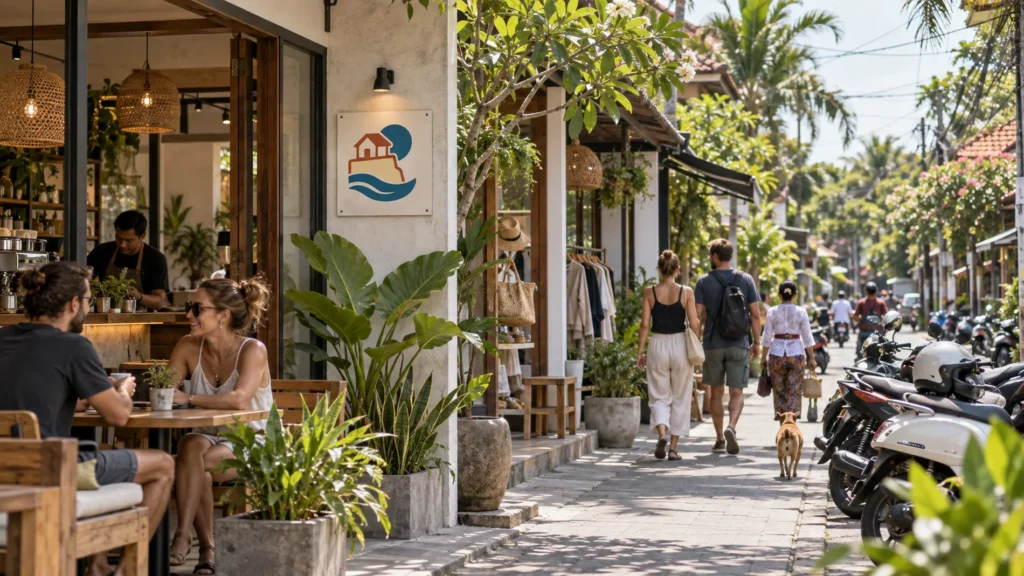
For owner-occupiers, the area is attractive because of the space-to-price ratio. Kerobokan can offer more space at a similar asking budget than some premium parts of Seminyak, although comparable properties should be matched by tenure, condition, plot size, and micro-location.
Kerobokan can be considered for a long-term rental strategy because a meaningful part of local demand comes from residents and longer-stay tenants rather than exclusively from holidaymakers. Unlike a purely holiday-oriented location, Kerobokan also serves residents and longer-stay tenants, so rental analysis should consider both residential and visitor demand. The area can also work for short- and medium-term rentals, but the pool of suitable properties is noticeably smaller: you need the right zoning, the necessary permits, good road access, and a distance to the beach that guests will accept.
Who Should Consider Another Area
If walking to the beach is essential, most inland parts of Kerobokan will not fit the requirement. Some properties around Kerobokan Kelod and Batu Belig can be much closer to the coast, so the exact location matters. It makes more sense to look at coastal locations such as Jimbaran or Sanur, where residential development reaches much closer to the water.
If you want nightlife within a few minutes’ walk of home, the search shifts toward Seminyak, Legian, and Kuta.
If your daily routine revolves entirely around central Canggu — work, fitness, friends, and social life — commuting there every day from Kerobokan will quickly become tiring.
And if you are looking for a more natural and cultural environment rather than an urban one, it is worth comparing Kerobokan with Ubud. It is an entirely different market with a completely different pace of life.
Conclusion
Kerobokan is interesting not because it is “cheaper than Canggu” or “quieter than Seminyak.” It is a distinct residential market with its own demand dynamics: Kerobokan attracts a meaningful long-stay and residential audience alongside shorter-stay visitors, which gives its rental market a different profile from more tourism-dominated coastal pockets.
For owner-occupiers, the value of the area depends heavily on the quality of the specific micro-location. The street itself, the width of the access road, the number of routes in and out of the neighborhood, nearby construction, and noise levels all have a greater impact on day-to-day comfort than an attractive location name in a listing. In Kerobokan, the difference between a good and a poor address within the same one-kilometer radius can be substantial.
For investors, the variables are different, but they need to be assessed just as carefully: the entry price relative to genuinely comparable properties, the profile of the target tenant and the resilience of that demand, the property’s permitted use, the type of ownership or tenure and the remaining term, the actual operating costs, and a clear exit strategy. A property that cannot legally support the intended rental model, or whose remaining lease term materially narrows the future buyer pool, may be a poor fit for that investment strategy regardless of the wider appeal of the area.
A practical sequence is to define the intended use first, test the location and key routes in person, compare genuinely similar properties, and then complete independent legal and technical due diligence. For an income-producing property, the review should also confirm that the intended rental activity is compatible with land-use rules, building documentation, the operator structure, and applicable business licensing. Price negotiations should come after these checks, not before them.
 Real estate in Georgia
 Real estate in Cyprus
 Real estate in the UAE
 Real estate in Montenegro
 Real estate in Thailand
 Real estate in Spain
 Real estate in Saudi Arabia
 Real estate in Turkey
 Real estate in Zanzibar
 +62 895 001 924 667
 hello@ulu-homes.id
 Tibubeneng, Canggu, Kuta Utara, Badung Regency, Bali 80361, Indonesia


 Get catalogue of TOP-7 objects