
 +62 895 001 924 667


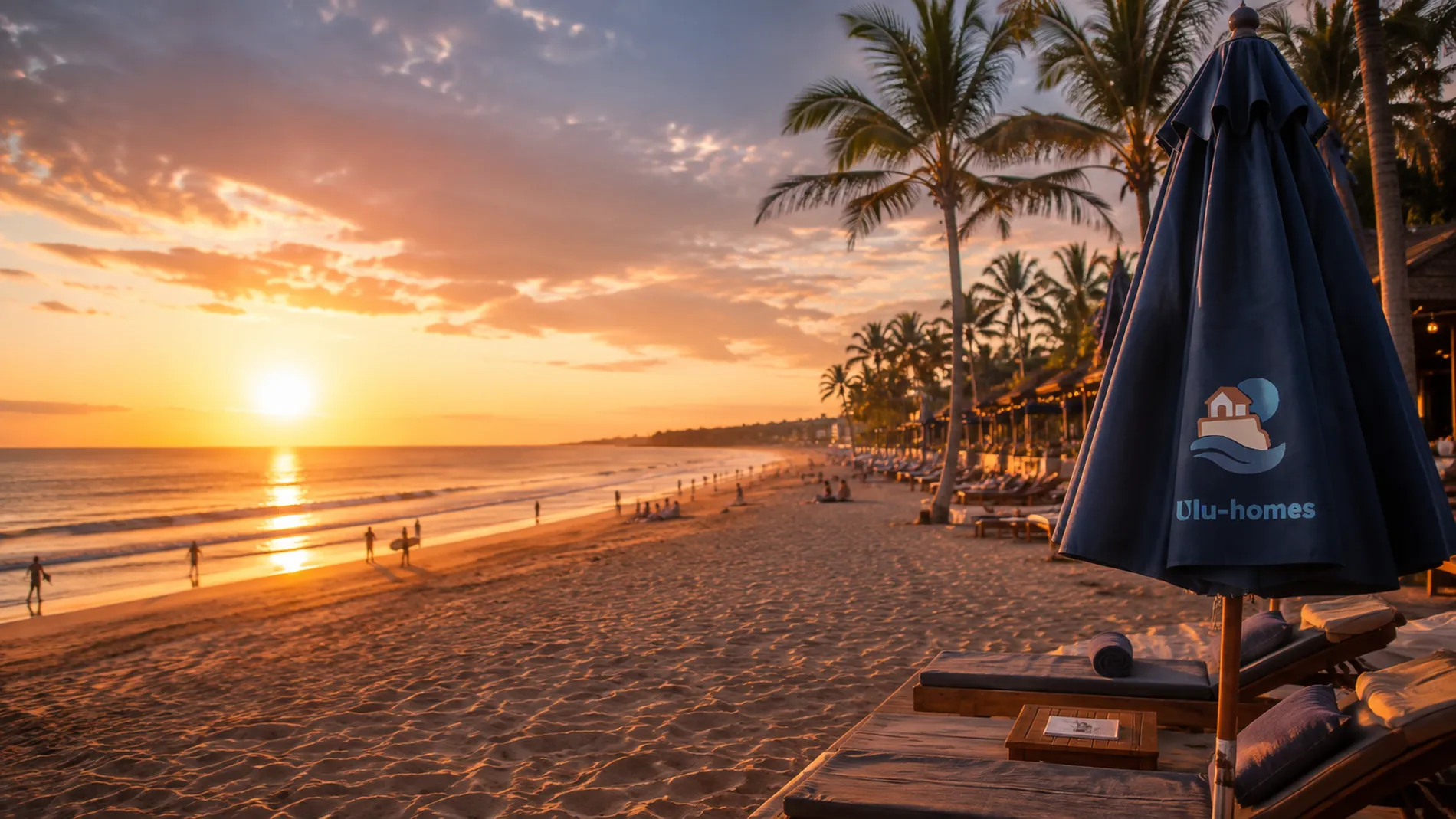

Seminyak is neither the cheapest nor the quietest part of Bali. What it does offer, however, is something few other areas on the island can match: a beach club, a designer boutique, an excellent restaurant, and a sunset over the Indian Ocean all within walking distance of one another. It is precisely this combination of beach access, lifestyle infrastructure, and nightlife that keeps people coming back.
If your time is limited, there is little point in putting together a list of twenty different venues. The five main stops below cover the experiences that define modern Seminyak: the beach and sunset, two very different styles of beach club, the central shopping and dining district, and the area after dark. We also cover several worthwhile additions — from Petitenget Temple and spa treatments to surfing — for travelers with more than one day. By the end of this guide, you will know not only where to go, but also when to visit, how much time to allow, and what each stop is best suited for.
One important point: opening hours, beach club reservation policies, and details of specific events are best confirmed directly with the venues, as these can change. This article is intended to provide a practical framework and help you decide what suits you best, rather than replace official venue information.

Key Takeaways
- Seminyak is ideal for an itinerary that combines the beach, shopping, and dinner in a single day without the need for long journeys across Bali.
- The best time for the beach and beach clubs is generally in the late afternoon, with sunset time varying through the year; check the exact time for your date and aim to arrive at least 30–60 minutes beforehand.
- Potato Head and KU DE TA offer two distinctly different experiences: the better choice depends on whether you prefer striking design, architecture, and a pool-focused setting or a more classic beachfront atmosphere centered around dining and sunset drinks.
- Shopping is best done in the first half of the day, before the heat intensifies and traffic becomes heavier.
- Traffic in Seminyak can be highly unpredictable, and even short distances may take significantly longer than they appear on the map.
- The area is particularly well suited to couples, independent travelers, and anyone who values a balanced mix of beach time, dining, and evening entertainment.
Seminyak at a Glance
Seminyak lies roughly 10 km from Denpasar and stretches from Double Six Street in the south toward Kerobokan and Umalas in the north, where Petitenget Temple is located. To the south, it borders Legian, which in turn blends almost seamlessly into Kuta. Seminyak has officially defined administrative boundaries, but the name is also used more loosely in tourism and hospitality. Hotels, villas, and travel guides may describe nearby parts of the wider coastal area as Seminyak even when they fall outside Kelurahan Seminyak itself.
Most of Seminyak’s tourist activity is concentrated around a handful of key streets. Jalan Kayu Aya — widely associated with the names Eat Street, Oberoi, and Jalan Laksmana — is one of Seminyak’s main dining and shopping corridors. The different names are often used interchangeably for the same street or adjoining sections of it, which can be confusing on maps and in local addresses. The beach lies to the west and is typically a 10–20 minute walk from the center, depending on where exactly you are staying.
Seminyak’s western coastline is more than just a stretch of beach; it is one of the defining reference points for the entire area. Sunset has become a nightly ritual here, shaping the rhythm of beach clubs, restaurants, and bars. Many visitors plan their day around being by the water or at a beach club between 5:00 and 6:00 p.m.
Walkability in Seminyak is relative. The central streets and the beach are reasonably well connected, and many places can be reached on foot. However, if you are staying in the northern part of the area or want to reach beach clubs farther south, you will usually need a taxi or scooter. Traffic in this part of Bali can be extremely heavy, and traveling by car can sometimes take far longer than the distance on the map would suggest. Grab and Gojek operate throughout Seminyak and are generally the most convenient and transparent ways to get around.
Table 1 — Seminyak in a Nutshell
| What to Do | Where to Go | Best Time | Best For |
|---|---|---|---|
| Beach and sunset | Seminyak Beach, Double Six, Petitenget | 4:00–7:00 p.m. | Everyone, especially couples and sunset lovers |
| Beach clubs | Potato Head, KU DE TA, and other venues along the coast | 2:00–9:00 p.m. | Those happy to spend a slow, relaxed day by the water |
| Shopping | Jalan Kayu Aya, Jalan Laksmana, Seminyak Village | 10:00 a.m.–2:00 p.m. | Fans of fashion, design, and lifestyle stores |
| Restaurants | Eat Street and the wider central area | 12:00–11:00 p.m. | Everyone — the choice is exceptionally broad |
| Nightlife | Central Seminyak, Petitenget | Later evening | Those who want to keep the evening going after dinner |
The table highlights one of Seminyak’s defining characteristics: there is virtually no “dead” time during the day. Activity simply shifts from shopping to the beach, from the beach to restaurants, and from restaurants to bars. It is precisely this concentration of things to do that makes Seminyak especially convenient for travelers who only have one or two days to explore the area.
1. Seminyak Beach — The Beach and Sunset
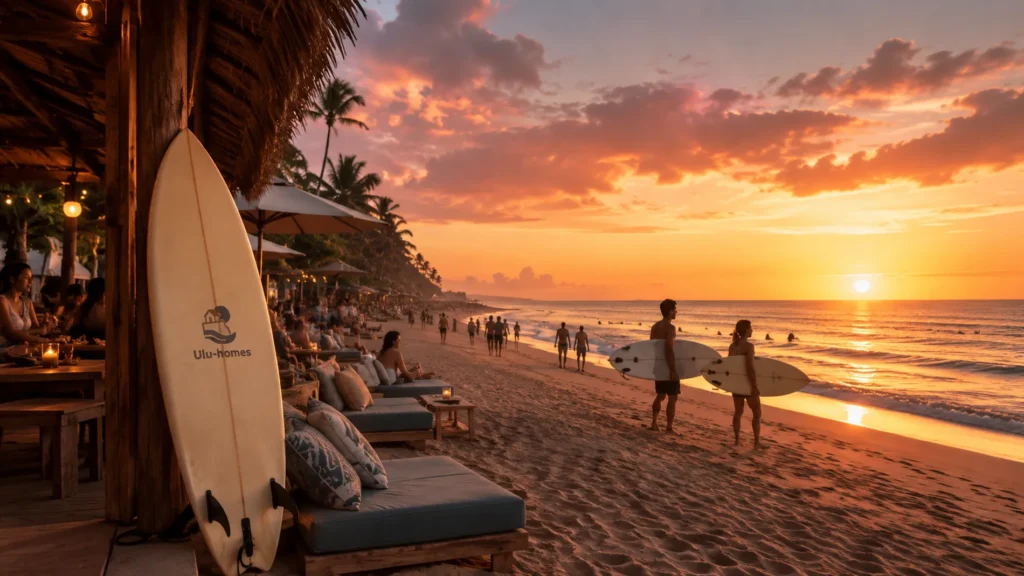
Seminyak Beach is known for its long stretch of golden sand, surf-friendly waves, and spectacular sunset views. This is Bali’s west coast, where the sun sets directly over the Indian Ocean, with no mountains on the horizon and no buildings obstructing the view. The hour before sunset, and especially the moment when the sun appears to touch the water, draws dozens of people to the shoreline. Some stroll along the water’s edge, while others settle in with a drink at one of the beachfront bars.
During the day, the atmosphere is noticeably calmer than in Kuta. There are fewer persistent vendors and generally less noise. Surfers head into the water early in the morning, and the beach bars gradually open for the day, but the crowds tend to arrive closer to sunset. If you want a quieter experience, come before noon or shortly after lunch. After 4:00 p.m., the beach begins to come alive, and by around 6:00 p.m. it can become genuinely busy.
One important point about safety: ocean conditions here vary depending on the season, and Ocean conditions can change quickly, so swimmers should use designated areas marked by red-and-yellow flags where lifeguards are on duty, follow local warning signs, and obey lifeguard instructions. Red flags indicate dangerous areas where visitors should not enter the water. Waves along Bali’s west coast can be powerful, and currents can be unpredictable. The flags, as well as warnings from local surfers and lifeguards, should be taken seriously rather than treated as a formality.
Seminyak Beach merges seamlessly into Double Six Beach to the south; in practice, they form one continuous stretch of coastline with no physical boundary between them. Double Six has historically been known for its sunset bars and livelier evening atmosphere. To the north lies Petitenget, a quieter section of the coast with fewer tourists, several villas close to the beach, and Pura Petitenget temple, which gives this part of the shoreline a distinctly different character. The names can be confusing for first-time visitors, but in reality all three areas form a single beach strip, distinguished mainly by the density and style of their surrounding infrastructure.
What to do if you have 2–3 hours by the coast:
- Arrive about an hour before sunset and walk along the beach from Double Six to Petitenget, or in the opposite direction. The route is roughly 2–3 km.
- Find a seat at a beach bar with an open view of the horizon and order a drink before golden hour begins.
- Spend some time watching the surfers. Even if you do not surf yourself, they are an essential part of the local beach atmosphere.
- If you want to try surfing rather than simply watch, beginner lessons are widely available along this stretch of Bali’s west coast. Conditions vary by day and season, so first-time surfers should use a reputable local instructor and follow lifeguard guidance rather than entering unfamiliar surf independently
- Stay after sunset. The first 20–30 minutes of twilight over the ocean are an experience in their own right and can be just as memorable as the sunset itself.
- In the evening, move on to one of the nearby restaurants or beach clubs. Distances in this part of Seminyak are relatively short.
A Cultural Stop: Petitenget Temple
If you want to add a cultural element to an otherwise beach-and-lifestyle-focused itinerary, Pura Petitenget is one of the most relevant stops in the area. The Balinese Hindu temple sits close to Petitenget Beach and offers a very different perspective on Seminyak from its restaurants, boutiques, and beach clubs. It does not require a long visit, so it can easily be combined with a walk along the northern part of the beach. As with other active temples in Bali, visitors should dress respectfully and follow any access rules in place during ceremonies.
2. Potato Head — A Day by the Ocean
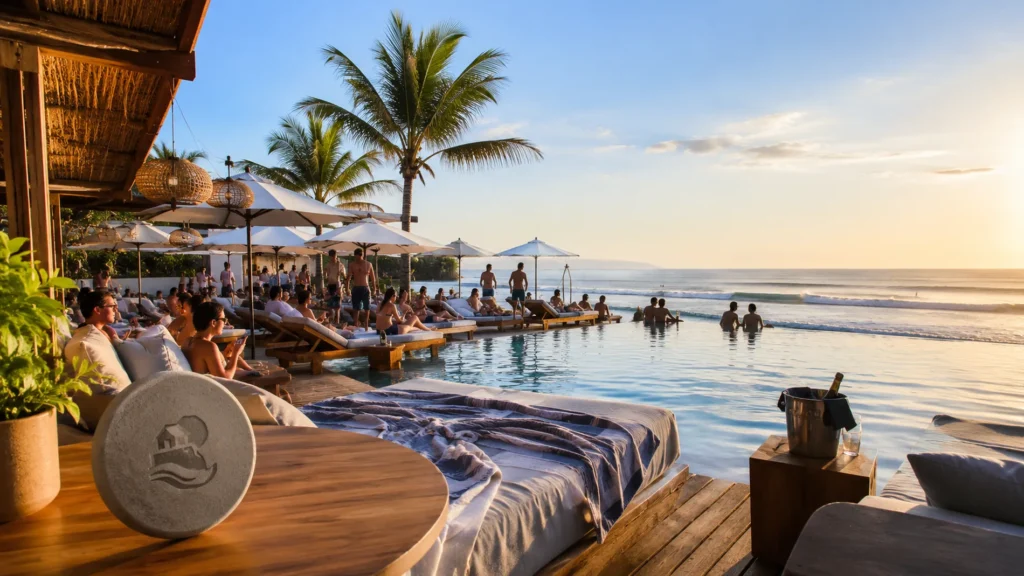
Potato Head is much more than a beachfront club with a swimming pool. It is arguably one of the most cohesive and carefully developed lifestyle concepts among Seminyak’s beach clubs. The architecture is designed to create a strong sense of openness and space, with layered outdoor areas, ocean views from multiple vantage points, and the pool serving as the visual and social centerpiece. Many people come here not for a particular drink or dish, but simply for the experience of spending time in the space itself.
Potato Head is best enjoyed over several hours. Technically, you can stop by for an hour or two and leave, but that is not really how the venue is meant to be experienced. “Potato Head works particularly well as a half-day experience, allowing time for the pool, food, drinks, and sunset without rushing. During the day, the atmosphere is relaxed, with lounge music and an unhurried pace. As evening approaches, the music gets louder, guest DJs may take over, and the character of the venue gradually shifts.
Potato Head is one of the best-known venues along the entire Seminyak coastline, attracting both local residents and international visitors. That popularity also means that reservations are advisable on weekends and during peak tourist periods, especially if you want a daybed or a particular seating area. Walk-ins are also accepted subject to availability, although preferred seating can fill up quickly. Booking conditions, minimum-spend requirements, and current venue policies are best checked on the official website before visiting, as they can change from time to time.
Potato Head may not be the right choice for everyone. If you prefer a quieter, less crowded beach experience, the atmosphere can feel overly busy. Sunbeds fill up, music carries throughout the venue, and during peak hours it helps to know in advance where you want to sit. The overall setting may also be less suitable for families with very young children.
The best time to visit Potato Head is around 2:00–3:00 p.m., allowing you to spend the afternoon by the pool and stay through sunset. Mornings are generally less interesting, as the atmosphere builds gradually over the course of the day. Later in the evening, the atmosphere can become more nightlife-oriented, particularly on days with scheduled DJ sets or special events.
When to Visit
| Time | Atmosphere | Best For |
|---|---|---|
| 11:00 a.m.–2:00 p.m. | Quiet, relatively uncrowded | A relaxed day by the pool |
| 2:00–6:00 p.m. | Lively, lounge music, most areas filling up | The full beach club experience |
| 6:00–8:00 p.m. | Sunset, peak attendance | Visitors coming primarily for sunset |
| After 9:00 p.m. | Music and atmosphere vary by day and event schedule | Check the official programme if nightlife is your priority |
3. KU DE TA — A Seminyak Classic
KU DE TA opened long before many of Bali’s newer beach clubs and, over the years, became almost synonymous with Seminyak for a certain generation of travelers. The venue has genuine history: it helped establish the culture of sunset cocktails by the sea at a time when there were very few comparable concepts on the island.
Today, KU DE TA still operates in a format where the dining experience is just as important as the beachfront setting. The venue is divided into several areas, including a full-service restaurant, a sunset bar, and lounge spaces by the water. On a typical non-event day, KU DE TA often feels more dining-led and less pool-party-focused than Potato Head, with less emphasis on a pool-centered experience than Potato Head and more focus on food and drinks. Guests also tend to use the space differently: many come for dinner or an aperitivo around sunset rather than planning to spend the entire day there.
The transition from relaxed afternoon drinks to an evening dinner is arguably the quintessential KU DE TA experience. Arrive around 5:00 p.m., find a spot by the water, watch the sun go down over a drink, and then move on to dinner at the restaurant. It is a natural progression that works particularly well here. The venue is large enough to accommodate a varied crowd, but during high season, it is still advisable to reserve a table for dinner.
Table 2 — Potato Head or KU DE TA?
| Criteria | Potato Head | KU DE TA |
|---|---|---|
| Atmosphere | Design-led, lounge-oriented, strong DJ culture | Classic beachfront setting with a stronger restaurant focus |
| Best experience | Half a day by the pool followed by sunset | Sunset aperitivo followed by dinner |
| Typical visit length | 4–6 hours | 2–4 hours |
| Daytime relaxation | Pool and sun loungers | Poolside daybeds are available, although the overall experience places more emphasis on dining, beachfront lounging, and sunset than on a pool-centered day-club format. |
| Sunset | One of the best views | Excellent unobstructed views from the beachfront |
| Evening | DJ sets and a more club-like atmosphere | Dinner-focused and generally more relaxed |
| Best for | Those looking for the full beach club experience | Those who prioritize food and a quieter atmosphere |
The choice between the two ultimately depends on how you want to spend your day. If you want several hours by the pool overlooking the ocean and the option to stay on for the party, choose Potato Head. If you would rather arrive for sunset, enjoy a good dinner, and leave relatively early, KU DE TA is the better fit.
It is possible to visit both in the same day, but doing so somewhat defeats the purpose: each place is best enjoyed at a slower pace, with enough time to settle into its own distinct atmosphere.
If You Have More Time: Add a Spa Session
Spa and wellness treatments are an established part of the Seminyak experience, with options ranging from simple massage studios to more polished day spas. A 60–90 minute treatment works particularly well between morning shopping and the late-afternoon beach period, especially if you are staying in the area for two or more days. Rather than choosing purely by price, check recent reviews, treatment menus, hygiene standards, and current booking availability.
4. Jalan Kayu Aya — Shopping and Dining
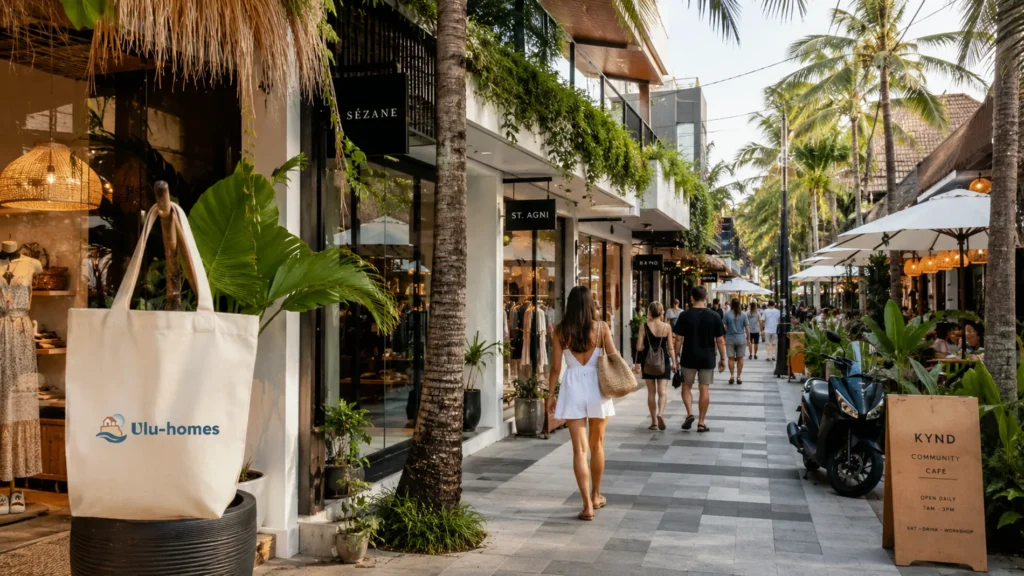
Shopping in Seminyak is quite different from what you would find in a conventional retail district. There is no single large mall where everything is concentrated under one roof. Instead, the area is made up of several streets lined with independent boutiques, small designer stores, lifestyle shops, and restaurants woven together. That is precisely what makes a walk along Jalan Kayu Aya so enjoyable: it feels less like a shopping trip and more like exploring the neighborhood.
Jalan Kayu Aya, often referred to by locals and visitors as Eat Street or Oberoi, is the main artery of Seminyak’s shopping and dining scene. The street is compact enough to explore on foot, yet remarkably dense with places to discover: boutiques by local designers, several excellent coffee shops, restaurants in a variety of styles, home décor stores, and jewelry boutiques. Seminyak has historically developed as a fashion and dining precinct, which sets it apart from neighboring areas where shopping plays a less prominent role.
The same shopping and dining corridor is also frequently referred to as Jalan Laksmana or Oberoi, depending on the map, business address, or local usage. It has a stronger concentration of well-known restaurants as well as several established boutiques. Seminyak Square and Seminyak Village are also worth noting. These relatively small shopping complexes offer straightforward navigation, air-conditioned interiors, and a convenient concentration of brands that would otherwise require walking around the neighborhood to find.
The overall character of shopping in Seminyak is independent, curated, and small-scale. This is not the place to look for electronics or mainstream mass-market brands. What the area does particularly well is offer distinctive products with a strong local or resort-oriented identity.
What to look for in Seminyak:
- Local designer clothing — Balinese labels with tropical-inspired cuts, often combining Indonesian fabrics with contemporary silhouettes.
- Resort wear — lightweight clothing designed for beach and holiday living, available here in a variety that can be difficult to find outside Bali.
- Accessories — handmade silver pieces, woven bags, belts, and other locally produced items.
- Jewelry — several boutiques feature work by local craftspeople in distinctive and unconventional styles.
- Home décor — ceramics, textiles, and smaller decorative pieces that work particularly well in tropical interiors.
- Lifestyle stores — books, fragrances, beauty products, and cosmetics from local brands.
Comparing prices directly with Europe or other markets is not especially reliable, as pricing varies significantly depending on the brand and type of store. Some boutiques are priced at a distinctly European level, while others are noticeably more affordable. Bargaining is not appropriate everywhere; in independent designer boutiques, prices are generally fixed.
The best time for a shopping walk is in the morning, ideally before 1:00 p.m. By midday, the heat can make walking less comfortable, while many visitors also begin moving toward the beach. Some shops open at around 10:00 a.m., and many restaurants begin serving from lunchtime onward, so it makes sense to plan your shopping before your meal rather than afterward.
5. Evening in Seminyak
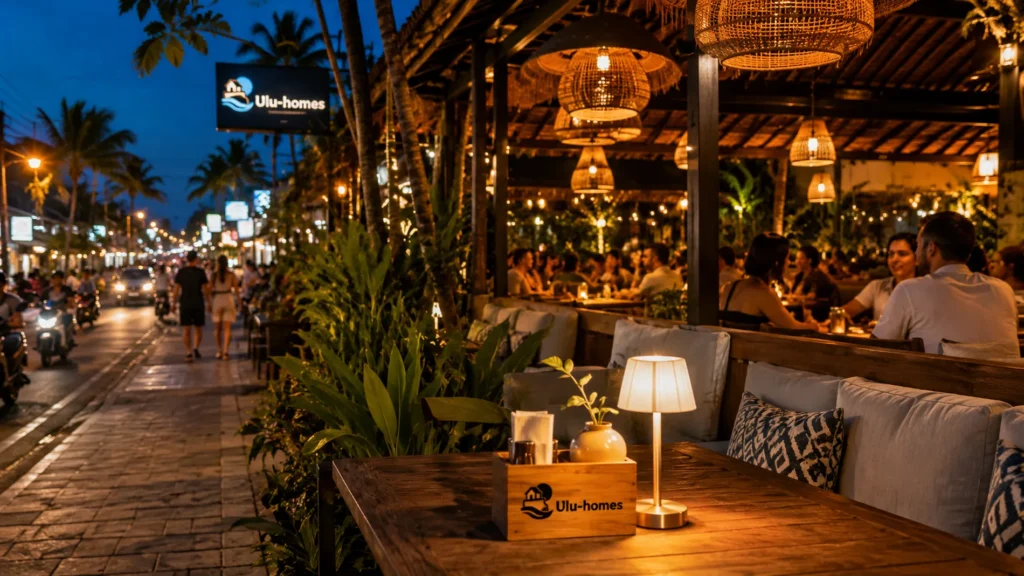
Seminyak’s nightlife is not centered around a single club or one particular street. It is better thought of as an evening route through the neighborhood, with everyone shaping it to suit their own pace. The area is compact enough to move between several venues in one evening, either on foot or with a short taxi ride.
A Relaxed Evening
For couples and anyone looking for an enjoyable night without too much noise, the classic formula is simple: sunset on the beach or at a beach club → dinner at a restaurant with a strong menu → cocktails at an open-air bar.
Seminyak has plenty of restaurants where the food is the main reason to visit rather than merely a backdrop to the atmosphere. Jalan Kayu Aya and Jalan Laksmana offer an impressive range of options, from Asian and Italian cuisine to Japanese omakase and Balinese specialties. After dinner, it is easy to stop by one of the nearby bars, many of which feature open-air seating that feels especially inviting on warm tropical evenings.
A More Lively Evening
If you want the night to continue beyond dinner, the route might look more like this: dinner → lively bar with music → nightclub.
Motel Mexicola is one of the best-known venues in the area, famous for its colorful atmosphere and Mexican theme. It is particularly popular with those looking for something that sits somewhere between a restaurant and a full-blown party. Several venues in central Seminyak also operate as proper nightclubs and stay open late.
Before heading to any specific venue, it is worth checking its current opening hours and event schedule: the atmosphere can vary considerably depending on the day of the week and the season.
An Evening Without Clubs
Not everyone comes to Seminyak for nightlife in the literal sense. For those who want a pleasant evening without loud music or clubs, a simple plan works perfectly well: head to the beach around dusk → have dinner → take a leisurely walk through the center of the neighborhood.
In the evening, Jalan Kayu Aya and the surrounding streets feel very different from how they do during the day. The lights come on, restaurants begin to fill up, and the area takes on that distinctive tropical evening atmosphere that is difficult to put into words, yet is one of the reasons people come to Bali in the first place.
One important point about nightlife in Seminyak: this is not Cuba or Ibiza. The pace is more relaxed, and most venues close earlier than they do in Europe’s major clubbing destinations. Travelers looking for a huge nightclub and a party that lasts until sunrise may find other destinations better suited to them. But for those who want a memorable evening built around excellent food, well-made cocktails, and laid-back music, Seminyak delivers exactly that.
How to See It All in One Day
The itinerary below is not meant to be a rigid schedule, but rather a logical way to move through Seminyak. Traffic can change unexpectedly at any time, so all timings should be treated as approximate.
The key principle for a one-day itinerary: move from shopping toward the beach, not the other way around. In the morning, the pedestrian-friendly streets are more pleasant, the shops are open, and the heat has not yet reached its peak. By the afternoon, you can make your way toward the water, allowing the rest of the day to flow naturally into sunset and dinner.
Table 3 — One-Day Itinerary
| Time of Day | Area / Place | What to Do | Time to Allow |
|---|---|---|---|
| 09:30–11:00 | Central Seminyak | Coffee and a relaxed start to the day | 1–1.5 hrs |
| 11:00–13:30 | Jalan Kayu Aya / Eat Street | Shopping and exploring the street | 2–2.5 hrs |
| 13:30–15:00 | Restaurants along Eat Street | Lunch | 1–1.5 hrs |
| 15:00–18:00 | Potato Head or KU DE TA | Beach club, pool, and sunset atmosphere | 2.5–3 hrs |
| 18:00–18:30 | Seminyak Beach | Sunset and a walk along the shore | 30–45 mins |
| 19:30–21:30 | Restaurant in central Seminyak | Dinner | 1.5–2 hrs |
| After 21:30 | Optional | Bar, evening walk, or return to the hotel | — |
This itinerary is designed for a moderate pace and, within the main part of Seminyak, requires little to no transportation, as most stops are within walking distance of one another. The main exception is if you are staying in the northern part of the area or outside Seminyak altogether, in which case it is usually more convenient to take a Grab to the beach clubs.
There are a few situations in which it makes sense to simplify the route. During particularly hot or humid weather, consider shortening the shopping portion or moving it to later in the day. If you are traveling with children, you may prefer to skip the beach club and head directly to the beach instead. And if your priority is to spend more time by the water, cut back on shopping rather than shortening the beach portion of the day.
If You Have Two Days in Seminyak
On the first day, follow the central Seminyak route: breakfast, Jalan Kayu Aya, lunch, the beach, sunset, and dinner. Use the second day for the experiences that are harder to fit into a single itinerary: a morning surf lesson or slower beach walk, Petitenget Temple, a spa treatment, and a second beach club or restaurant in the evening. Two days allow you to experience Seminyak without turning the visit into a checklist.
How to Choose the Right Place for Your Travel Style
Table 4 — What to Choose
| If you want to… | Best option | Why |
|---|---|---|
| Catch the best sunset | Seminyak Beach or Potato Head | Open horizon and direct access to the ocean |
| Spend half a day by the pool | Potato Head | The pool-and-ocean-view experience is exactly what it does best |
| Try surfing | Seminyak Beach | Beginner lessons are available, subject to suitable ocean conditions |
| Go shopping | Jalan Kayu Aya / Eat Street | A high concentration of boutiques along one convenient route |
| Add a cultural stop | Petitenget Temple | A compact introduction to the area’s Balinese religious heritage |
| Have a romantic evening | KU DE TA or a restaurant on Eat Street | Good food, atmosphere, and none of the noise of a nightclub |
| Experience the nightlife | Central Seminyak, following an evening route | Several different venues and nightlife formats within walking distance |
| Enjoy a quiet evening by the beach | Seminyak Beach on the Petitenget side | Fewer tourists and a more relaxed atmosphere |
| Get a first feel for Seminyak | Walk along Eat Street, then watch the sunset on the beach | Gives you a good overall sense of the area in three to four hours |
This table is designed to make the choice easier and remove unnecessary uncertainty. The practical rule is simple: start with the experience that best matches your travel style, rather than trying to fit everything into one visit.
A single, well-spent day at a beach club will often be more rewarding than rushing around just to tick five places off a list. Seminyak is an area to immerse yourself in, not somewhere to race through.
Seminyak as a Place to Live

Many people who first come to Seminyak as tourists eventually start considering a longer stay — and it is easy to see why. The area’s infrastructure makes everyday life relatively comfortable. There are cafés and restaurants for virtually every taste, along with supermarkets, spas, fitness studios, yoga spaces, and medical centers. Being close to the beach is not simply a tourist perk; it genuinely improves day-to-day quality of life when the ocean is only a 10–15 minute walk away.
That said, Seminyak comes with its own set of compromises. Traffic is one of the biggest. During peak hours, getting around the central streets can take disproportionately long compared with the actual distance involved. Dense development and constant tourist activity are also part of the experience: in high season, some streets become noisy, parking can be difficult to find, and popular restaurants often require reservations. Seminyak is lively and energetic — and that is both its greatest strength and its main drawback for anyone looking for peace and quiet.
For those considering Bali not only as a holiday destination but also as a place for a longer stay or a property purchase, spending several days in the area is the best way to understand whether it genuinely suits you. For more on the infrastructure, development patterns, and potential of the neighborhood, see our detailed guide to Seminyak: lifestyle, real estate, and investment potential.
If, after getting to know Seminyak, you are considering Bali not just as a holiday destination but also as a place to buy property, the World Estate Homes team can help you explore options that match your budget and intended use. Find a property
Seminyak or the Surrounding Areas
Choosing the right area is one of the key decisions when planning a trip to Bali. Seminyak, Canggu, and Kuta are relatively close to one another geographically, yet they offer noticeably different experiences.
In simple terms: choose Seminyak for dining, boutique shopping, and beach clubs; Canggu for surf culture, cafés, and a more casual social scene; and Kuta for a more budget-oriented, high-energy resort experience. None is universally better — the right choice depends on how you want to spend your time.
Seminyak is about beach clubs, boutique shopping, quality restaurants, and nightlife, all concentrated within a relatively compact area. It has developed into a lifestyle destination for a more mature audience that values good service and wants to combine the beach with dining and shopping. Traffic and tourist density are genuine downsides.


 Bali,Nusa Dua
 from 32м²
 Bali,Balanganfrom 192.4м²
 Bali,Canggufrom 252м²
Canggu has evolved more toward digital nomads, surf culture, and a younger, more casual atmosphere. Specialty coffee shops, coconut bowls, and rice fields sitting beside modern villas are all part of the typical Canggu landscape. The nightlife is well developed too, but it has a different character: more underground bars and surf-oriented venues, with less of the beach-club glamour associated with Seminyak. Read more about what to see in Canggu and what its lifestyle is like.
Kuta is the most mass-market and budget-oriented of the three. It was the first part of Bali to open up to large-scale tourism, and that legacy is still very apparent: it retains a more mass-market tourism character, with busy shopping streets, souvenir stores, inexpensive dining, and an established nightlife scene. For first-time visitors traveling on a very limited budget, Kuta can make sense. For anyone hoping to find the Seminyak atmosphere at a lower price, disappointment is almost inevitable — they are fundamentally different areas with very different personalities. For more details, see our guide to Kuta: lifestyle and real estate.
If none of these three options quite fits what you are looking for, it may be worth considering some of Bali’s quieter areas: Ubud for culture and nature, Sanur for a slower-paced beach lifestyle with calmer, shallower water and little surf, or Uluwatu for dramatic cliffs and more serious waves.
Seminyak has one clear advantage over its neighbors: if you want everything at once — the beach, good food, shopping, and nightlife — all in one place without constantly traveling between areas, it may be the most convenient of the three for travelers who want beach access, dining, shopping, and nightlife concentrated in one area.
Practical Tips
- Book popular beach clubs in advance. During the high season — especially July and August, as well as December and January — sunset-view spots at Potato Head and KU DE TA can be fully booked several days ahead. Many venues offer online reservations, so it is worth using them.
- Traffic is unpredictable. A distance of just 2 km on the map can take 25 minutes by car during rush hour. Leave extra time, especially if you are trying to arrive somewhere before sunset.
- Grab and Gojek operate in the area and are among the standard ways to get around. The apps show estimated journey times and prices upfront, which is generally more convenient than negotiating fares with taxi drivers.
- Do your shopping in the morning. Before noon, the streets are less crowded, temperatures are lower, and stores have only recently opened. By the afternoon, the area becomes noticeably busier.
- Sunscreen is essential, even on cloudy days, as UV exposure in Bali can be intense. If you are spending time outdoors, reapply it about every two hours and after swimming, heavy sweating, or toweling off.
- Carry some cash in Indonesian rupiah for small cafés, street food stalls, and markets. Larger restaurants and beach clubs usually accept cards, but it is still worth checking in advance, as policies are not identical everywhere.
- Dress codes vary by venue. Some beach clubs are very casual during the day, while restaurants and evening areas may require neater or smart-casual clothing. Check the current dress code of the specific venue before visiting.
- Be cautious in the ocean. Beach flags are there for a reason. A red flag means swimming is prohibited. Currents can be strong even when the weather looks calm and clear.
- Check event schedules on official venue pages. Party themes, guest DJs, and special dinners are often announced only a few days in advance.
Is Seminyak Worth Visiting?
Seminyak is a great choice for travelers who want a mix of beach life, excellent dining, and well-developed lifestyle infrastructure without having to travel far. The five places covered in this guide — the beach, two beach clubs, a shopping district, and an evening route — offer an accurate picture of what the area is really like. This is not the “quiet Bali” experience, nor is it a budget destination. Seminyak is a polished resort area that manages to deliver quality on several fronts at once.
Seminyak may not be the right fit for everyone. If you are looking for a low-cost holiday, Seminyak is generally positioned toward the mid-range and upscale end of Bali’s tourism market, although prices vary widely by accommodation, restaurant, and venue. If your priority is peace, seclusion, and unspoiled nature, you will probably be happier in Ubud, Sanur, or more remote parts of Bali. Seminyak Beach has surfable waves and attracts both beginners and more experienced surfers, but travelers coming to Bali primarily for advanced or more consistent surf conditions will usually want to explore established surf breaks elsewhere on the island as well.
If this is your first trip to Bali and you want to experience the character of the island’s west coast in just a few days — sunsets, beach clubs, good food, and a lively evening atmosphere — Seminyak brings all of that together in one place. Even if you later decide that Canggu suits your personality better or that Ubud offers more of what you are looking for, spending a few days in Seminyak is still likely to feel like a worthwhile part of the trip.
 Real estate in Georgia
 Real estate in Cyprus
 Real estate in the UAE
 Real estate in Montenegro
 Real estate in Thailand
 Real estate in Spain
 Real estate in Saudi Arabia
 Real estate in Turkey
 Real estate in Zanzibar
 +62 895 001 924 667
 hello@ulu-homes.id
 Tibubeneng, Canggu, Kuta Utara, Badung Regency, Bali 80361, Indonesia



 Get catalogue of TOP-7 objects