
 +62 895 001 924 667


You find a villa you like. The renders look polished, the price is below what finished properties are asking, and the developer offers staged payments spread over the construction period. The catch: the building doesn’t exist yet. That is the core proposition of buying off-plan property in Bali — you are purchasing contractual rights to a property that will be built, against a specification that may still change, on a timeline that may shift. The potential benefits are real, but so are the risks. A well-structured off-plan purchase starts with understanding exactly what you are buying, who you are buying it from, and what protections your contract actually provides. This guide works through each of those questions in the order a careful buyer needs to answer them.
Buying Off-Plan in Bali: Quick Answer
Buying an off-plan villa in Bali means committing to a property before construction is complete. Foreign buyers commonly encounter contractual leasehold arrangements, while qualifying purchases may also involve Hak Pakai or HGB held through a properly established PT PMA.
Before paying, verify the developer’s rights to the land, zoning conformity, the applicable building approval (PBG), the contract, and the construction-linked payment schedule. The completed building will also need the applicable SLF documentation.
| Key question | What buyers need to know |
|---|---|
| Can a foreigner own land freehold? | No direct Hak Milik ownership |
| Can a foreigner buy an off-plan villa? | Yes, through an appropriate lawful structure |
| Is a 25-year lease guaranteed to provide 25 years after completion? | No — the agreed commencement date determines the remaining usable term |
| What is PBG? | The building approval required under the applicable building rules |
| What is SLF? | Certification that the completed building meets fitness-for-use requirements |
| Is 20% construction progress required? | The PPJB regulatory framework contains a minimum construction-progress requirement where applicable; it is not a universal rule for every lease transaction |
| When should instalments be paid? | Ideally after independently verified construction milestones |
| Can rental income be guaranteed? | No reliable forecast is guaranteed by the purchase itself |
| What currency should be checked? | IDR for transactions subject to Indonesia’s mandatory rupiah rules, with any lawful exception reviewed individually |
Bottom line: Check the land, permits and contract before paying; link construction payments to verifiable progress; and confirm the documents required for handover and your intended use.
This guide is general information, not individual Indonesian legal, tax or investment advice.
Not Sure Where to Start?
Tell us your budget, preferred Bali location and whether you want a home or a rental investment. We’ll help you narrow down the options.
Find My Bali Property
What Is Off-Plan Property in Bali?
Off-plan property means buying before construction is complete — sometimes before it has started at all. The term covers a range of stages: a pre-construction sale where only land and plans exist, a mid-build purchase where the structure is partially complete, and late-stage sales where finishing work remains. Each carries a different risk profile, which is worth establishing early.
In Bali, off-plan sales typically involve detached villas or units within a managed villa complex. The distinction matters. A standalone villa gives the buyer direct negotiation over specification and finish. A complex sale often comes with shared amenities, a management structure and standardised unit designs, and the developer’s ability to change those elements may be broader than buyers expect.
What you actually acquire through an off-plan purchase depends on the legal structure of the transaction. In some cases a buyer receives a preliminary sale and purchase agreement (known in Indonesia as a PPJB, or Perjanjian Pengikatan Jual Beli) that may be followed by the appropriate final transfer deed once the legal and contractual conditions are satisfied. In a leasehold transaction — the structure frequently marketed to foreign buyers in Bali — the buyer may enter into a lease immediately or obtain contractual rights to a future lease. The agreement must clearly identify when the lease becomes effective and when the buyer can take possession. Those are meaningfully different things, and the distinction affects what protections apply, what happens if the developer encounters financial difficulty, and what a buyer can do if the completed property fails to match what was promised.
The gap between a developer’s visualisation and a finished building is another point that deserves clarity upfront. Renders are marketing tools. An approved building plan carries legal weight, but it may differ from the renders in material ways. A completed property will differ from the approved plan in minor ways as a matter of course, and sometimes in more significant ones. Buyers who anchor their expectations to CGI images rather than documented specifications and approved permits tend to be disappointed — and often have limited contractual recourse unless they have secured specific written commitments.
The question of current versus future value is worth addressing directly. Developers frequently cite projected completion values to justify an off-plan price. Those projections are neither independent market valuations nor guaranteed outcomes. An off-plan price should be assessed against what comparable finished properties are currently selling for on the open market, not against what the same developer predicts the property will be worth at some future date.
Off-Plan vs Ready-Built Property
The comparison between off-plan and ready-built property is often presented in favour of off-plan, since developers have an obvious interest in doing so. A more useful analysis asks when off-plan genuinely makes sense for a particular buyer, and when the advantages are less clear than they appear.

| Factor | Off-Plan | Ready-Built | What Buyers Should Consider |
|---|---|---|---|
| Purchase price | Often lower than equivalent finished property, though not guaranteed | Market price is transparent and comparable | Verify against comparable completed sales, not developer projections |
| Customisation | Layout and finish choices sometimes possible, subject to stage and developer | Fixed as built | Value of customisation depends on whether it’s contractually guaranteed |
| Quality verification | Cannot be fully inspected before purchase | Inspectable before payment | Independent inspection reduces uncertainty about the property’s physical condition, but cannot eliminate hidden defects or legal risks |
| Time to use | Months to years after purchase | Immediate occupation or rental | Waiting period means no income and continued currency exposure |
| Construction risk | Borne by buyer if developer fails or delays | Risk of non-completion largely removed; latent defects and compliance risks remain | Risk must be weighed against any price advantage |
| Capital outlay before transfer | Staged payments typically required during build | Full payment at or near transfer | Staged payments reduce total exposure at any one point, but cumulative outlay before use is similar |
| Legal and documentary clarity | May depend on building reaching conditions for title transfer | Title or lease should be established and verifiable | Off-plan legal status requires careful review at each stage |
| Resale liquidity | Limited during construction; may be restricted by contract | Established secondary market where relevant | Resale terms should be reviewed in the purchase agreement |
The table above is a framework, not a verdict. The relative weight of each factor depends on the specific project, the buyer’s situation and the terms of the particular contract being offered.
One assumption worth examining is whether off-plan is automatically cheaper. A developer marketing early-stage units at a discount is comparing their own price against their own projected future price — not against what a comparable finished villa would cost today on the open market. In many areas of Bali, the supply of finished villas may be limited. Demand for completed villas varies by location, price segment and market conditions. The “discount” offered by some off-plan projects reflects construction risk being priced into the purchase, not necessarily a below-market opportunity.
There are scenarios where a ready-built purchase is more appropriate: a buyer who needs the property available within a defined period, someone purchasing primarily for personal use who wants certainty about what they are getting, a buyer who cannot monitor construction remotely, or anyone who cannot absorb the financial and practical consequences of a significant build delay. Off-plan makes more sense when the buyer has a longer horizon, can tolerate construction risk, has the capacity to conduct thorough due diligence, and is buying into a project where independent verification of land, permits and developer track record is genuinely achievable.
How to Compare Two Bali Villas Fairly
The advertised price alone does not show which villa offers better value. Compare the building size, location, land rights, remaining lease term, permitted use and total costs.
For example, consider two hypothetical villas:
| Factor | Off-Plan Villa A | Completed Villa B |
|---|---|---|
| Advertised price | $200,000 | $220,000 |
| Building area | 100 m² | 110 m² |
| Price per m² of building | $2,000 | $2,000 |
| Usable lease term at handover | 25 years | 20 years |
| Advertised price per usable lease year | $8,000 | $11,000 |
| Construction status | Not completed | Ready to inspect |
| Time until potential rental use | Depends on completion | Depends on licensing and readiness |
These are illustrative figures, not current property listings or market averages. Price per lease year is a comparison tool, not a formal valuation or rental-return metric. It excludes taxes, financing, furnishing, operating costs and the time value of money.
A cheaper off-plan villa is not automatically the better purchase. Its value depends on what is delivered, when it is delivered and the rights remaining at that point.
Not sure which Bali property fits your plans? ULU Homes can help you explore options based on your budget, preferred location and intended use, whether you are considering an off-plan villa or a completed property. Find properties that match your goals.
Compare Off-Plan and Completed Properties in Bali
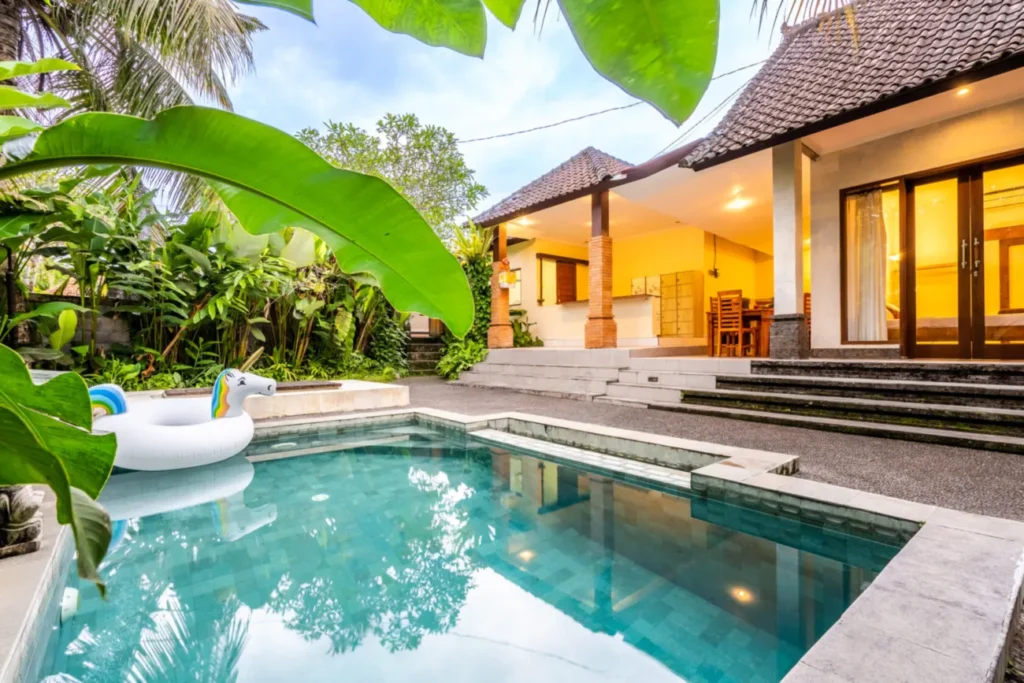

 Bali, Ubud
 from 120м²

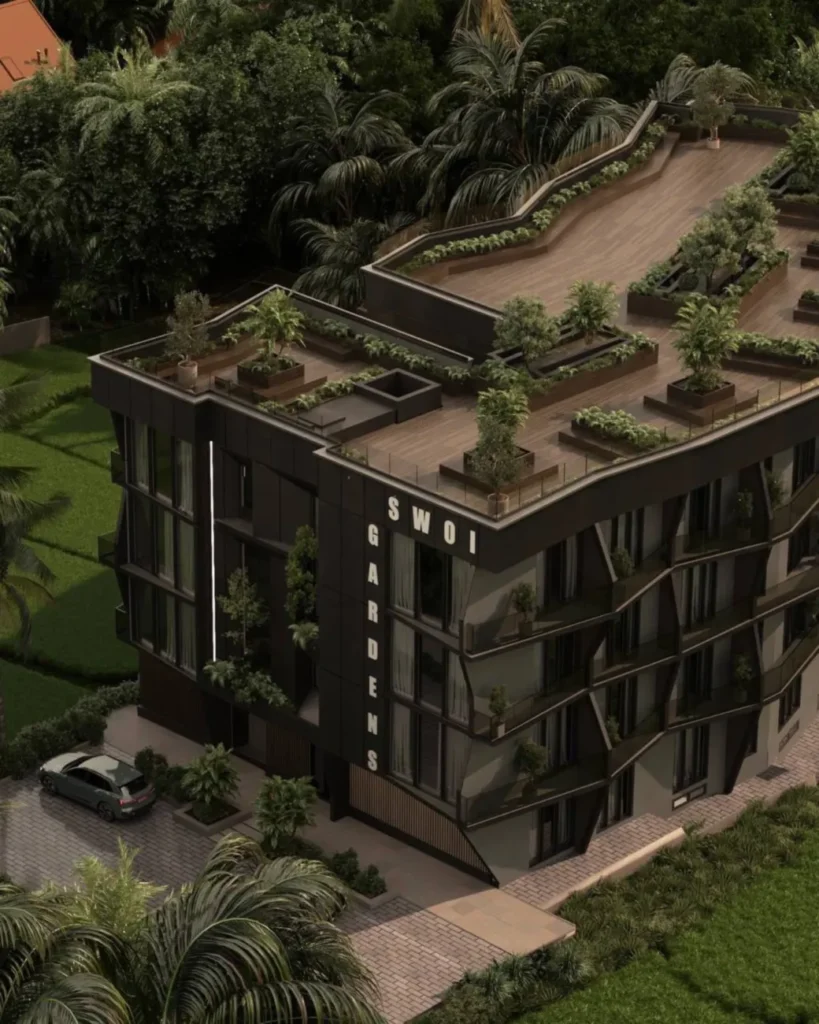
 Bali, Canggufrom 100м²

 Bali, Bukit, Jimbaranfrom 103.8м²

Benefits and Risks of Buying Off-Plan
The potential advantages of buying off-plan in Bali are real, but each comes with qualifications that responsible buyers should understand before committing.
Potential entry price advantage. Developers often offer lower prices on early-stage units to generate capital for the build. The size of any discount relative to the eventual market price is not knowable at the time of purchase. What is knowable is whether the off-plan price is reasonable compared to equivalent completed properties available today.
Staged payment structure. Rather than a single lump-sum payment, off-plan buyers typically pay in instalments tied to construction milestones. Staged payments can limit the amount paid before completion, but they do not eliminate the risk of losing funds already released.
Specification and customisation options. Buying before construction is complete sometimes — not always — gives buyers input into finishes, fixtures, and occasionally layout. The extent to which this is contractually enforceable varies significantly between developers and contracts.
Potential change in value between purchase and completion. If market values rise during the construction period, buyers who locked in an early price may benefit. This outcome is neither predictable nor guaranteed.
The risks require equal attention.
Practical risk checklist before reserving:
- Construction delay. Construction delays are a material risk in Bali, as in other property markets, and can arise from permitting, weather, labour or financing issues.
- Developer underfunding. Some projects are sold on the assumption that buyer deposits will finance the construction. If sales slow, construction may stall.
- Specification changes. Materials, finishes, layouts and amenities can change between commitment and delivery, sometimes significantly and sometimes without contractual obligation to notify or compensate.
- Build quality that diverges from specification. Even when construction completes on time, the finished property may not match what was committed in the contract.
- Permit problems. A project may be sold before all required approvals are in place. Construction may begin before certain permits are properly secured.
- Value at completion not matching expectations. Market conditions change. A property purchased at a price that seemed reasonable may be worth less at completion, or may be difficult to sell on.
- Deposit recovery difficulties. Refund terms in off-plan contracts vary. Some are enforceable in practice; others are not.
The connection between an off-plan discount and construction risk is direct. The earlier you pay and the less verified the project is, the greater your exposure — and the smaller the gap between that discount and what you are accepting in exchange for it.
A buyer who enters an off-plan purchase having systematically assessed each of these risks, verified what can be verified, and accepted what cannot be eliminated is in a substantially different position from one who has relied on a developer’s marketing materials and the enthusiasm of an interested sales agent.
Can Foreigners Buy Off-Plan in Bali?
Foreign nationals cannot directly hold Hak Milik — Indonesia’s strongest form of land ownership, equivalent to freehold title. That restriction applies regardless of whether the property is completed or under construction, and it shapes every foreign buyer’s options in Bali. Understanding which legal structure applies to a specific transaction is one of the most important steps any foreign buyer must take.
For a detailed overview of how foreigners can hold property in Bali, see “How a foreigner can buy property in Bali“.
| Structure | What It Provides | Main Restrictions | Key Off-Plan Questions |
|---|---|---|---|
| Leasehold / Hak Sewa | Contractual right to use property for a defined term | No land ownership; rights limited to lease duration | When does the term start — at signing or at handover? How many years remain at completion? |
| Hak Pakai (Right to Use) | Statutory land-use right with its own legal and registration framework | Subject to eligibility conditions; not universally accessible for all foreigners in all scenarios | Requires independent legal review of eligibility; not automatic |
| Hak Guna Bangunan (HGB) via PT PMA | Building rights held through an Indonesian company with foreign ownership | Company ownership, not personal; compliance and reporting obligations | Is the PT PMA properly established? Are the company’s permitted activities consistent with intended use? |
| Nominee arrangement | Foreign buyer funds purchase held nominally by an Indonesian citizen | Not a recognised legal structure for property ownership under Indonesian law; carries significant legal risk | Avoid — not a reliable substitute for a legitimate ownership structure |
Leasehold, Hak Pakai or a Company Structure?
Tell us how you plan to use your Bali property. Explore suitable listings and discuss the proposed ownership structure with an independent Indonesian lawyer before committing.
What Document Should You Receive?
| Transaction structure | Key documentation to verify | Who should assist |
|---|---|---|
| Contractual leasehold | Executed lease agreement or notarial lease deed, with the landowner’s authority and lease terms verified | Independent lawyer and Notaris |
| Hak Pakai | Applicable transfer or grant documents and evidence of registration of the right | Independent lawyer and PPAT |
| HGB through a PT PMA | Company documents, relevant land-right deed and land registry confirmation showing the company’s registered right | Corporate lawyer and PPAT |
| PPJB transaction | Executed preliminary agreement, followed by the applicable final deed and registration process when required | Independent lawyer, Notaris and/or PPAT as applicable |
Important: A private lease contract is not equivalent to a registered Hak Pakai or HGB land title. The documents and registration steps depend on the exact legal structure. Ask your Indonesian lawyer to identify the document that will establish your rights before signing or paying.
A contractual leasehold arrangement is frequently marketed to foreign buyers in Bali. The buyer may acquire an immediate leasehold right or a contractual entitlement to future use, depending on the agreement and its commencement provisions. The critical off-plan question is straightforward but frequently overlooked: when does the lease clock start? Some agreements start the term from the date of signing. If a 25-year lease is signed when a villa has two years left to build, the buyer receives 23 usable years, not 25. Others start from handover or from a specified commencement date. The contract must state this clearly, and the implications of each approach must be understood before signing.
Extension clauses deserve close attention too. A lease with an extension option sounds reassuring. Whether that option can realistically be exercised, on what terms, and whether the current landowner (or their heirs or successors) will agree is a separate question. An extension right written into a contract is only as useful as the practical mechanism for enforcing it. For a direct comparison of leasehold and freehold structures, “Leasehold vs Freehold in Bali” sets out the key differences.
Can You Resell or Transfer an Off-Plan Leasehold?
An off-plan buyer should not assume that a lease can automatically be transferred to another buyer or passed to heirs without restrictions.
Before signing, ask your lawyer to check:
- Whether assignment or subleasing is allowed.
- Whether the landowner’s written consent is required.
- Whether an assignment fee or other charges apply.
- Whether the buyer can transfer contractual rights before construction is complete.
- How the agreement addresses death, inheritance and succession.
- What happens if the developer’s underlying lease ends before the buyer’s promised term.
For example, if a developer has a 30-year head lease but promises a buyer a 35-year right without a valid mechanism supporting the additional period, the legal basis for the promised term needs independent verification.
The right to resell, assign or inherit leasehold interests depends on the agreement and applicable Indonesian law. These provisions should be checked before the buyer pays a deposit.
Hak Pakai is a statutory land-use right with a different legal and registration framework from a contractual lease. Eligible foreign nationals holding the immigration documents required by Indonesian law may acquire qualifying residential property under Hak Pakai, subject to applicable property-type, location and other regulatory conditions. The eligibility requirements should be confirmed with an independent Indonesian lawyer for each specific case. Under PP No. 18/2021, which governs land rights including foreign access to property in Indonesia, the conditions attaching to Hak Pakai for foreigners are specific and must be verified against the particular transaction.
HGB through a PT PMA (a foreign-owned Indonesian legal entity) gives the company Building Rights over land. For foreign buyers considering this route, the analysis goes beyond property law into corporate structure, compliance requirements and the ongoing obligations of operating an Indonesian entity. This is not a workaround for foreign ownership restrictions; it is a legitimate but distinct approach that requires proper establishment and management. Further detail on the PT PMA structure is at “PT PMA for Bali Property“.
One area of particular complexity in off-plan transactions is the relationship between the legal rules governing preliminary sale agreements for residential property and the structures used in leasehold villa sales. Government Regulation No. 12 of 2021 establishes separate requirements for marketing residential property, collecting certain payments and entering into a PPJB, including a minimum construction progress requirement for the PPJB stage. Their application to a particular villa transaction must be assessed separately. These provisions are not automatically applicable to all leasehold off-plan transactions. Whether and to what extent specific consumer protections attach to a given leasehold villa sale is a question that requires independent legal analysis of the specific transaction structure, not a general assumption.
Nominee arrangements — where an Indonesian citizen holds legal title on behalf of a foreign buyer — are not a recognised legal structure for property ownership under Indonesian law and carry significant risk. They should not be presented as, and should not be accepted as, a reliable substitute for a properly structured legal arrangement.
How to Buy Off-Plan Property in Bali
The sequence below is a recommended framework for a careful buyer, not a set of legally mandated steps that applies identically to every transaction. Individual projects, legal structures and contract terms vary, and some steps will involve different parties or take different forms depending on what is being purchased.
Step-by-step buying process:
- Define your purchase goals and budget. Clarify whether the purchase is primarily for personal use, rental income, capital appreciation or some combination. Establish the total capital available, including an honest allowance for transaction costs, furnishing, management fees and a contingency for delays. A budget that only covers the contract price is an incomplete budget.
- Compare projects and available units. Research multiple projects across your preferred locations. Compare pricing against comparable completed properties on the current market, not against the developer’s projected completion values. Consider access, infrastructure, local planning and the character of the surrounding area.
- Check the developer and land rights. Establish who legally controls the land, what title or rights the developer holds, and whether those rights are consistent with what is being promised in the sale. Review the developer’s completed projects and their condition. Speak to buyers from previous projects where possible.
- Appoint an independent legal adviser. This means a qualified Indonesian lawyer with no financial interest in the transaction and no referral relationship with the developer or the selling agent. Their role is to review title, zoning, permits, the proposed contract and any representations made about the property.
- Review permits and zoning. Verify that the land is designated for the proposed development under the applicable spatial planning rules, that spatial-use conformity documentation is in order, and confirm that a valid building approval (Persetujuan Bangunan Gedung, or PBG) has been issued before construction starts. Check any applicable requirements that must be satisfied before a binding agreement or payment can lawfully be made.
- Agree reservation and refund conditions. Before paying any booking fee or reservation deposit, understand exactly what it commits you to, whether it is refundable and under what conditions. Get refund terms in writing before any payment is made.
- Review and sign the applicable agreement. Whether the agreement takes the form of a PPJB, a leasehold deed or another instrument depends on the transaction structure. Your lawyer should review the full document, not a summary or translation. Pay particular attention to payment terms, completion dates, specification commitments, change provisions, refund rights and dispute resolution.
- Pay against independently verifiable milestones. Each payment instalment should be linked to demonstrable construction progress, confirmed by someone other than the developer. Do not release payment because a developer says a stage is complete. Require photographic evidence, an independent inspection report or both.
- Monitor construction and inspect the completed property. Arrange regular progress reports, site photographs and, where possible, independent inspections at key stages. Buying property remotely is manageable, but it requires more active oversight, not less. For guidance on managing a purchase from abroad, see “How to buy property in Bali remotely“.
- Complete handover and documentation. Handover is not simply receiving keys. It involves verifying the building against specification, confirming the Sertifikat Laik Fungsi (SLF — the certificate confirming the building is fit for its intended use) has been obtained, and establishing that all documentation required for your intended use of the property is in place.
Due Diligence Before Paying a Deposit
Thorough due diligence is not something that happens after you decide to buy; it is the process by which you decide whether to buy and on what terms. The deposit conversation should not start until this work is substantially complete.
Land, Zoning and Permits
The starting point is the land itself. Establish who holds legal title to the land — not who is marketing the project or who claims development rights, but who the registered landowner is. Obtain the land certificate number and verify it through BPN (the National Land Agency) records. Check for encumbrances, mortgages or disputes on the title. A developer who is reluctant to facilitate this check is signalling a problem.
Zoning is the next layer. Verify the applicable spatial planning rules, including the Rencana Detail Tata Ruang (RDTR) — the detailed spatial plan that governs what can be built where — where available. The Kesesuaian Kegiatan Pemanfaatan Ruang (KKPR) — the land-use activity conformity document — confirms alignment with the applicable spatial plan and is typically a prerequisite for obtaining the PBG; obtain the relevant spatial-use conformity documentation through the applicable procedure. A villa built on land that is not designated for the proposed use faces serious regulatory risk regardless of whether a building permit was issued.
The PBG (Persetujuan Bangunan Gedung, or Building Approval) replaced the older Izin Mendirikan Bangunan (IMB) under Government Regulation No. 16 of 2021. A PBG is a building approval relating to the proposed technical design and applicable building requirements; it does not independently establish land ownership, rental-business licensing or construction quality. Verify that the PBG covers the specific building being sold — its footprint, height, use and any additional structures — not a different configuration that may have been amended since approval. A PBG is issued before construction; it is not the same as the SLF, which is issued after construction is complete and confirms the building meets required standards for occupancy.
For commercial use — short-term rental, villa resort operation and similar activities — additional licensing requirements apply beyond residential construction permits.

Developer and Contract Verification
Once land and permits are established, the scrutiny turns to the developer. Verify the developer’s NIB (Nomor Induk Berusaha), incorporation documents, registered business activities, relevant licences and the authority of its signatories. Confirm that the person signing any agreement on behalf of the company has the documented authority to do so.
Check what the developer has completed previously. Visit finished projects if possible, or arrange for someone to do so on your behalf. Speak to buyers from those projects about their experience — whether construction ran to time, whether the finished product matched the specification and how the developer handled problems.
Make Sure the Contracting Parties Match
An off-plan development may involve several different parties: the landowner, developer, construction contractor, sales agency and property management company.
Before signing, establish which entity:
- Controls the land.
- Is responsible for completing construction.
- Signs the agreement with the buyer.
- Receives each payment.
- Must refund money if the agreement is terminated.
- Is responsible for handover and defect rectification.
If the payment recipient differs from the contracting developer, ask your lawyer to verify the legal basis and obtain written payment instructions consistent with the agreement.
A reputable brand name does not replace a clear contractual obligation from the entity responsible for delivering the villa.
Review the technical specification in the contract carefully. Materials, brands, dimensions and finishes should be stated with enough precision that substitution of lower-quality alternatives would represent a clear breach. A specification that uses phrases like “or equivalent” without defining what equivalence means gives the developer significant latitude.
| Item to Verify | Evidence to Request | Why It Matters | Red Flag |
|---|---|---|---|
| Land certificate and registered owner | BPN-verified land certificate (such as SHM, SHGB or Hak Pakai, as applicable), together with any relevant lease agreements and evidence of the developer’s rights | Confirms developer’s right to build and sell | Reluctance to share; certificate in a third party’s name without explanation |
| KKPR / spatial-use conformity | KKPR document or applicable spatial conformity evidence | Confirms the land is legally usable for the proposed villa | No zoning documentation; land classified as agricultural or protected |
| Building approval (PBG) | Issued PBG matching the approved plans | Confirms construction approval for the specific building | PBG pending; approved plans differ significantly from marketing materials |
| Developer’s legal entity | NIB, company deed, incorporation documents, authorised signatories | Confirms who you are contracting with and their authority | Entity is newly formed with no track record; signatory authority unclear |
| Previous completed projects | Site visits, independent buyer references | Indicates ability to deliver | Only renders and promises; no verifiable completions |
| Refund and termination terms | Written contract provisions | Sets out what you can recover if things go wrong | Deposit described as “non-refundable” without qualification |
| Completion date and long-stop date | Explicit contract dates | Establishes the timeline and when remedies become available | No defined completion date; only estimated timelines |
| Technical specification | Detailed schedule of materials and finishes | Allows verification at handover | Vague references to “high quality” without specifics |
| Construction contractor | Company name, registration, track record | Building quality depends on the contractor, not just the developer | Contractor unnamed or newly established |
| SLF process | Developer’s documented plan for obtaining SLF | Confirms property will have occupancy certification | No plan or awareness of the SLF requirement |
Documents provided by the seller should always be independently verified — not simply reviewed for internal consistency. A land certificate that looks correct does not establish that it has not been charged as security against a loan. A PBG that appears complete does not confirm that it has not been revoked or amended. Your lawyer’s job is to verify these things through official channels, not to review the copies the developer provides at face value.
Documents to Request Before Paying a Bali Villa Deposit
Ask the developer to provide a document pack for independent legal review before transferring money.
- Land certificate identifying the relevant plot and registered rights holder.
- Evidence of the developer’s ownership, lease or other legally sufficient authority over the land.
- Relevant zoning and spatial-use conformity documents.
- Building approval (PBG) and approved drawings, where applicable.
- Developer’s NIB, incorporation documents and relevant business authorisations.
- Draft purchase, lease or construction agreement, including all schedules.
- Detailed technical specifications, floor plans and included furniture or equipment.
- Construction milestones, completion deadline and payment schedule.
- Written terms covering delays, termination, refunds and defects.
- Evidence of previous completed projects and details of the building contractor.
- Documentation or a clear contractual obligation covering the SLF and any licences needed for the intended use.
Where should documents be checked? Land rights should be checked through the relevant ATR/BPN land records by an authorised professional. Building approval records should be verified through the relevant government building-approval channels, including SIMBG where applicable. Company and licensing information may require verification through AHU and OSS.
A developer’s PDF copies are a starting point, not proof that every document is authentic, current or applicable to your villa.
For a comprehensive overview of property checks in Bali, see “Bali Property Due Diligence Checklist“.
Payment Plans and Contract Protection
Payment is where abstract risk becomes financial exposure. Understanding how an off-plan payment schedule works — and what should govern each instalment — is among the most practically important aspects of the transaction.
A typical off-plan transaction may involve several payment stages. These are possible payment categories rather than mandatory stages, and some projects combine or omit them:
Booking fee. A relatively small initial payment — often to secure the unit while due diligence proceeds. The refundability of this amount on discovery of problems should be agreed in writing before it is paid.
Reservation deposit. A larger amount confirming commitment to proceed, typically paid around the time the main agreement is signed. Refund terms vary significantly between developers and contracts.
Down payment. In some structures, a more substantial initial payment is made at or shortly after signing. The size of this payment varies.
Construction-stage instalments. Payments tied to defined construction milestones — foundation completion, structure, roof, fit-out and so on. Milestone-linked instalments may provide greater protection than payments based solely on calendar dates, provided the milestones are independently verified and the contract includes effective remedies.
Final payment. The final payment varies by project and contract and should be linked to clearly defined handover conditions.
Some developers also offer deferred payment arrangements where a portion is paid after the property is operational. These structures reduce pre-completion financial exposure but require additional analysis of the developer’s commercial position and the contractual enforceability of the arrangement.
Payment tied to calendar dates rather than construction progress is riskier than milestone-linked payment. A date-based schedule requires you to pay regardless of whether building has actually progressed. A milestone-based schedule at least creates a mechanism for withholding payment until verified progress is demonstrated.
Escrow arrangements — where payments are held by a neutral third party and released only on verified milestone completion — offer additional protection. They are not universally available in Bali’s off-plan market, and their use cannot be assumed. Where they are available and offered, understanding the specific terms of the escrow, who the escrow holder is and what triggers a release is essential.
What Currency Should You Pay in?
International buyers often see Bali villa prices advertised in US dollars. However, Indonesia generally requires transactions conducted within its territory to use Indonesian rupiah (IDR), subject to specific legal exceptions.
Before sending funds:
- Confirm the legally appropriate contract and payment currency with your Indonesian lawyer and bank.
- Request the seller’s complete bank account details and verify that the recipient is authorised under the agreement.
- Check how any advertised USD price converts into the amount payable and whether the exchange rate is fixed or variable.
- Obtain written payment instructions and retain bank transfer records.
- Confirm who bears intermediary bank fees and exchange-rate differences.
Do not assume that a USD quotation automatically authorises payment in USD, or that sending money to an overseas account provides additional protection.
Indonesian Government Regulation No. 12 of 2021 establishes separate requirements for marketing residential property, collecting certain payments and entering into a PPJB, including a minimum construction progress requirement before a PPJB can be signed. Whether and how these provisions apply to a specific off-plan transaction — including a leasehold villa sale — depends on the legal structure of that transaction and requires independent legal analysis.
Example Construction-Linked Payment Plan
This is a mathematical illustration for a hypothetical USD 200,000 villa purchase. It is not a market standard, a representation of any specific project, or evidence that this structure is appropriate for every transaction. Actual terms should be negotiated on the basis of legal advice and the specific project circumstances.
| Stage | % of Contract Price | Amount (USD) | Confirmation Required Before Payment |
|---|---|---|---|
| Reservation payment, if legally permitted and independently advised | 10% | 20,000 | Amount and refund conditions to be negotiated after preliminary legal checks; refund terms agreed in writing before any payment |
| Agreement signed; agreed initial milestone reached | 20% | 40,000 | Agreement signed; foundation or agreed early structural stage independently verified |
| Structure confirmed complete | 25% | 50,000 | Photographic and/or inspection evidence of completed structural frame |
| Principal finishing works confirmed complete | 25% | 50,000 | Evidence of completed internal works, plumbing, electrical and roof |
| Completion of agreed handover conditions | 20% | 40,000 | SLF obtained; snagging remedied; required documentation provided |
| Total | 100% | 200,000 |
Which Payment Structure Offers Better Protection?
| Payment structure | How it works | Main issue to check |
|---|---|---|
| Construction-linked instalments | Payments become due when specified building stages are independently verified | Whether the buyer can withhold payment if a milestone is not met |
| Calendar-based instalments | Payments fall due on agreed dates | Whether a delay suspends or changes the obligation to pay |
| Partial post-handover payment | Some of the price remains payable after handover | Final price, security arrangements and post-handover obligations |
| Full payment upfront | The buyer pays the entire agreed amount before completion | The financial exposure, security and remedies if the developer fails |
No payment structure is automatically safe. The right arrangement depends on the legal form of the transaction, the developer’s financial position and the buyer protections available.
A large upfront discount should not be assessed without considering the additional risk of paying before construction is complete.

Key contractual terms to review with your lawyer:
- Completion date and long-stop date. A long-stop date is the latest date by which the developer must complete, after which the buyer may have specific contractual remedies. Without a clearly defined long-stop date, establishing when delay-related contractual remedies become available may be more difficult.
- Penalties and remedies for delay. What financial remedy does the buyer have if the long-stop date passes without completion? Are those remedies realistically enforceable?
- Force majeure provisions. Broad force majeure clauses can excuse delays that a buyer might reasonably expect to be the developer’s responsibility.
- Material changes to specification. What requires buyer consent? What constitutes a material change?
- Termination and refunds. Under what conditions can either party terminate, and what is returned to the buyer?
- Independent inspection rights. Does the contract allow the buyer to commission independent inspections at key stages?
- Handover conditions. What must be true — including permit status — before handover is formally triggered?
- Governing law and dispute resolution. Confirm the governing-law and dispute-resolution clauses with an Indonesian lawyer, taking into account mandatory Indonesian land and property rules.
Do not assume that penalties for delay or refund obligations will be automatically paid. Enforcement requires effort, documentation and sometimes formal dispute resolution.
Total Costs and Investment Returns
A purchase price is not a total investment. The full financial picture of an off-plan villa in Bali includes a range of additional costs that vary by transaction structure, intended use and the specific terms negotiated.
How Much Money Do You Need Beyond the Advertised Price?
Consider a hypothetical off-plan villa advertised at USD 200,000. The final amount needed may be higher because the advertised price may exclude legal work, transaction taxes, furnishings and operating setup.
| Expense | What to budget for |
|---|---|
| Advertised contract price | USD 200,000 in this example |
| Applicable purchase or transaction taxes | Confirm the actual transaction structure and tax treatment |
| Notaris, PPAT and independent legal fees | Obtain written quotations showing which services are included |
| Land and legal due diligence | Obtain a separate quote if not included in legal fees |
| Independent building inspections | Budget for agreed construction milestones and handover |
| Furniture and appliances | Confirm which items are included in the developer’s specification |
| Utility connections and setup | Check electricity, water, internet and pool equipment |
| Rental-business licensing | Required costs depend on the activity and operating entity |
| Initial working capital | Allow for expenses before rental revenue starts |
| Currency conversion and bank charges | Confirm the payment currency and actual transfer costs |
| Contingency | Set aside an additional reserve appropriate to the project’s risks |
The total budget is not necessarily USD 200,000. Request a written breakdown from the developer, lawyer and service providers before deciding whether the property is affordable.
Tax rates should not be copied from another transaction without verifying the relevant legal structure, location, transaction date and taxpayer status.
Indicative categories of cost to account for:
- Contract price — the agreed purchase sum
- Applicable transaction taxes — these vary by transaction type and the legal structures involved; verify the current rates and which apply to your specific transaction with a tax adviser familiar with Indonesian property law; see “Property Taxes in Bali” for further detail
- Legal and notarial fees — Notaris and PPAT fees, plus your independent lawyer’s fees
- Independent surveys and inspections — land surveys, construction stage inspections, snagging
- Furnishing and appliances — often not included in the contract price, and significant for a rental-ready villa
- Utilities and connection costs — electricity connections, water, internet and pool systems
- Insurance — building and contents insurance
- Property management fees — typically charged as a percentage of rental income or as a fixed monthly fee
- Maintenance and repair reserve — an annual provision for upkeep
- Lease extension costs — if and when applicable under a leasehold structure
- Licensing and compliance expenses — for short-term rental operations, specific licensing is required;
- Currency conversion costs — exchange rate movements and transaction costs on international transfers can have a material effect on total outlay
Together, these costs typically add a meaningful percentage to the contract price. A buyer who has not budgeted for them may find the economics of the investment substantially different from what they assumed.
Understanding investment return metrics:
- Gross rental yield is annual gross rental income divided by the total investment. It is a rough indicator and ignores all costs.
- Net operating income (NOI) deducts applicable property-level operating expenses from operating revenue. This is a more realistic picture of ongoing cash generation than gross yield alone. Financing costs, income taxes and capital expenditure should be analysed separately, while taxes and charges directly related to operations require appropriate treatment depending on the accounting approach and applicable rules.
- Net yield divides NOI by the total investment, including acquisition costs.
- Capital appreciation is the increase in the property’s market value over time. This is not guaranteed, not reliably predictable, and often quoted on the basis of the developer’s own projections rather than independent data.
- Resale proceeds depend on market conditions, the remaining lease term and buyer demand at the time of sale — none of which can be determined in advance.
Illustrative financial example (for a hypothetical villa; not a forecast or projection by ULU Homes):
- Total investment (purchase price plus estimated acquisition costs): USD 220,000
- Hypothetical annual rental revenue: USD 30,000, assumed solely for demonstrating the calculation. No market occupancy rate or achievable rental performance is implied.
- Operating costs (management, maintenance, utilities, insurance): USD 12,000
- Net operating income: USD 18,000
Under these purely hypothetical assumptions, annual net operating income would be USD 18,000, equal to approximately 8.18% of total invested capital. This is an arithmetic illustration, not an expected or typical yield for Bali villas. Actual results depend on occupancy, nightly rates, operating expenses, taxes, capital expenditure and the remaining lease term.
A two-year construction period delays potential rental income, while the opportunity cost depends on how much capital has been committed and when each payment is made. This needs to be incorporated into any serious financial assessment of an off-plan purchase.
Construction Monitoring and Handover
Signing a contract and making staged payments is not the end of a buyer’s involvement in an off-plan purchase. Active monitoring through the construction period is both a reasonable precaution and often a contractual right.
Monitoring construction progress effectively:
Establish at the outset what reporting you expect from the developer. Datestamped photographs at agreed intervals, a written progress report against the agreed construction programme, and notification of any variations to the specification or timeline are reasonable requests. If the developer cannot or will not commit to these, that is worth noting before you sign.
Where possible, arrange for an independent local contact — an architect, a building inspector or a professional monitoring service — to make periodic site visits. Their role is to verify that construction is proceeding and to flag material departures from specification. For buyers purchasing from overseas, this kind of independent oversight is especially important because delays and problems are harder to detect remotely.
Material changes during construction — different tile, modified window dimensions, alternative structural approach — should be reported and agreed in writing before they are implemented. A change that the developer considers minor may be significant to the buyer, particularly where it affects the commercial value of the property or its suitability for the intended use.

When delays occur:
First establish whether the delay is acknowledged by the developer and, if so, what revised timeline is being proposed. Check whether the delay triggers any contractual provisions — either the long-stop date mechanism or a penalty clause. Document all communications in writing. If a delay is significant and no adequate explanation is provided, this is the point at which your lawyer should be consulted about the implications for your contractual position and your options.
Before the final payment:

The final payment should not be released because construction appears complete. It should be released when a systematic inspection has been completed and the agreed conditions for handover have been satisfied. An independent inspector — someone engaged by you, not by the developer — should carry out a thorough pre-handover inspection.
Pre-handover inspection checklist:
- Roof and waterproofing: check for visible defects, drainage slopes and any signs of existing water ingress
- Drainage: test all drainage points; verify pooling does not occur in key areas
- Doors and windows: check alignment, operation, seals and hardware function
- Plumbing: run all taps and showers; check water pressure; test all drainage; inspect under sinks
- Electrical installations: verify all circuits, outlets, switches and fittings function; confirm compliance with the approved electrical design
- Air conditioning: operate each unit; verify drainage; check remote functionality
- Pool equipment (if applicable): test pumps, filtration, heating and chemical dosing systems
- Finishes and fixtures: compare tile, stone and joinery specifications against the contractual schedule; document any substitutions
- Agreed furniture and appliances: verify all items specified in the contract are present and functional
- Completion documentation: confirm the SLF has been issued; verify all documentation required for the agreed use of the property is available
The Sertifikat Laik Fungsi (SLF) is the certificate confirming fitness for use of a completed building, issued under the regulatory framework established by Government Regulation No. 16 of 2021. An SLF confirms that a building has met the applicable fitness-for-use requirements. It does not, by itself, authorise commercial accommodation operations. Confirm that the documentation needed for your intended use — residential or commercial — is in place before accepting handover. The OSS (Online Single Submission) system provides guidance on the SLF process, including for existing buildings that previously held IMB permits.
Any defects discovered during the pre-handover inspection should be documented with photographs and a written list. Material defects should be resolved before final acceptance or addressed through a documented retention, rectification or warranty mechanism agreed with the developer. Accepting handover without documenting outstanding defects may complicate later claims, depending on the contract and applicable law.
What Warranty Should You Request?
Before handover, obtain written confirmation of the developer’s obligations for defects discovered after completion.
The agreement should explain which defects are covered, how they must be reported, who is responsible for repairs, the applicable response times and the available remedies if the developer fails to act.
Pay particular attention to waterproofing, roof leaks, drainage, pool systems, electrical installations and structural defects. Different components may have different contractual warranty arrangements.
Do not assume that a defect liability period automatically covers every type of damage or that accepting the keys removes all future remedies. Have the warranty and handover provisions checked under Indonesian law.
When Should You Walk Away?
Every buyer needs to know in advance what would cause them to decline a project, because that judgement is harder to make under time pressure and after emotional investment has been established.
Reasons to reconsider or reject a project:
- Cannot confirm the developer controls the land → Request documentary evidence of title or land rights and verify through BPN before proceeding further. If the developer cannot provide verifiable evidence of its land rights, treat the project’s legal status as unresolved and refrain from committing funds.
- Developer refuses independent legal verification → A developer’s refusal to permit reasonable independent legal verification of essential project documents is a serious red flag.
- Required permits are absent with no credible documented explanation → Do not accept assurances that permits are “in process” without documentary evidence of where in the process they actually are.
- Pressure to pay a significant deposit urgently → Urgency that shortens due diligence is a commercial pressure tactic, not a legitimate reason to move faster than is safe.
- Refund terms are unclear, verbal or absent → Without clear written refund terms, recovering a deposit may become significantly more difficult and may require legal action.
- The project as marketed does not match the documents → Marketing representations that are not incorporated into the contract may be difficult to enforce, so material promises should be documented explicitly.
- No verifiable construction history for this developer → Unverifiable claims about previous projects carry no weight; ask for references and verify them.
- Claimed guaranteed rental yields without contractual basis → Guaranteed returns that are not backed by a specific, legally enforceable commitment from a creditworthy party are marketing, not contracts.
- Large advance payments demanded without corresponding buyer protections → The proportion of the contract price paid before construction progress is demonstrated should be proportionate to the verified risk, not to the developer’s cash flow needs.
The difference between a problem that warrants additional due diligence and a fundamental reason to withdraw is usually whether the issue can be resolved by obtaining and verifying documentation. When the documentation required to establish basic facts about a project is unavailable or refused, that is not a gap that more time or goodwill will fill.
What If Construction Stops After You Have Paid?
If construction appears to have stopped, do not automatically continue making instalments or terminate the agreement without reviewing your contractual position.
Take the following steps:
- Request a written explanation and an updated construction programme.
- Obtain independent evidence of the project’s actual construction status.
- Review payment conditions, completion deadlines and default provisions with your lawyer.
- Preserve contracts, payment receipts, correspondence, inspections and marketing representations.
- Ask your lawyer to assess whether payments may lawfully be suspended and whether a formal notice is required.
- Assess termination, refund or dispute-resolution options based on the contract and applicable law.
If the developer becomes insolvent, recovering money may depend on the legal entity involved, the buyer’s contractual and creditor position, the security available and the relevant insolvency procedure.
A contractual refund clause is not the same as guaranteed recovery of your funds.
Prefer to Compare Projects Before You Commit?
Explore available Bali developments, compare their construction status and specifications, and request the documents you need for an independent review.
Get a Personalised Property Shortlist

Final Thoughts
Off-plan property in Bali can be a reasonable purchase when the right conditions are in place: you understand precisely what rights you are acquiring and for how long, the land and permits have been independently verified, the developer has a demonstrable track record, the contract protects your interests as robustly as the transaction structure allows, payments are linked to verifiable construction progress, and your financial model accounts honestly for delays, total costs and the period before the property generates any income.
When those conditions are not met — or when establishing whether they are met is obstructed by the developer — that is the most useful signal a buyer can receive.
A purchase of this scale and complexity in a foreign legal jurisdiction is not a decision to make on the basis of a developer’s presentation alone. Appoint a qualified Indonesian lawyer who acts solely for you, with no referral relationship with the project, before any money is paid. If construction monitoring is not something you can manage personally or through a trusted local contact, engage a qualified independent inspector to do so. Independent professional advice adds to the upfront cost, but can help identify legal, contractual and construction risks before they become substantially more expensive to address.
The gap between a well-structured off-plan purchase and a poorly structured one is not primarily about luck or market conditions. It is about the quality of the information gathered before commitment, the robustness of the contract negotiated before signing, and the discipline applied to payments throughout the build.
 Real estate in Georgia
 Real estate in Cyprus
 Real estate in the UAE
 Real estate in Montenegro
 Real estate in Thailand
 Real estate in Spain
 Real estate in Saudi Arabia
 Real estate in Turkey
 Real estate in Zanzibar
 +62 895 001 924 667
 hello@ulu-homes.id
 Tibubeneng, Canggu, Kuta Utara, Badung Regency, Bali 80361, Indonesia




 Get catalogue of TOP-7 objects