
 +62 895 001 924 667


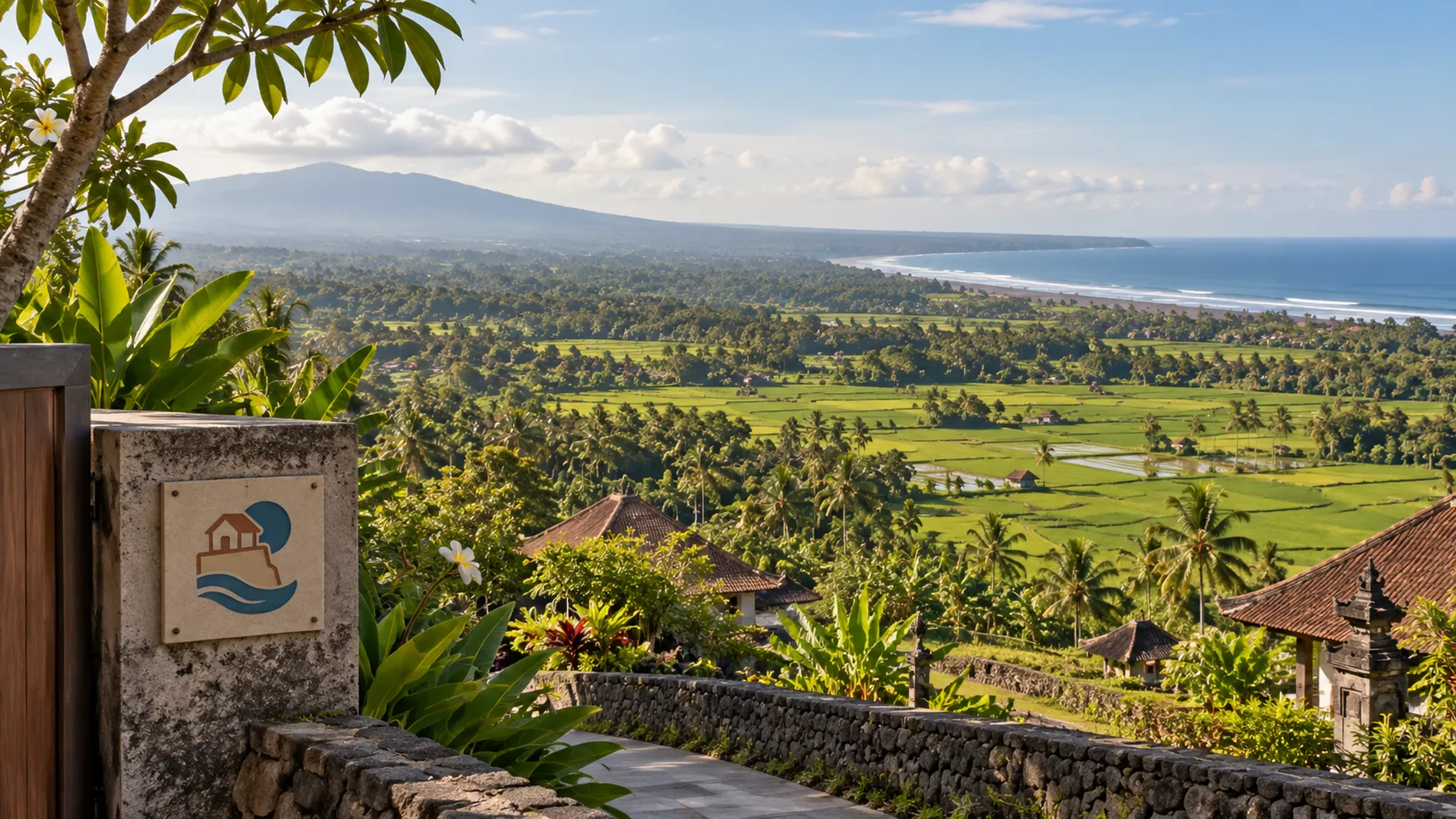

Quick answer: Tabanan is one of Bali’s largest and most varied property markets, stretching from the developing coast near Kedungu to the rice terraces around Jatiluwih and the surf communities of Balian. Property prices are generally lower than in established parts of Canggu, but infrastructure, rental demand and permitted land use vary sharply by micro-location. For buyers, the key questions are not simply how cheap a property is, but where it is located, what can legally be built or operated there, and whether the local demand matches the intended use.
Tabanan is a regency in southwestern Bali that begins just beyond the western border of Badung and stretches from the Indian Ocean coastline all the way to the slopes of Mount Batukaru. Interest in the area has grown for an obvious reason: southern Bali has become densely developed and increasingly expensive, while Tabanan still offers space, rice fields, ocean access, and, in some locations, a noticeably lower entry point for property buyers.
The problem is that this growing interest is often reduced to a single phrase: “the new Canggu.” That label is overly simplistic and can be misleading for buyers. Kedungu, around twenty minutes from Pererenan, and a mountain village above Jatiluwih may belong to the same administrative regency, but they represent entirely different property markets, lifestyles, and investment dynamics.
This guide looks at Tabanan the way it should be assessed before a purchase: by micro-location, day-to-day lifestyle, infrastructure, property formats, price drivers, and key constraints — legal, transport-related, and land-use related. Tabanan’s main appeal lies in its space, natural environment, and the relatively early stage of development along parts of the coast. Yet those same qualities also mean less mature infrastructure and a higher cost of making the wrong decision when choosing a specific plot or property.
Tabanan at a Glance
| Category | What You Need to Know |
|---|---|
| Area type | A large regency encompassing coastline, urban areas, and extensive rural zones |
| Atmosphere | Quieter than Bali’s main southern tourist hubs, with a strong rural character |
| Well-known locations | Tanah Lot, Jatiluwih, Mount Batukaru, Kedungu, Balian |
| Property formats | Completed villas, off-plan developments, land plots, and small boutique projects |
| Best suited for | Lifestyle buyers, surfers, long-term investors, and nature-oriented buyers |
| Key advantages | Space, landscape, and a lower entry point in selected areas |
| Main limitations | Uneven infrastructure, zoning restrictions, transport dependency, and highly varied demand |
Where Tabanan Is Located
Administratively, Tabanan is one of Bali Province’s regencies, occupying the west-central part of the island. According to the Tabanan Regency Government, the regency covers approximately 839.33 km², or around 14.9% of Bali’s total land area. Its terrain ranges from sea level to 2,276 metres at the summit of Mount Batukaru. According to the Tabanan Regency Government, the regency has approximately 37 km of coastline along the Indian Ocean.
Its boundaries explain the character of the area better than any generic description. To the east, Tabanan borders Badung, placing it directly next to Canggu, Pererenan, and the wider southern urban belt. To the north, it rises into the mountain range that separates it from Buleleng. The Indian Ocean lies to the south, while Jembrana borders it to the west. Within these boundaries are ten districts, including Tabanan town itself, the coastal areas of Kediri and Kerambitan, the upland districts of Penebel, Baturiti, and Pupuan, and the western Selemadeg districts.
The Tabanan Regency Government’s published regional profile states that approximately 23,358 hectares, or 28% of the regency, are rice-field land. Tabanan has historically been regarded as one of Bali’s agricultural heartlands, and this is not merely a picturesque detail. It is a fundamental consideration for anyone looking to buy land here.
This leads to an important practical point: giving a single distance “from Tabanan to Canggu” or “to the airport” is largely meaningless. From Kedungu to Pererenan, the journey can be relatively short along the coastal road. From Balian, it can take well over an hour by highway. From a village below Mount Batukaru, reaching Denpasar may take two hours or more. These are entirely different logistical realities, and they have a direct impact on both property values and rental demand.
What to check on the map before viewing a property:
- actual travel times to Canggu or Pererenan during morning and evening traffic;
- distance to the nearest paved arterial road;
- nearby supermarkets, warungs, and restaurants;
- the nearest clinic and hospital with 24-hour emergency services;
- genuine access to the beach, based on existing roads rather than straight-line distance;
- the route to Ngurah Rai International Airport, including possible alternative routes.
Google Maps estimates are useful as a reference, but they should not be treated as definitive. On narrow rural roads and during the rainy season, actual journey times can vary considerably.
Tabanan Is Not a Single Market
The biggest mistake when assessing Tabanan is to treat it as one homogeneous market. In reality, the regency contains at least five very different scenarios: an emerging coastal corridor near Badung, the tourist hub around Tanah Lot, an ordinary Balinese town, a UNESCO World Heritage landscape in the mountains, and a sparsely developed western coastline. Demand, liquidity, infrastructure, and permitted land use differ dramatically from one area to another.
Kedungu and the South-Eastern Coast
This is the part of Tabanan where the outward expansion of Greater Canggu is genuinely visible. Kedungu and nearby Nyanyi are within a relatively short drive of Pererenan and Seseh, with established surf breaks, wide black volcanic-sand beaches, and a gradually increasing number of boutique hotels, beach clubs, and villas.
Development density is still noticeably lower than in Canggu, and plots tend to be larger. Development activity is more visible here than in many inland parts of Tabanan, with new villas, boutique accommodation and hospitality projects appearing along the coastal corridor. Asking prices also tend to reflect the area’s proximity to Pererenan, Seseh and the wider Badung market, although there is no official micro-market price index. The Kedungu–Nyanyi area is one of the clearest parts of Tabanan where proximity to Pererenan, Seseh and the wider Badung market can influence development patterns and buyer interest.
That said, increasing development along the Seseh–Kedungu corridor does not mean the area will necessarily follow the same trajectory as Canggu. The road network is different, land ownership patterns are different, and the planning and approval dynamics are different as well.
Tanah Lot
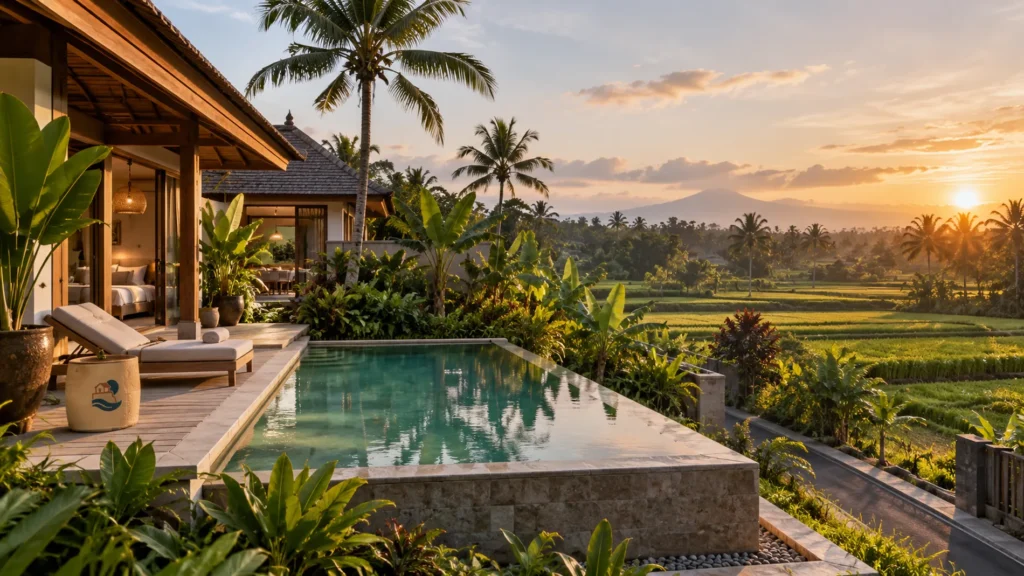
Tanah Lot Temple is one of Bali’s most recognisable landmarks, but its popularity is highly concentrated. Visitor traffic clusters around the temple itself and the evening sunset window, while just a few kilometres away the landscape quickly returns to ordinary villages and agricultural land.
For buyers, this creates two very different types of property. The first is hospitality and restaurant real estate that depends on routed daytime visitor traffic. The second is residential houses and villas in a rural setting, which gain relatively little simply from being close to the temple.
Development restrictions also apply around the temple complex and along parts of the coastline, including rules connected with sacred zones. These need to be verified on a plot-by-plot basis.
Jatiluwih and Batukaru
Here, the market changes completely.
Jatiluwih forms part of the UNESCO World Heritage Site known as the Cultural Landscape of Bali Province: the Subak System as a Manifestation of the Tri Hita Karana Philosophy, specifically within the Catur Angga Batukaru landscape. This is a cooler, mountainous area of terraced rice fields, active water temples, and functioning agricultural communities.
Tourism here is driven mainly by day trips, trekking, retreats, and small-scale eco-accommodation. The standard Bali investment model of a three-bedroom villa for short-term rental is far less effective in this setting. Development within or near the relevant World Heritage component requires particular caution because the UNESCO-listed cultural landscape and surrounding spatial-planning controls do not apply uniformly to every plot in the wider Batukaru area.
Here, the beauty of the landscape is not an argument in favour of more construction. It is precisely the reason development is more constrained.
Balian and the West
Balian is an established surf destination with a long-standing niche audience: surfers, long-stay visitors, small guesthouses, and independent cafés. Infrastructure is significantly less developed than in the eastern part of the regency, the drive to Canggu takes well over an hour, and the choice of everyday services is limited.
For some buyers, that is exactly the appeal: peace, waves, and a lower entry price.
For investors, Balian serves a more specialised visitor profile than Bali’s major southern tourism centres, with demand centred on surfing, longer stays and small-scale retreat or guesthouse concepts. Success therefore depends heavily on the property concept, positioning, management and its fit with this narrower visitor segment.
Tabanan cannot be evaluated as a single real estate market. Kedungu, Tanah Lot, Tabanan town, Jatiluwih, and Balian share little beyond an administrative boundary: buyer demand, infrastructure, and permitted land use are fundamentally different.
Which Parts of Tabanan Suit Which Buyers?
| Area | Character | Tourism Demand | Infrastructure | Most Logical Use Case |
|---|---|---|---|---|
| Kedungu / south-east | Emerging coastal area | More established than in most inland areas | Developing | villa, lifestyle purchase, selective long-term investment |
| Tanah Lot corridor | Landmark destination surrounded by rural areas | Localised, primarily daytime | Moderate | Targeted hospitality concept |
| Tabanan town and surroundings | Local urban life | Low | Full local infrastructure | Owner-occupation, rental to local residents |
| Jatiluwih / Batukaru | Mountains and rice terraces | Eco-tourism and day trips | Limited | Retreat, eco-accommodation, private residence |
| Balian and the west | Surf coastline | Niche and seasonal | Limited | Surf-oriented accommodation, long-stay rental, small guesthouse |
What Life in Tabanan Is Really Like
Daily life here works very differently from Canggu. Cafés and coworking spaces do exist, but there are far fewer of them and they are much more spread out: instead of one street lined with twenty places, you may have three or four options scattered across several kilometres. Dinner is more often at home than at the latest new restaurant, and evening life tends to wind down early.
Transport is not optional; it is a basic requirement. In most of Tabanan, life is simply impractical without a scooter or a car. Village roads are narrow, some access roads are not wide enough for two vehicles to pass comfortably, and during the rainy season road conditions become an issue in their own right. Food delivery is not available everywhere, and farther inland the delivery radius becomes noticeably more limited.
In return, buyers get something that has almost disappeared from much of southern Bali: properly sized plots, views that do not end at the neighbour’s fence, quiet surroundings, and direct contact with Balinese village life, where the rhythm of the calendar is still shaped by temple ceremonies.
The contrast between the coast and the inland areas is substantial. In Kedungu and along the south-eastern shoreline, a mixed environment is beginning to emerge: newcomers, surfers, small-scale developments, and the early stages of an expat community. In Tabanan town, everyday life is local and practical, centred around the market, schools, clinics, and shops. In the mountains and farther west, the social circle is much smaller, and anyone considering a long-term move should take that seriously.
For someone used to walking ten minutes from home in Berawa to a gym, a coworking space, and three different coffee shops, Tabanan may feel inconvenient. For someone who values land, space, and a more predictable pace of life, those same limitations can feel like an advantage.
Tabanan is particularly well suited to people who:
- prefer lower-density development and are comfortable with a more limited range of services;
- do not mind driving every day;
- would choose nature and the ocean over nightlife;
- do not depend on Canggu’s infrastructure on a daily basis;
- are considering living there for several years rather than just one season.
Nature, Beaches, and Culture

Here, the landscape is not merely a backdrop; it is the area’s main asset, and it is also what creates many of its constraints. Tabanan’s coastline is defined by black volcanic sand, open ocean, and strong currents. Kedungu and Balian are known for surfing, while Nyanyi and Kelating are valued for their almost empty beaches and sunsets. Swimming with children, however, requires caution: these are not the calm, sheltered bays found on the eastern side of the island.
The inland part of the regency rises towards Mount Batukaru, Bali’s second-highest peak at 2,276 metres, covered in humid montane forest. On its slopes lie the Jatiluwih rice terraces, which form part of the UNESCO World Heritage Site “Cultural Landscape of Bali Province: the Subak System as a Manifestation of the Tri Hita Karana Philosophy”. UNESCO describes subak as a cooperative water-management system based on a network of canals, dams, and water temples that has existed since the ninth century and is rooted in the Tri Hita Karana philosophy — the balance between the spiritual, human, and natural worlds.
The key point is that subak is a functioning institution, not a museum exhibit. These are active agricultural associations through which farmers manage and distribute water, with practices closely tied to the temple calendar. Land within such a system remains part of a living agricultural economy, so taking it out of that system for development is not a neutral event for the surrounding community.
In Decision 47 COM 7B.75 (2025), the World Heritage Committee notes the impact of tourism and associated development on the property, particularly around Jatiluwih, as well as the extreme fragility of the landscape and the risk of fragmentation of the rice terraces. The Committee also points to the need for stronger control over permits and land-sale regulation. This does not amount to a general prohibition on construction, but it reinforces the need to verify current spatial-planning rules, land-use status and applicable permits for each site.
Tabanan’s agricultural landscape is both one of the main reasons the area is so attractive and one of the main reasons why the permitted use of any specific plot should be verified before purchase.
Infrastructure and Transport
Saying that “Tabanan has no infrastructure” is inaccurate. A more precise way to put it is that infrastructure is distributed very unevenly and depends almost entirely on the exact location.
Tabanan town itself has a public hospital, private clinics, schools, markets, banks, supermarkets and a broad range of everyday services. From some south-eastern locations near the Badung border, major supermarkets, clinics, schools and other services around Pererenan and Canggu can be reached relatively quickly. Actual travel time varies sharply with the starting point and traffic, so it should be tested during peak hours. In Balian and the mountain villages, however, the range is much more limited, often consisting mainly of warungs, minimarkets, and a local puskesmas — essentially a primary healthcare centre.
Healthcare is one of the factors foreign buyers most often underestimate. Local clinics and puskesmas provide primary and routine healthcare services, but the availability of specific diagnostics, specialists and emergency care varies by facility. Buyers planning to live in Tabanan long term should check where they would go for urgent or specialist treatment and how long that journey takes. For more serious medical needs, however, you may have to rely on hospitals and clinics in Denpasar or Kuta, and the travel time to them is a real factor in choosing a location, not an abstract consideration.
The situation with schools is similar. International and bilingual schools are concentrated in the southern urban area and around Canggu, so families with children should calculate the daily journey in both directions rather than judging the distance based on a one-off weekend drive.
Internet access is generally workable: mobile networks cover the regency, and fibre-optic connections are available in many villages along the main roads. Coverage is not universal, though, and the actual speed at a specific address can only be verified on site — ideally in the evening, when local networks are under heavier load.
Before buying a property for your own use, check the following in person:
- the condition of the road during rain, not just on a dry day;
- the width of the access road — can a truck get through, can a car pass comfortably, and is there room for vehicles to pass each other;
- mobile internet speed on site and whether neighbouring properties have fibre;
- the nearest grocery stores and how long it takes to reach them;
- the nearest clinic and the travel time to a major hospital;
- your full daily route: work, school, gym, the beach, and any other regular destinations.
Real Estate in Tabanan
The market here is noticeably less standardized than in Canggu. The main property types include:
Completed villas. These range from compact two- or three-bedroom homes in rural settings to larger properties with swimming pools and views over rice fields or the ocean. Construction quality varies considerably, from well-built projects to properties with drainage or water-supply issues.
Off-plan and small-scale developments. Boutique projects consisting of just a handful of villas are beginning to appear along the coastal corridor. In this segment, the key considerations are the developer’s track record, the availability of the required permits, and whether the proposed construction timeline is realistic — not how attractive the renderings look.
Land plots. This is where the largest share of supply is concentrated, ranging from small plots near the coast to substantial parcels further inland. It is also where some of the most significant risks arise, particularly around land-use designation, road access, and the legal status of the title.
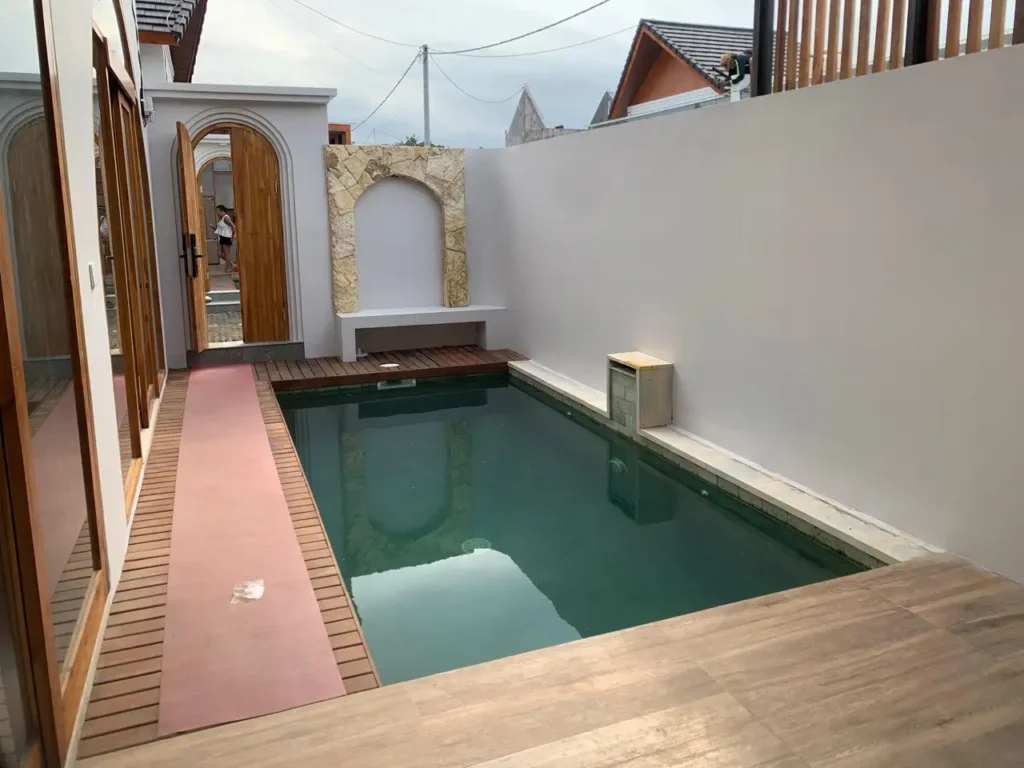

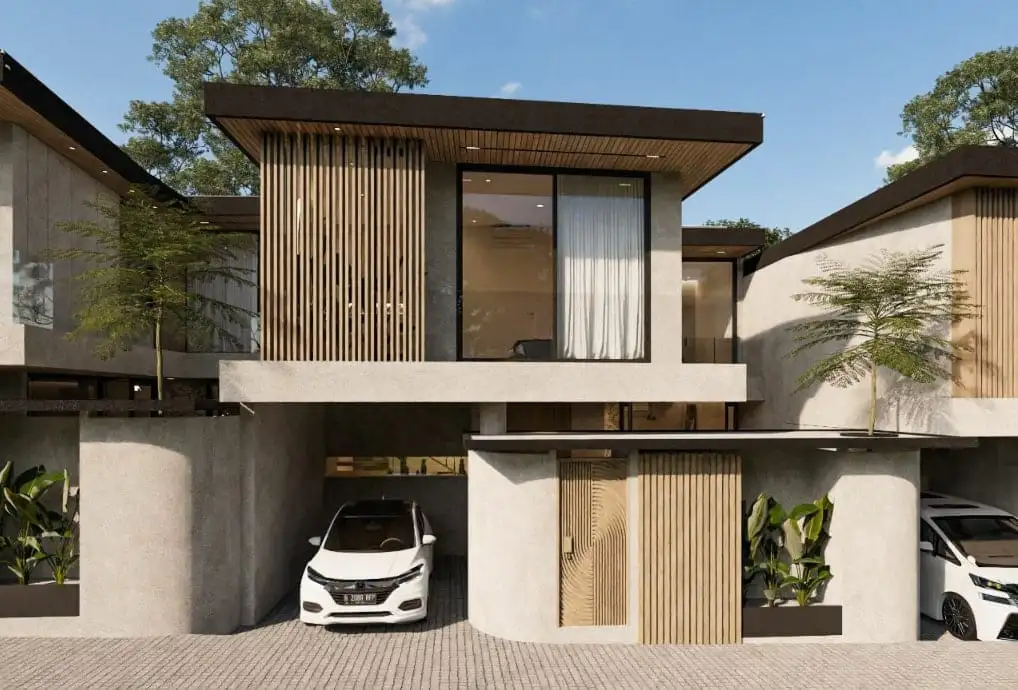

 Bali,Umalas
 from 172м²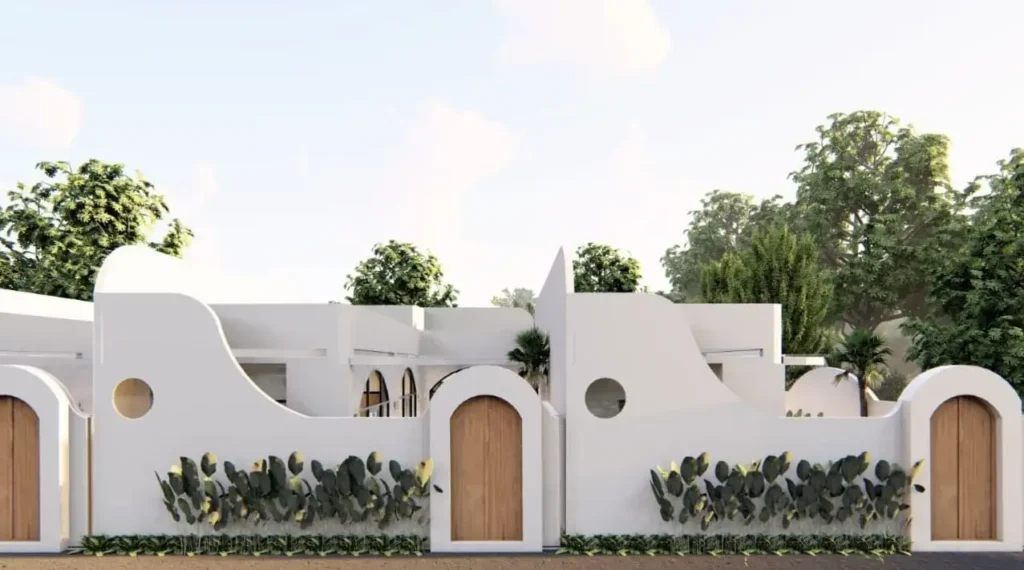
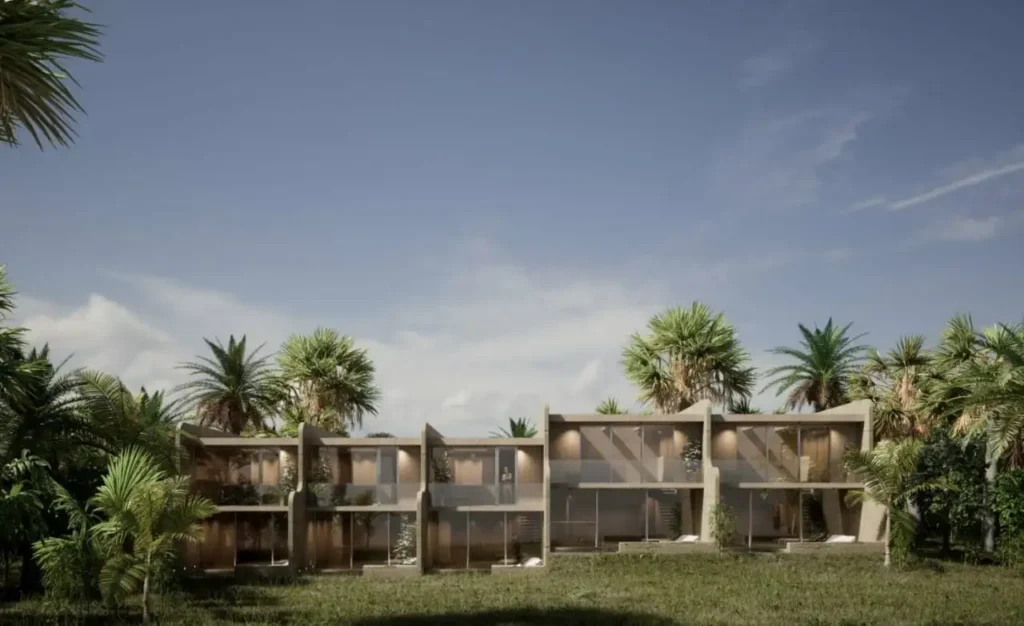 Bali,Canggufrom 77.6м²
Local houses and commercial properties in Tabanan town form a separate segment aimed primarily at domestic demand.
When it comes to ownership structures in Bali, foreign buyers typically operate through long-term leasehold arrangements or through rights of use and corporate structures. These options differ in duration, tax implications, and the extent to which commercial use is permitted, so the appropriate structure should always be selected according to the specific purpose of the purchase.
The most important point to understand about pricing is this: the value of a property is determined not by the word “Tabanan” in the address, but by the micro-location and the characteristics of the specific plot. Key factors include:
- distance from the coast and whether the property has a view;
- travel time to Canggu and Pererenan;
- the quality and width of the access road;
- zoning and permitted land use;
- the size and shape of the plot;
- the remaining lease term and renewal conditions;
- construction quality and the condition of the building systems;
- the status of the PBG (Persetujuan Bangunan Gedung), where applicable, and the SLF (Sertifikat Laik Fungsi). A PBG concerns approval for construction or specified alterations, while an SLF certifies that a completed building is fit for its intended function.
- the readiness of utilities and infrastructure, including electricity, water, drainage, and internet.
Property Prices in Tabanan
There is no official residential property price index published at the regency level in Bali, so any “average price for Tabanan” is necessarily based on aggregated listings rather than formal statistics. There is no single reliable benchmark for villa prices across Tabanan. Asking prices vary substantially by micro-location, land tenure or remaining lease term, plot size, construction quality, zoning, access and distance from Bali’s established southern markets. For that reason, buyers should compare current properties within the same micro-location rather than rely on a regency-wide average. These are asking-price benchmarks and market estimates, not an official price index, and they move with the market.
As a market reference rather than an official statistic, specialist Bali property publications in 2026 commonly place entry-level completed villas in Tabanan at around US$200,000, with mid-market villas around US$350,000–400,000. These figures should be treated as asking-price or editorial market benchmarks rather than verified transaction averages, and they vary substantially between Kedungu, Tanah Lot, Balian and inland Tabanan.
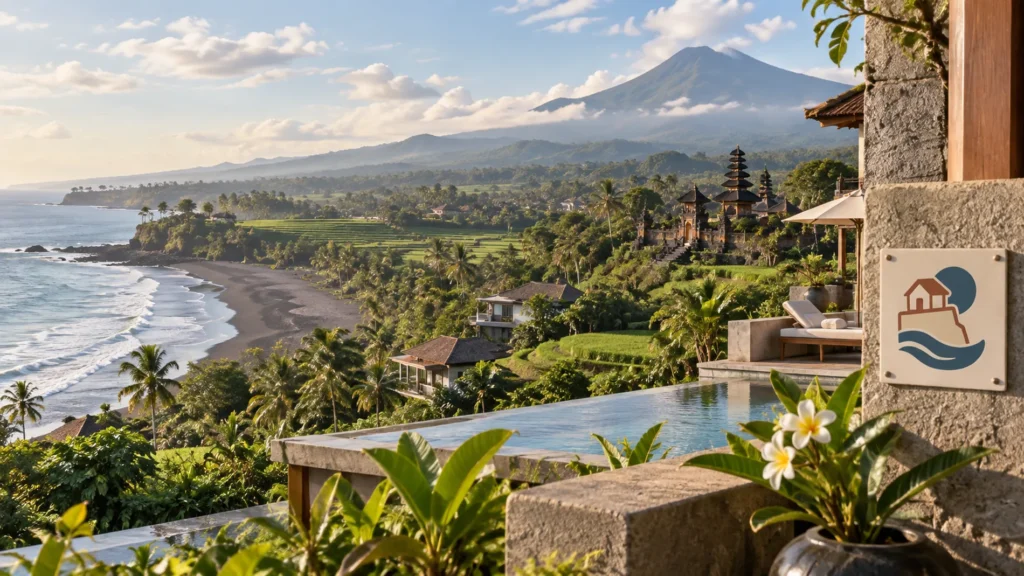
The spread in land prices is even wider. A well-located coastal plot in Kedungu with suitable access and land-use status may command a substantial premium over similarly sized land farther inland. Another complication is that land listings are often quoted per are (100 m²) per year of lease, which means offers can only be compared properly once the lease term and underlying conditions have been standardised.
There is also one factor that consistently distorts buyers’ perception of value: a low entry price is usually being offset by something specific — greater distance, a narrow access road, lack of utilities, restrictions on permitted land use, or a short remaining lease term. If a plot is clearly cheaper than comparable alternatives, the sensible assumption is that there is a reason for it. That reason should be identified before the transaction, not after.
| Property segment | Broad 2026 market reference | Important caveat |
|---|---|---|
| Entry-level completed villa | from around US$200,000 | varies by lease term and micro-location |
| Mid-market villa | around US$350,000–400,000 | market benchmark, not official transaction average |
| Premium coastal villa | can exceed US$700,000 | highly property-specific |
| Coastal land | highly variable | compare per 100 m², zoning, access and lease/freehold basis |
These figures are indicative asking-price and editorial market benchmarks from specialist Bali property publications in 2026, not an official Tabanan transaction-price index.
What Determines a Property’s Price
| Factor | How it affects value |
|---|---|
| Travel time to Canggu and Pererenan | Particularly important in the south-eastern part of the regency |
| Coastal location and ocean views | Increases buyer interest, but does not eliminate zoning concerns |
| Rice-field views | Adds lifestyle value; the view itself is not guaranteed to remain unobstructed |
| Road access | Affects construction costs, day-to-day use, and resale liquidity |
| Lease term and renewal conditions | Directly determines the economic value of a leasehold property |
| Permitting status | Critical for lawful construction and commercial operation |
| Stage of area development | Influences both the entry price and the level of investment risk |
| Availability of utilities | Hidden connection costs can be significant |
Tabanan’s Investment Potential
There is a genuine investment case for Tabanan, but it is more nuanced than simply saying, “it is cheaper, so prices will rise.”
What works in Tabanan’s favour. Entry prices in a number of micro-locations remain lower than in Bali’s more mature southern markets. The supply of good coastal land in the south-eastern part of the regency is physically limited: the coastline itself is finite, and a meaningful share of the surrounding land remains in agricultural use. The westward expansion of development from Pererenan is already visible, and eastern Tabanan benefits from that proximity effect.
Tabanan also appeals to a different segment of Bali visitors and buyers: people looking for lower-density surroundings, surf-oriented stays, retreats and smaller hospitality concepts with more land and privacy. These characteristics can give operators more scope to create a differentiated product, although demand for that product still needs to be validated locally.
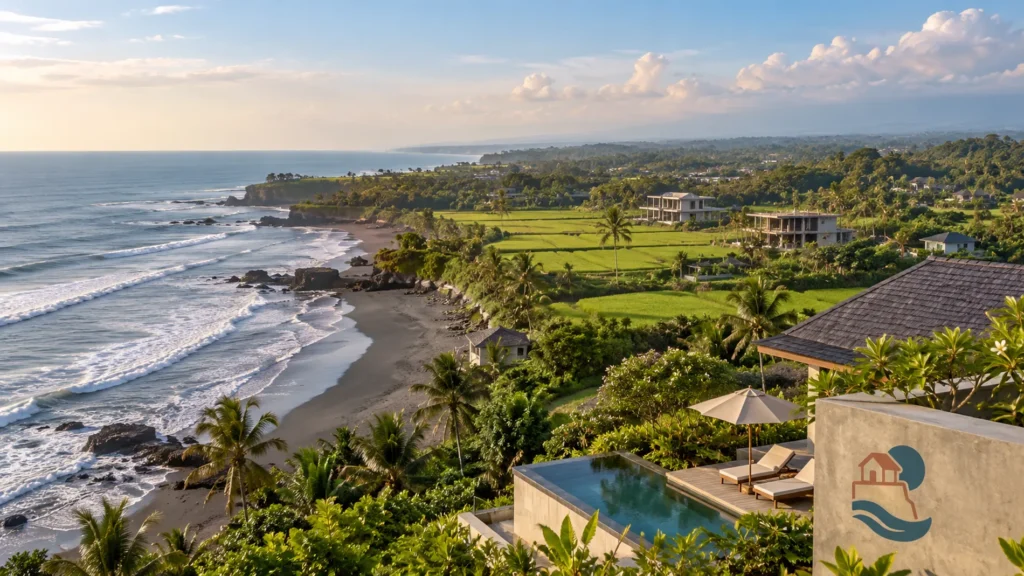
What works against it. Compared with established tourism areas such as Canggu or Seminyak, many parts of Tabanan have a smaller and less mature short-term accommodation market. Rental assumptions should therefore be based on recent comparable properties in the same micro-location rather than on Bali-wide averages. Occupancy tends to depend more heavily on seasonality and on the marketing strength of the individual property. Infrastructure development is uneven, and project timelines can shift. Resale can be less predictable in emerging micro-markets because the pool of comparable transactions and potential buyers may be smaller.
Zoning, road access, and permits are therefore not administrative details; they are real investment filters. Most importantly, there is a genuine risk of overestimating future urbanisation. A significant amount of land in Tabanan is currently used for agriculture, and some areas are subject to spatial-planning or cultural-landscape protections. Investors should therefore not assume that urban development will spread uniformly across the regency.
A separate point concerns yield. Any return percentages quoted in Bali property materials should be treated as estimates rather than verified district-level statistics. If you are working with specific numbers, ask for the source and the date, distinguish clearly between gross and net returns, and account for taxes, management fees, pool and garden maintenance, utilities, furniture depreciation, and vacancy periods. Most importantly, do not assume that the performance of someone else’s villa can simply be applied to your own.
Tabanan’s investment appeal depends on choosing the right micro-location and understanding the area’s long-term development trajectory — not on buying any inexpensive plot and waiting for the price to rise automatically.
Find Property in Bali
If you are considering Tabanan or comparing several areas of Bali, you can complete the short World Estate Homes property-matching quiz. It helps narrow down the options based on your budget, purchase objective, and preferred property type: find property.
Tabanan vs Canggu
These two names are compared in almost every discussion, although in practice it is more accurate to compare a specific part of Tabanan with a specific neighborhood in Canggu.
| Criterion | Tabanan | Canggu |
|---|---|---|
| Development density | Lower in most areas | High |
| Lifestyle | Nature, surfing, quiet | Restaurants, community, active social scene |
| Infrastructure | Varies by area | Mature |
| Walkability | Low in most locations | Higher in central neighborhoods |
| Asking-price level | Generally lower in many inland and emerging locations | Generally higher in established central areas |
| Rental-market maturity | Highly dependent on micro-location | Larger and more established short-term accommodation market |
| Investment risk | Less established and highly dependent on micro-location | More established, with a larger existing accommodation and resale market |
| Typical buyer approach | Often location-specific and longer-term | Wider range of lifestyle and rental strategies |
The choice is not simply a matter of “where is cheaper.” Tabanan suits buyers who are consciously willing to trade a denser service environment for more space, better views, and lower land prices, and who are prepared to take a longer-term view. Canggu suits buyers who prioritize proven rental demand, liquidity, and an established lifestyle environment, and are willing to pay a premium for those advantages.
A middle ground can be found along the eastern edge of Tabanan, around Kedungu and Nyanyi, where buyers can still access much of Badung’s infrastructure while benefiting from lower development density and more moderate pricing.
Legal and Land-Use Risks
This is one of the most underestimated aspects of buying in developing areas. There are several principles worth understanding before you even begin viewing properties.
A foreign individual cannot acquire Hak Milik as an ordinary form of land ownership in Indonesia. Article 21 of Indonesia’s Basic Agrarian Law reserves Hak Milik to Indonesian citizens. Foreign buyers therefore need to consider other lawful structures appropriate to the property and intended use. Foreign buyers may encounter several legally distinct structures. These include a contractual lease, Hak Pakai in circumstances permitted by Indonesian law, and ownership of certain land rights by an eligible Indonesian legal entity such as a PT PMA. These structures are not interchangeable and differ in eligibility, duration, taxation, permitted use, and exit arrangements. Arrangements in which ownership is formally registered in the name of a local individual create legal risk for the buyer and should not be treated as a proper solution.
The next issue is the distinction between two concepts that are often confused. Land title determines who has rights to the land. Zoning determines what may legally be done with it. A perfectly valid land certificate for a plot in an agricultural zone does not automatically give the owner the right to build a tourist villa there.
For due diligence, these checks should be separated: first verify the registered land right and owner, then confirm the current spatial designation and whether the intended building and business activity are compatible with it. One check does not replace the other.
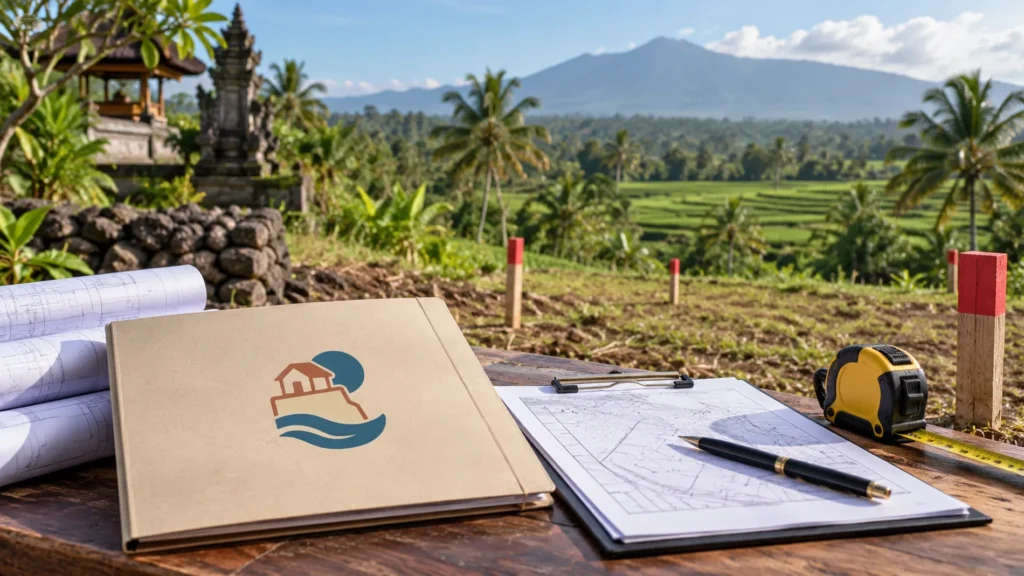
Given Tabanan’s extensive agricultural land and the protected status of parts of its cultural landscape, this issue can be particularly important when assessing undeveloped plots.
The practical implication is straightforward: a beautiful plot surrounded by rice fields should never automatically be assumed to be suitable for a rental villa. The actual zoning must be checked against the current regional spatial plan rather than relying on a seller’s assurances.
Road access is another common source of problems. An access road that local residents have used for years is not necessarily legally registered as a right of access to a specific plot. If the right of passage and vehicle access is not formally documented, this can affect both construction and future resale.
For leasehold properties, the remaining lease term and the renewal mechanism are critical. A clause stating that the lease may be extended “by mutual agreement” is very different from a clearly defined renewal mechanism with an agreed pricing formula. Over a long holding period, that difference can translate into a substantial financial impact.
Before paying a deposit, check:
- the identity of the owner and the original land certificate;
- the actual zoning of the plot and permitted land use;
- whether the intended scale of construction is legally feasible in principle;
- the existence and status of relevant permits, including PBG, SLF, and any others that apply;
- whether road access is legally documented;
- electricity and water connections, as well as drainage conditions;
- the lease term, renewal mechanism, and the cost of extending it;
- tax obligations related to acquisition, ownership, and resale;
- whether the intended rental activity is compatible with the applicable spatial rules and whether the operator has the business licences and other approvals required for the relevant accommodation activity.
- the draft contract, reviewed by an independent qualified lawyer in Indonesia.
This material is for informational purposes only. The transaction structure, form of title, and permitting status must be verified for the specific property by an independent professional in Indonesia rather than relying on general rules described in an article.
Who Tabanan Is Best Suited To
The answer depends on what you are buying.
For personal use. Tabanan can work across much of the regency, but the compromises vary by location. The southeast offers better access to Badung’s services while still providing more privacy. Tabanan town suits people who need everyday functionality but do not care about being close to the sea or an expat community. The mountain and western areas are better suited to people who have already spent time living in Bali and know that they are comfortable with a more remote lifestyle.
A lifestyle villa with occasional rental income. This is one of the most realistic scenarios on the coast, particularly in and around Kedungu. The economics should be calculated on the assumption that the property remains financially comfortable even with zero occupancy. Rental income should be treated as a welcome bonus rather than the foundation of the investment case.
An income-producing rental villa. This is the most demanding scenario. It can work in a limited number of locations with genuine tourist demand, but only with a strong concept, professional management, and realistic assumptions about operating costs. Deeper inland, the conventional short-term rental model is much harder to make work.
A long-term land investment. This can be viable, but it requires a multi-year horizon, tolerance for limited liquidity, and very careful due diligence on zoning and access. The investment case should be based on a specific plot within a specific development corridor, not on a broad assumption about the entire area.
If your main priority is being able to walk every day to restaurants, schools, and coworking spaces, Tabanan will usually compare unfavorably with central Canggu. If your priorities are space, nature, and entering an area at an earlier stage of development, the comparison may look very different.
What to Check Before Buying
A final checklist, grouped into four areas.
Location
- actual travel time to key destinations during peak traffic;
- the width and surface condition of the access road, including how it performs during rain;
- the nearest shops, clinic, and school;
- potential noise sources: construction, roads, temples, roosters, generators;
- what can legally be built on neighboring plots.
The property
- structural quality, roofing, and waterproofing;
- drainage and how the site behaves during the rainy season;
- water source and quality, including whether filtration is installed;
- electrical capacity and the frequency of outages;
- the true cost of maintaining the pool, garden, and house.
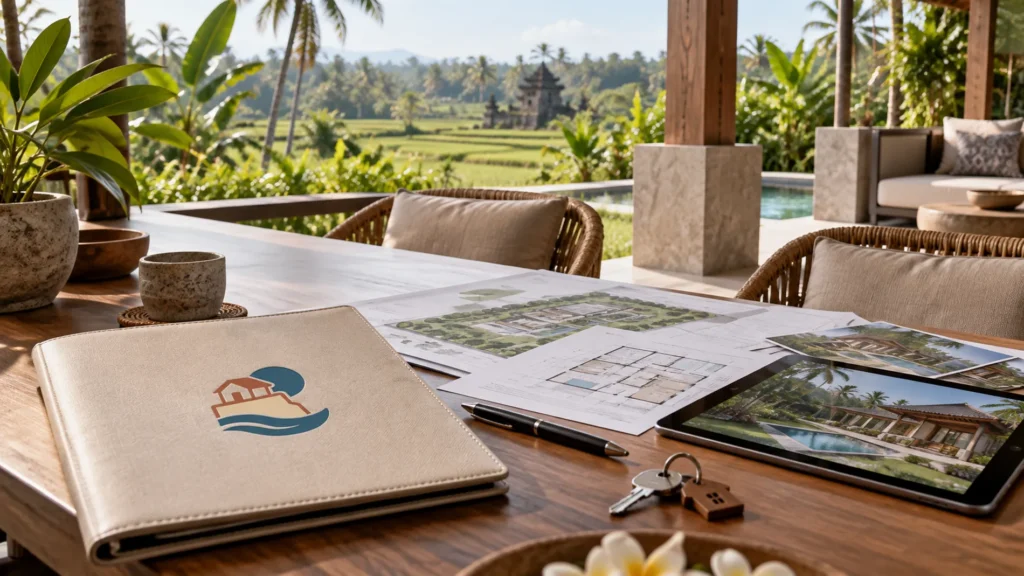
Legal
- the land certificate and the seller’s legal right to sell;
- zoning and permitted use;
- construction and occupancy permits;
- lease term, renewal conditions, and each party’s rights upon exit.
Financial
- a realistic nightly rate based on comparable nearby properties;
- expected occupancy adjusted for seasonality rather than relying on a single annual average;
- management company fees and booking-platform commissions;
- operating costs, taxes, and furniture depreciation;
- the exit strategy: who is likely to buy the property in five to seven years.
An attractive purchase price on its own says very little about actual returns. A property with a low entry price, high operating costs, and inconsistent occupancy may generate less income than a more expensive villa in an area with proven demand. The correct comparison is annual cash flow, not simply the difference in purchase price.
Is Tabanan Worth Considering?
Tabanan is not a one-size-fits-all, cheaper alternative to Canggu. It is a large and highly diverse region where the appeal of any particular property depends on its micro-location, zoning, accessibility, and intended use. In practical terms, the difference between a plot in Kedungu and one near Batukaru can be far more significant than the difference between Tabanan and a neighbouring regency.
For buyers looking for more space, nature, privacy, and a long-term ownership horizon, certain parts of the regency can offer a rational alternative to Bali’s more densely developed and higher-priced southern markets. For those who prioritise walkable access to services, a mature local environment, and established rental demand, it may make more sense to focus on already developed locations rather than trying to compensate for those shortcomings with a lower entry price.
A practical next step is not to search broadly for “property in Tabanan,” but to first define the intended use and identify the area that best fits that scenario. Only then should individual plots be assessed for zoning, access, and permitting status. If you would like to narrow the search down to a few suitable options, you can start with a short property selection.
 Real estate in Georgia
 Real estate in Cyprus
 Real estate in the UAE
 Real estate in Montenegro
 Real estate in Thailand
 Real estate in Spain
 Real estate in Saudi Arabia
 Real estate in Turkey
 Real estate in Zanzibar
 +62 895 001 924 667
 hello@ulu-homes.id
 Tibubeneng, Canggu, Kuta Utara, Badung Regency, Bali 80361, Indonesia



 Get catalogue of TOP-7 objects