
 +62 895 001 924 667


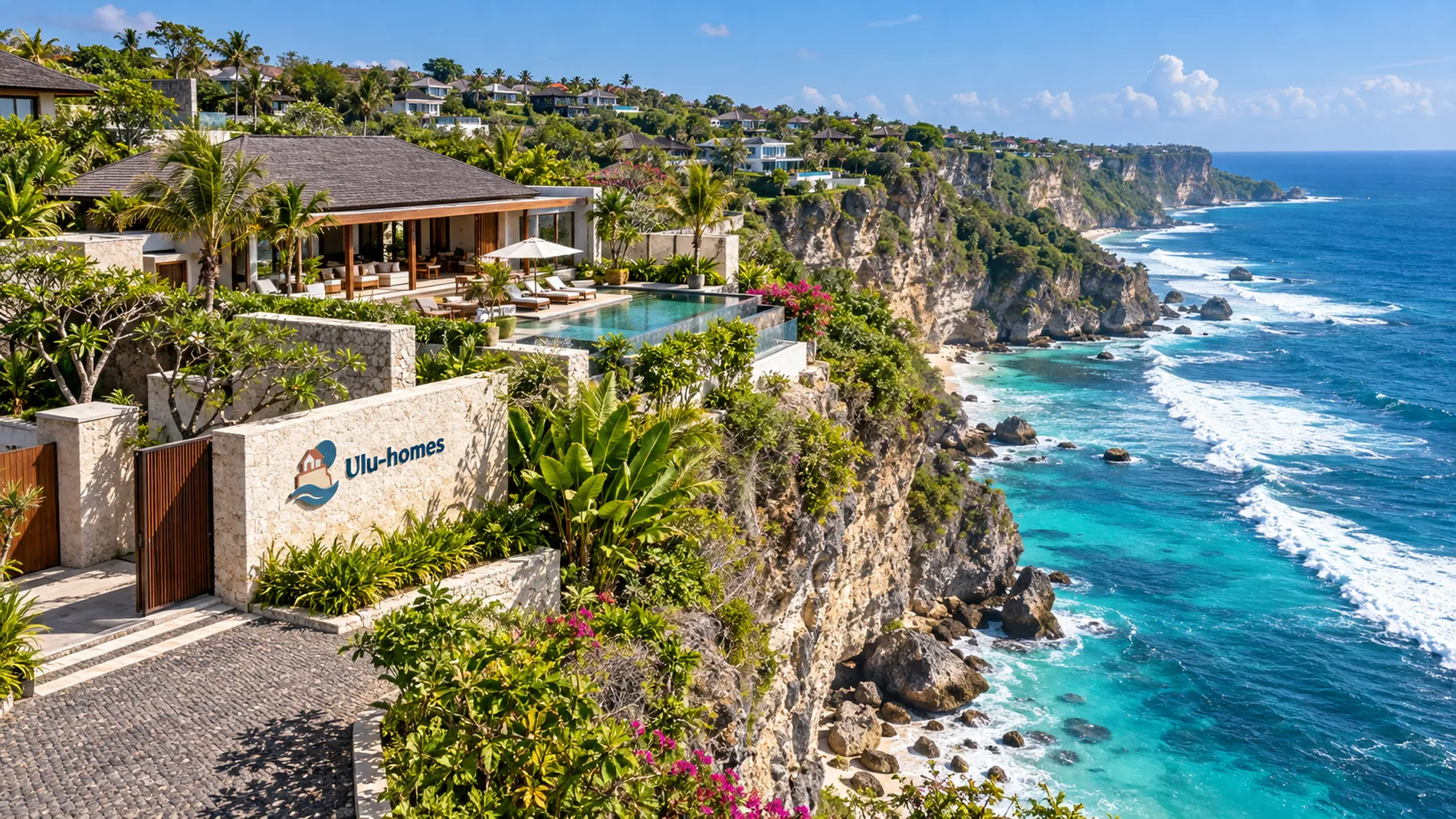

Pecatu is a village on the southwestern coast of the Bukit Peninsula, the southernmost part of Bali. Its administrative boundaries encompass Uluwatu Temple, the beaches of Padang Padang, Bingin, Suluban, and Dreamland, the Pecatu Indah Resort complex, and residential neighbourhoods spread across the limestone plateau. As a result, many of the places that tourists and real estate agents refer to as “Uluwatu” are officially located within Pecatu.
Interest in Pecatu extends beyond surfing and ocean views. The area offers a range of property types, from compact holiday villas to premium ocean-view residences, supported by its established tourism appeal. However, demand varies between micro-locations and property segments, while road access, infrastructure, and the pace of development remain uneven. Buyers should assess these factors at the level of an individual property rather than assuming that conditions are consistent throughout Pecatu.
However, not all villas in Pecatu are comparable. A property near a popular beach, a house in a residential neighbourhood on the plateau, and a villa within a managed resort complex can differ substantially in price, legal status, maintenance costs, and intended use.
This guide explains how Pecatu is organised, which areas are best suited to different lifestyles, how much property costs, how to calculate potential rental returns, and what to verify before paying a deposit.
Where Is Pecatu Located?
Pecatu belongs to the South Kuta (Kuta Selatan) district of Badung Regency. Jimbaran and Ungasan lie to its north and east, while the Indian Ocean borders it to the south and west. The village covers a substantial portion of western Bukit, stretching from the inland plateau to a dramatic, cliff-lined coastline known for its world-class surf breaks.
The name “Uluwatu” is used rather loosely. Strictly speaking, Uluwatu refers to Pura Luhur Uluwatu Temple, the surrounding headland, and its famous surf break. In tourism and real estate marketing, however, the name is commonly applied to almost the entire southwestern Bukit Peninsula, including parts of Pecatu, Ungasan, and even areas around Jimbaran.
A property advertised as being in “Uluwatu” could therefore be located in any of these villages, potentially placing it under a different local administration, subject to different zoning regulations, and within a distinct property market.
The landscape is dominated by limestone formations, with elevated plateaus, deep ravines, steep slopes, and cliffs rising dozens of metres above the ocean. This terrain is responsible for much of the coastline’s dramatic beauty, but it also creates practical challenges for residents and property owners.
Plots vary considerably in gradient, the porous limestone ground retains water poorly, and reaching many of the beaches involves descending long flights of steps.
Distances are relatively short, but journey times can vary dramatically depending on traffic conditions:
- Ngurah Rai International Airport: Approximately 20–25 km away, with travel times generally ranging from 40 minutes to an hour and a half.
- Jimbaran: Around 10–15 km away, typically a 25–45-minute drive.
- Nusa Dua: Approximately 15–20 km away, with journey times of around 30–50 minutes.
- Canggu and Seminyak: Both require careful travel planning, particularly during peak hours, when delays can be substantial.
Most traffic moves along the Bukit Peninsula’s main roads, with congestion frequently building up on narrower sections near Jimbaran and around the airport roundabout. Within Pecatu itself, many residential streets are narrow, single-lane access roads known locally as gang, where two cars may struggle to pass each other.
Consider a simple example. Two properties are both advertised as “villas in Pecatu, Uluwatu.”
The first is five minutes from Padang Padang Beach, surrounded by cafés, surf shops, and busy evening traffic. The second is located in a residential neighbourhood on the plateau, around a 15-minute drive from the nearest beach, but close to a local market and quiet streets.
Despite sharing the same administrative location, these properties belong to two very different market segments, attracting different tenants and carrying different ownership costs.
For buyers and investors, understanding these distinctions is far more useful than relying on the broad “Uluwatu” label in a property listing.
Life in Pecatu

Life in Pecatu moves at a slower pace than in Canggu or Seminyak, but the area is far from an isolated rural retreat. Daily routines often revolve around the ocean: a morning surf session or yoga class, a few hours working from home or a coworking space, and dinner overlooking the sunset. Nightlife is concentrated in a handful of beach clubs and cliffside restaurants rather than along busy entertainment streets.
Dining options range from affordable local warungs (family-run eateries serving Indonesian food) to contemporary restaurants offering creative cuisine and casual smoothie bars. Supermarkets, pharmacies, gyms, yoga and Pilates studios, and barbershops have opened along the main roads. However, residents still tend to travel to Jimbaran, Nusa Dua, or Denpasar for major shopping trips and specialised services.
Pecatu can be a good base for remote work, provided you check the internet connection before committing to a property. Fibre-optic broadband is not available on every street, so many residents rely on mobile data or satellite internet as a backup.
Families and couples appreciate the sense of space, villas with private gardens and swimming pools, and proximity to nature. However, peace and quiet should never be taken for granted throughout Pecatu. Construction activity is widespread, and an empty plot next door could become a building site with concrete mixers and generators within six months. Areas near popular beaches can also become noisy in the evenings because of traffic and nearby restaurants and bars.
Pecatu is particularly well suited to people who are comfortable driving a scooter or car, enjoy spending time by the ocean, and do not mind travelling for specialised services. Those accustomed to walking to the shops, requiring regular medical appointments, or relying on an urban environment with pavements and public transport may find everyday life more challenging.
If you are considering living in Pecatu for several months, take the following precautions:
- Start with a short-term rental of two to four weeks to explore different parts of the area before signing a six-month lease.
- Visit prospective accommodation in the evening and on a weekday morning to assess traffic conditions and construction noise.
- Clarify who pays for water, electricity, cleaning, and rubbish collection, and how the property’s water supply is replenished.
- Test the internet speed at the property rather than relying on the connection advertised in the listing.
- Check travel times to the nearest clinic and supermarket during rush hour.
- If you work remotely, find out whether the property has backup power in case of electricity outages.
Long-term rentals generally offer better value than nightly accommodation and give you time to decide whether the area is suitable for a future property purchase. Many prospective buyers choose their preferred neighbourhood this way, spending an extended period living locally before deciding on a specific location.
Beaches and Attractions
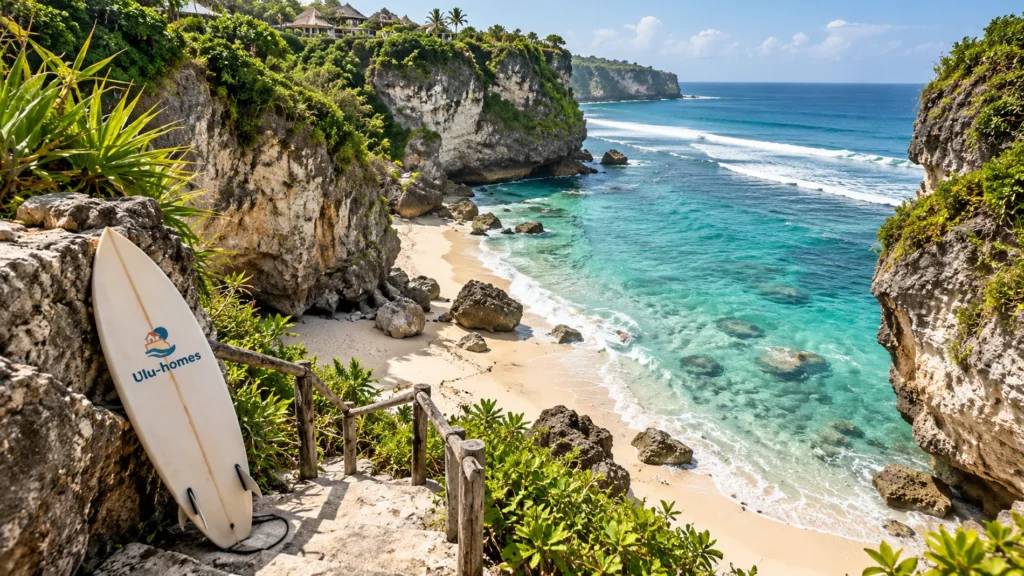
Pecatu’s coastline is the main reason for the area’s popularity. Most beaches lie at the foot of dramatic limestone cliffs, and conditions can change considerably depending on the tide and swell.
Dreamland Beach (New Kuta Beach) is a broad sandy beach near Pecatu Indah Resort. Access is relatively straightforward, with parking and visitor facilities available. However, waves can be powerful, and dangerous currents may develop in the surf zone. Swimming is safest in areas supervised by lifeguards.
Bingin Beach is a small beach below steep limestone cliffs, famous for its reef break and experienced surfing community. Access has traditionally involved descending a steep staircase, while the exposed reef and available beach space change considerably with the tide. However, the surrounding beachfront underwent major changes in July 2025, when Badung authorities demolished 48 structures found to be in violation of applicable regulations. The affected buildings were located on government-owned land, and authorities subsequently began planning improvements to public beach access and facilities. As of 2026, redevelopment planning and access arrangements have continued to evolve, so visitors should verify current conditions before travelling to the beach. For property buyers, the enforcement action highlights the importance of independently checking land ownership, zoning, and building permissions, particularly for coastal properties.
Padang Padang Beach is a small stretch of sand accessed through a narrow passage between rock formations. It is one of the area’s most visited beaches and hosts surfing competitions on its powerful reef break. Swimming is more comfortable on calm days, away from the main surf break. The beach can become particularly crowded during peak season.
Suluban Beach (Blue Point) is a distinctive beach set among caves beneath towering cliffs, reached via stairways and narrow passages through the rocks. It provides access to the famous Uluwatu surf spot. At high tide, parts of the cave system may flood, so it is important to check tide tables before visiting.
Pura Luhur Uluwatu is one of Bali’s most important sea temples, perched on a dramatic cliff overlooking the Indian Ocean. Traditional Kecak dance performances take place here in the evenings. As an active place of worship, the temple requires visitors to wear clothing that covers their knees. Visitors are also warned about the resident macaques, which are known to snatch sunglasses, mobile phones, and other loose belongings.
Beyond the beaches and temple, Pecatu’s cliffs are dotted with scenic viewpoints, cafés overlooking the ocean, and walking trails along the cliff edges. Some destinations that tourists associate with “Pecatu” are actually located in neighbouring Ungasan or other parts of the Bukit Peninsula. Melasti Beach, for example, is in Ungasan, while Nyang Nyang lies closer to the peninsula’s southern coastline. This geographical overlap reflects the loosely defined boundaries of the wider area commonly referred to as “Greater Uluwatu.”
None of these beaches should automatically be considered safe for children or inexperienced swimmers. Coral reefs, strong currents, and seasonal swells can change swimming conditions throughout the day. The dry season, roughly from April to October, is generally regarded as the best period for surfing along the western coast of the Bukit Peninsula.
From a real estate perspective, proximity to the beach is a major advantage, but it is not enough on its own to guarantee strong rental performance. A villa five minutes from Padang Padang may appeal to surfers, yet its occupancy will still depend on pricing, design, guest reviews, management quality, and the number of comparable villas available on neighbouring streets.
Infrastructure and Transportation
Pecatu is an area where having your own transport is almost essential. Public transportation is virtually nonexistent, and although app-based car and motorcycle taxis operate in the area, drivers can be reluctant to accept bookings from certain locations, particularly those reached by less accessible roads. Most residents get around by scooter or rental car.
A scooter offers greater freedom and can save considerable time in traffic, but riding one requires experience. Roads are often winding and steep, with sand and loose gravel along the edges. During the rainy season, standing water and erosion can create additional hazards. Cars are more practical for families, although narrow lanes and limited parking near the beaches can complicate everyday journeys. Pedestrian infrastructure is poorly developed: sidewalks are scarce, distances between destinations can be considerable, and the combination of heat and steep hills makes walking inconvenient.
Convenience stores, minimarkets, and pharmacies can be found along the main roads. Healthcare services within Pecatu itself are largely limited to primary care clinics. More serious medical conditions generally require a journey to hospitals in Jimbaran, Nusa Dua, Kuta, or Denpasar. There are private and international schools on the Bukit Peninsula, but neighbouring areas offer a wider selection. As a result, the daily school run can take up a substantial part of the morning.
Electricity is supplied by the state-owned utility company PLN. Power outages do occur, particularly during the rainy season, making voltage stabilisers and backup power systems sensible investments for anyone working remotely. Fibre-optic broadband is available in some well-served residential areas, but coverage remains inconsistent.
Water supply is another important consideration. The municipal water network does not adequately serve every part of the Bukit Peninsula, and many villas rely on private wells, storage tanks, and water delivered by tanker trucks. This affects both running costs and reliability: well water may contain impurities, while tanker deliveries can be delayed during peak periods. The area’s limestone geology also raises additional concerns about drainage, foundations, and retaining walls.
Finally, there is the issue of construction. New developments are appearing throughout Pecatu, and noise from neighbouring building sites can continue for months.
Pecatu Infrastructure: What to Check Before Moving
| Factor | Local Conditions | What to Check in Person |
|---|---|---|
| Road access | Many roads are narrow, while some are unpaved or steep | Whether the access road is wide enough for a car, its condition during rainfall, and who is responsible for maintenance |
| Water supply | A combination of municipal water, private wells, and tanker deliveries | Water source, storage tank capacity, delivery frequency and costs, and water quality |
| Electricity | Supplied by PLN, with occasional outages | Available electrical capacity, generator or UPS availability, and utility bills from recent months |
| Internet | Fibre-optic coverage is not universal | Available providers, actual connection speeds at the property, and backup internet options |
| Healthcare | Medical facilities within Pecatu are mainly clinics | Travel time to the nearest hospital during rush hour and the terms of your health insurance |
| Schools | Limited local choice, with some schools located in neighbouring areas | School commute routes and travel times, availability of places, and school transport services |
| Noise and construction | Active development on neighbouring plots | Nearby vacant land, construction notices, and planned building projects on adjacent properties |
| Drainage | Limestone terrain, sloping land, and heavy tropical rainfall | Evidence of previous flooding, drainage channels, and the condition of retaining walls |
Infrastructure conditions in Pecatu vary considerably between properties, even within the same neighbourhood. Reliable water supply, road access, and internet connectivity may require additional investment or ongoing maintenance, and not every limitation can be resolved easily. Buyers should assess the technical condition of the property, the legal status of access roads and utilities, and the cost of any required improvements before deciding whether a particular villa is suitable for long-term living or rental operations.
Being close to the beach is no substitute for checking road access, water supply, and essential utilities. A beautiful view may help sell a villa, but reliable infrastructure is what makes it comfortable to live in and suitable for renting out.
Where Is the Best Place to Live in Pecatu?

Pecatu can be divided into several distinct areas, each with its own character, property market, and lifestyle advantages. These are informal geographical distinctions intended to help buyers and residents compare locations, rather than official administrative boundaries.
Central Pecatu encompasses the residential neighbourhoods surrounding the village centre on the plateau. This area has a stronger local character, with more Balinese residents, temples, traditional markets, and small shops. Rental and land prices are generally lower than along the coast, and the atmosphere feels more authentically Balinese. However, reaching the beaches requires a drive.
Pecatu Indah Resort / New Kuta is a large, master-planned resort development near Dreamland Beach, featuring a golf course, hotels, and residential villas. The area offers an organised environment with internal roads and security, but property ownership and use are subject to the development’s rules and management regulations. Buyers should understand the applicable service charges, management fees, and rental restrictions before committing to a purchase.
Labuan Sait and Padang Padang form a lively stretch along the main road towards Uluwatu. The area offers easy access to cafés, surf shops, bars, and beaches, making it particularly attractive to visitors and surfers. Strong tourist demand, however, comes with heavier traffic, considerable competition, and evening noise.
The coastal areas towards Bingin and Uluwatu include hillside villas and properties overlooking the limestone cliffs, some with panoramic ocean views. These locations can command premium asking prices, although values depend on land rights, access, plot characteristics, building quality, and the remaining lease term. Coastal properties also require particularly careful due diligence. Buyers should verify zoning restrictions, coastal protection rules, legal access, building permits, and slope stability. The enforcement action at Bingin Beach in 2025 demonstrates why proximity to the shoreline should never be treated as evidence that a property has the necessary legal approvals.
New residential developments further inland on the plateau occupy former agricultural plots and previously undeveloped land, where villa complexes are now being constructed. These areas offer more opportunities to purchase newly built homes or development plots. However, the surrounding landscape is changing rapidly, and roads, utilities, and other essential infrastructure often struggle to keep pace with construction.
Pecatu’s Main Residential Areas and Micro-Locations
| Location | Property Characteristics | Best Suited For | Main Limitations |
|---|---|---|---|
| Central Pecatu | Older and newly built houses, smaller villas, residential plots | Long-term residents, budget-conscious buyers | Greater distance from beaches, lower tourist demand |
| Pecatu Indah Resort / New Kuta | Villas and houses within a managed resort development | Families and buyers who value organised surroundings and security | Development regulations, management fees, restrictions on property use |
| Labuan Sait / Padang Padang | Compact villas, guesthouses, commercial properties | Short-term rental investors, surfers | Traffic congestion, noise, intense competition |
| Coastal areas towards Bingin and Uluwatu | Premium villas with ocean views | Luxury property buyers, high-end holiday rental investors | Coastal zoning restrictions, slope stability, high acquisition costs |
| New developments on the plateau | Newly built properties, villa complexes, development land | Property developers, investors, buyers seeking new homes | Nearby construction activity, infrastructure that may lag behind development |
As the comparison shows, choosing a micro-location in Pecatu means balancing rental demand against everyday comfort. Properties close to the beaches benefit from stronger tourist appeal, but these busy areas can be less comfortable for permanent residents. The quieter plateau is often more practical for families, although successfully operating a short-term rental there generally requires a more distinctive property and a stronger marketing strategy.
Start your property search with the specific street, not simply the neighbourhood. In Pecatu, a difference of just one kilometre can significantly affect the purchase price, the type of rental guests a property attracts, and even the legal status of the land.
Real Estate in Pecatu
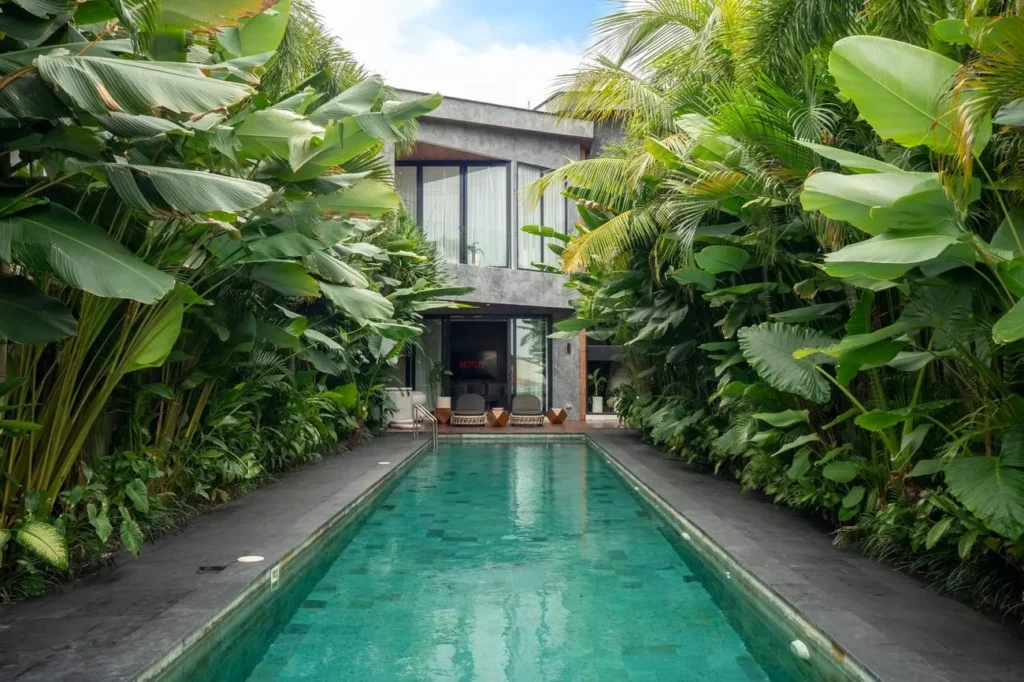


 Bali,Umalas
 from 26.5м²
 Bali,Canggufrom 77.6м²

Pecatu’s property market consists of several distinct segments: older homes owned by local families, villas developed for holiday rentals during the 2010s, newly built residential complexes, and plots of land available for development. Below, we explore the property types most commonly found in the area and what buyers should consider when evaluating them.
What Types of Property Are Available?
Compact one- and two-bedroom villas are a visible segment of Pecatu’s holiday rental market. Many feature a private swimming pool, a relatively small plot, and an open-plan or partially open-air living area. These properties may appeal to couples, solo travellers, and surfers, particularly when they offer convenient access to beaches and restaurants. However, their rental performance depends on location, pricing, competition, and the quality of the accommodation rather than bedroom count alone.
Three- and four-bedroom family villas are suitable both for personal use and for renting to groups. Important considerations include plot size, parking facilities, privacy, and proximity to schools, shops, and other everyday amenities.
Premium ocean-view properties occupy clifftop locations or elevated positions on the plateau. Uninterrupted ocean views command a price premium, but these properties also require particularly careful due diligence. Buyers should investigate coastal protection restrictions, slope stability, and whether future development on neighbouring plots could obstruct the view.
Villas within resort developments, including Pecatu Indah Resort, offer a more established residential environment and access to managed services. However, owners must comply with the management company’s regulations, which may include monthly maintenance fees and specific rules governing rental operations.
Land plots appeal to buyers planning to build their own property. Land values depend on zoning, access road width, terrain, and views. A plot located in a protected green or agricultural zone may not be legally suitable for residential development, regardless of how attractive the location appears.
Completed and off-plan developments carry different levels of risk. A finished villa can be inspected in person, and its building documentation can be checked against the completed structure. Buying during construction, however, requires a thorough assessment of the developer, construction schedule, and the permits under which the project is being carried out.
Properties intended for personal use and those purchased for holiday rentals should be evaluated against different criteria.
For a permanent home, factors such as a quiet environment, storage space, a dedicated home office, and convenient school access are particularly important. For holiday rentals, visual appeal, proximity to beaches, a layout with separate bedrooms and bathrooms, and, above all, legal permission for commercial rental use are more significant.
Property values are influenced by plot size, construction quality, road access, ocean views, nearby infrastructure, and the remaining duration of the land rights.
A villa with 15 years remaining on its lease and an otherwise identical villa with 28 years remaining represent two very different assets, even if they look exactly the same.
Villa and Land Prices in Pecatu
Official transaction statistics for Pecatu are not publicly available, so buyers generally have to rely on property listings to assess the market.
An advertised price represents the seller’s asking price, not the final transaction value. The actual sale price may be lower following negotiations, and some properties remain on the market for years.
An indicative snapshot of online listings dated October 10, 2026, showed a median asking price of approximately IDR 5 billion among 57 advertised villas in Pecatu, with a reported range of around IDR 4.4–7.3 billion. These figures come from a limited commercial listing sample rather than official transaction records. The methodology, representativeness, and treatment of duplicate or outdated listings have not been independently audited. The sample also combines properties with different legal rights, sizes, locations, and remaining lease terms. Buyers should therefore treat these figures only as an initial reference point and obtain current, property-specific comparisons before making an offer.
Reliable price ranges are not available for the other property categories, and this limitation is explicitly reflected in the table below.
Another essential rule is to compare properties only when they have the same type of land rights.
Leasehold properties, which involve the contractual right to use land and buildings for a fixed period, are generally less expensive than comparable freehold properties, where eligible Indonesian owners hold full ownership rights to the land.
This difference reflects not only location and property characteristics but also the time-limited nature of leasehold rights.
Property Types and Indicative Purchase Budgets
| Property Type | Price Indicator | Main Characteristics | Key Factors Affecting Value |
|---|---|---|---|
| Villas (overall listing market) | Median asking price of approximately IDR 5 billion; typical range of ~IDR 4.4–7.3 billion (sample of 57 listings, October 2026) | Mixed sample covering different property sizes, land rights, and locations | Type of land rights, remaining lease term, location, property condition |
| Compact 1–2-bedroom villa | Depends on the individual property | Small plot, swimming pool, designed for holiday rentals | Beach proximity, remaining leasehold term, rental licensing |
| Family villa with 3–4 bedrooms | Depends on the individual property | Larger plot, parking, garden | Land area, road access, nearby amenities |
| Premium ocean-view villa | Depends on the individual property | Clifftop or elevated location | Protection of ocean views, coastal zoning restrictions, construction quality |
| Villa within a resort development | Depends on the individual property | Managed grounds, access to services | Development regulations, maintenance fees, rental conditions |
| Land plot | Depends on the individual property | Land intended for development or long-term lease | Zoning, slope, road access, views |
These price indicators are useful for an initial property search, but a purchasing decision should ultimately be based on genuinely comparable properties.
That means evaluating homes within the same micro-location, with equivalent land rights, similar plot sizes, comparable remaining lease terms, and a similar standard of maintenance and construction.
Property searches in Pecatu should begin with a clear understanding of the buyer’s objectives. A permanent residence, a seasonal rental property, and a long-term investment each require different characteristics. ULU Homes can help buyers compare available properties based on their budget, preferred location, legal structure, and intended use. Find properties that match your requirements.
Rental Market and Investment Potential

Pecatu’s investment potential depends on acquisition costs, property rights, maintenance expenses, management quality, and competition from comparable accommodation. Location alone cannot establish whether a villa will generate attractive returns. For example, two properties near Bingin may have different rental prospects because of their layout, accessibility, condition, pricing, and operational management. A property without the required permissions for commercial accommodation may also face restrictions on its intended use. Before investing, buyers should compare verified operating data from similar properties and confirm that the proposed rental activity is legally permitted.
Who Rents Villas in Pecatu?
The main tenant and guest segments include:
- Tourists and surfers — Peak demand generally coincides with the dry season and the surfing season along the western Bukit Peninsula.
- Couples and small groups — Typically favour compact villas with private pools, ideally within easy reach of beaches and restaurants.
- Remote workers — Often book accommodation for a month or longer, prioritising reliable internet access and a comfortable workspace.
- Expatriates and families — Tend to seek long-term rentals, paying particular attention to nearby schools, road access, and a peaceful environment.
- Luxury travellers — Are willing to pay a premium for exceptional views, privacy, and personalised service, but have correspondingly high expectations of quality.
Short-term rentals can command higher nightly rates, but they also involve property management fees, cleaning costs, booking platform commissions, and potential vacancies during the low season. Long-term rentals generally generate less income per night but offer more predictable cash flow and reduce the operational demands placed on the property.
Bali continues to attract substantial international tourism, although monthly arrivals and accommodation occupancy fluctuate. According to BPS Bali’s August 2026 tourism report, the province recorded 685,994 direct foreign tourist arrivals in August, down 1.69% from July. The room occupancy rate was 68.19% for star-rated hotels and 43.16% for non-star-rated hotels and other accommodation establishments. These figures describe Bali as a whole rather than Pecatu and cannot be used to estimate the occupancy, revenue, or profitability of an individual villa.
The difference between the August 2026 occupancy rates of 68.19% for star-rated hotels and 43.16% for non-star-rated accommodation illustrates how performance varies across Bali’s hospitality sector. However, these categories represent different types of accommodation and cannot be directly used to evaluate the performance of privately managed villas in Pecatu. Investors need property-specific booking and revenue data rather than relying on island-wide hotel occupancy statistics.
Rental Yields and Operating Costs
When evaluating a property investment, it is useful to distinguish between two key performance indicators:
Gross rental yield = Annual rental revenue ÷ Total investment cost × 100%.
Net operating yield = (Annual rental revenue − Operating expenses) ÷ Total investment cost × 100%.
The total investment cost should include the purchase or acquisition price, notarial and legal fees, transaction taxes, furniture, and any work required to prepare the property for rental.
Operating expenses include property management, booking platform commissions, cleaning, utilities, water supply, pool and garden maintenance, minor repairs, and staff wages.
However, net operating yield does not account for income taxes, financing costs, the cost of capital, building depreciation, or, most importantly, the gradual reduction in the remaining value of a leasehold interest as its term approaches expiry.
The applicable tax treatment also depends on the legal structure and nature of the activity. A privately arranged residential lease, a commercially operated tourist villa, and accommodation managed through an Indonesian company may be subject to different tax and reporting obligations. Buyers should obtain a property-specific assessment from a qualified Indonesian tax adviser rather than applying a single assumed tax rate to every rental scenario.
Consider the following hypothetical example, intended purely to illustrate the calculation rather than predict actual market performance or represent an average villa in Pecatu:
- Initial investment: USD 250,000.
- Average achieved nightly rate: USD 180.
- Occupancy rate: 60%.
- Annual rental revenue: 180 × 365 × 0.60 = USD 39,420.
- Operating expenses (35% of revenue): USD 13,797.
- Net operating income: USD 25,623.
- Illustrative gross rental yield: Approximately 15.8%.
- Illustrative net operating yield: Approximately 10.2%.
This example demonstrates the arithmetic, not an expected investment return.
The assumed operating expenses are illustrative and do not represent a verified cost ratio for Pecatu. Actual expenses may include fixed costs that do not decrease when bookings fall, as well as periodic capital expenditure, taxes, financing expenses, and costs associated with the remaining lease term. Therefore, the calculated operating yield should not be interpreted as an investor’s final after-tax return or as a prediction of capital recovery.
If occupancy falls to 45%, annual rental revenue in this hypothetical example declines to USD 29,565. If all operating expenses are assumed to remain at 35% of revenue, the calculated operating income is approximately USD 19,217, equivalent to an operating yield of around 7.7%. In practice, this simplified assumption may understate the impact of lower occupancy because several costs, including certain staffing, maintenance, insurance, and utility expenses, may remain partly fixed. Investors should therefore prepare a separate conservative scenario using realistic fixed and variable costs rather than relying on a single percentage of revenue.
A major renovation or the replacement of essential equipment could absorb an entire year’s rental income.
A 20-year leasehold arrangement introduces another important consideration: part of the income generated each year effectively represents the recovery of the original capital invested. At the end of the lease term, the property returns to the landowner unless the lease has been successfully extended.
Key Factors Affecting Villa Rental Yields
| Factor | Potential Positive Impact | Risks or Additional Costs | What to Check |
|---|---|---|---|
| Seasonality | Strong demand during the dry season and major holidays | Vacancies and discounted rates during the low season | Monthly occupancy data for comparable properties |
| Location | Proximity to beaches can support higher nightly rates | Noise and intense competition in popular areas | Number of similar villas on neighbouring streets |
| Property operations | Well-maintained properties tend to receive better guest reviews | Water, electricity, pool and garden maintenance, staffing | Actual operating bills covering the previous 12 months |
| Renovation and upkeep | Regular upgrades help maintain competitive nightly rates | Humidity and sun exposure accelerate wear and deterioration | Age of building systems and budget for major repairs |
| Competition | A distinctive, well-positioned property can stand out | Oversupply of similar villas puts downward pressure on rates | Pricing and occupancy of comparable properties |
| Leasehold duration | Lower initial acquisition costs | The remaining economic value of the leasehold decreases over time | Remaining lease term and extension conditions |
| Property management | Professional management may improve guest experience, maintenance coordination, and booking performance | Fees vary by provider, contract scope, services, and property type; additional charges may apply for cleaning, maintenance, marketing, or booking platforms | Written management agreement, fee structure, exclusions, sample financial statements, termination conditions, and independently verifiable operating results |
| Permitted use | Legally authorised short-term rentals reduce regulatory exposure | Fines or restrictions on operations without the necessary licences | Zoning classification and permits for commercial rental activity |
Another significant risk is the growing similarity of properties entering the market.
In recent years, Pecatu and the wider Bukit Peninsula have seen extensive development of villas featuring one or two bedrooms, private swimming pools, and minimalist architecture.
When accommodation supply grows faster than demand, property owners increasingly compete on price, making projections based on previous years’ performance less reliable.
Before purchasing, investors should collect data on at least 10–15 comparable properties. Relevant indicators include achieved nightly rates, booking calendars, review counts, and the dates when properties first appeared on rental platforms.
This research can help establish whether demand is sufficient to support the proposed rental strategy and whether the property’s pricing assumptions are realistic.
It is also important to distinguish between advertised nightly rates and actual revenue. A villa listed at USD 200 per night does not necessarily achieve that rate consistently, particularly after promotional discounts, seasonal adjustments, and periods of low occupancy.
Similarly, a booking calendar that appears full does not always indicate paid reservations. Some dates may be blocked for owner use, maintenance, or other reasons. Calendar availability should therefore be treated as an indirect indicator rather than verified occupancy data.
A guaranteed investment payback period cannot be established in advance. The time required to recover the initial investment depends on acquisition costs, occupancy, operating expenses, and whether the underlying land lease can be extended.
Every financial projection should also be tested against a pessimistic scenario, incorporating lower occupancy, reduced nightly rates, unexpected maintenance costs, and the possibility that a leasehold extension may be unavailable or prohibitively expensive.
Buying Property as a Foreigner
This is where mistakes can be most costly. The following is an overview of the key legal concepts, not personalised legal advice. Before entering into any property transaction, you should consult an independent Indonesian lawyer and notary.
Indonesia recognises several types of land rights:
- Hak Milik — the most comprehensive form of land ownership. It is available only to Indonesian citizens and certain Indonesian legal entities. Foreign nationals cannot register Hak Milik in their own names.
- Hak Pakai — a registered right to use land, subject to statutory conditions and applicable time limits. Under Indonesian Government Regulation No. 18/2021, eligible foreign nationals holding the required immigration documentation may own qualifying residential property through permitted legal arrangements, including Hak Pakai over certain categories of land. The regulation also recognises Hak Pakai established over Hak Milik land through a deed prepared by an authorised PPAT. Articles 69–73 provide the framework, including restrictions relating to minimum property prices, land area, the number of properties, and residential use. These requirements, together with any subsequent implementing rules, must be checked for the particular buyer and property before signing a binding agreement.
- Hak Guna Bangunan (HGB) — a right to construct and own buildings on land for a defined period. It is available to eligible Indonesian legal entities, including companies with foreign investment.
- Leasehold (sewa) — a contractual lease rather than ownership of the underlying land. Its duration is determined by the parties’ agreement and the applicable legal requirements, and should not be confused with the statutory terms governing registered land rights such as Hak Pakai or HGB. The contract must clearly address the lease period, payment obligations, permitted use, assignment, subletting, termination, and any proposed extension. A lease does not transfer Hak Milik ownership of the land to the foreign tenant.
PT PMA is an Indonesian company established with foreign investment. An eligible PT PMA may hold HGB rights, subject to the applicable land and corporate regulations. However, holding property through a company does not automatically authorise tourist accommodation or short-term villa rentals. The company’s registered business classification, investment requirements, operational licences, building documentation, and permitted land use must all be checked against the activities it actually intends to conduct. The relevant OSS business classification and licensing requirements should be confirmed under the rules in force at the time of operation.
However, establishing a PT PMA is not a way to purchase land without restrictions. The company must conduct genuine business operations, comply with capital and reporting requirements, pay applicable taxes, and ensure that the property is used in accordance with its legally permitted purpose.
Nominee ownership arrangements, in which Hak Milik is registered in the name of an Indonesian citizen on behalf of a foreign buyer, are legally vulnerable and offer no reliable protection. Such arrangements may be declared null and void.
Key terms you are likely to encounter:
- ATR/BPN — Indonesia’s Ministry of Agrarian Affairs and Spatial Planning/National Land Agency, responsible for land rights registration and land certificate records.
- PPAT — a Land Deed Official authorised to prepare deeds for certain land transactions.
- RDTR — the detailed spatial plan that establishes land-use zones and planning restrictions.
- KKPR — confirmation that the intended land use complies with the applicable spatial planning regulations.
- PBG — building approval, which replaced the former IMB building permit.
- SLF — a certificate confirming that a building is fit for its intended use.
- Land rights certificate — the principal document identifying the registered rights to a plot of land and their holder.
- Tourist accommodation licences — licences required where a property is intended for short-term holiday rentals.
The exact documentation required depends on the characteristics and legal status of the property.
Indonesia’s official OSS and SIMBG systems provide procedures for assessing existing buildings that lack an earlier IMB or PBG. Depending on the circumstances, the process may involve a technical assessment and the processing of PBG and SLF documentation for an existing structure. However, the existence of such a procedure does not guarantee that a particular villa can be regularised. Zoning restrictions, building safety, structural compliance, land rights, and the approved use of the property may prevent approval or require substantial corrective work. An independent Indonesian lawyer and qualified building professional should assess these issues before the buyer makes a financial commitment.
The remaining lease term is an important factor in assessing a leasehold property’s value and resale prospects. A shorter remaining term can reduce the period available for personal use or rental income and may narrow the pool of potential buyers. However, the effect on market value depends on the property, location, contractual extension provisions, transfer rights, and prevailing demand. Buyers should compare properties with similar lease structures rather than assuming a fixed discount based solely on the number of years remaining.
Any promise of a “guaranteed lease extension” must be carefully examined from a legal perspective. The contract should be reviewed to establish whether the extension price and conditions are clearly defined, whether the landowner is legally obliged to extend the lease, and whether those obligations remain enforceable against the landowner’s heirs.
Due diligence checklist before paying a deposit:
- Land title and legal rights. Verify the type and remaining duration of the land rights shown on the certificate and cross-check the information against ATR/BPN records.
- Ownership and the seller’s authority. Confirm that the seller matches the registered rights holder and that any necessary consent has been obtained from spouses, heirs, or other relevant parties.
- Boundaries and land area. Check that the property’s physical boundaries and actual area correspond to the land certificate, with no encroachment on neighbouring plots.
- Permitted land use. Review the RDTR zoning designation to establish whether the plot is designated for residential, tourism, agricultural, or protected use.
- Building documentation. Verify the existence of a PBG and SLF, or establish whether there is a realistic and legally compliant route to obtaining them.
- Legal road access. Confirm that the property has legally secured access to a public road rather than relying on an informal arrangement to cross someone else’s land.
- Encumbrances and disputes. Investigate mortgages, liens, seizures, court proceedings, and potential claims from the seller’s relatives.
- Water supply and utilities. Check the legality of any private well, the capacity of the electrical connection, and the condition of the wastewater and drainage systems.
- Contract terms and lease extensions. Review the lease duration, extension price, and rights to sublet or assign the lease to another party.
- Lawful property use. Confirm that the property can legally be used for its intended purpose, whether as a private residence or short-term rental accommodation.
An attractive villa price cannot offset legal restrictions affecting the land. Before paying a deposit, verifying land rights, zoning, building approvals, and contractual terms is more important than discussing potential rental returns.
Purchasing property does not, in itself, grant the buyer the right to reside in Indonesia. Immigration status and the appropriate visa or residence permit must be arranged separately.
Risks of Buying and Operating Property

Even when all the legal documentation is in order, a villa in Pecatu can become an expensive asset to maintain. Most technical risks arise from the area’s terrain, tropical climate, and variations in construction quality.
Hillside plots require properly engineered retaining walls, effective drainage, and foundations designed for the terrain. Heavy rainfall during the wet season puts these structures to the test. Where drainage is inadequate, runoff can erode the soil, while existing cracks in retaining walls may widen as ground conditions deteriorate.
Humidity and salt-laden coastal air accelerate metal corrosion, timber deterioration, and damage to electrical systems. Swimming pools require regular maintenance, and pumps, filtration systems, and other equipment may need replacing after several years. Water can also be more expensive on the Bukit Peninsula than in many other parts of Bali, particularly when supplies have to be delivered by tanker.
Construction quality can vary significantly between properties, including villas developed for the holiday rental market. Attractive finishes do not necessarily indicate sound waterproofing, drainage, electrical installations, plumbing, or structural workmanship. Defects may become apparent only after periods of heavy rainfall or sustained use. The timing and cost of repairs depend on the original construction standard, environmental exposure, maintenance history, and condition of the building systems. Buyers should commission an independent technical inspection rather than assuming that a recently completed villa is free from defects.
Market-related risks are equally important. Nearby construction projects can disrupt the peace and quiet for years and negatively affect guest reviews and rental ratings.
An ocean view today is not necessarily an ocean view tomorrow. If undeveloped land lies between the property and the coastline, and construction is permitted on that land, future development could obstruct the view.
A villa’s resale potential also depends heavily on its legal ownership structure and remaining lease term. Properties with relatively little time left on their leasehold agreements are more difficult to sell, and prospective buyers may demand substantial discounts.
Consider a villa situated on elevated ground with panoramic ocean views, advertised at a lower price than neighbouring properties.
During an inspection, several problems emerge. The access road is unpaved and becomes badly eroded during the rainy season. The retaining wall beneath the terrace has developed cracks, while the drainage system channels rainwater onto a neighbouring plot.
The cost of repairing the road, installing proper drainage, and reinforcing the damaged structures could eliminate the entire price advantage. The villa may also be unsuitable for rental use while the work is being carried out, resulting in further lost income.
A technical inspection of the building and land should be conducted independently of the legal due diligence process. Legal documents may establish that a property has the necessary approvals, but they cannot tell you how long its structure will remain sound before major repairs become necessary.
Pecatu vs. Neighbouring Areas
Comparing locations on the Bukit Peninsula requires a clear distinction between administrative boundaries and commonly used property-market names. Bingin is part of the administrative village of Pecatu, even though it is frequently presented as a separate market in property advertisements and local guides. In the comparison below, “Pecatu” refers primarily to the broader residential and inland parts of the village, while “Bingin” refers specifically to its coastal micro-location. Ungasan and Jimbaran are separate neighbouring areas. These distinctions are important because listing data for Bingin may already be included in broader Pecatu statistics.
Bingin is a coastal micro-location within the administrative village of Pecatu, centred around the beach and its well-known surf break. The surrounding area includes hillside villas, restaurants, and accommodation aimed at visitors, although conditions vary between individual streets. The demolition of unauthorised structures near Bingin Beach in July 2025 also underlines the importance of checking land rights, zoning restrictions, and construction permits before purchasing coastal property. Buyers should not assume that every building near the beach is legally authorised or that current beach access arrangements will remain unchanged. For a more detailed overview, see our complete guide to Bingin.
Ungasan lies east of Pecatu and is known for its residential neighbourhoods, luxury resorts, clifftop villas, and access to beaches such as Melasti. Depending on the precise location, it may offer a more residential environment than Pecatu’s busiest tourist corridors. However, everyday convenience, travel times, noise levels, and access to the western Bukit surf breaks vary substantially between individual properties.
Jimbaran is a more urbanised area overlooking the bay, with seafood restaurants, traditional markets, schools, and convenient access to the airport. It is generally better suited to families looking for a permanent home, although it has less of the surf-oriented atmosphere found farther south. For more information, see our complete guide to Jimbaran.
Uluwatu is an umbrella term widely used in tourism and real estate marketing rather than a consistently defined administrative district. We explore its geographical boundaries and property market in our complete guide to Uluwatu.
| Criteria | Pecatu | Bingin | Ungasan | Jimbaran |
|---|---|---|---|---|
| Atmosphere | Varied, from quiet residential streets to lively beachside areas | Relaxed, surf-oriented lifestyle | Spacious, resort-style setting | More urban and family-oriented |
| Infrastructure | Basic but developing | Beachside cafés and tourist services, limited everyday amenities | Spread out across the area | The most developed of the four |
| Typical Properties | Compact villas, premium properties, and villas within managed developments | Hillside villas, guesthouses | Large luxury villas, often with ocean views | Residential houses, villas, and housing developments |
| Beach Access | Depends heavily on the exact location | Very close to the beach | Beaches along the southern peninsula | Jimbaran Bay |
| Holiday Rental Market | Strong in coastal locations | Strong demand but intense competition | Focused on the premium segment | Moderate demand |
| Year-Round Living | Practical if you choose the right street and location | More challenging due to traffic and steep terrain | Convenient with a car | Generally the most convenient |
| Main Drawback | Significant differences between individual neighbourhoods | Narrow roads and coastal zoning restrictions | Greater distances and reliance on transport | Less of a dramatic oceanfront and surf-oriented atmosphere |
Buyers who want surfing and restaurants within easy reach may prefer coastal Pecatu or Bingin. Families planning to live in Bali year-round should take a closer look at Jimbaran or the quieter residential parts of the Bukit plateau. In either case, checking the actual journey time to school is essential.
For buyers seeking a spacious premium property with ocean views, it makes sense to compare coastal Pecatu with Ungasan.
Those looking for a completely different pace of life may want to explore our guide to Nusa Dua or consider Bali’s western coast, particularly areas such as Canggu.
Who Is Pecatu Best Suited For?
Short-term rental investors: Pecatu can be attractive if the property is located in an area with proven tourist demand, has the necessary permits for commercial rental use, and offers something that distinguishes it from competing accommodation. The main challenges are intense competition and potentially high property management costs.
Buyers looking for a permanent home: Pecatu can work well if you choose a quiet residential street with reliable road access and a dependable water supply. The main limitations are reliance on private transport and the need to travel farther for healthcare and major shopping trips.
Families with children: Pecatu can be a good option, but there are important considerations. Advantages include more space, access to nature, and villas with private gardens. Drawbacks include a limited selection of schools within the immediate area and beaches that can be dangerous for children without close adult supervision.
Remote workers and digital professionals: Pecatu is a good fit provided the internet connection has been tested and backup power is available. The relaxed atmosphere and proximity to the ocean can more than compensate for the distance from Bali’s main urban centres.
Luxury villa buyers: Coastal plots and villas with panoramic ocean views are particularly appealing. However, these properties can also carry greater legal and technical risks, making comprehensive due diligence especially important.
Budget-conscious buyers hoping to live near the ocean: Finding an affordable property usually involves compromises. Lower-priced options are often farther from the beaches, come with shorter remaining leasehold terms, or require substantial renovation work.
When Should You Consider Another Area?
Pecatu may not be the right choice if:
- Walkability is essential: You want to live somewhere where everyday errands can be completed on foot, without relying on a scooter or car.
- Peace and quiet are non-negotiable: You need a consistently quiet environment and are unwilling to accept the possibility of construction on neighbouring plots.
- Easy access to healthcare is a priority: You need to be close to major hospitals or specialised medical facilities on a daily basis.
- Your children attend a school elsewhere on the island: The daily school commute could become impractical, particularly during peak traffic hours.
- Your budget and plans require long-term ownership security: You are looking for a property with a long investment horizon, but the options within your budget offer only short remaining leasehold terms.
Is Buying Property in Pecatu a Good Investment?
Pecatu attracts interest from buyers considering holiday villas, private residences, and rental properties on Bali’s Bukit Peninsula. However, its suitability depends on the buyer’s objectives, budget, and tolerance for legal, operational, and market risks. The property’s precise location, permitted use, and ownership structure provide a more reliable basis for comparison than the neighbourhood name used in a listing.
For those buying a home to live in, the key considerations are convenient transport routes, reliable water and electricity supplies, stable internet connectivity, and reasonable travel times to schools and healthcare facilities. For holiday rentals, the priorities shift to tourist demand, market competition, property management standards, and compliance with short-term rental regulations. For long-term investors, the most important factors are the legal ownership structure, the remaining term of the property’s usage rights, and anticipated maintenance and renovation costs.
A good property investment in Pecatu is one where your objectives, budget, legal documentation, and the property’s physical condition all align. Before committing to a purchase, compare several genuinely comparable properties, have independent professionals verify the land’s legal status and the building’s condition, and assess the financial viability of the investment using conservative assumptions.
 Real estate in Georgia
 Real estate in Cyprus
 Real estate in the UAE
 Real estate in Montenegro
 Real estate in Thailand
 Real estate in Spain
 Real estate in Saudi Arabia
 Real estate in Turkey
 Real estate in Zanzibar
 +62 895 001 924 667
 hello@ulu-homes.id
 Tibubeneng, Canggu, Kuta Utara, Badung Regency, Bali 80361, Indonesia




 Get catalogue of TOP-7 objects