
 +62 895 001 924 667


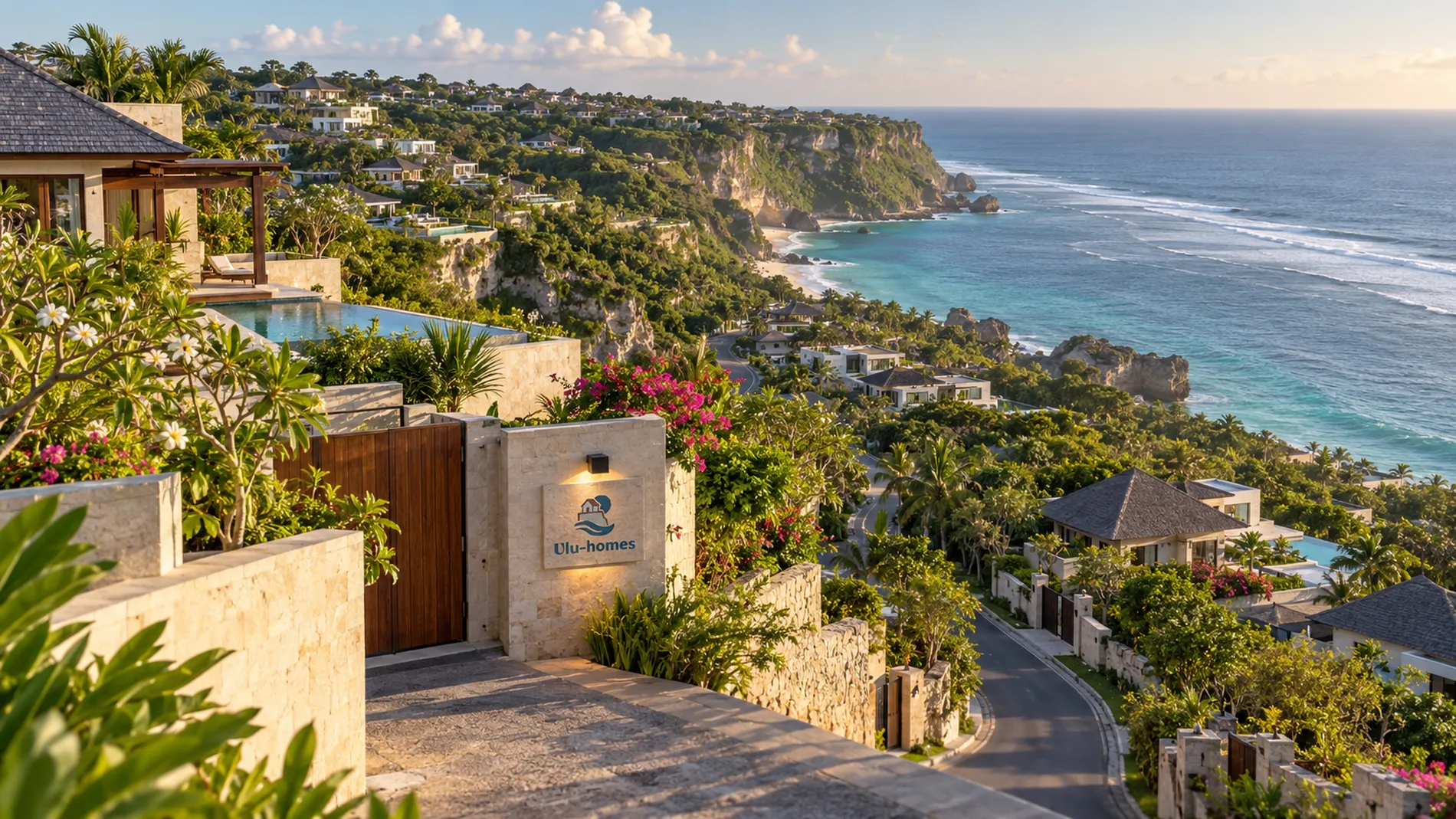

Ungasan is a residential area on the limestone plateau of the Bukit Peninsula, at the southernmost tip of Bali. Unlike Canggu or Ubud, there are no rice terraces or densely developed tourist districts here. Instead, the landscape is characterised by dry, rolling hills, villas hidden behind stone walls, clifftop hotels, and access to beaches such as Melasti and Green Bowl. The area appeals to those seeking peace and quiet, proximity to the ocean, and more spacious plots of land than are typically available in the central parts of the island.
However, this lifestyle comes with trade-offs. Almost every daily activity in Ungasan requires a scooter or car, road conditions and water supply reliability vary considerably from one street to another, and the number of newly built villas is growing rapidly. As a result, evaluating Ungasan as a single property market is of limited value. One villa may be perfectly suited to both everyday living and rental use, while another just a short distance away could present serious challenges because of poor access, unreliable water supply, or legal documentation issues.
This guide takes a detailed look at Ungasan: where it is located, how its different neighbourhoods compare, what everyday life is like, how much properties cost to buy and rent, how to calculate investment returns realistically, which property rights are available to foreign buyers, and what to check before paying a deposit.
Where Is Ungasan Located?
Administratively, Ungasan is a village (desa) in the South Kuta (Kuta Selatan) district of Badung Regency. This distinction matters because the Bukit Peninsula and Ungasan are not the same place.
The Bukit Peninsula encompasses several villages and resort areas, including Jimbaran to the north, Pecatu to the west, and Kutuh and Benoa, home to the Nusa Dua resort area, to the east. Ungasan occupies the central and southern parts of the plateau, stretching towards the dramatic cliffs along the southern coastline.
The area’s main transport artery is Jalan Raya Uluwatu, which runs south from Jimbaran through Ungasan towards Pecatu and Uluwatu Temple. Roads branch eastwards towards Kutuh and Nusa Dua, while numerous smaller streets and lanes lead into residential neighbourhoods and villa developments.
Ngurah Rai International Airport lies to the north, beyond Jimbaran. Journey times from Ungasan are difficult to predict without knowing the exact starting point, time of day, and traffic conditions, particularly around the roads leading into Jimbaran.
The landscape plays a major role in shaping everyday life. Ungasan sits on an elevated limestone plateau, with steep cliffs separating much of the coastline from the beaches below.
Consequently, being close to the ocean on a map does not necessarily mean having convenient access to the beach on foot. A villa located just one kilometre from the shoreline in a straight line may still be separated from the beach by a sheer cliff, a private hotel property, or a winding access road.
Ungasan can broadly be divided into several distinct areas:
- Northern Ungasan, around Jalan Raya Uluwatu and towards Jimbaran: Closer to shops, cafés, essential services, and the main route to the airport, but with heavier traffic and higher noise levels.
- The area surrounding Garuda Wisnu Kencana (GWK) Cultural Park: A mix of residential and commercial development, established local amenities, and convenient connections to Jimbaran.
- The southern coastline near Melasti, Green Bowl, and the clifftop resorts: Ocean views and high-end villas are the main attractions, although everyday shops are farther away and access roads can be more challenging.
- The inland neighbourhoods of the plateau: Generally quieter, with more affordable land relative to plot size. However, roads can be narrow, and the availability and reliability of utilities vary significantly between locations.
What Is Life Like in Ungasan?
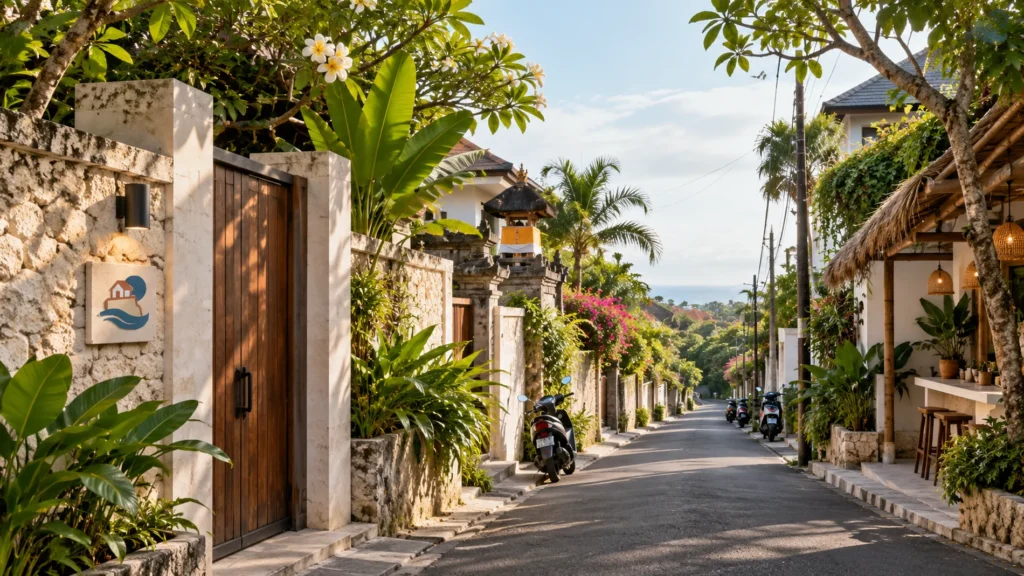
Everyday life in Ungasan is far removed from the polished resort experience portrayed in promotional videos. It is a peaceful residential neighbourhood where expatriate villas stand alongside traditional Balinese family homes, local banjar (community) temples, and small neighbourhood shops. The streets tend to become quiet in the evenings, while religious ceremonies and processions are a regular part of local life during festivals and special occasions. Residents are expected to respect these traditions, including when ceremonies temporarily affect road access or traffic.
Most everyday essentials are available locally. Ungasan has chain convenience stores, traditional warungs, fruit stalls, pharmacies, laundries, and scooter repair shops. Cafés and restaurants are concentrated along the main road and closer to the coast. For larger supermarkets, a wider selection of imported groceries, shopping centres, and specialised services, residents generally travel to Jimbaran, Nusa Dua, or towards Kuta and Denpasar.
Ungasan is generally suitable for remote work, although internet quality varies considerably between properties. Newer villas and residential developments typically have fibre-optic connections, while older houses and properties on quieter outskirts may have less reliable service or slower speeds. Before signing a long-term rental agreement, it is worth testing the connection at different times of day and checking whether a backup option is available, such as a mobile router or a second internet provider. There are coworking spaces and laptop-friendly cafés, but the selection is noticeably smaller than in Canggu.
For families with children, one important consideration is that the international schools, nurseries, and larger medical clinics serving Bukit Peninsula residents are spread across different parts of the peninsula and beyond. Rather than relying on vague descriptions such as “near Ungasan,” families should choose schools and healthcare facilities based on their villa’s exact location and actual morning travel times. For more complex medical needs, many residents travel to hospitals in Jimbaran, Nusa Dua, or Denpasar.
Sports and outdoor activities are among Ungasan’s greatest advantages. Residents have access to the Bukit Peninsula’s reef breaks for surfing, as well as gyms, yoga studios, and opportunities for early-morning running and cycling before temperatures rise. Evening entertainment centres mainly around beach clubs and sunset dining. For a more conventional nightlife scene, Seminyak and Canggu offer considerably more options.
Who is Ungasan best suited to, and who might prefer another area?
- Couples and remote workers: A good choice for those who value peace, quiet, and proximity to the ocean, and do not mind travelling by scooter every day. Reliable internet at the specific property is essential.
- Families with children: A practical option if schools and healthcare facilities are accessible without difficult commutes, and the villa has a secure perimeter and a child-safe swimming pool. Living here without a car can be challenging.
- Retirees: The relaxed pace of life can be appealing, but proximity to medical facilities should be assessed carefully. Properties accessed by steep or poorly lit roads may be less suitable.
- Surfers: Ungasan makes a convenient base for exploring the Bukit Peninsula’s surf breaks, although some of the best-known spots are located in Pecatu and Bingin.
- People who enjoy nightlife and having cafés within walking distance: Ungasan may feel too quiet and spread out. Canggu, Seminyak, or the central Uluwatu area may be a better match.
- Residents who do not drive a scooter or car: Daily life will depend heavily on taxis and private drivers, which can quickly become both expensive and inconvenient.
Beaches and Attractions

Beaches are one of the main reasons people consider living in Ungasan, but the coastline is very different from the broad sandy shores of Sanur or Kuta. Most beaches are reached by descending from the surrounding cliffs, while the amount of exposed sand and the conditions in the water depend heavily on the tides and offshore reef formations.
Melasti Beach is located in Ungasan, along the southern coast of the Bukit Peninsula. The access road cuts dramatically through towering limestone cliffs, creating one of the peninsula’s most recognisable landscapes.
Because visitors can drive down to the beach by car or scooter, Melasti is particularly convenient for shorter visits. There are no long staircases to negotiate, and facilities include parking, cafés, and beach clubs. At low tide, sections of the reef become exposed as the water retreats, while at high tide the available strip of sand becomes narrower. Swimming is not always advisable, as waves and currents can change throughout the day. Beach safety flags and lifeguard instructions should always take priority.
Green Bowl Beach is also located in Ungasan, but offers a completely different experience. Reaching the beach involves descending a long staircase with several hundred steps down the hillside. The climb back up can be physically demanding, particularly in hot weather.
The beach itself is relatively small and can almost disappear at high tide. There are also caves beneath the surrounding cliffs. Green Bowl is particularly popular with surfers and visitors looking for a more secluded coastal experience, rather than families with young children carrying beach bags and equipment.
Pandawa Beach is technically located in the neighbouring village of Kutuh, but it is a regular destination for Ungasan residents. Its broad stretch of sand, road access through dramatic limestone cliffs, sun loungers, and kayak rentals make it one of the Bukit Peninsula’s more family-friendly beach options.
The offshore reef helps reduce wave energy in certain areas, although calm swimming conditions cannot be guaranteed throughout the year.
A few practical beach tips can help make your visit safer and more enjoyable:
- Check the tide tables before setting off. Tidal conditions can determine how much of the beach is accessible, or whether there is any usable sand at all.
- The ocean around the Bukit Peninsula is not always safe for swimming. Coral reefs, strong currents, and powerful surf are common along this coastline.
- Take extra precautions with children. Reef shoes can help protect their feet, and swimming should only take place in designated areas under lifeguard supervision where available.
- Consider accessibility before choosing a beach. Beaches reached by long staircases are generally unsuitable for visitors with joint or mobility problems and for families using pushchairs.
Beyond the coastline, Ungasan’s main cultural attraction is Garuda Wisnu Kencana Cultural Park (GWK), known for its monumental statue and outdoor performance venues. The park hosts cultural activities and performances, making it one of the area’s most recognisable landmarks.
Uluwatu Temple is located in neighbouring Pecatu rather than Ungasan itself, but it is easily accessible by car. Its dramatic clifftop setting makes it a popular destination for sightseeing and sunset visits.
For evening entertainment closer to home, Ungasan’s clifftop beach clubs and venues around Melasti Beach offer opportunities to enjoy sunset views, dining, and a relaxed coastal atmosphere without travelling to other parts of Bali.
Transport and Infrastructure

Living in Ungasan without your own transport can be challenging. Most streets have no pavements, distances between villas, shops, and beaches can be considerable, and the hilly terrain makes walking in the tropical heat uncomfortable. Scooters are the most common means of transport, while families generally prefer to rent or buy a car. Ride-hailing services are available, but local transport associations restrict app-based taxi operations in certain areas, and waiting times can be long on more remote residential streets.
The main traffic bottlenecks are Jalan Raya Uluwatu and the approach to Jimbaran, where congestion builds during rush hour and the peak tourist season. Smaller access roads leading to villas can be narrow, poorly lit, steep, and uneven. Parking at cafés and beaches also fills up quickly during busy periods.
When evaluating a property, road access deserves just as much attention as the villa itself. Garbage collection vehicles, water delivery trucks, and taxis must all be able to reach the property without difficulty.
Electricity is supplied by the state-owned utility company PLN. Power outages do occur, so villas intended for rental use often have generators or backup power systems to keep water pumps and internet routers running. Before purchasing, it is important to check the property’s available electrical capacity, as it may be insufficient to operate multiple air conditioners, a swimming pool, and kitchen appliances simultaneously.
Water supply is one of the most important technical considerations on the Bukit Peninsula’s limestone plateau. Limestone does not retain surface water effectively, while demand continues to increase as new villas and hotels are developed.
Several water supply arrangements are used throughout Ungasan, and no single solution is available everywhere:
- Connection to the municipal water network (PDAM): Convenient where available, although water pressure and supply reliability vary from street to street.
- Private borehole: Possible only with the necessary permits. Water quality, borehole depth, and sustainable yield must all be verified.
- Water storage tanks: Underground or rooftop tanks provide a reserve when the main supply is interrupted.
- Tanker-delivered water: A common backup solution that introduces an additional recurring operating expense.
Drainage is another major consideration linked to the area’s geology and terrain. A plot may look perfectly maintained during the dry season, only for heavy rainfall to send water flowing down neighbouring slopes, across the garden, and into lower-level rooms. Runoff can also damage or wash away access roads.
Every property should be assessed with rainy-season conditions in mind. Look for signs of previous flooding, examine the slope of the land, inspect drainage channels, and check the condition of retaining walls.
Infrastructure checklist before renting or buying:
- Test the access road: Drive to the villa during the day and after dark, on both weekdays and weekends. Check the road’s width, condition, and lighting.
- Confirm the water supply: Identify the source, storage tank capacity, and frequency and cost of tanker deliveries.
- Check water pressure and filtration: Test the water supply at the property and assess the filtration system.
- Verify electrical capacity: Confirm the available power supply and whether backup electricity is installed.
- Test internet connectivity: Run an internet speed test and identify the available service providers.
- Inspect the property for drainage problems: Look for evidence of flooding, cracks in walls, and defects in the drainage system.
- Speak to neighbours or the property manager: Ask what happens to the access road and water supply during the rainy season.
Property Prices in Ungasan in 2026
The first point to understand is a significant limitation in the available market data. Publicly accessible, comprehensive transaction-price data for individual properties in Ungasan is limited. As a result, buyers often rely on advertised listings, local market research, and independent valuations, none of which should automatically be treated as verified completed-sale prices.
Most of the pricing information available online comes from advertised listings and samples compiled by individual property platforms. These figures can provide useful market benchmarks, but they should not be confused with verified transaction prices or independently assessed market values.
It is important to distinguish between three concepts.
The asking price is the amount advertised by the seller. It often includes room for negotiation and may remain unchanged for an extended period, even if market conditions shift.
The actual transaction price is the amount agreed upon and recorded in the contract. This is known to the parties involved and the notary handling the transaction, but it is generally not publicly available.
The calculated price per square metre is a derived metric that must be interpreted carefully. A square metre of land cannot be compared directly with a square metre of built floor area. Similarly, a property with 20 years remaining on its leasehold cannot be valued on the same basis as one with a 30-year lease.
What do publicly available figures from autumn 2026 suggest?
According to the Balinsky property catalogue, the median asking price in its Ungasan listings was approximately USD 377,500 for villas and USD 160,000 for apartments. However, these figures were calculated from a very small sample of four villas and six apartments. They should therefore be treated as indicative listing observations rather than representative market prices or verified transaction values.
Published asking prices in Ungasan vary considerably across property platforms, partly because listings combine different property types, construction stages, locations, and legal arrangements. An off-plan studio offered under a short leasehold agreement cannot be compared directly with a completed ocean-view villa on a larger plot. Buyers should establish the remaining lease term, land and building areas, completion status, and included furnishings before comparing advertised prices. Without a consistent, dated sample of comparable listings, the lowest and highest advertised prices should not be presented as a reliable price range for the entire Ungasan market.
Table. Indicative Property Prices in Ungasan, 2026
| Property Category | Indicative Asking Price | Ownership Structure | Main Price Factors | What Buyers Should Consider |
|---|---|---|---|---|
| Studios and one-bedroom villas in off-plan developments | From approximately USD 90,000–100,000 | Primarily leasehold | Remaining land lease term, construction stage, development management | Construction delays, development density, advertised rental yield projections |
| Apartments | Around USD 160,000 in one listing sample, with considerable variation | Leasehold; Hak Pakai may be available to eligible foreign buyers, subject to applicable minimum price requirements | Views, floor level, development amenities | Monthly service charges, rental restrictions, management company performance |
| Small two-bedroom villas | Approximately USD 200,000–350,000 | Predominantly leasehold | Road access, swimming pool, plot size | Remaining lease term, water supply, permits for commercial rental use |
| Three- to four-bedroom family villas | Approximately USD 350,000–700,000 | Leasehold, with other structures less common | Plot size, layout, construction quality | Maintenance costs, garden and pool upkeep, vehicle access |
| Premium ocean-view villas | From approximately USD 1 million to several million dollars | Leasehold or other legally structured arrangements requiring specialist advice | Clifftop location, ocean views, architecture | Slope stability, coastal corrosion, zoning restrictions near the shoreline |
Why can two seemingly similar properties differ in price by a factor of two?
The explanation usually lies in a combination of factors: location and road access, land and building size, ocean views, structural and finishing quality, reliable water and electricity supplies, ownership arrangements, and, above all, the remaining leasehold term.
A villa with 15 years left on its land lease and another with 28 years remaining represent fundamentally different assets, even if they stand on neighbouring plots.
A completed villa with an established rental history and documented permission for commercial use must also be assessed differently from an off-plan development where projected returns exist only in marketing materials.
It is equally important to remember that the price ranges above are observations based on advertised listings, not valuations of individual properties.
A meaningful price comparison should use properties with similar bedroom counts, land areas, building sizes, locations, completion status, and remaining lease terms. For off-plan developments, buyers should also compare the payment schedule, contractual delivery date, construction progress, developer obligations, and the cost of completing or furnishing the property. When a listing advertises a price per square metre, confirm whether the calculation refers to the land, the enclosed building area, or another measurement. These distinctions can change which property offers better value even when headline asking prices appear similar.
Before entering into a transaction, buyers should examine several genuinely comparable listings, verify the property’s legal documentation, and, particularly for high-value acquisitions, commission an independent valuation.
Finding the right property in Ungasan or elsewhere in Bali becomes much easier when you have clearly defined your budget, purchasing objectives, and preferred ownership structure. Start your property search.
How Much Does It Cost to Rent in Ungasan?
Ungasan’s rental market is divided into two main segments: long-term rentals, typically lasting from several months to a year or longer, and short-term holiday accommodation aimed at tourists.
To establish a realistic rental budget, compare at least five currently available properties of a similar size and standard. For long-term rentals, record the monthly equivalent of the advertised rent, required upfront payment, security deposit, utilities, internet, pool maintenance, and cleaning costs. For short-term stays, compare the total cost for identical dates, including service and cleaning fees, rather than relying on the advertised nightly rate. A two-bedroom villa with a private pool should not be compared directly with a studio apartment or a larger holiday villa. Listing prices also need to be checked against actual availability, as advertised rates may not apply to the dates or contract duration required.
Short-term rental rates fluctuate considerably throughout the year. Short-term rental demand in Ungasan may be influenced by the dry season, international holiday periods, and Christmas and New Year travel. However, occupancy and nightly rates vary between properties and guest segments, so investors should analyse monthly booking patterns rather than assume that every rainy-season month will perform poorly.
Long-term rentals offer greater stability, although tenants are often required to pay six months or even a full year’s rent in advance.
Properties of the same size do not necessarily command similar rents. Pricing depends on several factors, including distance from main roads and beaches, the presence and size of a swimming pool, the condition of furniture and appliances, vehicle access, layout, views, and property management quality. Villas with separate, private bedrooms are generally more desirable. A well-maintained property with excellent guest reviews can command higher rates than a newer but poorly managed villa next door.
Apartments are generally more affordable than villas and easier to maintain. However, they are often less suitable for families and tend to be less competitive in the Bukit Peninsula’s short-term rental market, where many visitors prioritise privacy and a private swimming pool.
For long-term tenants, additional expenses typically include electricity, sometimes water and internet, gas, and transportation. Cleaning and pool maintenance may or may not be included in the rent, so these arrangements should be clearly specified in the tenancy agreement.
Responsibility for repairs, maintenance, utilities, and applicable taxes depends on the ownership structure, rental agreement, and Indonesian law. These obligations should be clearly allocated in the contract, especially for long-term villa rentals and leasehold arrangements.
Short-term rental operations also involve management fees, booking platform commissions, cleaning costs, and financial losses during vacant periods.
| Rental Scenario | Payment Structure | Advantages | Limitations | Best Suited For |
|---|---|---|---|---|
| Long-term rental | Fixed rent for 6–12 months, often paid upfront; utilities are generally paid by the tenant | Predictable income, less wear and tear, fewer management responsibilities | Lower rental rates than short-term accommodation; dependence on a single tenant | Owners seeking stable income without intensive property management |
| Short-term rental | Nightly rental revenue minus management fees, platform commissions, cleaning, and utilities | Higher potential revenue during peak seasons | Seasonality, competition, licensing requirements, high operating costs | Investors with legally compliant properties and professional management |
| Owner occupation | No rental income; all maintenance and operating costs are borne by the owner | Full control over the property, personal comfort, no dependence on occupancy rates | Capital tied up in the property; remaining leasehold term decreases over time | Buyers purchasing a home primarily for personal use rather than investment returns |
The practical takeaway is that anyone planning to live in Ungasan should seriously consider renting for several months before buying. Experiencing the rainy season firsthand can reveal issues that may not be apparent during a short property viewing.
For investors, the choice between long-term and short-term rentals should not be based simply on which generates more revenue. What matters is how much income remains after all operating expenses and whether the property has the necessary approvals for tourist accommodation.
Investment Potential
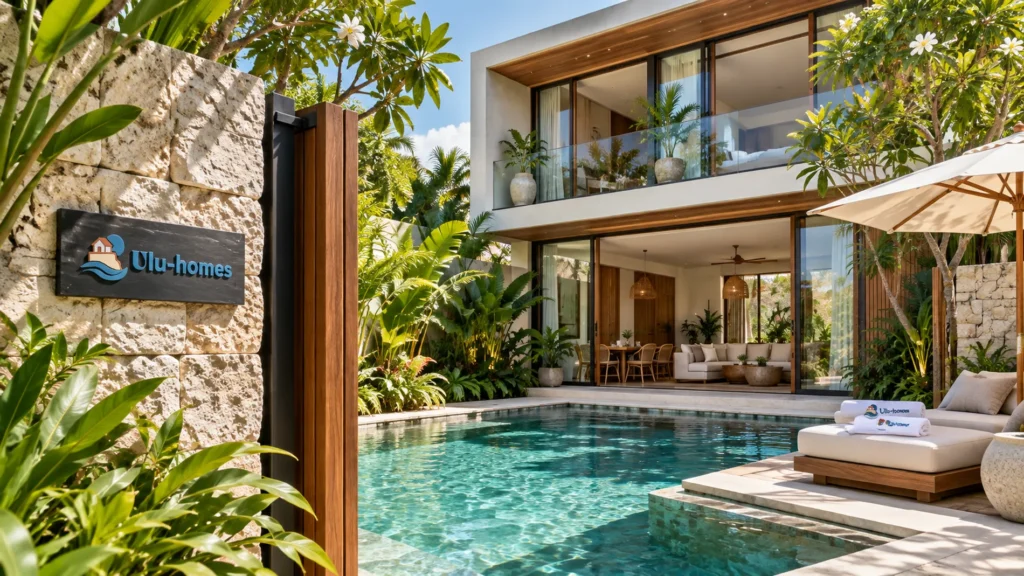
Ungasan attracts property investors because of its location on the Bukit Peninsula, access to beaches such as Melasti, residential atmosphere, and variety of villa developments. However, its investment potential cannot be assessed from location alone. A villa’s rental performance depends on its target guests, layout, private amenities, road access, pricing, operating costs, and legal eligibility for tourist accommodation. Properties in different parts of Ungasan may compete for different guest segments, from couples seeking a quiet retreat to families looking for a private pool and convenient transport connections. Standardised villas with limited distinguishing features may face stronger price competition, while properties with better functionality and verified operating permissions can offer a more compelling rental proposition. Neither outcome is guaranteed, so investors should examine comparable listings and realistic operating scenarios before purchasing.
Two key indicators are used to assess short-term rental performance:
- ADR (Average Daily Rate): The average revenue earned per occupied night.
- Occupancy rate: The percentage of available nights during the year when the property is occupied by paying guests.
Multiplying ADR by the number of occupied nights gives gross rental revenue. Gross rental yield is calculated by dividing annual gross rental revenue by the acquisition price. Net operating income is the revenue remaining after operating expenses, before applicable taxes and financing costs. Net operating yield expresses that income as a percentage of the investment basis used in the calculation. For a fuller assessment, investors should also consider acquisition costs, taxation, financing, and the remaining leasehold term.
Promotional claims of “up to 20% annual returns” often refer to gross revenue under optimistic occupancy assumptions rather than the actual profit an owner can expect to receive.
The following example is entirely hypothetical. All figures are illustrative and are intended to explain the calculation process. They are not a forecast of property investment returns in Ungasan.
The model assumes a hypothetical acquisition price of USD 250,000, an average daily rate (ADR) of USD 120, and 365 available nights per year. Gross annual rental revenue is calculated as ADR multiplied by 365 and the assumed occupancy rate. Operating expenses are illustrative rather than verified market averages, and applicable taxes are excluded. The USD 250,000 purchase price is used as a simplified calculation basis; it does not include additional acquisition costs, legal fees, furnishing, financing, or the cost of extending a lease. Consequently, the calculated yields should not be interpreted as the total return on all capital invested. Investors should prepare an individual cash-flow model based on the actual purchase contract, property specifications, operating arrangements, and expected holding period.
Table. Illustrative Villa Rental Yield Scenarios
| Metric | Conservative Scenario | Base Scenario | Optimistic Scenario |
|---|---|---|---|
| Occupancy rate (assumption) | 50% | 60% | 70% |
| Gross rental revenue (calculated) | USD 21,900 | USD 26,280 | USD 30,660 |
| Gross rental yield (calculated) | 8.76% | 10.51% | 12.26% |
| Property management: 15% of revenue (assumption) | USD 3,285 | USD 3,942 | USD 4,599 |
| Booking platform commissions: 15% of revenue (assumption) | USD 3,285 | USD 3,942 | USD 4,599 |
| Electricity, water, and internet (assumption) | USD 2,400 | USD 2,700 | USD 3,000 |
| Cleaning, laundry, and consumables (assumption) | USD 1,500 | USD 1,800 | USD 2,100 |
| Pool and garden maintenance (assumption) | USD 1,800 | USD 1,800 | USD 1,800 |
| Repair and refurbishment reserve (assumption) | USD 2,000 | USD 2,000 | USD 2,000 |
| Insurance and miscellaneous expenses (assumption) | USD 500 | USD 500 | USD 500 |
| Total operating expenses | USD 14,770 | USD 16,684 | USD 18,598 |
| Operating profit before tax | USD 7,130 | USD 9,596 | USD 12,062 |
| Net operating yield before tax | 2.85% | 3.84% | 4.82% |
| Illustrative annual allocation of the initial investment over 25 years | USD 10,000 | USD 10,000 | USD 10,000 |
| Illustrative operating surplus or shortfall after annual capital allocation | −USD 2,870 | −USD 404 | +USD 2,062 |
The figures illustrate an essential point: gross and net rental yields can differ dramatically.
Even with 70% occupancy, the hypothetical villa generates a net operating yield of approximately 4.8% before tax, rather than the 12% suggested by its gross rental yield.
The difference becomes even more significant when the remaining leasehold term is considered.
A leasehold interest diminishes in duration each year, and when the agreement expires, the right to use the land generally returns to the landowner unless a valid extension has been secured.
Consequently, part of the income generated by a leasehold investment effectively represents the recovery of the original capital rather than additional economic profit.
This does not mean that leasehold property is inherently a poor investment. It means that its financial performance must be assessed in the context of the remaining lease term rather than judged solely by advertised rental yields.
The annual leasehold adjustment shown in the table is a simplified straight-line calculation, not a formal property valuation or discounted cash flow analysis. It does not account for the timing of rental income, potential changes in property value, or the financial implications of extending the lease.
Operating profit is not the same as the owner’s final cash flow.
The operating profit figures in the table exclude applicable rental income taxes, tourism-related levies, licensing expenses, accounting costs, and, where the acquisition is financed, loan repayments.
Tax liabilities depend on the ownership structure and the nature of the rental business. They should be calculated with the assistance of a qualified Indonesian tax adviser.
Before comparing investment returns, calculate them on a consistent basis: net operating profit before tax divided by the acquisition price, while also accounting for the remaining leasehold term. Gross revenue figures from a developer’s sales presentation are not sufficient for making a meaningful comparison.
Why Property Management Matters So Much
Two otherwise similar villas can achieve significantly different occupancy rates and average daily rates depending on their management quality, pricing strategy, guest reviews, maintenance standards, and marketing. The size of this difference varies by property and market conditions.
A competent property manager is responsible for professional photography, compelling listing descriptions, dynamic pricing, guest reviews, cleaning, maintenance, repairs, and compliance with applicable licensing requirements.
The management fee is one of the largest operating expenses, making it essential to understand exactly what the service includes.
Some management companies include booking platform commissions in their fees, while others charge these separately. This distinction can have a substantial impact on the owner’s actual income.
Before signing a management agreement, investors should establish how pricing decisions are made, how maintenance is approved, which costs are charged separately, and how frequently financial reports are provided.
Reselling a Leasehold Property
When evaluating a leasehold property on the resale market, buyers pay close attention to the remaining duration of the lease.
For example, a villa originally acquired with 28 years remaining on its lease will have only 18 years left if sold a decade later. This directly affects the number of potential buyers and the price they may be willing to pay.
Before buying, investors should model at least three exit scenarios: selling the property without extending the lease, extending the lease before resale, and continuing to operate the property until a later stage of the lease term. Each scenario should consider the remaining contractual rights, expected renewal costs, the owner’s ability to transfer the lease, and possible changes in buyer demand. A resale price should never be calculated by simply assuming that the original acquisition price will remain unchanged. The cost and enforceability of any extension mechanism require independent legal review.
A clearly documented contractual option to extend the lease may help preserve the property’s value. However, lease extensions are not automatically guaranteed. The applicable conditions and the cost of renewal depend on the lease agreement and the landowner’s rights and willingness to proceed.
This makes the wording of extension clauses particularly important. Buyers should establish whether the agreement provides a legally enforceable renewal mechanism or merely states that an extension may be negotiated in the future.
A promise to extend the lease “by mutual agreement” does not offer the same certainty as a properly drafted contractual right with clearly defined conditions.
Three Main Property Ownership and Investment Scenarios
1. Buying a Property for Personal Use
For owner-occupiers, the principal benefits are lifestyle, comfort, and the potential savings compared with renting an equivalent home.
Rental yield is not the primary objective, but buyers should still understand the full cost of ownership, including maintenance, utilities, insurance, taxes, and the gradual reduction in the remaining leasehold term.
2. Buying a Villa for Short-Term Rentals
This strategy offers the highest potential rental revenue, particularly during peak tourist seasons.
However, it also involves the greatest exposure to seasonal fluctuations, management quality, local competition, operating expenses, and licensing requirements.
Success depends not simply on attracting guests but on generating sufficient income after all costs have been deducted.
3. Combining Personal Use with Rental Income
Under this arrangement, the owner occupies the villa for part of the year and rents it out during the remaining months.
The potential rental income is lower because the property is unavailable to paying guests during periods of personal use.
There is also an important practical consideration: the most attractive time for owners to stay in their villa often coincides with the peak tourist season, when nightly rental rates are highest.
This trade-off should be included in the financial model from the beginning rather than discovered after the property has been purchased.
Ungasan vs. Neighbouring Areas
Comparing Ungasan with its neighbours can be confusing because place names are not always used consistently. In tourism and real estate marketing, “Uluwatu” often refers to almost the entire western and southern Bukit Peninsula, including parts of Ungasan. Administratively, however, Uluwatu Temple and the beaches of Bingin, Padang Padang, and Suluban are located within Pecatu village.
As a result, a property advertised as an “Uluwatu villa” may actually be in Ungasan, and vice versa. Always rely on the official address in the property documents rather than the location stated in the listing.
For a closer look at the surrounding areas, explore our guides to Uluwatu, Jimbaran, and Nusa Dua.
| Area | Atmosphere | Infrastructure | Beach Access | Advantages | Limitations |
|---|---|---|---|---|---|
| Ungasan | Quiet residential neighbourhoods with villas and cliffside hotels | Basic amenities locally, with larger facilities and services in neighbouring areas | Melasti is accessible by car, Green Bowl requires descending stairs, and Pandawa is nearby | Space, tranquillity, ocean views, wide range of property prices | Dependence on private transport, inconsistent road conditions and water supply |
| Pecatu and Uluwatu | Surf culture, cafés, beach clubs, and lively evenings | Plenty of cafés and tourist-oriented services, but an increasingly congested road network | Numerous beaches beneath dramatic cliffs, often reached by steep stairways | Strong tourist demand, vibrant atmosphere | Traffic congestion, dense development around popular spots, intense competition among rental villas |
| Jimbaran | Traditional fishing village and family-friendly coastal suburb | Well-developed amenities, including shops, schools, healthcare facilities, and convenient airport access | Long sandy beach along a sheltered bay, generally offering calmer swimming conditions | Convenient everyday living and easier travel connections | Fewer dramatic clifftop views, aircraft noise in some areas, traffic |
| Nusa Dua | Managed resort enclave with surrounding residential neighbourhoods | Well-organised infrastructure, major hotels, hospital, and shopping centre | Gently sloping beaches, generally calmer and more suitable for families | Orderly surroundings, security, family-friendly facilities | Resort-oriented atmosphere, less exposure to everyday Balinese life, higher prices within the resort enclave |
What does this mean when choosing where to live or invest?
- Families planning a long-term move may find Jimbaran or Nusa Dua more practical because of their proximity to schools, healthcare facilities, and calmer beaches. Ungasan can also be a good option, particularly if the villa is in the northern part of the area and the school commute has been tested during peak traffic hours.
- Couples and remote workers seeking peace, privacy, and ocean views may find more space for their money in Ungasan than near Pecatu’s most popular beaches, provided they are comfortable travelling for entertainment and nightlife. Those who prefer being surrounded by cafés and surfers may feel more at home in Bingin.
- Investors considering short-term villa rentals should compare specific micro-locations rather than entire districts. A villa near Melasti with good road access may compete successfully with properties in Pecatu, while a villa on an inland residential street without a view could struggle to attract the same demand.
It would be misleading to claim that Ungasan is always cheaper or offers better investment opportunities than its neighbours. Premium properties along its southern coastline can command prices comparable to the most desirable real estate elsewhere on the Bukit Peninsula.
How Foreigners Can Buy Property in Indonesia
Indonesia’s land ownership system is based on the Basic Agrarian Law of 1960 and subsequent regulations. One important legal framework for foreign residential property ownership is Government Regulation No. 18 of 2021 (PP 18/2021), which addresses land rights and conditions relevant to qualifying foreign property acquisitions. The legal structure available to a buyer depends on the property, the underlying land rights, and the buyer’s eligibility. The following overview is intended for general information and does not replace independent legal advice on a specific transaction.
The main forms of property rights are:
- Hak Milik: The most comprehensive form of land ownership, broadly comparable to freehold title. Foreign nationals cannot acquire land under Hak Milik on the same terms as Indonesian citizens.
- Hak Guna Bangunan (HGB): A right to construct and own buildings on land for a specified period. It is available to eligible Indonesian legal entities, including foreign-invested companies (PT PMA), for legitimate company activities rather than as a means of acquiring property for personal ownership.
- Hak Pakai: A registered right to use land, available to eligible foreign nationals for qualifying residential property under specific legal conditions. Eligibility depends on the applicable immigration-document requirements, the property type, and the underlying land rights. The duration, extension, and renewal rules vary according to the legal structure and must be checked individually. Buyers should not assume that an advertised maximum term is automatically available or guaranteed for their property.
- Hak Sewa: A contractual right to lease property. In Bali’s real estate market, this generally corresponds to what is advertised as leasehold: an agreement to lease land or a villa for a fixed period, typically with rent paid upfront.
An important distinction must be made between three separate legal concepts: rights over a plot of land, ownership of a building, and ownership of shares in a company.


 Bali,Ungasan
 from 28.7м²


Establishing a PT PMA does not give a foreign individual Hak Milik ownership of land. The company may hold HGB rights, but it must comply with applicable capital requirements, reporting obligations, and genuine business activity requirements. Using a corporate structure solely to hold a private villa can create legal, financial, and compliance risks.
Minimum property price thresholds apply to certain residential property acquisitions by foreign nationals in Indonesia. Under Ministerial Decision No. 1241/SK-HK.02/IX/2022, the stated thresholds for Bali are IDR 5 billion for a landed house and IDR 2 billion for an apartment unit. These thresholds must be considered together with the applicable ownership structure, eligibility criteria, and current regulations. They should not be interpreted as minimum prices for all leasehold contracts. Buyers should have a qualified Indonesian lawyer confirm the rules applicable to their proposed transaction.
There is no single standard leasehold duration. Agreements for 20, 25, or 30 years are common, although other terms are also available. Some contracts include extension provisions, while others do not.
Before signing any leasehold agreement, buyers should establish how many years remain, whether an extension is possible, how the extension price will be determined, who legally owns the land, whether the seller has the authority to transfer the relevant rights, whether the agreement has been properly executed and documented through a notary, and whether tourist subletting is permitted. The role of a PPAT should also be confirmed where the transaction involves registered land rights.
Another essential consideration is permitted land use.
Zoning is governed by Indonesia’s detailed spatial planning framework, including the Rencana Detail Tata Ruang (RDTR). Buyers can conduct an initial review using the RDTR Interactive service on the OSS portal, but an online zoning map does not replace official confirmation or a detailed examination of the property’s legal documentation.
Construction generally requires building approval (Persetujuan Bangunan Gedung, or PBG), while completed buildings are subject to applicable requirements for a certificate of proper function (Sertifikat Laik Fungsi, or SLF).
Before relying on projected income from holiday rentals, request evidence of the property’s current permitted use and any existing business licences. Check whether the proposed operator is legally authorised to conduct the accommodation business, whether the relevant KBLI classification applies, and whether the building’s approved function is consistent with the intended rental activity. The KBLI 2025 classification includes code 55203 for villa accommodation, replacing the earlier 55193 classification, but the applicable registration and licensing requirements must be confirmed for the specific business through OSS. A developer’s rental-income forecast or an existing listing on a booking platform is not evidence that the operation is legally compliant.
Operating a villa as short-term tourist accommodation is a regulated business activity in Indonesia. Owners and operators must confirm the applicable KBLI business classification, registration requirements, building approvals, zoning restrictions, and tourism-sector licences through the OSS system and the relevant authorities. A building’s approval for residential use does not, by itself, establish permission to operate it as commercial tourist accommodation.
Property rights must be verified through legal documents, not the seller’s assurances or the villa’s appearance. If the lease agreement, land certificate, and building permits contain inconsistent information, the transaction should be put on hold until those discrepancies have been resolved, before any deposit is paid.
What to check before paying a deposit:
- Title documents: Examine the land certificate, including the type of right, certificate number, registered area, and boundaries. Confirm that the details match the physical plot.
- Owner’s or seller’s authority: Establish whether the seller owns the land or is themselves a leaseholder. Check whether consent is required from a spouse, heirs, or other parties with legal rights.
- Leasehold duration and conditions: Verify the remaining lease term, extension provisions, future extension costs, and the procedure for transferring contractual rights to a new buyer.
- Permitted land use: Check the applicable RDTR zoning and confirm that the intended residential or tourism-related use is allowed.
- Construction and occupancy documentation: Review the PBG, SLF, and other relevant approvals. Confirm that the completed building corresponds to the approved plans.
- Legal road access: Determine whether the access road is public or crosses privately owned land under an easement, agreement, or other legally enforceable arrangement.
- Utilities: Check water availability, sufficient electricity capacity, and the presence of a suitable wastewater disposal system, whether connected to a sewer network or using a septic tank.
- Encumbrances and outstanding obligations: Investigate mortgages, legal disputes, unpaid taxes, existing leases, and any contractual obligations affecting the property.
- Tax implications: Calculate applicable buyer and seller taxes, taxes on rental income, and any relevant local charges.
The transaction should be handled with the assistance of an independent Indonesian lawyer representing the buyer rather than the seller or estate agent. An appropriately authorised notary or PPAT should also be involved wherever required for the documentation and registration of land rights.
Indonesian regulations and administrative procedures can change, so all legal requirements should be checked against the rules in force on the actual transaction date.
Risks and Future Prospects of Ungasan
One of Ungasan’s main investment risks is the growing supply of accommodation.
An expanding supply of villas and holiday accommodation may intensify competition in parts of the Bukit Peninsula. Standardised properties with few distinguishing features can be more exposed to pricing pressure, particularly during periods of weaker demand. However, the extent of this effect in Ungasan should be assessed using current, location-specific listing, occupancy, and average daily rate data rather than assuming that all properties face the same market conditions.
Seasonality adds another layer of uncertainty. Occupancy can decline during the rainy season, while fixed operating expenses remain payable regardless of how many nights a property is booked.
Regulatory requirements are also becoming stricter.
Indonesian authorities have increased scrutiny of unlicensed tourist accommodation. In December 2025, the Ministry of Tourism announced a March 31, 2026 target for accommodation providers listed on online travel platforms to obtain the necessary permits, with non-compliant listings potentially subject to removal. Property owners should verify the current enforcement position, applicable business classification, and required licences before offering a villa for short-term rental.
Bali’s provincial authorities have tightened controls on the conversion of productive agricultural land for commercial development. These measures have implications for proposed hotel and villa projects, particularly where land-use restrictions apply. The precise legal position must be checked against current provincial regulations, local spatial plans, and the zoning classification of the individual plot.
Regulatory compliance is an essential part of investment risk management rather than a guarantee of stronger rental performance. Properties operating without the required permissions may face restrictions, penalties, or removal from online booking platforms, depending on the applicable rules and enforcement measures. A villa with verified land rights, appropriate zoning, and valid business permissions is better positioned to demonstrate legal compliance, but this does not guarantee higher occupancy, rental rates, or profitability. Investors should evaluate regulatory status alongside competing supply, location, guest demand, and ongoing operating costs.
The main risks to assess before investing include:
- Increasing competition: A growing supply of new villas and downward pressure on nightly rates for properties with standard layouts and limited distinguishing features.
- Road access and traffic: Dependence on increasingly congested roads and the quality of the access route to the property.
- Water supply: Potential shortages, inconsistent availability, and additional costs associated with water delivery.
- Construction quality: Poor workmanship, leaking roofs, structural cracks, and other defects that may lead to expensive repairs.
- Drainage and flooding: Inadequate drainage systems and localised flooding during heavy rainfall.
- Humidity and coastal exposure: Mould, deterioration of building materials, and corrosion affecting metal structures, fittings, and appliances near the ocean.
- Geotechnical conditions: Erosion, slope instability, landslide risks, and the structural condition of retaining walls, particularly on clifftop or hillside plots.
- Planning and regulatory restrictions: Zoning limitations, changes to licensing rules, and restrictions on permitted property use.
An impressive ocean view does not guarantee legal compliance, ground stability, or comfortable everyday living. A villa on the edge of a cliff requires a separate engineering assessment, while the view itself is often one of the property’s most expensive—and least reliably protected—selling points.
Ungasan’s long-term prospects should be assessed with measured expectations.
Factors supporting the area’s appeal include the limited availability of coastal land, continued development of tourism and hospitality infrastructure across the Bukit Peninsula, and sustained interest in southern Bali as both a residential and holiday destination.
However, these advantages must be weighed against increasing accommodation supply, mounting pressure on water resources and roads, and uncertainty surrounding future regulatory changes.
There is no guarantee that property prices will rise. Clear legal documentation, a substantial remaining lease term, reliable road access, and dependable utilities can reduce transaction and operational risks. However, these features do not guarantee price stability, liquidity, or a profitable resale. Future value will also depend on market demand, the property’s condition, competing supply, and the terms of any remaining leasehold rights.
Is Ungasan the Right Choice?
Ungasan is an attractive option for buyers looking for a home of their own, particularly those who value peace, quiet, and proximity to the ocean, are comfortable driving a scooter or car, and are prepared to carefully assess the property’s exact location. For families, the area makes sense when schools, healthcare facilities, and shops are within easy reach via convenient routes. Otherwise, Jimbaran or Nusa Dua may prove more practical.
Ungasan also offers opportunities for property investors, but only when potential returns are assessed realistically, with particular attention to net rental yields and the remaining leasehold term. Buyers planning to operate a villa as a short-term rental need the appropriate legal licences, professional property management, and a property that stands out in an increasingly competitive market.
Before making any decision, verify the property’s exact address and access road, water supply, and drainage conditions during the rainy season. Check the land title documents, zoning restrictions, actual maintenance costs, realistic occupancy projections, and legal limitations affecting foreign buyers.
The ULU Homes team can help buyers compare properties in Ungasan with alternatives elsewhere on the Bukit Peninsula, taking into account location, budget, property specifications, and the intended use of the home. Independent legal due diligence should be conducted by a qualified Indonesian lawyer before the buyer enters into binding contractual obligations.
Ultimately, Ungasan is best suited to buyers who focus on finding the right property—one that has been thoroughly inspected and legally verified—rather than simply purchasing a villa because it is advertised in a desirable location.
 Real estate in Georgia
 Real estate in Cyprus
 Real estate in the UAE
 Real estate in Montenegro
 Real estate in Thailand
 Real estate in Spain
 Real estate in Saudi Arabia
 Real estate in Turkey
 Real estate in Zanzibar
 +62 895 001 924 667
 hello@ulu-homes.id
 Tibubeneng, Canggu, Kuta Utara, Badung Regency, Bali 80361, Indonesia




 Get catalogue of TOP-7 objects