
 +62 895 001 924 667



If you’re wondering what to see in Bingin, the answer lies along five stretches of coastline: Bingin Beach, Cemongkak Beach, Dreamland Beach, Padang Padang Beach (also known as Labuan Sait), and Balangan Beach. This selection covers Bingin and its immediate surroundings on the western coast of Bali’s Bukit Peninsula, rather than five attractions within a single village. Balangan, for example, requires a separate journey by road.
The main attractions are coastal coves, limestone cliffs, powerful surf, and opportunities to watch surfers riding reef breaks. Access varies considerably, from short walks to steep staircases and uneven cliffside paths. Padang Padang has a reported entrance fee, while charges at the other beaches are less consistently documented and may include parking or locally collected fees. This is an editorial selection rather than an official ranking of quality or safety. Prices, access conditions, and available facilities are based on travel guides and reports from 2025–2026 and should be verified before visiting.
Before You Visit Bingin
Bingin is located in Pecatu on the western side of Bali’s Bukit Peninsula, beneath the limestone cliffs near Jalan Pantai Bingin. On July 21, 2025, the authorities began demolishing 48 structures in the Bingin Beach area, as confirmed by the Badung Regency Government. The operation affected former tourism businesses, including restaurants and accommodation. In July 2026, local reporting indicated that the regency had begun procurement for redevelopment works, with approximately IDR 20 billion allocated and plans covering beach access, public facilities, and improvements to the surrounding area. However, detailed designs were still being finalised at that stage. The announced programme should not be interpreted as confirmation that redevelopment or safe permanent access had been completed by November 2026.
Bingin looks very different from its older photographs following the demolitions. The former hillside cafés have disappeared, and the descent remains affected by construction work. According to reports from 2026, the beach is open and free to enter, but there are no restaurants, toilets, or accommodation directly on the sand. The staircase reportedly reaches only partway down the slope, after which visitors follow an uneven path through the remains of demolished structures.
| Location | Main Highlight | Access | Main Limitation | Best Suited To |
|---|---|---|---|---|
| Bingin | Reef break beneath the cliffs | Steep descent via an access route affected by demolition and redevelopment; current conditions require verification | Uneven terrain, changing access arrangements, and limited facilities | Visitors comfortable with demanding access who want to watch experienced surfers |
| Cemongkak | Quiet cove framed by pale limestone cliffs | Parking near Bingin, followed by a walk and steep steps | No facilities, rocky shoreline, and limited sand at high tide | Visitors looking for a quieter sunset spot |
| Dreamland | Wide sandy beach bordered by cliffs | Short walkway and low staircase from the parking area | Powerful shore break | Visitors seeking easier access and beach facilities |
| Padang Padang | Rock-enclosed cove accessed through a narrow passage | Approximately 100–120 steps | Entrance fee, limited space, and crowding | Travellers who enjoy intimate coves and watching the waves |
| Balangan | Long sandy beach and sunset cliff viewpoint | Clifftop parking and approximately 50 steps to the beach | Reef near the shore and no lifeguards | Visitors seeking open space and sunset views |
Four things to check before setting off:
- Access to Bingin: Look for recent reviews and photographs showing the condition of the descent over the previous few weeks.
- Tide times: Check the official BMKG tide forecast, select a relevant nearby station, and confirm that the displayed time zone matches Bali’s local time (WITA, UTC+8). Predicted water levels depend on the selected station and reference datum. A tide forecast does not establish whether a particular beach or rock passage is safe. Always assess local wave conditions and follow any access restrictions or warnings.
- Cash: Do not assume card payments are available at beach entrances or parking areas. Small charges generally range from IDR 2,000 to IDR 20,000.
- Daylight and footwear: Allow enough daylight for both the descent and return climb. During the rainy season, roughly November to March, wear shoes with good grip.
1. Bingin: Beach and Surf Break

What to See
The main attraction is the sweeping curve of sand beneath the dark limestone cliff and the left-hand reef break that produces powerful waves close to shore. Surfers gather in the lineup approximately 100 metres from the water’s edge, giving visitors on the beach an excellent view of how they select waves and ride along the reef.
The best time to watch depends on the tide. Surf camp descriptions suggest that Bingin generally works best around mid-tide, which is also when the lineup tends to be busiest. Check the forecast before visiting.
Nearby, towards Padang Padang, lies Impossibles, a long left-hand wave breaking over coral reef. It does not work every day: the break requires suitable south or southwest swell and offshore southeasterly winds. The most favourable season is generally the dry period, from April to October. You can watch the waves from a distance on the cliffs without attempting to find a route down to the water.
How to Get There
Search for “Bingin Beach” or Jalan Pantai Bingin in Pecatu on your map. According to reports from 2026, there are two parking areas, each connected to a route descending towards the beach.
Parking is paid in cash. Prices reported in October 2026 were approximately IDR 5,000 for a scooter and IDR 10,000 for a car, although these charges may change.
From the parking area, follow the narrow lane and signs towards the descent. According to Bali Untold, following a visit in June 2026, the walk to the sand takes approximately eight minutes.
However, the lower section is no longer the original staircase. Visitors now follow a newer, uneven path. Pay attention to signs and ask local residents which entrance is currently open. Never bypass barriers or use closed trails.
How Difficult Is the Access?
Bingin currently has one of the more demanding beach approaches in this selection. Reports from 2026 describe a partially damaged staircase and a steep, uneven path through an area affected by demolition work. Gravel, loose stones, and construction debris may be present, although the precise route can change as access improvements progress. The difficulty depends on the entrance used, recent weather, and the condition of the path on the day of your visit. If the designated route is blocked or appears unstable, do not attempt an alternative descent through the construction area.
After heavy rain, loose material may shift or slide, so avoid sitting directly beneath exposed sections of the hillside. Tracks Magazine reported in May 2026 that local authorities had delivered concrete blocks for new steps.
The descent is unsuitable for pushchairs and visitors with limited mobility. Children need close supervision, and everyone should wear closed-toe shoes with good grip because sharp debris may remain along the path.
The climb back up is more tiring in the heat, so carry enough drinking water and allow additional time for your return.
Best Time to Visit
Mornings are generally cooler and quieter on the hillside. During the dry season, some of the best surf conditions develop when offshore winds become established, which does not necessarily happen at sunrise.
Bingin is rarely completely deserted, whatever the weather. Surfers often enter the water very early. For photography, the evening can be particularly attractive, when low sunlight brings out the texture and colours of the limestone cliffs.
High tide significantly reduces the exposed sand, while low tide reveals a reef platform. Do not walk across the reef without suitable protective footwear.
After heavy rain, the slope can become slippery. In those conditions, it may be wiser to admire the view from the upper part of the descent. Avoid descending at dusk or after dark, as the path is not illuminated.
Swimming and Surfing
Watching the waves, swimming, and surfing at Bingin are three very different activities.
Surf schools describe Bingin as an advanced-level reef break, with shallow coral, fast sections, and little room for mistakes. Beginners should not attempt to join the lineup. Anyone learning to surf would be better off choosing a more suitable break with a qualified instructor.
Swimming close to shore is also limited by the reef and rocks, which can make entering the water hazardous even for strong swimmers.
There are no lifeguards on the beach. If swimming is your priority, consider Dreamland or Balangan when sea conditions are calm and a suitable swimming area can be identified. If you have come for the surf, watching from the sand is a worthwhile experience in itself.
Costs and Facilities
Entrance to Bingin Beach is free. The main charge is parking, reportedly around IDR 5,000 for a scooter and IDR 10,000 for a car, provided the prices have not changed.
Bring small-denomination notes, as parking attendants may not always have change.
According to visitor reports from 2026, established beachfront restaurants, public toilets, and accommodation have not returned to their former condition following the demolitions. A small number of informal vendors may operate near the beach, but their availability is not guaranteed. Bring sufficient drinking water and snacks, do not rely on finding toilets at beach level, and take your rubbish away with you. Check recent reports before visiting, as facilities may change during redevelopment.
If you need a toilet or café, look for facilities higher up near the parking areas and confirm which businesses are currently open.
Who Should Visit and How Much Time to Allow
Bingin is best suited to visitors who are comfortable with an uneven descent and want to see its famous reef break up close.
If your priority is relaxing comfortably on the sand, Dreamland is a more practical starting point. Visitors interested in Bingin’s history may also enjoy comparing today’s shoreline with photographs taken before the 2025 demolitions.
Allow approximately 1–1.5 hours for the descent, exploring the beach, and climbing back up, plus any additional time you want to spend watching surfers.
This is an editorial estimate. In hot weather or at high tide, consider shortening your visit.
2. Cemongkak: Limestone Cliffs and a Quiet Cove

What to See
Cemongkak lies between Bingin and Dreamland and is particularly appealing for its sunset views.
Travel guides describe pale sand, white limestone cliffs, and scattered rocks and pebbles along the water’s edge. It is not generally regarded as a major surf spot, so you are more likely to encounter people enjoying the scenery than surfers carrying boards.
A separate sunset viewpoint is marked on maps as “Sunset Point Pantai Cemongkak”. This clifftop location overlooks the cove.
Approach it only using established paths. An unprotected cliff edge should never be treated as a safe viewing platform. Visiting the beach and enjoying the view from above are separate experiences, and you do not need to descend to the sand to watch the sunset.
How to Get There
Search for “Cemongkak Beach” or “Pantai Cemongkak”. The location is generally listed along Jalan Pantai Bingin in Pecatu.
There is no dedicated parking area directly beside the beach. Visitors usually park near Bingin, reportedly around five minutes’ walk away, or use a small parking area on the clifftop.
Access to Cemongkak may be less clearly signposted than access to the larger neighbouring beaches. Use an up-to-date map to locate Pantai Cemongkak or Sunset Point Pantai Cemongkak, then confirm the public entrance locally before proceeding. Older travel guides may refer to nearby shops or guesthouses, but these landmarks should not be relied upon without recent verification. Avoid entering private property or following unmarked cliffside paths.
Some travel guides describe a short walk from the parking area followed by steep steps descending towards the cove. The walking distance and condition of the route may vary depending on where you park and which entrance is currently accessible. No reliable, consistently documented measurement of the elevation change was available, so visitors should assess the actual path rather than rely on a precise height or distance.
Do not cross abandoned structures, private property, or closed paths. If the route is unclear, choose another beach rather than attempting to improvise a descent.
How Difficult Is the Access?
The descent is short but steep. Travel guides describe it as a “steep walk down the cliff”: relatively quick, but uncomfortable underfoot.
The steps vary in height and can become slippery after rain, making ordinary sandals a poor choice. The return climb is noticeably more demanding in hot weather.
Cemongkak is unsuitable for pushchairs and visitors with limited mobility.
According to published descriptions, the path and stairs are not illuminated. If you visit for sunset, allow enough time to return while there is still daylight. Avoid climbing an unfamiliar cliffside path in darkness.
Best Time to Visit
Late afternoon is generally the most appealing time, especially if your main goal is sunset.
During the dry season, the evening viewing window is roughly between 6:00 pm and 6:45 pm, although the actual sunset time varies by month.
Arrive approximately an hour before sunset so you have enough time to explore and return safely.
High tide reduces the amount of exposed sand, while low tide reveals more rocks. During particularly high tides, the cove can feel extremely narrow.
Mornings are generally cooler and quieter, although natural shade on the beach is limited.
Swimming and Surfing
Cemongkak is only conditionally suitable for swimming.
Travel guides describe limited swimming opportunities at Cemongkak because of the rocky seabed, changing wave conditions, and exposed shoreline. Shallow water should not automatically be considered safe, as breaking waves can knock visitors off their feet and currents may develop close to shore. If conditions are uncertain, avoid entering the water and enjoy the beach from the sand instead. Visitors who specifically want to swim should consider a location with suitable conditions and, where available, lifeguard supervision.
Low tide does not automatically make swimming safe. Waves, slippery rocks, and changing currents remain potential hazards.
The cove itself is not commonly discussed as a surfing destination. Beginners should not treat it as a suitable learning spot, while experienced surfers generally favour neighbouring breaks.
If the sea is rough, stay on the sand and enjoy the view.
Costs and Facilities
Entrance to Cemongkak Beach is free. According to most descriptions, the only possible charge is parking.
Reported parking fees range from IDR 2,000 to IDR 10,000, although some visitors describe free parking. Since the information varies, carry small-denomination notes.
There are no facilities directly on the beach. Several sources mention small warungs selling drinks near the parking area, but their availability should not be taken for granted.
Bring water, food, and a bag for your rubbish. Do not expect to find vendors on the shoreline.
Who Should Visit and How Much Time to Allow
Cemongkak appeals to visitors looking for a sunset spot away from the largest crowds who are comfortable negotiating steep steps.
However, describing it as deserted would be misleading: the upper viewpoint can attract plenty of visitors around sunset.
If you prefer a beach with facilities and convenient access, Dreamland is the better option.
Allow approximately one hour for a straightforward visit, or around 90 minutes if you plan to stay for sunset.
If you are visiting after Bingin, allow additional time for parking and locating the correct path.
3. Dreamland: Open Space and Powerful Surf

What to See
Dreamland is the most spacious beach in this selection, with a broad stretch of pale sand approximately 400–500 metres long, enclosed by limestone cliffs.
Located between Bingin and Balangan, it attracts visitors who want more room to spread out and an open view of the ocean.
At one end of the beach, you can see the Jumeirah Bali resort, while a small hill near the entrance provides an elevated viewpoint.
Waves break directly onto the sand, making the shoreline particularly dramatic in favourable weather.
Mornings are usually the quietest time. Some hotel travel guides recommend arriving around 7:00–8:00 am. By approximately 5:00 pm, visitors begin gathering for sunset, and the beach becomes noticeably busier.
How to Get There
Search for “Dreamland Beach Parking” in Pecatu or navigate towards Jalan Pantai Dreamland.
There are separate parking areas for scooters and cars. Scooter parking is close to the beach, while reaching the car parking area involves a short walk of approximately two or three minutes and a small staircase.
From the parking area, an elevated walkway passes toilets and showers before continuing down a short flight of steps to the sand.
The entire approach takes only a few minutes and does not involve a difficult cliff descent, unlike Bingin or Padang Padang.
Some visitors have reported rubbish and graffiti around the shops near the entrance.
How Difficult Is the Access?
Dreamland has the easiest approach of the five beaches in this guide.
Travel guides describe a relatively level walkway followed by a short staircase, making it a more practical choice for families with children or visitors carrying beach equipment.
However, steps and uneven surfaces can still present difficulties for pushchairs. Check recent photographs of the entrance if accessibility is important to you.
Visitors with limited mobility may find Dreamland easier to approach than the other beaches, although crossing the sand to reach the water remains a challenge.
Closed-toe shoes or suitable beach footwear are recommended, as sharp stones may be present near the cliffs and in parts of the water.
Best Time to Visit
The most comfortable times are generally early morning and late afternoon, when temperatures are lower.
There is little natural shade during the middle of the day. Sunset is the busiest period, and weekends typically attract more visitors than weekdays.
Tidal conditions affect the intensity of the shore break. At high tide, swimming can become particularly hazardous. At low tide, shallow pools may appear near the shoreline.
Visitor reports describe significant changes in wave conditions throughout the day. Observing the sea for a few minutes cannot reliably establish whether swimming is safe or whether dangerous currents are present. Follow any posted warning flags or instructions from authorised beach personnel, and do not enter the water when conditions are uncertain. Powerful shore breaks and rip currents may be difficult to recognise, particularly for visitors unfamiliar with the beach.
Swimming and Surfing
Dreamland is known for its powerful shore break, with waves sometimes breaking directly onto the sand. Rip currents and hazardous surf conditions may develop in different parts of the beach, and no particular section should be considered consistently safe for swimming. Visitor reports mention red warning flags near the main entrance, but their placement and meaning should be checked on arrival. Never enter an area marked as dangerous or closed to swimming, and do not assume that low tide makes the water safe. Children and inexperienced swimmers should remain out of the water when waves are powerful or conditions are unclear. Surfing lessons may be available, but beginners should only participate with a qualified local instructor who has assessed the conditions that day.
Costs and Facilities
Many travel guides describe entry to Dreamland Beach as free, although visitors have also reported being asked to pay additional charges of approximately IDR 10,000–20,000 near the entrance. These reports do not establish whether the payments were official entrance fees, parking-related charges, or fees collected by individual operators. Confirm any requested payment at the entrance and ask what it covers before paying. Charges and collection arrangements may change.
Reported parking fees are approximately:
- Scooter: IDR 5,000.
- Car: IDR 20,000.
Along the walkway to the beach, toilets reportedly cost approximately IDR 3,000, while showers cost around IDR 10,000.
Sun loungers with umbrellas are generally quoted at IDR 50,000–100,000 for a single lounger, or approximately IDR 150,000–200,000 for a set for the day.
Confirm the price and what is included before sitting down.
There are warungs and small shops nearby, although prices tend to be higher than in ordinary urban shopping areas.
Who Should Visit and How Much Time to Allow
Dreamland is a practical choice for families and travellers who value easier access, toilets, and the option of renting an umbrella for shade.
It also makes a good introduction to this part of the Bukit Peninsula.
Visitors seeking quiet, secluded coves may find it crowded, especially towards sunset.
Allow approximately two hours for a relaxed visit, or around three hours if you want to include sunset and the nearby hilltop viewpoint.
These are editorial estimates. If you intend to swim, allow additional time to assess sea conditions before entering the water.
4. Padang Padang: A Cove Between the Cliffs
What to See
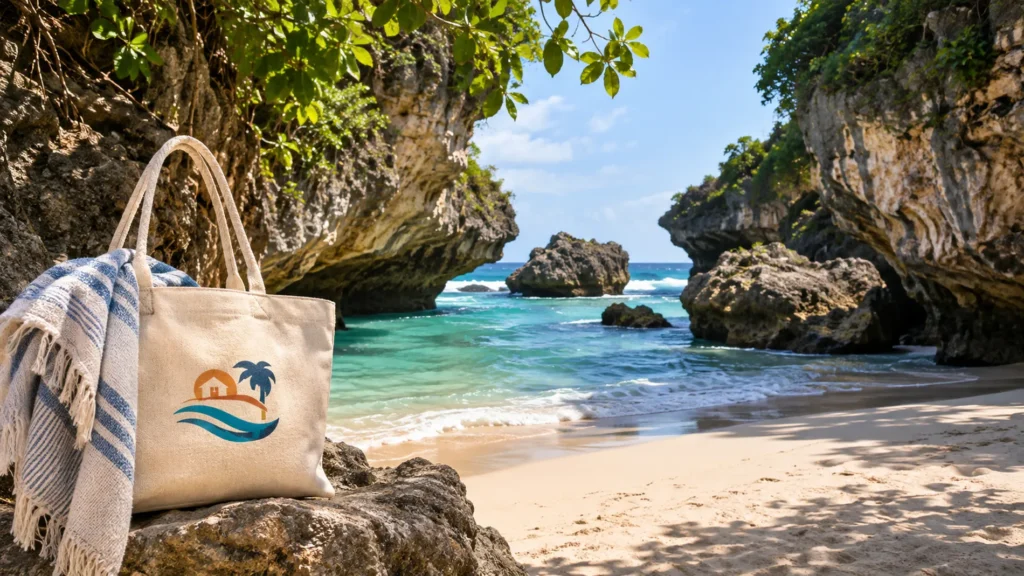
Padang Padang is tucked between towering limestone cliffs and reached through a narrow opening in the rock.
The beach itself is small, with approximately 100 metres of sand according to published descriptions. However, the high surrounding walls make it feel almost like a secluded world of its own.
The name Labuan Sait is also used for this location and often appears alongside Padang Padang on maps.
The tourist beach and the famous surf break are two different parts of the experience.
Surfers ride powerful waves farther out, reaching the break through a channel, while most beach visitors come to enjoy the enclosed sandy cove.
The location also became internationally recognised through the film Eat Pray Love, parts of which were filmed here.
How to Get There
Search for “Padang Padang Beach” or “Labuan Sait” in Pecatu.
The parking area is on the opposite side of the road from the entrance. Park your scooter or car, pay the parking charge, and cross the road to the ticket gate.
From there, a narrow staircase descends through a passage cut into the limestone, followed by a short tunnel leading to the sand.
Queues can form at the entrance on busy days.
Monkeys live among the rocks and may snatch belongings left on parked scooters. Never leave bags, food, or loose valuables unattended on a scooter seat.
How Difficult Is the Access?
Different sources estimate the descent at approximately 100–120 steps.
Walking down is relatively straightforward for most visitors, but the return climb can be tiring in hot weather.
The staircase is narrow, so you may need to stop and make room for people travelling in the opposite direction.
One travel guide describes the route as manageable for visitors with average fitness. However, the beach is not wheelchair-accessible, and the steps may be difficult for young children or older visitors.
After rain, both the rock surfaces and steps can become slippery. Shoes with good grip are preferable to ordinary sandals.
Best Time to Visit
For a quieter experience, aim to visit between 7:00 am and 10:00 am, when temperatures are generally lower and crowds smaller.
The late afternoon, roughly 4:00–6:30 pm, can be beautiful, but the beach also becomes busier.
Travel descriptions suggest that access is generally available from around 7:00 am until sunset.
The narrow passage is easier to negotiate at low tide. At high tide, the exposed beach becomes smaller and access through the rock opening may be more difficult.
Check the tide forecast before travelling. On some days, a morning visit will be preferable; on others, the most suitable conditions may occur later. There is no universally ideal visiting hour.
Swimming and Surfing
The sheltered-looking cove can appear calm, but actual conditions vary from day to day.
A powerful reef break lies nearby, currents can change, and the rocks at the water’s edge may be slippery.
Stay close to shore when conditions permit swimming, and observe the movement of the water before entering.
Padang Padang is not universally suitable for beginner surfers. The sheltered tourist cove and the powerful offshore reef break present very different conditions and risks. Beginners should not assume that a beach popular with visitors is also suitable for learning to surf, especially when shallow reef, strong waves, or changing currents are involved.
Surfing the main break requires experience. Beginners should take lessons with a qualified instructor at a gentler location.
The availability of surfboard rentals on the beach does not mean that the nearby waves are suitable for beginners.
Costs and Facilities
Entrance is paid in cash. According to travel guides published in 2025–2026, the reported entrance fees are:
- Foreign adult: IDR 15,000.
- Foreign child: IDR 10,000.
- Indonesian adult: IDR 10,000.
- Indonesian child: IDR 5,000.
Parking reportedly costs approximately IDR 2,000 for a scooter and IDR 3,000–5,000 for a car.
Travel descriptions mention toilets, showers, warungs, umbrellas, and surfboard rentals.
Because the beach is small and popular, shade and free space can be limited.
Bring small notes and coins, as ticket counters may not always have sufficient change.
Who Should Visit and How Much Time to Allow
Padang Padang appeals to visitors who love compact, dramatic coves, enjoy watching surfers from a distance, and do not mind paying an entrance fee.
If you prefer more space, Dreamland or Balangan may be a better choice.
Allow approximately 1.5–2 hours for the descent, time on the sand, an optional short swim, and the return climb.
This is an editorial estimate. If you arrive at high tide, you may find that a shorter visit is more practical.
5. Balangan: Beach and Panoramic Clifftop Views

What to See
Balangan lies north of Dreamland, so it should be treated as a neighbouring destination requiring a separate journey by road.
It is a long stretch of pale sand, extending more than 500 metres beneath limestone cliffs.
At the northern end, Balangan Cliff rises above the beach and is particularly popular with couples arranging wedding and engagement photographs.
The clifftop is known for its panoramic sunset views, although the viewing angle and visibility depend on the exact location and weather conditions. Access to some clifftop areas may be affected by construction or temporary restrictions. The current status of the viewpoint could not be independently confirmed as of November 1, 2026. Before visiting, check recent local access information and use only designated public paths and viewing areas. If access is restricted, enjoy the coastline from the beach or choose another confirmed open viewpoint.
You do not need to approach an exposed cliff edge to photograph Balangan’s coastline. Use established public paths and viewing areas, remain well away from unsupported or eroded edges, and never cross barriers or enter restricted sections. Protective fencing should not be assumed to be present, and the stability of the ground cannot be judged from its appearance alone. If the viewpoint is closed or access is unclear, choose another location rather than attempting to reach the cliff independently.
How to Get There
Search for “Balangan Beach” or “Pantai Balangan” on Jalan Pantai Balangan in the Ungasan area.
The beach is approximately 20 km south of Kuta and around half an hour by car from Ngurah Rai International Airport under favourable traffic conditions.
There is a designated pickup point near the parking area for Grab and Gojek services.
Two parking areas are located above the beach.
The northern parking area is closer to the viewpoint, with approximately 50 steps leading down to the sand.
The southern parking area is closer to the surf break. The route from there is shorter but steeper.
Do not attempt to reach Balangan by walking along the shoreline from Dreamland. Although sections of reef may be passable at low tide, rising water can cut off the return route.
How Difficult Is the Access?
The descent is generally described as moderately demanding.
The approximately 50 steps from the northern parking area are manageable for many visitors, although the limestone steps are uneven and can become slippery when wet.
Closed-toe shoes or trainers with good grip are recommended.
The route can be difficult for pushchairs and visitors with limited mobility.
The return climb becomes more tiring in hot weather, especially after a day of travelling between beaches.
If you are visiting for sunset, allow enough time to return before dark.
Best Time to Visit
Mornings are generally quieter, and some travellers report finding very few people on the sand around 7:00 am.
The sunset period, roughly 5:30–6:45 pm, is the busiest.
During the dry season, the most attractive golden-hour light is often reported between approximately 6:05 pm and 6:45 pm, although the timing changes throughout the year.
Low tide exposes the reef platform on the southern side of the beach, creating opportunities for coastal photographs and careful exploration.
At high tide, the usable sandy area becomes considerably narrower.
Check the tide forecast before visiting so you do not arrive when much of the beach is covered by water.
Swimming and Surfing
Balangan is a well-known surf spot with a long left-hand wave breaking over the reef from the headland towards the bay.
Surf guides generally describe it as more suitable for intermediate and advanced surfers, with the best wave season typically running from May to September.
The reef is shallow in places, and injuries are possible, particularly around low tide.
Swimming should only be considered when the sea is calm and a suitable area away from the reef break can be identified.
Some travel descriptions mention local families swimming in quieter sections of the bay.
There are no lifeguards on the beach. During larger swells, the shore break around the central section can be particularly powerful.
Do not attempt to surf the reef break without sufficient experience.
Costs and Facilities
Entrance is generally free, although some sources mention an additional fee of IDR 5,000–10,000 at the gate. Carry small-denomination notes in case a charge applies.
Reported parking fees are approximately:
- Scooter: IDR 5,000.
- Car: IDR 10,000.
Small warungs and a beach club have operated along the beach and near the clifftop.
Reported service prices include:
- Sun lounger: Approximately IDR 100,000, sometimes negotiated down to IDR 50,000.
- Umbrella: Around IDR 50,000 for a couple of hours.
- Surfboard rental: IDR 50,000–100,000 per hour.
- Surfing lesson: From approximately IDR 350,000 for two hours, based on older price reports.
Sun loungers and umbrellas may be charged separately.
These are visitor-reported estimates, not guaranteed current prices. Confirm availability, charges, and rental conditions before paying.
Who Should Visit and How Much Time to Allow
Balangan suits travellers looking for an expansive beach, clifftop sunset views, and enough time to make a separate trip from the Bingin area.
It is less convenient for visitors with a very limited schedule.
Allow approximately 2–3 hours for a beach visit, and a similar amount of time if your main goal is sunset.
This is an editorial estimate. Leave extra time for the return journey during the evening traffic peak.


 Bali, Bingin, Uluwatu
 from 117м²



How to Plan Your Day
For a relaxed day, it is better to choose two or three locations rather than attempt all five beaches.
Every descent involves a return climb, and the combination of heat, traffic, and scooter journeys can take more time and energy than expected.
Travel between the beaches by road.
If you plan to travel by scooter, check the legal and insurance requirements before renting one. Foreign visitors generally need a valid driving licence covering the relevant motorcycle category together with a recognised International Driving Permit, unless they hold an applicable Indonesian licence. A car-only licence does not automatically permit motorcycle riding. Wear a properly fitted helmet and confirm that your insurance covers the vehicle and activity. If you are not an experienced rider, consider using a licensed taxi or hiring a driver instead. See the UK government’s road safety advice for Indonesia.
Dreamland, Cemongkak, and Bingin are relatively close together. Padang Padang lies farther south, while Balangan is to the north.
| Itinerary | Suggested Route | What to Consider | Alternative |
|---|---|---|---|
| Short Visit | Dreamland in the morning, followed by a view of Bingin from above | Cash for parking and the physical effort of climbing in the heat | Stay at Dreamland and have lunch there |
| Full Day | Balangan in the morning, Dreamland during the day, then Cemongkak or Bingin for sunset | Scooter journeys, tides, fatigue, and sufficient daylight for the descent | Skip Cemongkak or Bingin |
| Waves and Coves | Padang Padang in the morning, ideally when tidal conditions are suitable, followed by views of Bingin from above | Narrow staircase, monkeys, and the amount of exposed sand | Skip the descent to Bingin |
What to bring:
- Water and snacks: There are no beachfront cafés at Cemongkak or Bingin.
- Closed-toe shoes with good grip: Essential for rocky surfaces, uneven paths, and stairways.
- Small-denomination cash: For Padang Padang admission, parking, showers, and toilets.
- Sun protection: A hat, sunscreen, and a light cover-up, as most beaches have little shade.
- A charged phone and offline map: Useful for navigation and arranging transport.
When to shorten or change your itinerary:
- After heavy rain, when slopes become slippery or unstable.
- During high tide or powerful surf, especially at Padang Padang and Dreamland.
- When construction work or safety barriers affect the descent.
- When heat and fatigue make the return climb too demanding.
Low tide alone does not guarantee safe access. Waves, slippery rocks, coral reef, and the possibility of being cut off by rising water remain serious hazards. Some travel guides describe walking between beaches over sand and reef at low tide, but the returning tide can make the route impassable. Use established roads and verified access paths instead.
If exploring this coastline makes you consider living in the area long-term, pay particular attention to road access, steep gradients, and noise.
The beach approaches described in this guide offer a useful insight into everyday life around Bingin: how much effort it takes to reach the water, when roads become busy, and how the neighbourhood changes throughout the day.
Considering buying property in Bali after exploring Bingin? Start by defining your budget, preferred location, intended use, and property requirements. Complete the property selection questionnaire on ULU Homes, and the ULU Homes team can help you explore options that match your search criteria. Property availability, ownership structure, and legal conditions should be verified independently before making a purchase decision.
How to Choose the Right Places to Visit
If you want to watch the waves and surfers, head to the viewpoints above Bingin and visit Padang Padang. If you would rather spend time relaxing by the water, Dreamland Beach is a good choice.
For sweeping coastal views and sunset, Balangan is particularly appealing, while Cemongkak is ideal for those seeking a quieter atmosphere and willing to tackle an uneven access path.
If you prefer to avoid several demanding descents, visiting Dreamland and just one nearby beach or viewpoint is enough for a rewarding day.
Your next step: Choose two or three places, check the tide forecast and recent visitor reviews for access conditions, and assess the weather and sea conditions when you arrive.
 Real estate in Georgia
 Real estate in Cyprus
 Real estate in the UAE
 Real estate in Montenegro
 Real estate in Thailand
 Real estate in Spain
 Real estate in Saudi Arabia
 Real estate in Turkey
 Real estate in Zanzibar
 +62 895 001 924 667
 hello@ulu-homes.id
 Tibubeneng, Canggu, Kuta Utara, Badung Regency, Bali 80361, Indonesia




 Get catalogue of TOP-7 objects