
 +62 895 001 924 667


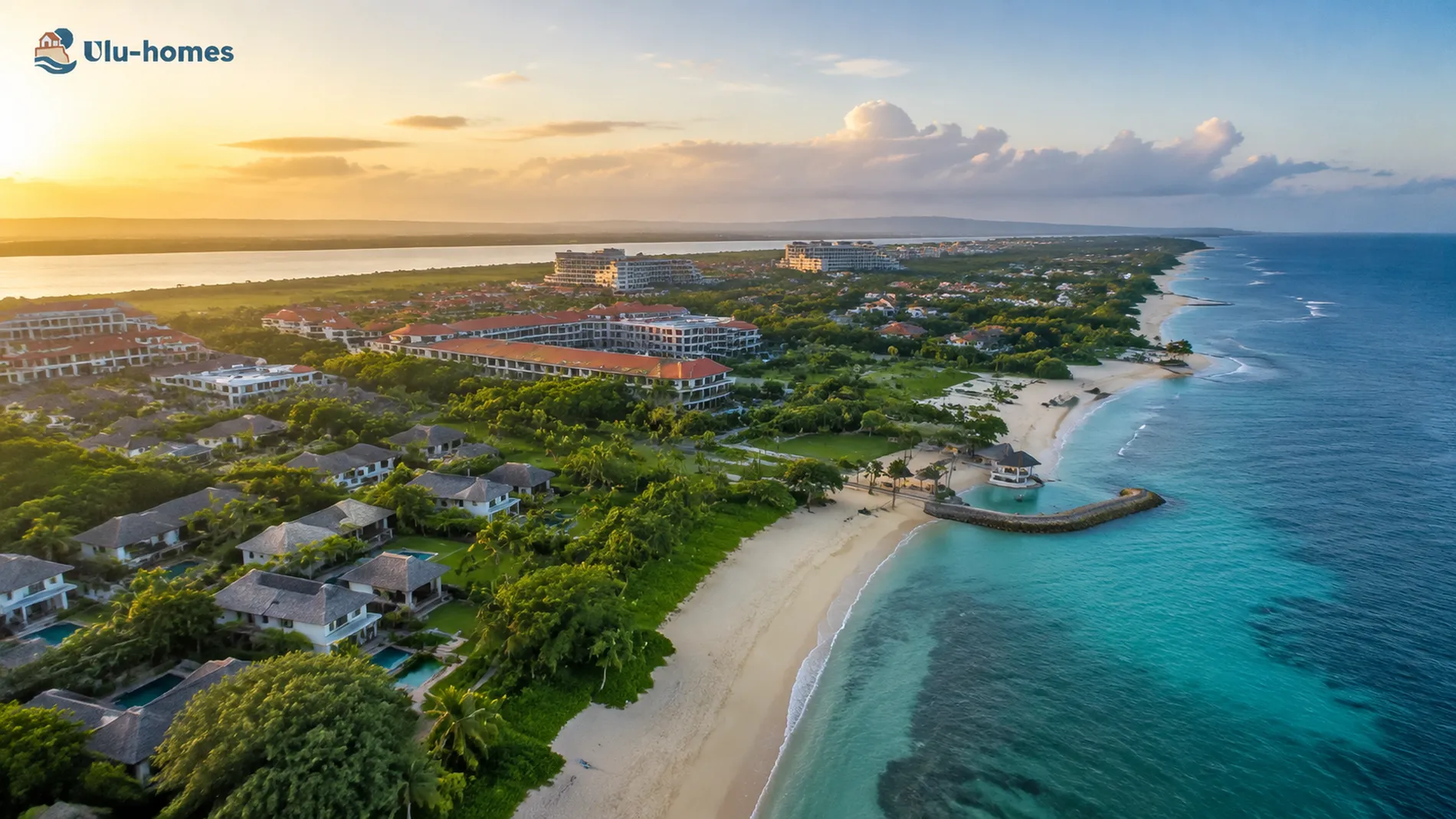

Nusa Dua looks impeccably organized at first glance — and that is no coincidence. The area was deliberately developed as a controlled resort destination, with wide roads, carefully maintained landscapes, major international hotels, and relatively quiet beaches along Bali’s eastern coastline. Approaching from the Bali Mandara Toll Road, the transition is almost tangible: traffic becomes lighter, greenery becomes more abundant, and the usual island chaos noticeably fades away.
For tourists, this translates into a comfortable and predictable holiday experience. For property buyers, however, it represents something entirely different: a specific type of demand, a distinct tenant profile, a particular pricing logic, and a unique set of trade-offs.
Nusa Dua is not a single, uniform neighborhood. The name covers several different areas: the resort core managed by ITDC, the more urban zones of Benoa and Tanjung Benoa, the hillside area of Sawangan with its separate villa development projects, and surrounding locations at various stages of development. For visitors, these differences may go largely unnoticed. For property buyers, they are crucial.
This guide is designed specifically for those considering Nusa Dua not simply as a holiday destination, but as a potential place to purchase property — whether for spending several months a year in Bali, generating long-term rental income, investing in the premium segment, or combining personal use with professionally managed rentals.
The guide explores both everyday life in the area and the realities of its property market, including the investment logic behind different opportunities. By the end, you should have a clear understanding of whether Nusa Dua is the right fit for your goals.
Nusa Dua in a nutshell
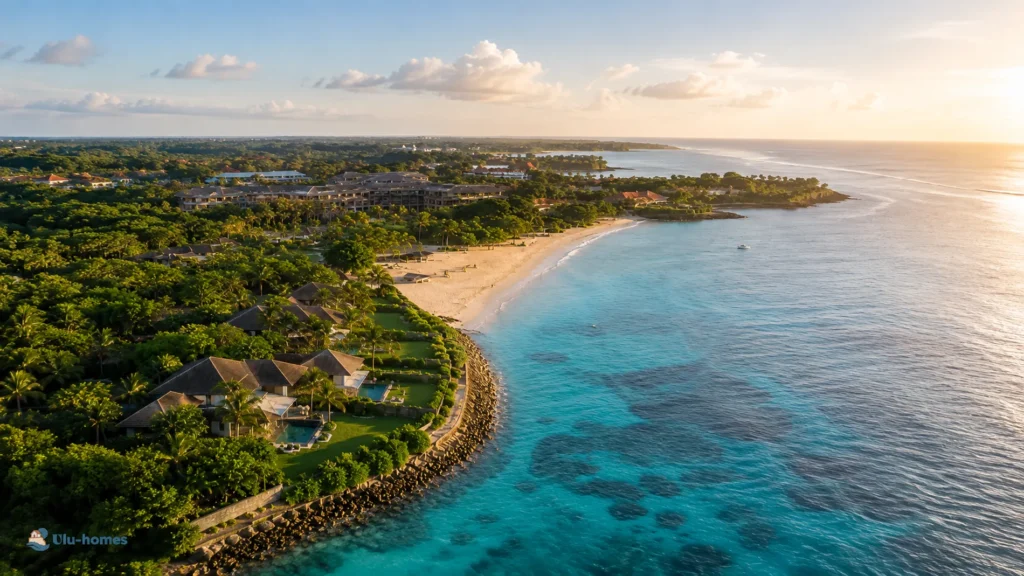
Nusa Dua is located on the southeastern coast of the Bukit Peninsula, within Badung Regency. It is a resort destination with a distinctly premium character, home to some of Bali’s largest and most recognized international hotels — from St. Regis and Conrad to Mulia and Hilton. The area’s main planned development zone, The Nusa Dua, is operated by the state-owned corporation ITDC (Indonesia Tourism Development Corporation). It is a gated, carefully maintained resort area offering controlled access and professionally managed resort facilities., its own beachfront promenade, private beach areas, the Bali Collection shopping complex, and a concentration of internationally operated hotels.
The defining characteristics of Nusa Dua are its relaxed pace, smoother traffic flow compared with areas such as Canggu or Seminyak, well-developed hospitality infrastructure, and strong focus on upscale tourism, family holidays, destination weddings, wellness retreats, and MICE (meetings, incentives, conferences, and exhibitions). The beaches here are generally quieter, with calmer waters than those on Bali’s western coast — surfing is not the main attraction, but swimming conditions are often more suitable for relaxed beach activities compared with many exposed surfing beaches on Bali’s western coast.
Nusa Dua should not be viewed as a single neighborhood, but rather as a collection of micro-locations with noticeably different development patterns, property formats, and lifestyles.
| Parameter | What to expect |
|---|---|
| Atmosphere | Calm, resort-oriented, and well-organized; less spontaneous urban energy compared with Bali’s more vibrant areas |
| Development style | Large-scale hotels, private villas, serviced residences, and selected residential complexes; limited traditional urban density |
| Beaches | Located on the eastern coast, with calmer waters; Geger Beach and Mengiat/Nusa Dua Beach are the main coastal highlights |
| Infrastructure | International hotels, Bali Collection, restaurants, and resort facilities; everyday essentials may still require short trips outside the area |
| Transportation | Well-maintained roads and direct access to the Bali Mandara Toll Road; having a private vehicle or using taxis is often necessary |
| Real estate | Villas, serviced and branded residences, apartments, as well as both off-plan and completed properties |
| Price segment | Primarily mid-premium to luxury; affordable entry-level options are limited |
| Rental demand | Families, luxury travelers, honeymooners, business visitors, and domestic tourists |
| Best suited for | Families, premium residence buyers, and investors targeting the resort property segment |
| Main trade-off | Less of a social scene, fewer cafés, and a quieter nightlife offering compared with Canggu or Seminyak |
Where Is Nusa Dua Located?
Nusa Dua is located in the southern part of Bali, on the Bukit Peninsula, approximately 14–16 km from Ngurah Rai International Airport. The area’s key transport link is the Bali Mandara Toll Road, a dedicated toll highway connecting the airport with Nusa Dua and helping travelers avoid much of Denpasar’s main traffic congestion. Under normal traffic conditions, the journey from the airport to Nusa Dua takes around 20–30 minutes, making it one of the area’s major transportation advantages compared with districts located farther north.
Jimbaran lies to the northwest, while Uluwatu is located farther southwest along the Bukit Peninsula. Buyers comparing southern Bali locations should also consider Jimbaran, which combines beach access, restaurants, residential areas, and proximity to the airport. A detailed overview of the area is available in our guide: Jimbaran: A Complete Area Guide — Lifestyle, Real Estate Prices, and Investment Potential. Sanur is situated to the east, across Denpasar. Canggu is considerably farther away from Nusa Dua: the drive takes approximately 40–60 minutes in light traffic and can take significantly longer during peak hours. Denpasar, with its everyday infrastructure — including markets, hospitals, and government services — is accessible, but trips there require additional travel time and planning.
The Bukit Peninsula generally has a hilly landscape with noticeable elevation changes. However, Nusa Dua itself is located in a flatter coastal area, which distinguishes it from destinations such as Uluwatu, known for its dramatic cliffside views and winding roads.
An important practical point: marketing materials often use the name “Nusa Dua” quite broadly, including projects that are technically located in Benoa, Sawangan, Bualu, or other neighboring areas. The exact location of a property should always be verified independently on the map — the actual distance to the beach, road access, and surrounding development can differ significantly from what the project name in an advertisement may suggest.
The name “Nusa Dua” in a property listing does not replace the need to check the project’s exact location on the map.
What Are the Main Areas of Nusa Dua?
Understanding exactly where a property is located within the broader “Nusa Dua” area is one of the most important steps when choosing real estate. Below are the main micro-locations and their characteristics.
Resort Core and ITDC
The central part of Nusa Dua is The Nusa Dua, a master-planned area managed by ITDC. This is where the largest international hotels, a beautifully maintained beachfront promenade, the main beaches, Bali Collection shopping centre, and major conference facilities are located. Access and movement within the area are organized, with security measures in place. It is a highly managed, predictable environment with a premium level of service — and this is precisely what attracts a certain type of buyer.
There is very little traditional residential fabric here. The area is dominated by large-scale hotels, branded residences attached to some of them, and standalone premium developments. The entry price reflects this positioning. Everyday conveniences — such as small cafés, local markets, and neighbourhood grocery stores — operate differently compared with Bali’s residential districts: they are available, but usually through the lens of a hospitality-oriented environment.
Benoa and Tanjung Benoa
Benoa is a more diverse area located north of the resort core. It combines residential properties, restaurants, shops, and a more visible local community, creating a livelier atmosphere than the controlled environment inside the ITDC perimeter.
Tanjung Benoa is a peninsula extending into Benoa Bay, traditionally known for water sports, diving, and family-friendly activities. The area has a mixed urban character, with smaller hotels, guesthouses, villas, and local businesses. Compared with the resort core, it feels more “lived-in” and less like a closed resort destination.
For buyers who value walkable amenities and closer contact with everyday local life, Tanjung Benoa offers more of this than the ITDC zone, although still less than areas such as Sanur or Canggu.
Sawangan and the Southern Part
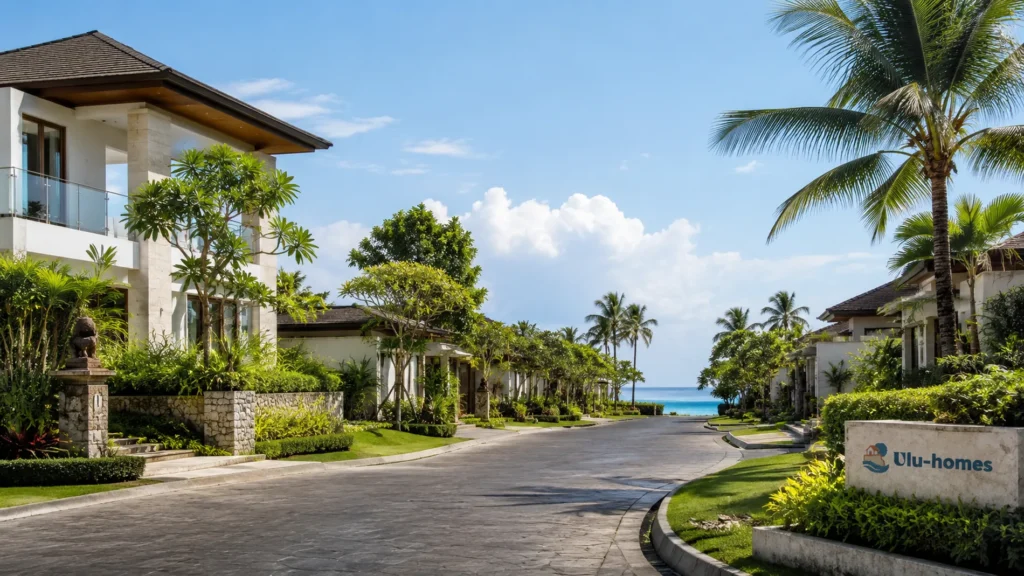
Sawangan is an area that is often overlooked, yet it has become one of the key locations for villa development projects in recent years. The terrain is more elevated and hilly, creating opportunities for properties with ocean or valley views. Development density is lower, and the overall atmosphere is more private and secluded.
The main consideration here is transportation: without a private vehicle, daily life can be inconvenient. Distances to the beach, restaurants, and essential infrastructure should be physically checked rather than evaluated solely on a map.
Sawangan and neighbouring areas are also where many off-plan villa projects appear, often marketed under broader labels such as “Nusa Dua” or “South Bali”. However, these developments may have their own lifestyle concept and location logic, which can differ significantly from the resort core.
Micro-Location Comparison Table
| Micro-location | Character | Main Property Types | Suitable For | What to Check |
|---|---|---|---|---|
| ITDC / Resort Core | Managed area with premium hospitality infrastructure | Branded residences, luxury apartments | Premium residence buyers, investors interested in managed products | Management terms, service charges, usage restrictions |
| Tanjung Benoa | Mixed area combining tourism, residential life, and water activities | Villas, smaller developments, apartments | Families, buyers with moderate budgets, those seeking a more authentic environment | Road quality, proximity to the water, transport accessibility |
| Sawangan / Bualu | Residential villa development area with hilly terrain | Pool villas, off-plan projects | Villa rental investors, buyers seeking privacy and tranquillity | Actual distance to the beach, road access, surrounding infrastructure |
| Jenggala / Bualu | Mixed hotel and residential environment | Villas, selected apartments | Buyers prioritising access to Geger Beach | Land status, zoning regulations, exact address |
What Is It Like to Live in Nusa Dua?
Daily life in Nusa Dua depends heavily on the exact part of the area where you choose to live. This distinction is important and should not be overlooked.
If you live within the ITDC complex or in a resort residence attached to a major hotel, your lifestyle revolves around hospitality infrastructure: hotel restaurants, wellness facilities, beach clubs, and a carefully managed environment. It is comfortable, quiet, and highly predictable. However, this is not the same kind of lifestyle you would find in Canggu or Ubud, with cafés around every corner, independent coworking spaces, and spontaneous social communities. A resort environment represents a very specific way of living, and it does not suit everyone.
If you live in a villa in Sawangan or Benoa, the experience is completely different. Transportation becomes essential — whether by scooter or car. The beach is only a few minutes away, and reaching a good café or grocery store usually takes about the same amount of time. This is a perfectly practical lifestyle, but it requires a different approach to daily planning compared with living in a dense urban area.
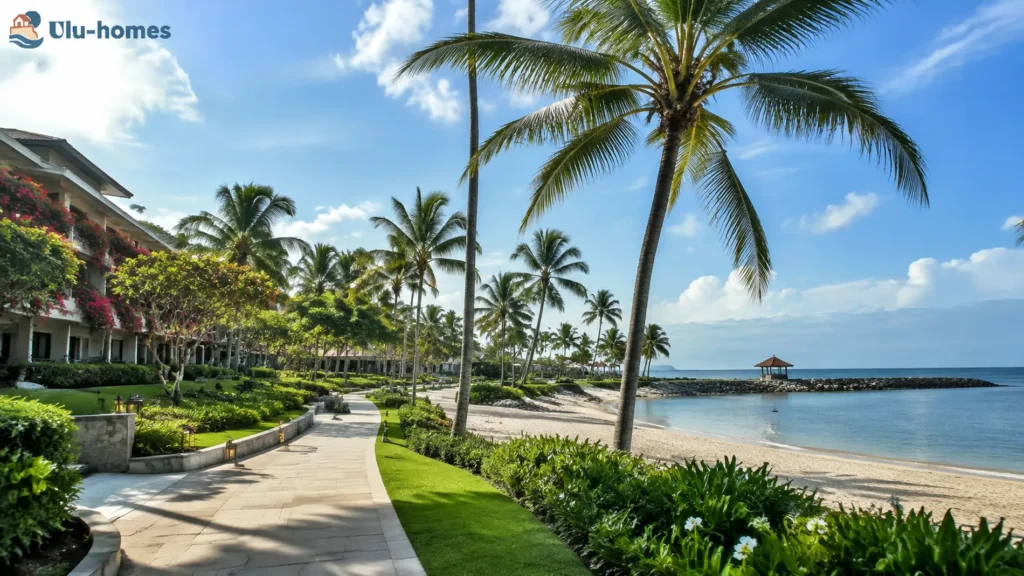
Walkability in the traditional sense is limited in Nusa Dua, with the exception of the promenade and nearby beach areas within ITDC, where walking is genuinely convenient. Outside these zones, using a scooter or ride-hailing apps such as Grab and Gojek is the standard way to get around.
Noise is not a concern in this area. Nusa Dua is peaceful: there are no major nightlife districts, no dense roadside development, and none of the traffic congestion typically associated with Canggu. At night, the area is genuinely calm. For families with children and people seeking privacy and a slower pace of life, this is a significant advantage.
Remote work from Nusa Dua is technically possible. Internet connections in most hotels and residential developments are reliable, and there are cafés with good Wi-Fi. However, the area does not have the same digital nomad community or ecosystem of independent coworking spaces found in places like Canggu — and it is not trying to be one.
Nusa Dua is particularly well suited for people who value:
- A quiet environment and organized surroundings without chaotic traffic
- A family-oriented lifestyle with safe beaches and well-developed hospitality infrastructure
- A wellness-focused routine with spas, fitness facilities, and peaceful morning beach walks
- International-level service integrated into everyday life
- Privacy and minimal exposure to the external urban environment
- Easy access to the airport without feeling like you are living in a suburb
- A combination of personal comfort and the opportunity to target the luxury rental segment, depending on the property, management strategy, and market conditions.
The other side of the equation is that Nusa Dua offers less of a bohemian and creative atmosphere, very limited nightlife, and fewer independent cafés and restaurants outside the hotel ecosystem. Some people find the resort atmosphere highly appealing, while others perceive it as too polished or even sterile.
This is not a disadvantage — it is a matter of lifestyle preference. Nusa Dua was designed for a specific audience, and it remains one of the areas in Bali that most honestly reflects that original purpose.
Beaches and Infrastructure
The beaches of Nusa Dua are one of the area’s strongest advantages. The eastern coast of the Bukit Peninsula is protected by a reef, which means the waters here are generally calmer than those on the more exposed western shores. Geger Beach is the most well-known public beach in the area, located south of the ITDC zone. It offers sunbed rentals, restaurants, and relatively easy access to the water. Mengiat Beach and Nusa Dua Beach itself, stretching along the ITDC area, have a more resort-oriented atmosphere, with access primarily through hotels, although the beachfront promenade remains open to pedestrians. Tanjung Benoa provides a more active coastal environment, with water sports, yacht activities, and various seaside entertainment options.
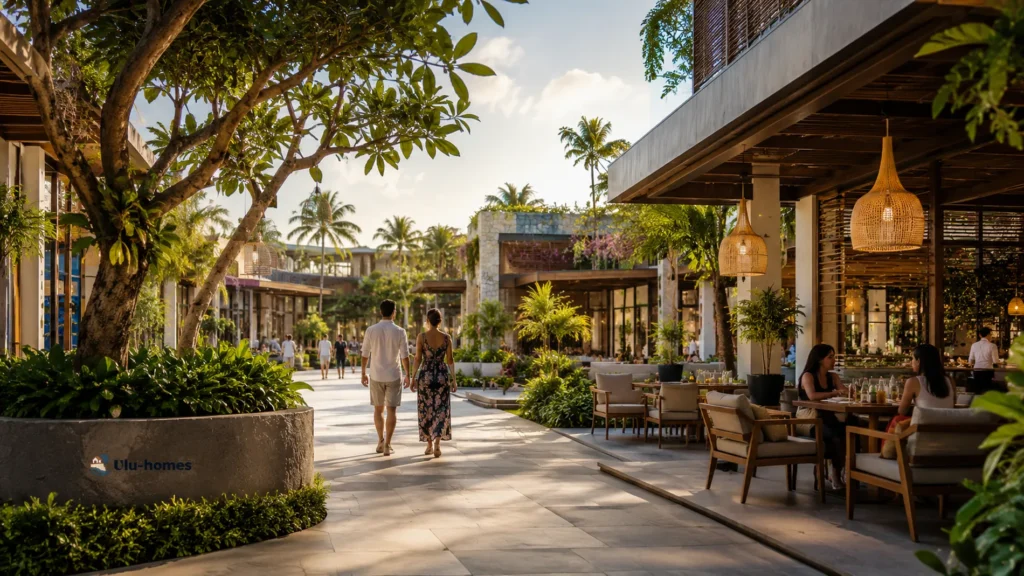
For a property buyer, the key factor is not simply the presence of a beach, but the actual accessibility of that beach. A villa located five minutes by car from the coastline and a villa with direct walking access to the water represent completely different lifestyle scenarios and have different rental appeal. This should always be verified in person during a property viewing.
Bali Collection, the shopping center within the ITDC area, covers basic retail needs with restaurants, souvenir shops, and selected stores. For more extensive shopping, most residents travel to Denpasar or Seminyak. The Bali National Golf Club is also located in the area and is one of the few golf courses on the island — for some buyers, this alone can be a significant advantage.
International-standard medical facilities are available across the wider southern Bali region. The nearest international hospitals are located in Kuta and Denpasar, including BIMC, Siloam, and other facilities. The distance is not a major issue, but it is a practical consideration: families with children should understand that high-quality medical care is accessible, but not necessarily located just around the corner.
The area’s MICE infrastructure, particularly the Bali Nusa Dua Convention Center (BNDCC), consistently attracts international conferences and corporate events. This creates an additional flow of business travelers who are specifically interested in accommodation within the Nusa Dua area.
Real Estate in Nusa Dua
The real estate offering in Nusa Dua is far broader than it may appear from typical marketing listings. The area includes private villas, serviced apartments, branded residences within international hotels, smaller residential developments, and off-plan projects at various stages of completion. The exact mix of available properties depends heavily on the specific micro-location.
Villas
Villas are the flagship real estate product in Nusa Dua. The market range is extensive — from compact two-bedroom villa apartments within smaller developments to spacious four- and five-bedroom residences featuring private pools, landscaped gardens, and ocean views. Several key factors define the differences between properties:
- Residential vs hospitality-oriented villas. Some properties are designed primarily for private living or long-term personal use. Others are created as rental products, with layouts, furnishings, and management structures optimized for short-term stays. These are fundamentally different products with different valuation approaches.
- Sea view vs inland location. Ocean views create a price premium — sometimes a significant one. However, it is important to understand that a marketed “ocean view” and a genuinely unobstructed panoramic view are not always the same thing.
- Ready property vs off-plan. Off-plan projects usually enter the market at a lower price point but carry construction-related risks, including delays, quality concerns, and developer financial stability. A completed property allows buyers to evaluate exactly what they are purchasing, including the surrounding infrastructure and actual environment.
Apartments and Residences
Apartment formats and serviced residences in Nusa Dua generally fall into two categories: independent residential developments with their own management structures, and branded residences operated in partnership with major hotel brands.
The second option represents a more premium product, offering access to hotel amenities, professional management through a hospitality operator, and, in many cases, strict rental conditions. Some branded residences can only participate in rental programs managed by the hotel itself. This is a crucial point for buyers: property usage rules and rental income distribution are determined by the contractual structure, not solely by the owner.
Serviced residences without a hotel brand usually provide more flexibility but require the owner to independently select a management company or rental operator. Service charges and maintenance costs can vary significantly between projects, making them an important factor to compare rather than overlook.
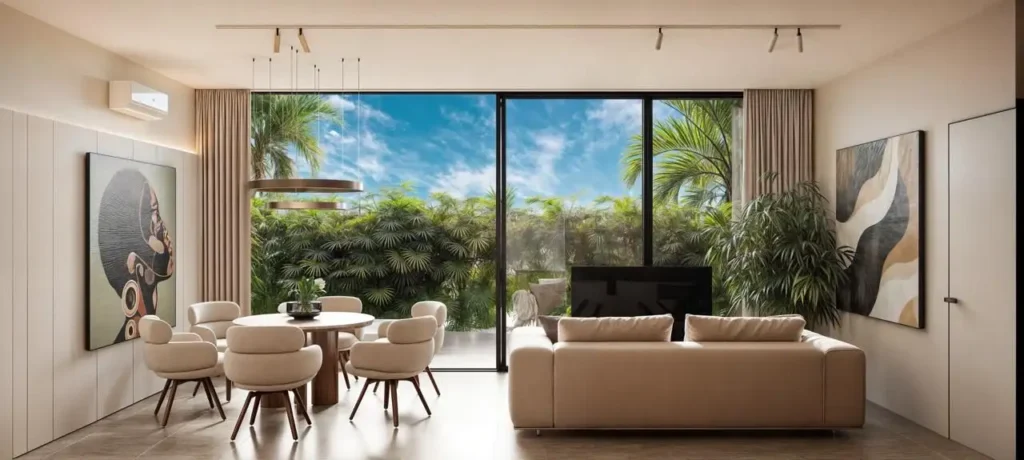

 Bali,Nusa Dua
 from 32м²
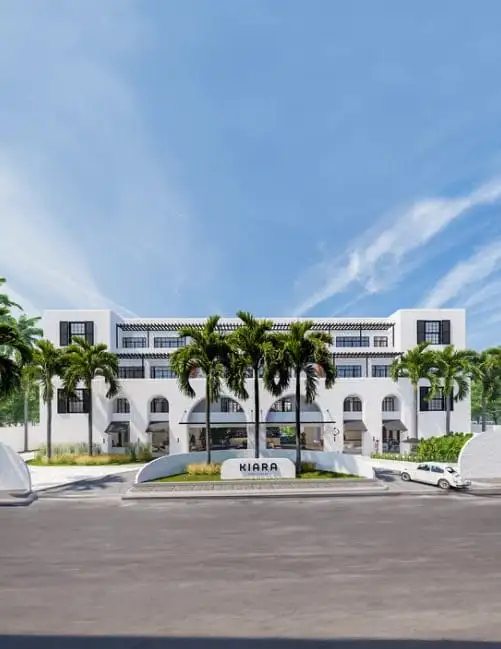
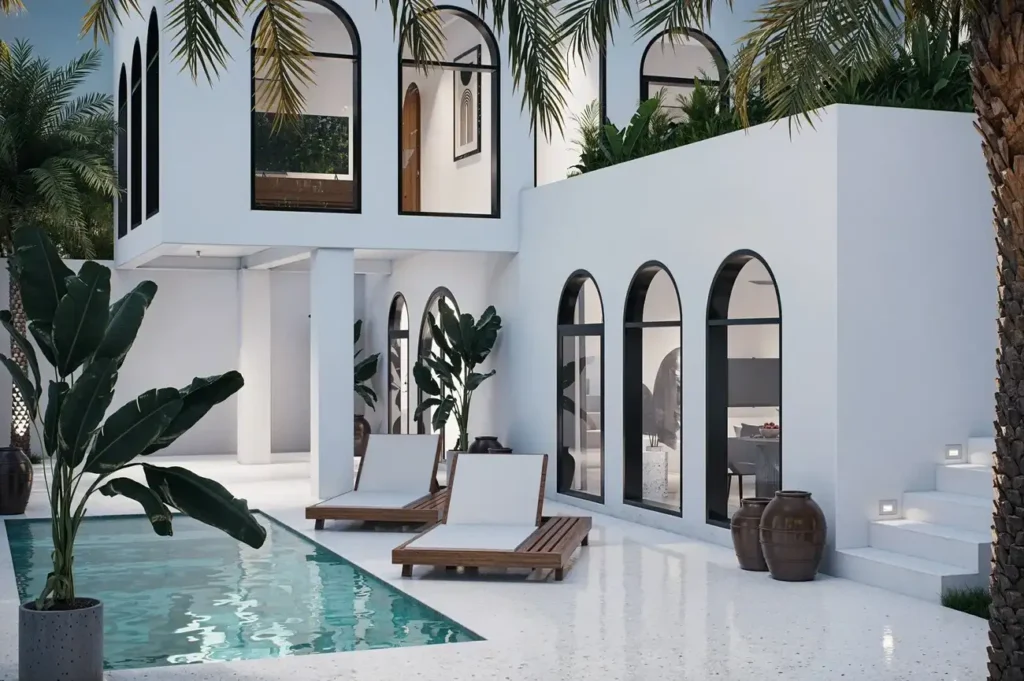
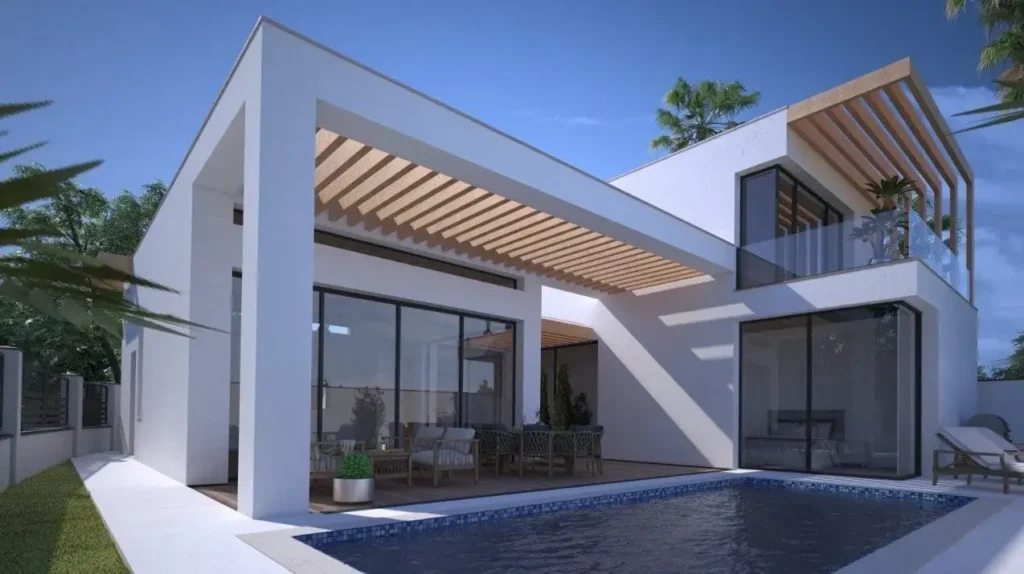 Bali,Nusa Duafrom 150м²
It is also incorrect to assume that apartments are always cheaper than villas. A branded residence within the ITDC area may cost more than a standalone villa in Sawangan.
Property Prices
There is no single “average Nusa Dua property price” because the market range is too broad. Relying on one average figure often leads to inaccurate comparisons.
Property prices are influenced by:
- Tenure (Leasehold arrangements (Hak Sewa) and other legally recognised structures available to foreign buyers, such as Hak Pakai or company-based ownership structures where applicable.) and the remaining lease term: a villa with a 10-year lease and the same villa with 25 years remaining are not equivalent assets, even if they look identical
- Land size and building area
- Number of bedrooms and the presence of a swimming pool
- Ocean views, distance to the beach, and walkability to the waterfront
- Construction quality and finishing standards
- Furniture and equipment included
- Construction stage (off-plan vs completed property)
- Development infrastructure (security, maintenance, restaurants, wellness facilities)
- Presence of a recognized hotel brand or management company with an established track record
- Ability to legally rent out the property and availability of required licenses
Public listings suggest that villa prices in the wider Nusa Dua area vary significantly depending on tenure, location, land size, and development quality. Entry prices can differ substantially between leasehold villas, completed properties, and premium developments.
These figures represent market indicators based on publicly available listings and industry sources, rather than official government statistics. Individual projects may be priced significantly below or above these ranges depending on the factors outlined above.
| Property Format | Approximate Price Range | Key Price Factors | Typical Buyer Scenario |
|---|---|---|---|
| Two-bedroom leasehold villa | From $350,000 | Lease term, views, beach proximity | Personal use + rental income |
| Three- to four-bedroom mid-premium villa | $600,000–$1,000,000 | Sea view, pool, management company | Rental investment, seasonal living |
| Luxury villa / branded residence | From $1,000,000 | Brand value, hotel infrastructure, ITDC location | Premium buyers, capital preservation |
| Apartment / serviced residence | From $200,000 | Development quality, management, service charges | Easier entry point, passive management |
Why two visually similar properties can have completely different prices:
- Remaining leasehold term: 8 years versus 25 years creates a major difference in liquidity and exit potential
- Actual beach accessibility — walking distance versus requiring transport
- Land status and availability of construction permits such as IMB/PBG
- Professionalism of the management company and proven occupancy history
- Legal security of the transaction and resale potential
- Availability or absence of a rental license
- Construction quality, which is not always obvious during a property viewing
Gross ROI only shows the top layer of the investment model. For buyers, the more important figure is what remains after management fees, vacancy periods, maintenance expenses, and taxes are taken into account.
How to Interpret Property Prices in Nusa Dua
Property prices in Nusa Dua should be viewed as market indicators rather than fixed values. The final price depends on multiple factors, including the exact location, tenure structure, remaining lease period, land size, construction quality, management model, and proximity to the beach.
Public listings and developer offers can provide a general understanding of the market, but two properties with similar visual characteristics may have completely different investment profiles.
Before comparing prices, buyers should evaluate:
- remaining lease term or ownership structure;
- legal status of the property;
- rental permissions and operating model;
- service charges and maintenance costs;
- developer or management company reputation;
- actual location compared with advertised positioning.
A lower entry price does not always represent better value. In Bali real estate, the structure behind the property is often just as important as the property itself.
Investment Potential
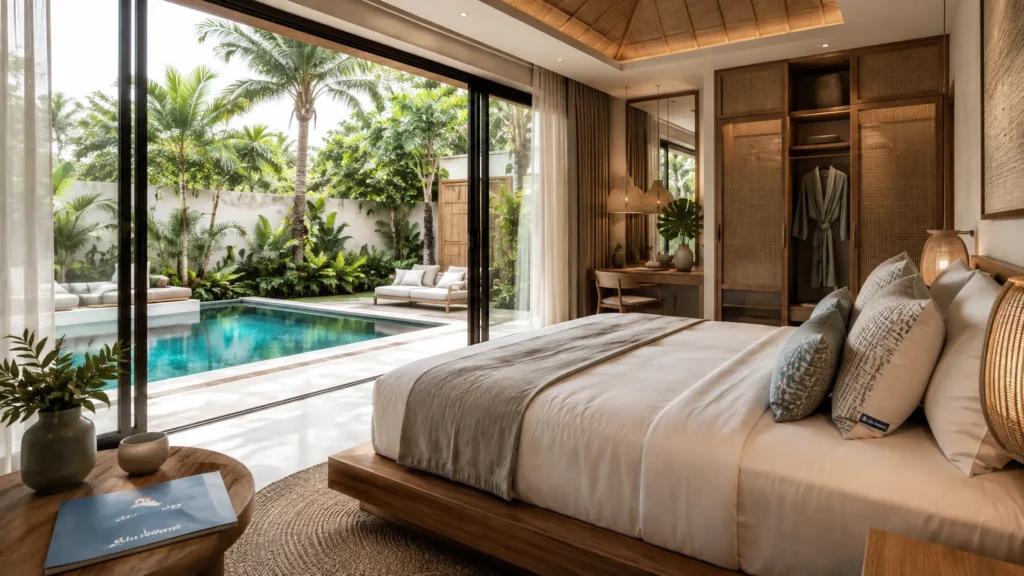
Nusa Dua attracts a very specific type of tourism demand: it is neither a budget segment nor a backpacker destination. The main sources of rental demand are families with children, honeymooners, luxury travellers, business visitors attending conferences, and an increasingly noticeable flow of domestic tourists from other parts of Indonesia.
Bali as a whole continues to maintain strong international tourism demand. According to the Bali Provincial Statistics Office (BPS Bali), the island recorded 605,013 direct international arrivals in June 2026, which was 4.63% higher than in May of the same year. This confirms the overall stability of Bali’s tourism market; however, island-wide tourism data cannot be automatically applied to the performance of a specific property in Nusa Dua. Actual occupancy depends on the location, property format, operator, price segment, and dozens of other factors.
Rental Income and Yield
The difference between gross yield and net yield is fundamental in the context of Nusa Dua and should be clearly understood before purchasing a property.
Gross yield refers to the ratio between a property’s annual gross rental revenue and its purchase price. Net yield represents the amount that remains after all operating expenses have been deducted. The difference between the two can be significant.
Typical deductions from gross rental income include:
- Management fees vary depending on the operator, rental model, and contractual terms, and should be reviewed before purchase.
- OTA platform commissions (Airbnb, Booking.com, and others) — typically 3–15%
- Utility costs (electricity and water)
- Maintenance and ongoing repairs
- Pool and garden maintenance
- Housekeeping and consumables
- Insurance
- Income taxes
- Vacancy periods
- Equipment replacement reserves
- Periods of personal use by the owner
Market sources and industry reports often mention gross yield estimates for Nusa Dua in the range of approximately 7–10% annually. These figures are not official statistics and should not be interpreted as guaranteed returns. They are market benchmarks based on specific assumptions regarding occupancy rates and ADR (average daily rate). The actual net performance of an individual property will depend on occupancy, pricing strategy, operating costs, management fees, tax structure, and other variables.
A simple illustrative scenario: if a villa generates $60,000 in gross annual revenue, with an average management fee of 25% and additional operating expenses of 15–20%, the actual net income may fall within the range of $33,000–$36,000 — approximately 40–45% lower than the initial gross revenue figure. This is only a hypothetical example, not a calculation for any specific property, but it demonstrates why a promised ROI without a detailed expense breakdown provides limited information.
What Affects Investment Performance
The actual investment performance depends on several factors:
- Micro-location and walking distance to the beach
- Number of bedrooms (larger villas often achieve higher rates among family travellers)
- Quality of the pool and outdoor areas
- Photography, marketing strategy, and platform ratings
- The professionalism of the operator and its actual occupancy track record
- Seasonality: high season (July–August, December–January) versus low season
- Real ADR and occupancy data rather than developer projections
- Management expenses
- Leasehold duration and exit strategy
- Entry price
Investment attractiveness cannot be assessed solely based on the ROI figures advertised by a developer. Rental projections should always be compared against conservative scenarios and real performance data from operators active in the area.
If you are comparing locations, property formats, and investment budgets, take a short consultation with World Estate Homes. The agency works with real estate in more than 13 countries and helps buyers structure their purchase strategy before selecting specific properties.
Buying Property as a Foreigner
This is a YMYL section where accuracy of wording is essential. Indonesian property ownership regulations for foreign citizens are more complex than they are sometimes presented in promotional materials, and any purchase decision requires independent legal verification.
The basic principle: foreign citizens cannot obtain full ownership rights (Hak Milik) over land in Indonesia under the same conditions as Indonesian citizens. This does not mean that purchasing property is impossible — it can be done through several legal structures, each with its own requirements, limitations, and suitability depending on the buyer’s circumstances.
The most common ownership structures include:
- Leasehold / Hak Sewa — a long-term lease agreement with an Indonesian land rights holder; this is the most common structure used by foreign buyers. The lease period, extension terms, and termination conditions are critical and must be clearly defined in the agreement.
- Hak Pakai — a right of use that may be available to foreigners under certain conditions, including those holding valid KITAS/KITAP permits. It has specific limitations and is not a universal solution.
- HGB through PT PMA — acquisition through a foreign investment company (PT PMA). This structure provides additional opportunities but requires compliance with corporate regulations and involves specific obligations.
- Nominee structures are not considered a legally recommended approach. Registering property in the name of an Indonesian citizen for the benefit of a foreign buyer creates legal risks that may be extremely difficult to defend in court.
The terms of each transaction depend on the property itself, land status, zoning regulations, intended use, and the legislation in force at the time of purchase. Current requirements should always be confirmed with an independent notary or lawyer specialising in Indonesian real estate law.
What should be verified before making a significant payment:
- The status and type of land certificate (SHM, HGB, Hak Pakai, etc.)
- The zoning classification and whether it allows the intended use
- The availability of IMB / PBG building permits for all structures
- The remaining leasehold period and specific extension conditions
- Legal access rights to the property (servitudes or direct road access)
- The legal history of ownership (including potential disputes or liens)
- The availability of a rental licence if the property is intended for leasing
- The management company’s obligations and termination conditions
- The actual service charges and maintenance costs
- Exit options and conditions: resale or leasehold transfer
The key point should be repeated: the appropriate purchase structure depends on the specific property, not simply on the buyer’s intentions. The same format (for example, leasehold) can be structured very differently across two neighbouring developments.
Independent legal due diligence is not an optional step — it is a necessary part of purchasing property in Bali.
Nusa Dua or Another Area?

Choosing the right area to buy property in Bali is ultimately about choosing a lifestyle and investment strategy. Nusa Dua works exceptionally well for certain scenarios, but it is not a universally “best” location.
| Area | Lifestyle | Main Rental Demand | Property Types | Investment Profile | Best Suited For |
|---|---|---|---|---|---|
| Nusa Dua | Resort-oriented, peaceful, family-friendly, premium | Luxury travelers, families, MICE guests, honeymooners | Villas, branded residences, apartments | Stable premium demand, lower rental volume, higher ADR | Families, premium buyers, long-term investors |
| Canggu | Dynamic, social, digital nomad-friendly, café culture | Digital nomads, young couples, surfers | Villas, apartments, boutique developments | High rental demand, strong competition, heavy traffic | Investors seeking high rental volume and socially active locations |
| Uluwatu | Clifftop views, surfing, boutique lifestyle | Surfers, young couples, honeymooners | View villas, boutique hotels, off-plan projects | Rapid growth, more fragmented infrastructure | Early investors and buyers attracted to clifftop living |
| Sanur | Peaceful, residential, established community | Families, retirees, long-term residents | Villas, apartments, houses | Stable market focused on long-term rentals | Permanent residents and retirees |
| Jimbaran | A mix of beach lifestyle, residential areas, and restaurants | Families, couples, tourists | Villas, apartments, mixed developments | Proximity to the airport, diverse demand base | Buyers prioritizing accessibility and local atmosphere |
Nusa Dua is most relevant to compare with Canggu when an investor asks: “What matters more to me — higher occupancy and rental turnover, or a higher average daily rate?” Canggu typically generates greater rental volume, but within a much more competitive environment with a higher concentration of properties. Nusa Dua, by contrast, targets a higher-end segment with stronger ADR potential but a smaller pool of potential luxury tenants.
A comparison with Uluwatu makes sense for buyers attracted to clifftop views and boutique-style living. Uluwatu is developing rapidly, although its infrastructure remains more fragmented compared with established resort areas. Sanur is an alternative for those looking for a quiet residential environment with a mature community rather than a resort atmosphere. Jimbaran represents a middle ground, combining airport accessibility, beach proximity, and a more authentic local lifestyle.
There is no absolute winner. Each area is the right choice for a specific type of buyer and investment strategy.
Nusa Dua vs Other Popular Areas in Bali
Choosing a property in Bali is not only about the island itself — it is about choosing the right environment for your lifestyle, rental strategy, and long-term goals. Different areas attract different types of buyers, from digital nomads and entrepreneurs to families, retirees, and investors focused on hospitality.
Nusa Dua stands out as a resort-oriented destination with a calmer atmosphere, premium hotels, organized infrastructure, and a strong family tourism segment. However, Areas such as Canggu, Seminyak, Ubud, Uluwatu, and Sanur offer completely different experiences. Buyers interested in a more dynamic environment with cafés, nightlife, and a strong digital nomad community can also explore our detailed guide: Canggu: A Complete Area Guide — Lifestyle, Real Estate Prices, and Investment Potential
| Area | Best suited for | Lifestyle | Property profile |
|---|---|---|---|
| Nusa Dua | Families, premium buyers, resort investors | Quiet, organized, hospitality-focused | Villas, branded residences, serviced apartments |
| Canggu | Digital nomads, entrepreneurs, younger buyers | Cafés, nightlife, community, surfing | Villas, rental-focused properties |
| Seminyak | Luxury tourism and short-term rentals | Restaurants, shopping, nightlife | Premium villas and hospitality assets |
| Ubud | Nature lovers, wellness buyers | Culture, greenery, slower lifestyle | Villas, retreats, wellness properties |
| Uluwatu | Surf lifestyle and ocean-view buyers | Beaches, cliffs, privacy | Luxury villas and boutique projects |
| Sanur | Families, retirees, long-term residents | Walkability, calm coastal living | Villas, apartments, residential projects |
The right choice depends on your priorities. A buyer looking for a quiet family base may prefer Nusa Dua or Sanur, while someone targeting a more active rental market may consider areas such as Canggu or Seminyak.
Who Is Buying Property in Nusa Dua Best Suited For?
Nusa Dua is a logical choice for the following scenarios:
- A family looking to use the property for several months each year. A well-organized environment, safe beaches, and international-level services all align with a family-oriented lifestyle. During periods when the property is not in use, it can be placed under professional management and rented out.
- A premium residence buyer. For those who prioritize the quality of the surroundings, service standards, and predictability over a bohemian atmosphere, Nusa Dua offers one of the most refined and polished residential products in Bali.
- An investor focused on resort and luxury demand. If the target tenant is a high-budget family or honeymoon couple, Nusa Dua occupies a strong position within the island’s premium rental segment.
- A buyer combining personal use with rental income. The model of living in the property for several months a year and renting it out during the remaining period can work well, provided the management company is selected carefully.
- Someone who values peace and organization over nightlife. For those looking to escape noise and unpredictability, Nusa Dua is one of the calmest residential options in southern Bali.
- A long-term buyer who understands tenure specifics. Nusa Dua is better suited for buyers who are not looking for a quick flip but instead have a long-term investment horizon and properly evaluate leasehold structures.
Who should compare Nusa Dua with other areas:
- Investors whose only goal is achieving the highest headline yield: other areas may offer higher turnover and stronger short-term returns
- Buyers looking for an active nightlife and social scene: Canggu or Seminyak may be a better fit
- Those who want to live within walking distance of cafés, markets, and coworking spaces: Nusa Dua is not designed around this lifestyle
- Buyers seeking the most authentic local Balinese atmosphere: the resort-focused environment can feel too international
How to Choose a Property
Choosing a property in Nusa Dua is a process that cannot be reduced to comparing prices and advertised ROI figures. A more practical approach includes the following steps:
1. Define your objective.
Is the property intended for personal use, investment, or a combination of both? This decision will determine all further considerations.
2. Set your budget while accounting for transaction costs.
The purchase price is only part of the total investment. Additional expenses may include notary fees, registration costs, legal services, and potential taxes. In many cases, these add approximately 5–12% on top of the property price, although the exact amount depends on the transaction structure.
3. Choose the right micro-location.
The ITDC area, Tanjung Benoa, and Sawangan represent different lifestyles and rental profiles. The right choice depends on your priorities.
4. Decide on the property format: villa vs apartment/residence.
A villa provides greater privacy and independence, while apartments and managed residences often offer a simpler ownership and rental management model.
5. Determine an acceptable tenure period.
A 15-year leasehold and a 30-year leasehold represent fundamentally different positions when it comes to exit strategy and financial planning.

6. Verify the legal and zoning status
before entering serious negotiations, not after the decision has already been made.
7. Compare the price with genuine market alternatives.
Do not rely only on advertised listings. Compare against completed transactions where possible, or at least multiple independent offers for similar properties.
8. Review ongoing operating costs.
Service charges, management fees, utilities, maintenance, and other recurring expenses all affect the real financial performance of the property.
9. For an investment scenario — build your own financial model.
Use conservative occupancy assumptions rather than developer projections, realistic ADR (average daily rate) figures based on comparable properties in the area, and a complete expense breakdown.
10. Evaluate the operator.
Do not focus only on the name of the management company. Review its actual track record in Nusa Dua, including guest feedback, operational quality, and occupancy results of similar properties.
11. Assess the exit strategy.
Who will be your potential buyer in 5–10 years, and under what conditions will you be able to sell or transfer the property?
12. Make the final decision only after completing all previous steps.
Comparing two properties solely based on price and advertised ROI is not enough. A well-informed decision requires evaluating the full ownership structure, operational reality, and long-term potential.
Nusa Dua: A Balanced Conclusion

Nusa Dua is one of the few areas in Bali that genuinely lives up to its positioning: a well-organized resort environment, premium hospitality infrastructure, tranquil beaches, and demand driven by a specific type of visitor and buyer. It is not a universally “best” area, nor is it necessarily the highest-yielding option on paper. Instead, it has a clearly defined character — and it makes sense to buy there only when that character aligns with your own goals and lifestyle scenario.
The strengths of Nusa Dua are tangible: its proximity to the airport, carefully planned surroundings, luxury-oriented demand, and beachfront infrastructure. Its trade-offs are equally real: less everyday local life, greater reliance on transportation, premium pricing in restaurants and services, and a more limited social scene.
Ultimately, an investment decision should not be based on the name of the area alone, but on the specifics of the property and the ownership scenario: the exact micro-location, entry price, legal structure, remaining tenure period, operating costs, rental model, and your personal timeframe for use. Two villas located in “Nusa Dua” can have completely different investment potential and lifestyle profiles depending on their exact position, ownership structure, and management approach.
The most effective approach is to compare specific properties and realistic ownership scenarios, rather than simply comparing district names. It is essential to have a complete understanding of what you are actually purchasing: the tenure structure, legal status, ongoing expenses, operator, and exit strategy are just as important as a terrace view or an advertised return figure.
 Real estate in Georgia
 Real estate in Cyprus
 Real estate in the UAE
 Real estate in Montenegro
 Real estate in Thailand
 Real estate in Spain
 Real estate in Saudi Arabia
 Real estate in Turkey
 Real estate in Zanzibar
 +62 895 001 924 667
 hello@ulu-homes.id
 Tibubeneng, Canggu, Kuta Utara, Badung Regency, Bali 80361, Indonesia


 Get catalogue of TOP-7 objects