
 +62 895 001 924 667


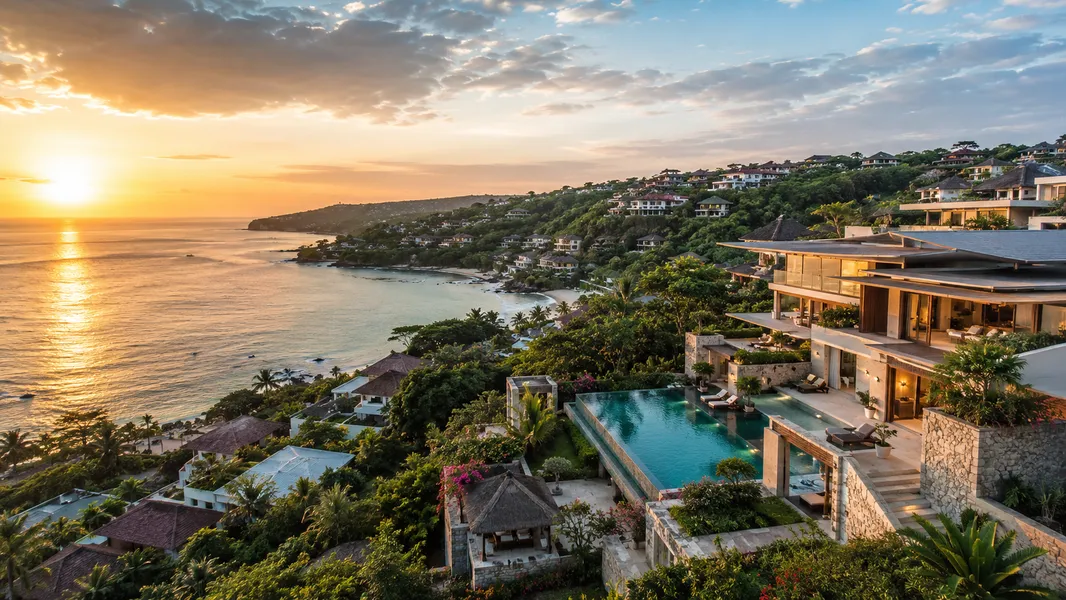

Jimbaran, Bali is one of those areas that rarely makes the loud, tourist-heavy “best places in Bali” lists — and that is precisely why it so often ends up on the shortlist for buyers looking for real estate in Jimbaran for living, holidays, or investment. Located in the southern part of the island, close to the airport, Nusa Dua, Uluwatu, and the beaches of Bukit, the area offers something increasingly rare in Bali: proximity to the ocean, a calm and livable atmosphere, well-developed infrastructure, and a property market that still feels far less overheated than Canggu or Seminyak.
What truly sets Jimbaran apart is that it works not only as a holiday destination, but as a place for real everyday living — with supermarkets, international schools, clinics, restaurants, beaches, and quick access to the airport all within easy reach.
From a practical perspective, property in Jimbaran appeals to several different types of buyers at once. Some are looking to buy a villa in Jimbaran as a comfortable family home near the sea. Others see the area as a strong investment property market, suitable for short-term tourist rentals or long-term leases for expats. And then there are buyers searching for a more balanced and conservative option in Bali — a location that is not overly crowded or chaotic, yet still benefits from stable demand and a clear long-term growth trajectory.
Where Jimbaran Is Located — and What Sets It Apart from Other Areas of Bali
Jimbaran, Bali, is located in the southern part of the island, between I Gusti Ngurah Rai International Airport and the Bukit Peninsula. Administratively, it belongs to Badung Regency — one of Bali’s most important tourism and investment regions. The area stretches along the western shoreline of Jimbaran Bay and gradually rises into the hills, offering sweeping views of the ocean, the airport, Nusa Dua, and the island’s southern coastline.
From a geographical perspective, Jimbaran occupies one of the most strategically convenient locations in Bali. It is removed from the island’s most chaotic tourist zones, yet remains close to nearly everything that matters for both daily living and property investment. The airport is typically just 10–20 minutes away, Nusa Dua around 20–30 minutes, Uluwatu approximately 25–40 minutes, and Canggu roughly 50–80 minutes, depending on traffic conditions.
Jimbaran’s greatest advantage is its location. The area allows residents to live close to the ocean while maintaining quick access to the airport, the beaches of Bukit, Nusa Dua, and the broader business and lifestyle infrastructure of South Bali.
For property buyers, this is far from a minor detail. In Bali, distance in kilometers often matters far less than actual travel time. Two areas may be only 15 kilometers apart, yet an evening commute between them can easily turn into an hour on a scooter or ninety minutes by car. This is precisely why Jimbaran is so highly valued: it offers a rare balance. Unlike Canggu, it does not suffer from overwhelming congestion, yet it still benefits from strong tourism demand and well-developed infrastructure.
Travel Times from Jimbaran to Key Areas of Bali
| Location | Approximate Travel Time | Why It Matters for Property Buyers |
|---|---|---|
| I Gusti Ngurah Rai Airport | 10–20 minutes | Ideal for short-term rentals, frequent travelers, and holiday-home owners |
| Nusa Dua | 20–30 minutes | Luxury resorts, beaches, conference venues, and a calm family-oriented environment |
| Uluwatu | 25–40 minutes | Surfing, Bukit beaches, beach clubs, and strong villa demand |
| Sanur | 35–50 minutes | Family lifestyle, medical infrastructure, and access to Nusa Penida ferries |
| Seminyak | 35–60 minutes | Restaurants, boutiques, nightlife, and tourist rental demand |
| Canggu | 50–80 minutes | Digital nomads, cafés, coworking spaces, and an active rental market |
| Denpasar | 30–50 minutes | Administrative services, universities, and urban infrastructure |
Taxi fares from Jimbaran to the airport typically range between $7–15, while trips to Uluwatu cost around $10–25, and rides to Canggu generally fall between $20–40. Prices vary depending on traffic, vehicle category, time of day, and booking platform. For day-to-day life, many residents rely on scooters, with monthly scooter rentals in Bali usually starting at around $70–120, while cars generally range from $350–700 per month.
Why Jimbaran’s Location Matters for Investors
For the Jimbaran real estate market, proximity to the airport is one of the area’s strongest advantages. A tourist arriving in Bali for a 7–10 day holiday does not necessarily want to spend another hour and a half driving to a villa after a long international flight. Jimbaran solves that problem elegantly: within fifteen minutes of leaving the airport, guests can already be relaxing by a private pool or dining at a beachfront restaurant.
This is particularly important for short-term rental properties. Villa rentals in Jimbaran are especially attractive to families, couples, and travelers seeking a quieter coastal environment without feeling isolated from the rest of the island. As a result, Jimbaran Bali real estate performs well not only as a lifestyle purchase, but also as a practical investment asset.
In Bali’s investment property market, success depends not only on the beauty of a location, but also on logistics: airport access, road connectivity, beaches, supermarkets, healthcare, and easy access to key destinations. Jimbaran performs exceptionally well across all of these factors.
From an administrative standpoint, Bali is part of Indonesia, and many aspects of regional development and tourism policy are reflected on the official Bali Provincial Government portal. For property buyers, this serves as an important reference point, as the development of South Bali is shaped not only by private developers, but also by broader infrastructure, tourism, and urban planning initiatives.
How Jimbaran Compares to Canggu, Uluwatu, Nusa Dua, and Sanur
Jimbaran is frequently compared with Bali’s other well-known districts, especially by buyers deciding where to live in Bali or where to invest capital. Yet direct comparisons can be misleading, as each area has its own atmosphere, audience, and investment logic.
| Area | Atmosphere | Main Audience | Key Difference from Jimbaran |
|---|---|---|---|
| Jimbaran | Calm, upscale coastal district | Families, investors, expats, villa buyers | A balanced mix of beaches, airport access, and everyday infrastructure |
| Canggu | Trendy, energetic, social | Digital nomads, younger expats, short-term renters | More traffic, nightlife, and density; Jimbaran is quieter and more residential |
| Uluwatu | Surf culture, cliffs, beach clubs | Surfers, tourists, villa investors | More resort-oriented and less consistent in infrastructure |
| Nusa Dua | Organized luxury resort enclave | Families, premium tourists, hotel investors | More enclosed and hotel-centric; Jimbaran feels more dynamic and authentic |
| Sanur | Relaxed, family-oriented lifestyle | Families, retirees, long-term residents | Calmer and more urban, but farther from Bukit’s beaches |
| Seminyak | Restaurants, boutiques, nightlife | Tourists, renters, commercial property buyers | More densely built-up; Jimbaran offers greater space and privacy |
In simple terms, choosing between Canggu and Jimbaran means deciding between an active social scene and a calmer oceanfront lifestyle. Choosing between Uluwatu and Jimbaran means deciding between dramatic cliffs and surf culture versus more practical everyday logistics. And choosing between Nusa Dua and Jimbaran often comes down to resort-style predictability versus a location that better combines lifestyle, investment, and long-term living.
Jimbaran from a Real Estate Perspective
The Jimbaran property market is far from uniform. Broadly speaking, the area can be divided into several distinct zones:
- Beachfront areas and properties near Jimbaran Beach — the most liquid segment of the market, with stronger rental demand and higher property values;
- The hills of Jimbaran — known for ocean-view villas, private residences, and premium developments;
- Areas near the main roads and university district — more practical options for long-term living and stable rental demand;
- The transition toward Bukit — attractive to buyers who want easier access to Uluwatu, Balangan, and Dreamland.
At present, property prices in Jimbaran generally start from around $120,000–180,000 for smaller apartments or compact units within residential developments. Mid-range villas typically range between $250,000–450,000, while premium ocean-view villas can exceed $700,000–1.5 million. Land prices in prime locations are also steadily increasing, especially in areas with good beach access and reliable road infrastructure.
The closer a property is to the ocean, the beach, quality roads, and tourism infrastructure, the more liquid and desirable it becomes. In Jimbaran, this effect is especially pronounced: the difference between “10 minutes walking distance to the beach” and “20 minutes by car through traffic” has a direct impact on both pricing and rental demand.
Foreign buyers should also pay close attention to the legal structure of any transaction. In Indonesia, foreigners cannot purchase land outright in the same way Indonesian citizens can. In practice, long-term land leases — commonly known as leasehold arrangements in Bali — or alternative legal structures are frequently used, all of which require professional due diligence. Core land ownership regulations fall under the authority of Indonesia’s Ministry of Agrarian Affairs and Spatial Planning / National Land Agency, while business licensing and permit procedures can be verified through the official OSS Indonesia portal.
The Defining Character of Jimbaran
Jimbaran is not trying to be Bali’s trendiest district — and that is exactly its strength. It is not as loud as Canggu, not as enclosed as Nusa Dua, not as intensely surf-focused as Uluwatu, and not as densely built-up as Seminyak. Its value lies in offering a calm, practical, and comfortable environment.
For buyers considering property in Jimbaran, the area stands out for three key reasons:
- Location — close to the airport, the ocean, Nusa Dua, and the Bukit Peninsula.
- Lifestyle — a peaceful environment suitable for families, expats, and long-term living.
- Investment Logic — stable demand for villas, tourist rentals, and properties with strong transport accessibility.
This is precisely why investing in Jimbaran appeals to buyers who are not chasing short-term hype, but instead looking for a more balanced market — one supported by beaches, infrastructure, tourism demand, and clear long-term growth potential.
The Atmosphere and Lifestyle of Jimbaran
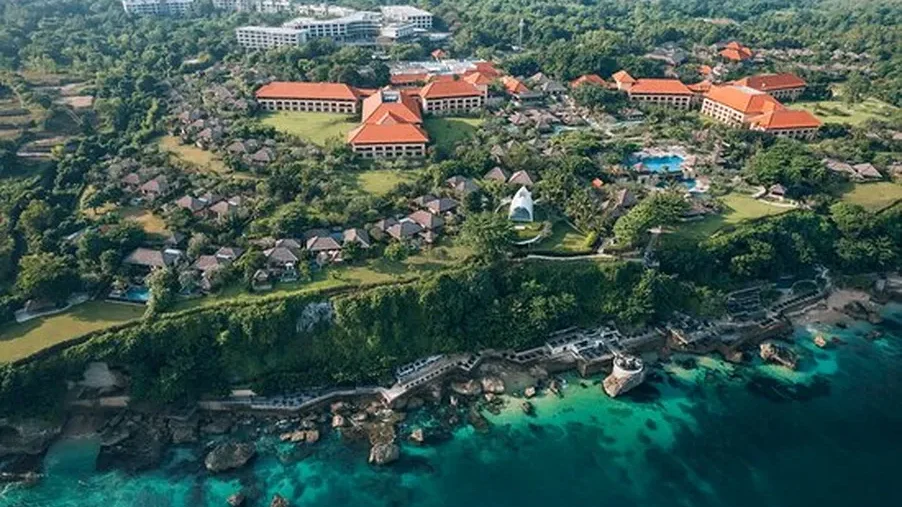
Jimbaran, Bali, feels fundamentally different from most of the island’s better-known districts. It lacks the constant sense of rush and overstimulation that defines Canggu, yet it also avoids the overly polished, resort-like isolation often associated with Nusa Dua. Life here moves at a calmer pace. In the mornings, local residents open small warungs and cafés; during the day, families head to the beach or run everyday errands; and by evening, the seafood restaurants lining the bay light up beneath soft pink-and-orange sunsets over the ocean.
For many buyers, this balance is exactly what makes property in Jimbaran so appealing. The area works not only as a holiday destination, but as a place for genuine long-term living: the ocean is nearby, supermarkets and cafés are within reach, international schools and clinics are easily accessible, and the roads connect conveniently to both the airport and the beaches of South Bali. At the same time, Jimbaran maintains a noticeably more relaxed rhythm than Bali’s busier nightlife-driven districts.
Jimbaran is not a “party until sunrise” destination. It is a location for people who want to live by the ocean while valuing peace, privacy, safety, and everyday comfort.
From a practical standpoint, life in Jimbaran feels structured and easy to navigate. In the morning, residents can reach Jimbaran Beach within 10–15 minutes for a walk, breakfast, or a meeting at a beachfront hotel. During the day, daily routines revolve around work, school runs, shopping, or short drives to Nusa Dua or the Bukit Peninsula. In the evening, many simply return home, order dinner, or head down to the oceanfront for a quiet sunset. This is one of the main reasons why Jimbaran real estate attracts families, expats, and buyers who see property not as an emotional “vacation purchase,” but as a practical asset for living and rental income.
The development of the area is closely tied to Bali’s broader tourism strategy. Official information about the region and its administrative structure can be found on the Bali Provincial Government portal, while municipal-level information is available through the Badung Regency website, which oversees Jimbaran. For investors, this matters because the district is not developing in isolation — it forms part of one of the island’s strongest tourism and infrastructure corridors.
Who Jimbaran Is Best Suited For
Jimbaran is not a universal fit for everyone. Some people may find it too quiet, particularly those accustomed to clubs, constant social activity, and an always-on atmosphere. But for a certain type of buyer, it is one of the most comfortable and balanced places to live in South Bali.
| Buyer Category | Why Jimbaran Appeals to Them | Typical Property Choice |
|---|---|---|
| Families with children | Calm atmosphere, family-friendly beaches, access to schools and healthcare | 2–4 bedroom villas, townhouses, gated residential homes |
| Expats and relocators | Convenient infrastructure, airport proximity, balanced pace of life | Long-term villa rentals or villa purchases |
| Investors | Demand from tourists and long-term residents, close to Nusa Dua and Uluwatu | Investment villas, apartments, managed rental properties |
| Lifestyle and holiday buyers | Beaches, seafood restaurants, sunsets, fast airport access | Oceanfront villas, serviced apartments |
| Capital preservation buyers | Limited supply of quality coastal locations in South Bali | Land plots, premium villas, ocean-view properties |
For families, Jimbaran’s biggest advantage is how easy it is to build a normal daily routine. There is no need to cross half the island every day for groceries, healthcare, or school. At the same time, the ocean remains close by, and weekend trips to Balangan, Dreamland, Uluwatu, or Nusa Dua are quick and convenient.
For investors, the logic is slightly different. Villa rentals in Jimbaran attract guests looking for a peaceful holiday experience without complete isolation from Bali’s main attractions. Properties with swimming pools, 2–3 bedrooms, parking, reliable internet, and convenient beach access tend to perform especially well. Depending on the property quality, season, and proximity to the ocean, villa rental rates typically range from around $150–400 per night in the mid-market segment and $500–1,000+ per night in the premium segment.
The most liquid property format in Jimbaran is typically a 2–4 bedroom villa with a pool, proper road access, and a location within 10–15 minutes of the beach.
For buyers considering purchasing property in Jimbaran for personal use, the district offers a rare combination of beauty and practicality. It allows residents to enjoy a private villa with a garden and swimming pool while still remaining connected to restaurants, shops, and essential services.
Everyday Life in Jimbaran
The lifestyle in Jimbaran can best be summarized in three words: calm, convenient, and coastal. Unlike Canggu, where daily life often revolves around cafés, coworking spaces, traffic, and constant social interaction, Jimbaran feels more like a mature residential district with a resort backdrop. There is less performative energy, less random noise, and a much stronger sense of privacy.
A typical day for a resident may look something like this:
- morning beach walk or workout session;
- breakfast at a café, warung, or hotel restaurant;
- daytime work from home or trips to Nusa Dua, Uluwatu, or Denpasar;
- evening dinner at Jimbaran Beach, gym session, massage, or quiet time at home;
- weekends spent exploring Bukit beaches, surfing, family outings, or oceanfront dining.
The cost of daily life depends heavily on personal habits and lifestyle choices. A meal at a simple local café may cost around $3–7, while dinner at a beachfront restaurant is typically $20–50 per person. Memberships at fitness clubs or studios usually range between $50–150 per month, while part-time household staff or gardeners for villas often start from approximately $150–300 per month.
For those planning long-term residence in Indonesia, visa regulations are an important consideration. The latest information regarding visas, residency permits, and entry requirements should always be verified through the official Indonesian Immigration website, as regulations may change over time.
The Pros and Cons of Living in Jimbaran
Jimbaran has earned a strong reputation as one of Bali’s calmer and more practical districts, but it should not be idealized. Like any area on the island, it comes with both advantages and trade-offs that buyers should evaluate carefully before purchasing or renting property.
| Advantages | What This Means in Practice |
|---|---|
| Close proximity to the airport | Convenient for owners, tourists, and visiting guests; transfers typically take 10–20 minutes |
| Ocean access and Jimbaran Beach | Excellent for walks, beachfront dining, and family-friendly recreation |
| Relaxed atmosphere | Less noise and nightlife compared to Canggu or Seminyak |
| Well-developed infrastructure | Supermarkets, cafés, schools, clinics, gyms, and daily services are readily available |
| Easy access to Bukit | Convenient for visiting Balangan, Dreamland, Padang Padang, and Uluwatu |
| Strong investment liquidity | Demand supported by tourists, expats, families, and proximity to premium destinations |
| Disadvantages | What Buyers Should Consider |
|---|---|
| Traffic during peak hours | Especially on roads leading toward the airport, Nusa Dua, and main junctions |
| Uneven street development | Premium villas may sit next to basic local buildings or undeveloped plots |
| Rental seasonality | Bali rental yields depend heavily on seasonality, management, and marketing |
| Not all properties are equally liquid | Villas far from the beach or with poor road access rent less successfully |
| Legal complexities | Foreign property ownership requires careful verification of leasehold terms, permits, and land titles |
| Less social energy than Canggu | Those seeking an active nightlife and networking scene may find the area too quiet |
Before purchasing property, it is essential to evaluate not only the building itself, but also the specific street: road access, noise levels, surrounding construction, beach distance, infrastructure quality, and future development potential.
This hyper-local analysis often determines the difference between a strong investment and a problematic asset. Two villas in Jimbaran may both cost $350,000–450,000, yet one may sit in a quiet residential pocket with easy beach access, while the other could face a noisy road or ongoing construction site. For Bali real estate investment, these details are critical.
How Lifestyle Influences Property Values
The atmosphere of the district directly affects property pricing. Buyers are not paying only for walls, land, and swimming pools — they are paying for the ability to live near the ocean, reach the airport quickly, dine on the beach, enjoy convenient infrastructure, and avoid constant tourist chaos.
This is why property prices in Jimbaran vary significantly depending on location:
| Property Type | Approximate Price Range | Key Characteristics |
|---|---|---|
| Apartments or compact units | $120,000–180,000 | Lower entry point, suitable for rentals and holiday use |
| Villas in residential areas | $250,000–450,000 | Core product segment for families and investors |
| Villas closer to the beach | $450,000–800,000+ | Higher liquidity and stronger rental appeal |
| Ocean-view villas | $700,000–1.5 million+ | Premium segment with limited supply |
| Land plots in promising areas | Depends on land status, leasehold term, and location | Suitable for development, but require careful due diligence |
For investors, the conclusion is straightforward: the lifestyle of a district creates demand. If a tourist or relocating resident wants South Bali, beaches, restaurants, airport access, and proximity to Bukit — without the chaos of busier districts — Jimbaran becomes one of the most logical choices. That is why Jimbaran property prices are supported not only by tourism, but also by the area’s long-term livability.
The Overall Character of Jimbaran
Jimbaran does not feel like a place for impulsive property purchases. It is a district for people who already understand Bali and are no longer searching for the loudest or trendiest location, but for a more balanced and sustainable lifestyle. There is less external glamour than in Seminyak, less social hype than in Canggu, and a much stronger sense of quiet confidence.
Coastal real estate in Bali within a location like this is especially attractive to buyers who value not only investment returns, but also quality of life. In Jimbaran, owners can live in the property themselves, rent it out, use it seasonally, or simply hold it as a long-term asset.
Jimbaran appeals to those who come to Bali not for constant noise and endless movement, but for the ocean, space, privacy, and a lifestyle supported by practical infrastructure. That is precisely what makes it one of the most resilient and balanced areas for living and investment in South Bali.
Jimbaran Beaches: What Property Buyers Need to Know
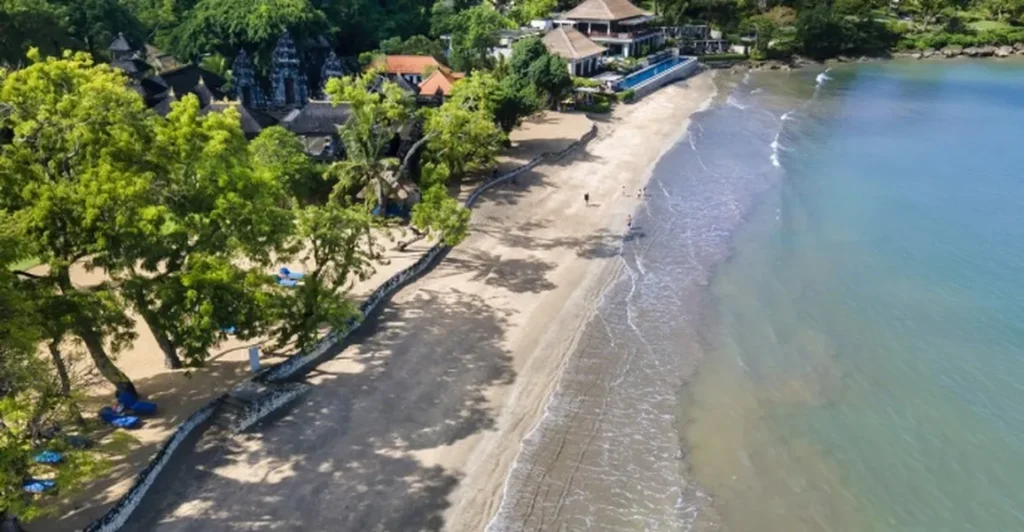
Beaches are one of the key factors influencing property liquidity in Jimbaran, Bali. For buyers, this is not simply a pleasant lifestyle bonus — it is a commercial factor. The easier the access to the ocean, the stronger the rental appeal, the more stable the occupancy, and the better the property’s position for resale. This is especially evident in the Jimbaran villa segment, where distance to the beach, views, road access, and the quality of nearby infrastructure can significantly affect value.
For coastal real estate in Bali, a simple rule applies: a property near a good beach is almost always more liquid than a comparable property deeper inland. In Jimbaran, this difference is especially noticeable.
When choosing a property, it is important not to rely solely on a developer’s claim of “5 minutes to the beach.” In practice, you need to understand what those five minutes actually mean: on foot or by scooter, along a proper road or through heavy traffic, with parking or without, whether the route feels comfortable in the evening, and whether access is restricted by private hotel grounds. In the Jimbaran Bali real estate market, these details directly affect rental potential.
From the perspective of tourism and regulation, Bali’s beach areas are important public and recreational zones. The broader context of the island’s development can be tracked through the official Bali Provincial Government portal, while district-level administrative matters can be checked via the Badung Regency website, since Jimbaran belongs to one of the island’s key tourism regions.
How Proximity to the Beach Affects Property Value
For buyers planning to purchase property in Jimbaran, the beach is not just a lifestyle argument. It is one of the fundamental criteria for assessing investment potential. Tourists are more likely to choose villas and apartments that offer quick access to the ocean, restaurants, beach cafés, and sunset spots.
| Property Location | How the Market Sees It | Impact on Price and Rental Demand |
|---|---|---|
| Within 5–10 minutes’ walk of the beach | The most attractive format for holidays and short-term rentals | Higher purchase price and stronger liquidity |
| 5–10 minutes by scooter or car | Comfortable for both living and rental use | Good balance between price and demand |
| 15–25 minutes from the beach | Suitable for long-term living, but weaker for tourist rentals | Lower price; yield depends heavily on property quality |
| Ocean view from the hills | Premium segment, especially with good road access | High price, limited supply |
| Far from the beach and main roads | Riskier for investment | Requires a discount and strong property management |
As a general benchmark, villas near the beach or with convenient access to Jimbaran Beach may cost around $450,000–800,000+, while premium ocean-view villas in Jimbaran’s hills can range from $700,000 to $1.5 million and above. More remote properties may start from $250,000–450,000, but their rental strategy must be planned especially carefully.
If the property is being purchased for rental income, it is essential to assess not the “map distance,” but the real travel time to the beach during high season, in the evening, and at peak traffic hours. In Bali, these figures can differ by two or even three times.
Jimbaran Beach
Jimbaran Beach is the area’s main beach and one of the most recognizable coastal spots in South Bali. It stretches along the bay, which means the water is usually calmer than on many beaches around Bukit. This makes the coastline more suitable for family outings, walks, oceanfront dinners, and a relaxed beach lifestyle.
The beach is especially known for its evening atmosphere. After 5 p.m., tourists and residents come here to watch the sunset, choose fresh fish or seafood at one of the restaurants, and dine at tables set directly on the sand. For tenants, this is a powerful emotional factor: not every area in Bali can offer such a clear and beautiful evening routine just minutes from home.
What property buyers should know about living near Jimbaran Beach:
- proximity to the beach increases property liquidity, especially when it is within walking distance;
- the area suits families, couples, and guests who do not want to live in a noisy party district;
- beachfront seafood restaurants strengthen the location’s tourist appeal;
- calmer water makes the area more versatile than surf beaches with strong waves;
- properties near the beach are more expensive, but are usually better received by the rental market.
Dinner at a seafood restaurant on Jimbaran Beach usually costs around $20–50 per person, depending on the seafood selection, restaurant level, and season. For a property owner, this matters: tenants are often willing to pay more for a property when it offers not only access to the ocean, but also a complete evening leisure experience nearby.
Jimbaran Beach defines the identity of the area. For property buyers, it is the key point of attraction supporting demand for villas, apartments, and premium properties close to the coastline.
At the same time, buyers should not focus only on the beauty of the beach itself. It is important to consider restaurant noise, evening traffic, parking, street lighting, and the density of surrounding development. In some cases, a property located 7–10 minutes from the beach may be more comfortable for everyday living than a villa right next to the busiest tourist zone.
Balangan, Dreamland, and the Nearby Beaches of Bukit
One of Jimbaran’s major advantages is its convenient access to the beaches of the Bukit Peninsula. While Jimbaran Beach is better suited for calm walks, family recreation, and sunsets, Balangan, Dreamland, Padang Padang, and other Bukit beaches offer a completely different experience: cliffs, surfing, turquoise water, beach clubs, and a stronger resort atmosphere.
For investors, this matters. A buyer or tenant of a villa in Jimbaran does not get access to just one beach, but to an entire beach map of South Bali within a short drive. This is why Jimbaran, Bali is often viewed as a convenient base between the airport, Nusa Dua, Uluwatu, and the best beaches of Bukit.
| Beach | Approximate Travel Time from Jimbaran | Features | Relevance for Real Estate |
|---|---|---|---|
| Jimbaran Beach | 5–15 minutes | Calm water, sunsets, seafood restaurants | The area’s main beach asset |
| Balangan Beach | 15–25 minutes | Surfing, cliff views, photogenic coastline | Increases appeal for active travelers |
| Dreamland Beach | 20–30 minutes | Waves, wide beach, resort feel | Adds value for short-term rentals |
| Padang Padang | 30–40 minutes | Famous surf spot, compact beach | Attractive to tourists and surfers |
| Bingin | 30–40 minutes | Surfing, cliffside cafés, viewpoints | Strengthens Jimbaran’s connection to the Bukit lifestyle |
| Nusa Dua Beach | 20–30 minutes | Calm beaches, five-star hotels, family recreation | Provides access to premium resort infrastructure |
Balangan is especially appealing to those who enjoy natural scenery and surfing. Dreamland attracts travelers looking for a wide beach and a strong visual impression. Padang Padang and Bingin are particularly popular with surfers and visitors who come to South Bali for waves, cliffside cafés, and atmospheric views.
Jimbaran wins because of its location: property buyers get a peaceful base for living with quick access to Bukit’s most famous beaches.
This is what sets Jimbaran real estate apart from properties in more isolated parts of the peninsula. In Uluwatu or Bingin, buyers may get a stronger beach atmosphere, but everyday infrastructure is often less consistent. In Jimbaran, it is easier to combine a coastal lifestyle with shops, schools, clinics, and fast airport access.
What to Check Before Buying a Property Near the Beach
Buying a property near the ocean requires more careful due diligence than purchasing deeper inland. This applies not only to documents, but also to practical factors such as access roads, drainage, noise, neighboring plots, and future construction. This is especially important when buying Bali investment villas or any property intended for regular rental use.
Before completing a transaction, buyers should check:
- The legal status of the land and property. For foreigners, the terms of the Bali leasehold, contract duration, extension rights, and usage restrictions are especially important.
- Building permits and land zoning. The property must comply with the permitted use of the land. Permit-related information can be checked through the official OSS Indonesia portal.
- Actual beach access. The route should be walked or driven in person rather than assessed only on a map.
- Road and parking quality. A narrow road with no proper turning space can reduce the property’s appeal to tenants.
- Noise risks. Restaurants, bars, roads, and construction sites near the beach can affect living comfort.
- Drainage and humidity conditions. Properties closer to the sea require higher standards of materials, maintenance, and ventilation.
- Future nearby development. An ocean view or open space nearby is not always guaranteed for years to come.
Buying property in Bali as a foreigner should always involve legal due diligence. In Jimbaran, transactions often involve long-term land leases — leasehold — as well as more complex ownership structures. Before you buy a villa in Jimbaran, it is important to obtain an independent legal opinion and verify the documents before paying a significant deposit.
Practical Takeaway for Buyers
Jimbaran’s beaches are not just part of the postcard image. They shape demand, pricing, and the entire investment scenario. A property near Jimbaran Beach can perform well for family holidays and short-term rentals. A villa in the hills with an ocean view may work as a premium asset. A property closer to the Bukit access roads offers convenient reach to Balangan, Dreamland, and Uluwatu, making it more attractive to tourists.
The best properties in Jimbaran are not necessarily the closest to the water. The best properties are those where four factors align: convenient beach access, a quiet street, clean legal structure, and a clear rental strategy.
That is why, when analyzing property prices in Jimbaran, buyers need to look beyond villa size and bedroom count. For investors, the beach scenario, transport accessibility, quality of surroundings, and real appeal to tenants are all crucial. In this sense, Jimbaran’s beaches remain one of the strongest arguments in favor of the area — both for living and for long-term investment in Bali real estate.
Infrastructure in Jimbaran
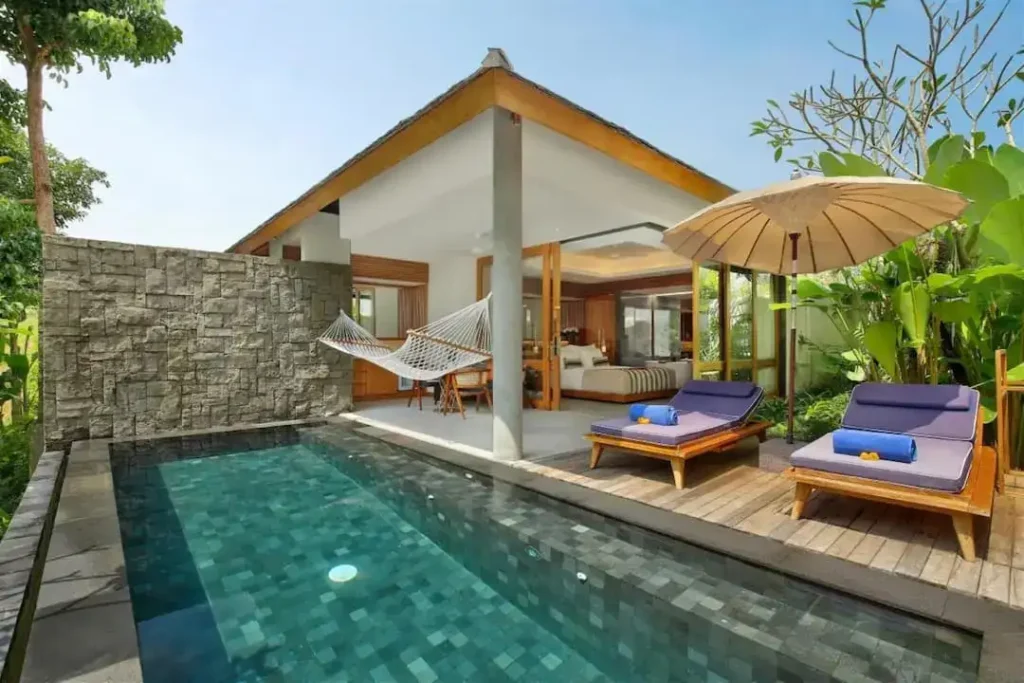

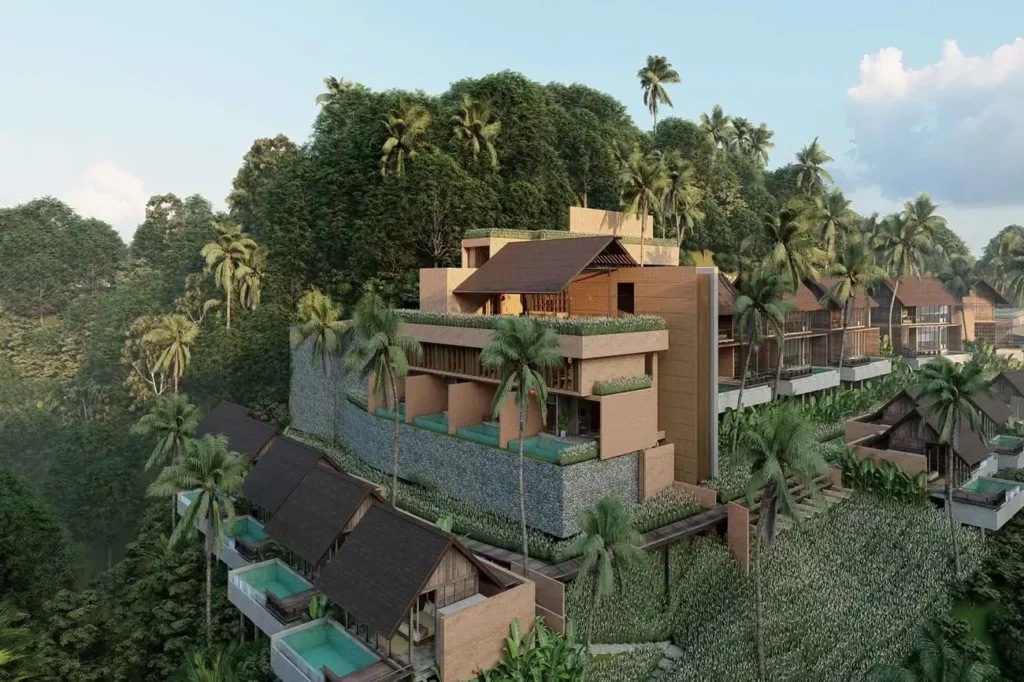

 Bali,Ubud
 from 80м²
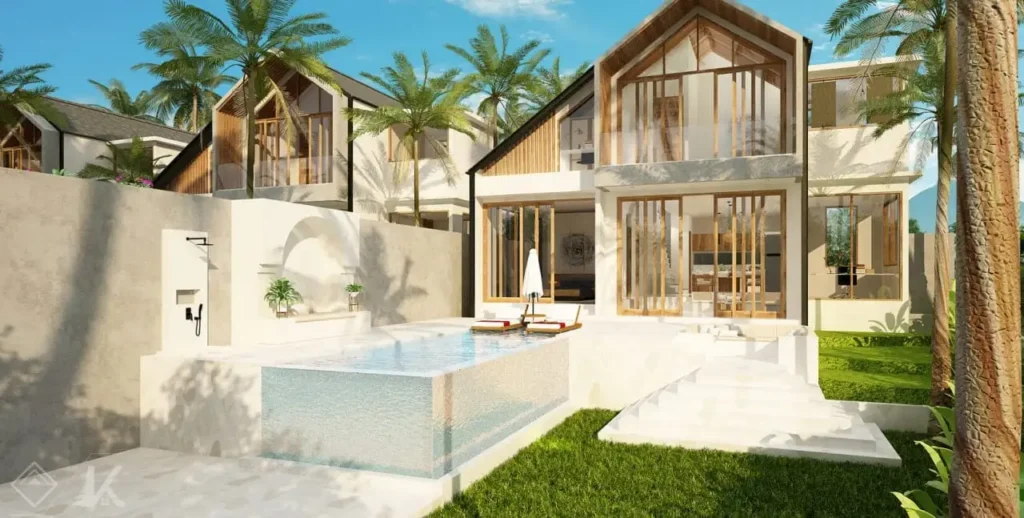 Bali,Canggufrom 183м²
Jimbaran’s infrastructure is one of the main reasons the area appeals not only to tourists, but also to property buyers considering long-term living. Unlike the more “wild” parts of Bukit, where a beautiful villa may sit next to a narrow dirt road with no proper supermarket nearby, Jimbaran, Bali feels more mature and predictable. The area offers everything needed for everyday life: shops, schools, clinics, cafés, fitness studios, home services, hotels, beachfront restaurants, and quick access to the airport.
For the Jimbaran real estate market, this matters directly. Buyers are not paying only for a house, land, and a swimming pool. They are paying for convenience: the ability to reach a supermarket in 10–15 minutes, take a child to school, call a doctor, meet guests at the airport, or quickly get to the beaches of Bukit. That is why properties in well-serviced areas are usually more liquid than villas in beautiful but isolated locations.
For long-term living in Bali, infrastructure matters more than it may seem when choosing a property from photos. A month after moving in, the ocean view is no longer the only thing that matters — road access, internet, clinics, schools, supermarkets, and everyday services become just as important.
Administratively, Jimbaran belongs to Badung Regency, one of the island’s most developed tourism regions. The broader context of regional development can be followed through the official Bali Provincial Government portal, while local matters are covered by the Badung Regency website. For investors, this is important: the area’s infrastructure is developing within a region where tourism and the service economy play a central role.
Transport and Airport Access
One of Jimbaran’s strongest practical advantages is its proximity to I Gusti Ngurah Rai International Airport. Under normal conditions, the journey takes around 10–20 minutes, although travel time can increase during peak hours or high season. For property owners, this is a major benefit: the location is convenient for personal trips, visiting guests, and short-term rentals.
If someone arrives in Bali late in the evening, they do not need to cross the entire island to reach Canggu or Ubud. They can get to the villa quickly, check in, and wake up near the ocean the next morning. This is why villa rentals in Jimbaran are often convenient for families, couples, and guests who value a peaceful stay without complicated logistics.
| Destination | Average Travel Time from Jimbaran | Practical Value |
|---|---|---|
| I Gusti Ngurah Rai Airport | 10–20 minutes | Convenient for tourist rentals and frequent flights |
| Nusa Dua | 20–30 minutes | Access to five-star hotels, beaches, and conference infrastructure |
| Uluwatu | 25–40 minutes | Surfing, beach clubs, and premium villas |
| Denpasar | 30–50 minutes | Administrative services and urban infrastructure |
| Sanur | 35–50 minutes | Healthcare, family-oriented lifestyle, and the port to Nusa Penida |
| Canggu | 50–80 minutes | Coworking spaces, cafés, and an active expat community |
Taxi fares from Jimbaran to the airport usually range from around $7–15, to Nusa Dua from $10–20, to Uluwatu from $10–25, and to Canggu from $20–40. For long-term living, many residents rent a scooter for $70–120 per month or a car for $350–700 per month.
Proximity to the airport increases property liquidity. For Jimbaran Bali real estate, this is one of the key factors — especially when the property is intended for short-term rental use.
Shops, Supermarkets, and Everyday Services
Jimbaran has a well-developed everyday retail infrastructure. The area and its surroundings offer supermarkets, small grocery stores, local markets, pharmacies, hardware and household goods stores, laundries, delivery services, beauty salons, and repair workshops. For residents, this means most day-to-day needs can be handled without trips to Denpasar or Canggu.
This is especially important for families and villa owners. Maintaining a home in Bali involves regular expenses: cleaning, pool care, garden maintenance, minor repairs, air-conditioning, internet, security, and waste collection. In Jimbaran, these services are accessible, which makes both personal living and rental property management much easier.
Approximate monthly costs for villa owners:
| Expense | Approximate Monthly Cost |
|---|---|
| House cleaning / domestic help | $150–300+ |
| Pool maintenance | $80–150 |
| Gardener | $80–200 |
| Internet | $25–60 |
| Electricity | $100–300+, depending on air-conditioning use and property size |
| Minor maintenance | $50–200+ |
| Rental property management company | Usually 15–30% of rental income |
Investors should factor these numbers in from the start. Rental yield in Bali depends not only on nightly rates, but also on operating costs. A beautiful villa in Jimbaran with a pool can perform well as a rental property, but only with proper maintenance and transparent management.
Schools and Education
Jimbaran is convenient for families with children because South Bali offers international and private schools, kindergartens, language centers, sports programs, and extracurricular activities. Some families choose Jimbaran specifically as a compromise between beachside living and access to educational infrastructure.
Tuition fees at international and private schools in Bali vary significantly. As a broad benchmark, budgets may range from $3,000–7,000 per year for younger grades and up to $10,000–20,000+ per year for more expensive international programs. Additional costs may include admission fees, uniforms, meals, transport, and extracurricular activities.
For family buyers, nearby schools are often more important than proximity to a beach club. This is one reason Jimbaran real estate is in demand among relocators and expats with children.
When choosing a property for family living, it is important to check not only the distance to school on a map, but also the actual morning commute. In Bali, morning traffic can significantly affect logistics. A villa that is “only 6 km from school” may still mean a 25–35 minute drive each way.
Clinics, Healthcare, and Pharmacies
For long-term living, medical infrastructure matters just as much as beaches and restaurants. Jimbaran and nearby areas offer private clinics, dental practices, pharmacies, laboratories, and hospitals. For more serious medical cases, residents usually consider facilities in Nusa Dua, Kuta, Sanur, or Denpasar.
The cost of medical services depends on the clinic and insurance coverage. A standard doctor’s consultation may cost around $30–80, a dental appointment from $40–100+, and basic lab tests from $20–100+. International health insurance for a resident or family may cost from $800–2,500+ per person per year, depending on age, coverage, and deductible.
For foreign residents, visa status and the legal basis for staying in Indonesia are also important. Current entry and permit rules should be checked through the official Indonesian Immigration website, as regulations can change.
For property buyers, this is especially important: if the property is intended not only for holidays but also for permanent living, clinics, pharmacies, and reliable transport access should be nearby. This is particularly relevant for families with children and older buyers.
Cafés, Restaurants, and Everyday Leisure
Jimbaran is known for its seafood restaurants on the beach, but its food and leisure infrastructure goes well beyond that. The area offers local warungs, coffee shops, family cafés, hotel restaurants, bakeries, food delivery, and both European and Asian cuisine. It is not as trendy or café-dense as Canggu, but for everyday living, the choice is more than sufficient.
Approximate costs:
- breakfast in a café — $5–12;
- lunch at a local warung — $3–7;
- dinner at a mid-range restaurant — $15–35 per person;
- seafood dinner on Jimbaran Beach — $20–50 per person;
- coffee — $2–4;
- food delivery — usually $5–15 per order, excluding higher-end restaurants.
For the rental market, this is a clear advantage. Tourists like having not only the beach nearby, but also an easy evening routine: walking to the ocean, having dinner, and returning home without a long journey. That is why coastal real estate in Bali in Jimbaran is often perceived as a convenient and peaceful holiday format.
Sports, Wellness, and an Active Lifestyle
Jimbaran and its surrounding areas offer gyms, yoga studios, massage salons, spas, Pilates studios, swimming pools, hotel tennis courts, and sports programs. The Bukit beaches are also nearby, making surfing, walking, running, swimming, and outdoor activities easily accessible.
Typical costs for sports and wellness services:
| Service | Approximate Cost |
|---|---|
| Single gym visit | $5–15 |
| Gym membership | $50–150 per month |
| Yoga / Pilates, single class | $8–20 |
| Massage | $10–35 |
| Surf lesson in South Bali | $25–60 |
| Personal trainer | $20–50 per session |
For buyers of Bali investment villas, the presence of wellness infrastructure increases a property’s appeal. Modern tenants increasingly look beyond bedrooms and swimming pools — they also care about where they can train, walk, work, and recover.
In Jimbaran, the formula “quiet villa + ocean + fitness + restaurants + quick access to Bukit” works particularly well. This is exactly the kind of lifestyle many mid-range and premium tenants are looking for.
Internet, Coworking, and Working from Home
Jimbaran is not Bali’s main digital nomad hub in the way Canggu is, but it works well for remote work. Many villas and apartments offer fiber-optic internet or stable home connections. Residents can also use mobile internet, café workspaces, hotel lounges, or small coworking spaces nearby.
Home internet typically costs around $25–60 per month, depending on provider and speed. For rental properties, fast internet has become a mandatory standard. In villa descriptions, the phrase “fast Wi-Fi” is no longer a competitive advantage — it is now a basic tenant expectation.
For investors, this is a practical point. If a villa rental in Jimbaran is intended for medium- or long-term stays, it is important to check connection speed, backup internet options, electrical quality, and whether a proper workspace can be set up. Tenants staying for a month or longer often choose properties based on these exact criteria.
Roads, Traffic, and Access Quality
Road quality in Jimbaran varies. The main routes are generally convenient, but inside residential pockets, buyers may encounter narrow streets, difficult turns, areas without sidewalks, and densely built-up lanes. For property buyers, this is critical: a villa may look excellent in photos, but lose part of its liquidity because of poor access.
Before buying, it is important to personally check:
- the width of the access road — whether a car can pass comfortably;
- parking availability — especially for rental villas;
- street lighting in the evening;
- road condition during the rainy season;
- noise levels from main roads;
- nearby construction sites;
- real travel time to the beach, airport, and shops.
In Bali, a “good location” is not just an area on a map. It is the specific street, access road, drainage, neighbors, noise levels, and the ability to reach the property comfortably during high season.
For Bali real estate investment, this point is often underestimated. Two properties priced at $350,000–450,000 can be very different products: one may sit in a quiet residential street with proper access, while the other may be tucked into a lane where turning a car around is difficult. For tenants and property managers, these are not the same asset.
Infrastructure and Its Impact on Property Values
Developed infrastructure has a direct impact on property prices in Jimbaran. Properties close to the beach, good roads, supermarkets, clinics, and schools are more expensive, but they also tend to hold demand better. This is especially true for 2–4 bedroom villas that work both for family living and rental use.
| Infrastructure Factor | Impact on the Property |
|---|---|
| Proximity to the airport | Increases appeal for tourists and owners |
| Access to Jimbaran Beach | Strengthens rental demand and liquidity |
| Nearby schools and clinics | Important for families and long-term residents |
| Supermarkets and everyday services nearby | Improves living comfort |
| Good road access and parking | Critical for rental villas |
| Stable internet | Essential for remote workers |
| Sports and wellness infrastructure | Increases the appeal of lifestyle properties |
This is why buyers looking to purchase property in Jimbaran are often searching not just for a beautiful house in Bali, but for a balanced asset. The area offers beaches, infrastructure, transport accessibility, and demand from several tenant groups: tourists, families, expats, and relocators.
Practical takeaway: Jimbaran’s infrastructure makes the area more resilient for both living and investment. It may not always be the loudest or trendiest district, but its maturity, airport proximity, and everyday convenience support demand for Jimbaran investment property, villas, apartments, and long-term rental assets.
Who Should Buy Property in Jimbaran?
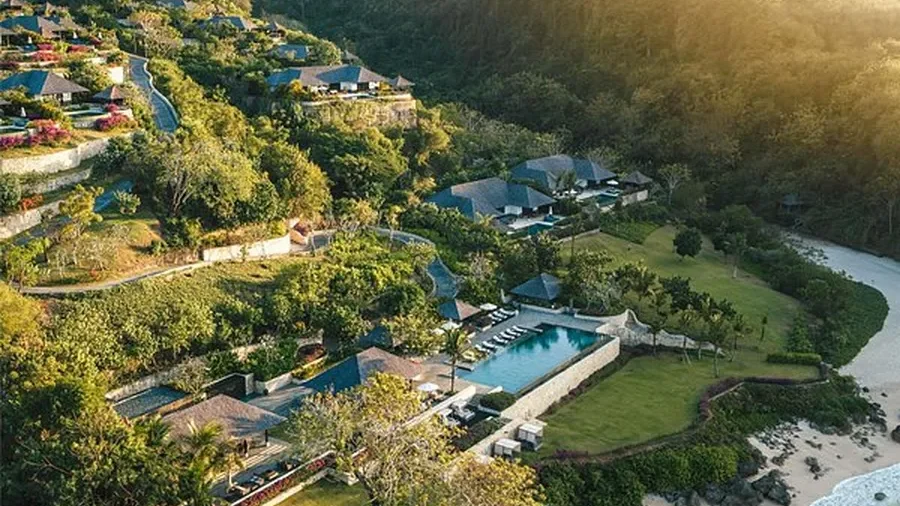
Property in Jimbaran is not equally suited to every type of buyer. It is not Bali’s loudest district, not the island’s main nightlife hub, and not a place where every second property automatically becomes a “gold mine.” But that is exactly where its strength lies: Jimbaran, Bali is chosen by buyers who value calm surroundings, proximity to the ocean, reliable infrastructure, and more stable rental demand.
Jimbaran is a strong choice for buyers who are looking not just for a villa in Bali, but for a liquid asset in a peaceful location with both tourist and family demand.
Buyers Looking for Personal Use
If the key question is where to live in Bali, Jimbaran often emerges as one of the most rational options. The area is close to the airport, Nusa Dua, Uluwatu, and the beaches of Bukit, yet it does not have the same density of traffic and daily chaos as Canggu or Seminyak.
Jimbaran is usually chosen for living by:
- families with children;
- relocators planning to stay in Bali for several months or several years;
- entrepreneurs and remote professionals;
- buyers who value the ocean, peace, and access to essential urban infrastructure.
In this scenario, it is best to consider a villa in Jimbaran with 2–4 bedrooms, parking, a swimming pool, and convenient access to main roads. The average price for such properties typically starts from $250,000–350,000 for a quality leasehold villa and can exceed $700,000–1.5 million for a premium ocean-view home.
For permanent living, the “most beautiful picture” is less important than road quality, reliable water, electricity, internet, and the legal status of the building.
Investors Focused on Rental Income
Buying property in Jimbaran is attractive for those planning to generate income from short- or medium-term rentals. The area appeals to tourists, families, digital professionals, couples, and guests who want to stay close to the ocean without being in the middle of the party scene.
For an investment model, the most in-demand formats are:
| Property Type | Best Suited For | Approximate Price | Rental Potential |
|---|---|---|---|
| Apartments / condominiums | Buyers with a smaller budget | from $120,000–200,000 | Medium-term rentals, couples, expats |
| 2-bedroom villa | Private investors | from $250,000–400,000 | Short-term rentals, families, tourists |
| 3–4 bedroom villa | Premium-segment investors | from $450,000–900,000 | Families, groups, long holidays |
| Ocean-view villa | Premium buyers | from $900,000–2 million+ | Higher nightly rates, but stronger management requirements |
Villa rentals in Jimbaran depend on the season, distance to the beach, design quality, service level, and property management. In well-prepared properties, annual yields in Bali real estate may be approximately 6–10%, but this should never be treated as guaranteed.
Investing in Jimbaran should only be considered after calculating realistic occupancy, management costs, taxes, maintenance, repairs, and booking-platform commissions.
Buyers Looking to Preserve Capital
Jimbaran is also suitable for buyers who view Jimbaran real estate as a capital preservation tool. Unlike more speculative areas, where prices can rise quickly and overheat just as fast, Jimbaran is supported by several durable fundamentals:
- proximity to the international airport;
- limited supply of quality land near the ocean;
- proximity to Nusa Dua, Uluwatu, and the Bukit area;
- steady tourist flows;
- the presence of premium hotels and restaurants.
This scenario is especially suitable for buyers who are not relying on a quick resale within 6–12 months, but are prepared to hold the property for five years or longer.
Buyers of Premium Coastal Property
If the goal is to buy property in Jimbaran for status, holidays, and long-term ownership, it makes sense to focus on hillside villas, properties with bay views, and projects close to Jimbaran Beach.
The premium segment here is limited, which means high-quality properties are not always publicly advertised. A villa with strong architecture, privacy, and ocean views often starts from $800,000–1.2 million, while selected residences may reach $2–3 million+.
Ocean-view villas in Jimbaran, Bali, are attractive because they combine a resort-style setting with real everyday convenience: restaurants, supermarkets, schools, clinics, and quick airport access are all nearby.
Buyers Ready to Work with Bali’s Legal Specifics
Foreign buyers should understand the legal structure of the transaction in advance. Indonesia has different formats for owning or using real estate, including Bali leasehold and limited forms of property rights available to foreigners, provided legal requirements are met. Land status, zoning, and property rights should be checked by specialized lawyers and verified through the relevant land authorities, including the systems and resources of Indonesia’s Ministry of Agrarian Affairs and Spatial Planning / National Land Agency.
If the property is intended for rental use, buyers should also consider commercial use permissions, licenses, tax structure, and possible business registration through the official OSS Indonesia system. Long-term stay, visa, and immigration status should be checked against the latest information from Indonesia’s Directorate General of Immigration.
Buying property in Bali as a foreigner requires legal due diligence before paying a deposit — not after signing a preliminary agreement.
Who Jimbaran Suits Best
| Purchase Goal | Is Jimbaran Suitable? | Comment |
|---|---|---|
| Living by the ocean | Yes | A calm area suitable for families and relocators |
| Short-term rentals | Yes | Especially 2–4 bedroom villas near the beach and main roads |
| Quick resale | Selectively | Requires a strong location and a clear entry discount |
| Premium residence | Yes | Especially hillside villas and ocean-view properties |
| Minimal budget | Limited | Entry is possible through apartments, but the selection is narrower |
| Nightlife and social scene | Usually no | Canggu, Seminyak, or selected parts of Uluwatu are more suitable |
Who Should Consider Other Areas
Jimbaran will not always be the best choice. If a buyer wants dense flows of young tourists, surf culture, clubs, cafés on every corner, and a highly dynamic short-term rental market, it is worth comparing Canggu vs Jimbaran. If surfing, cliffs, boutique hotels, and a stronger resort atmosphere matter more, then Uluwatu vs Jimbaran is the more relevant comparison. If the priority is a highly polished and peaceful resort environment, Nusa Dua vs Jimbaran should be evaluated separately.
For those looking for the best areas in Bali for investment, Jimbaran should be included on the shortlist primarily when the budget starts from $250,000–300,000 and the buyer is ready to approach the asset professionally: legal due diligence, property management, financial modeling, rental marketing, and regular maintenance.
The conclusion is simple: buying a villa in Jimbaran makes sense for those who want to combine personal use, investment potential, and a calmer version of Bali. This is not a district for impulsive, emotion-driven purchases; it is a location for measured decisions where the key factors are location, documentation, construction quality, and a clear ownership strategy.
Conclusion
Jimbaran is one of those areas in Bali where buying property feels less like an impulsive “I saw the ocean and fell in love” decision and more like a carefully considered investment. The logic behind both living and investing here is clear: proximity to the airport, a calm atmosphere, beaches, family-oriented infrastructure, steady rental demand, and a limited number of quality coastal locations. Real estate in Jimbaran is especially appealing to buyers seeking a balance between personal enjoyment, capital preservation, and potential rental income. At the same time, it is important to evaluate each property realistically: legal status, ownership structure, construction quality, property management, operating expenses, and the actual rental model all matter.
If you are considering buying a villa, apartment, or land plot in Jimbaran, leave an inquiry — we will help подобрать properties that match your budget, goals, and intended use. We will not promise “guaranteed returns” or unrealistic price growth. Instead, we will help you compare properties, assess the strengths and weaknesses of each location, and make a more informed decision before purchasing property in Bali.
 Real estate in Georgia
 Real estate in Cyprus
 Real estate in the UAE
 Real estate in Montenegro
 Real estate in Thailand
 +62 895 001 924 667
 hello@ulu-homes.id
 Tibubeneng, Canggu, Kuta Utara, Badung Regency, Bali 80361, Indonesia


 Get catalogue of TOP-7 objects