
 +62 895 001 924 667




Uluwatu, Bali is one of the few areas on the southern Bukit Peninsula where a limited supply of land intersects with strong, sustained tourism demand and a rapidly emerging premium residential market. The area consistently attracts expats, second-home buyers, and investors focused on both rental income and long-term capital appreciation.
According to data from Statistics Indonesia (BPS) and the Ministry of Tourism and Creative Economy, international arrivals to Indonesia have been growing at double-digit rates since the pandemic, with Bali maintaining its position as the country’s primary destination. Against this backdrop, Uluwatu real estate continues to demonstrate strong liquidity—particularly in the villa and low-rise development segments—making this Uluwatu area guide highly relevant for both lifestyle buyers and those pursuing a “rental income + capital growth” strategy.
Key insight: A limited supply of ocean-view land, high tourist spending, and consistently strong short-term rental occupancy create a compelling investment window in Uluwatu over the next 3–7 years.
In this introduction, we outline key market benchmarks. On average, villas in Uluwatu without direct ocean views start at approximately $250,000–$600,000, while properties with panoramic cliffside or ocean views typically begin around $450,000 and often exceed $1.5 million. Development land in prime micro-locations within the area ranges roughly from $12,000 to $35,000 per are (100 m²), depending on proximity to the coastline and road access.
Based on our observations and operator data, short-term rental yields in Uluwatu generally fall within the range of 10–16% gross annually, assuming professional management and dynamic seasonal pricing. In this guide, we also cover ownership structures (leasehold vs freehold in Bali), referencing the regulatory framework of the Ministry of Investment (BKPM), and explain how foreign buyers can acquire property in Uluwatu with minimal risk.
Where Is Uluwatu and Why Is It So Popular?
Location on the Bukit Peninsula (South Bali)
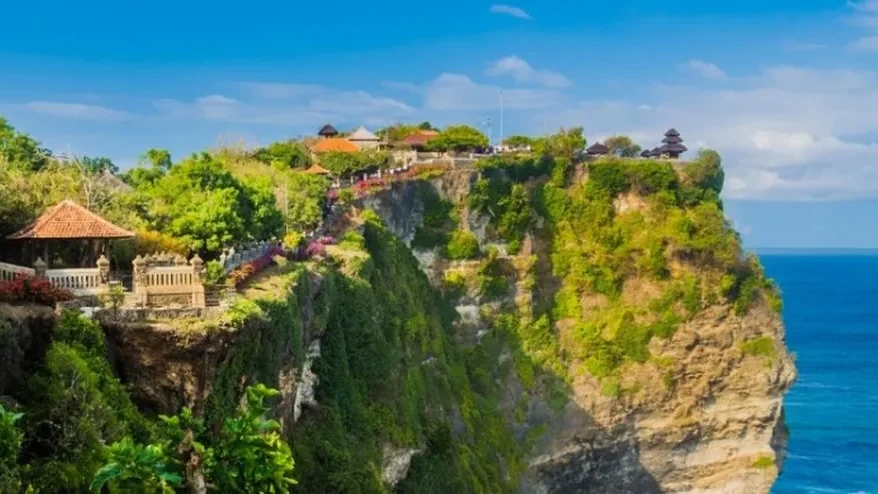
Uluwatu (Uluwatu, Bali) is located on the southwestern tip of the island, along the rugged limestone coastline of the Bukit Peninsula, within the administrative boundaries of Badung Regency (South Kuta, Pecatu). The area is best known for the iconic Uluwatu Temple perched atop 70-meter cliffs, a سلسلة of picturesque beaches—Padang Padang, Bingin, Suluban, and Nyang Nyang—and world-class surf breaks.
The main transport arteries include Jalan Raya Uluwatu, Jalan Labuansait, and a network of access roads leading to cliffside villas and hidden beaches. In terms of travel times: Ngurah Rai International Airport is approximately 35–50 minutes away (15–22 km), Jimbaran is 20–30 minutes, and Canggu is 50–80 minutes depending on traffic and seasonality. While Uluwatu generally experiences less congestion than northern Bali, bottlenecks do occur near beach access points and during evening hours.
Key insight: Uluwatu’s geography creates a rare combination—limited availability of ocean-view cliffside land paired with a steady flow of international tourism, as подтверждено данными Indonesia’s Ministry of Tourism and arrival statistics from Statistics Indonesia (BPS).
From a practical, day-to-day perspective:
- Airport to Uluwatu: taxi or private transfer averages $15–25 per trip
- Scooter rental: $60–120 per month (depending on model and insurance)
- Private driver with car: $35–60 per day
- Short-term accommodation: from $80–150 per night for private apartments, and $250–600 per night for mid-range modern villas (higher in peak season)
Investor note: Cliffside villas with panoramic ocean views command consistent premium demand. Within the Uluwatu real estate market, such properties typically start around $450,000 and often exceed $1.5 million, while villas without direct ocean views range from approximately $250,000 to $600,000 depending on location and land size.
For mobility, both residents and visitors rely primarily on private transport and ride-hailing services. The main connection to Nusa Dua and the airport is provided via the Bali Mandara Toll Road, while broader transport infrastructure and regulatory standards are overseen by the Indonesian Ministry of Transportation.
How Uluwatu Compares to Canggu and Seminyak
Any comprehensive Uluwatu area guide inevitably compares the region to Bali’s northern hotspots—Canggu and Seminyak. The differences extend beyond lifestyle to include demand structure, property pricing, and rental yield dynamics.
| Parameter | Uluwatu | Canggu | Seminyak |
|---|---|---|---|
| Terrain | Cliffs, coves, secluded beaches | Flat terrain, former rice fields, coastline | Urban coastal development |
| Atmosphere | Premium surf culture, beach clubs, quieter nightlife | Trendy cafés, heavy traffic, vibrant молодежная сцена | Boutiques, restaurants, nightlife, higher density |
| Surfing | Intermediate to advanced spots (Padang Padang, Uluwatu) | Beginner-friendly breaks (Batu Bolong, Berawa) | Limited surf, more leisure-focused |
| Infrastructure | Villa-focused, beach clubs; fewer schools and malls | Extensive coworking, gyms, schools | Well-developed commercial ecosystem, shopping |
| Property Prices | Villas: ~$250,000–$1,500,000+; Land: ~$12,000–$35,000 per are | Villas: ~$200,000–$1,200,000; Land: ~$20,000–$60,000 per are in prime areas | Villas: ~$250,000–$1,300,000; Land: ~$25,000–$55,000 per are |
| Rental Yield | ~10–16% gross with proper management and dynamic pricing | ~9–14% gross, with stronger year-round occupancy | ~8–12% gross, stable demand but higher competition |
| Audience | Surfers, expats, premium villa investors | Digital nomads, startups, freelancers | Tourists, shoppers, dining-focused visitors, families |
Conclusion: Uluwatu represents “ocean-view capital” in Bali. Limited cliffside land supply combined with a steady international tourist inflow (see reports from Kemenparekraf and BPS) sustains a pricing premium for both villa acquisitions and short-term rentals.
From a practical lifestyle standpoint:
- Noise and traffic: Lower than in Canggu and Seminyak, making Uluwatu more комфортным для долгосрочного проживания у моря
- Everyday convenience: Fewer chain supermarkets and international schools, but a higher concentration of private villas and gated communities
- Investment strategy: Uluwatu favors “view-driven premium villa + hospitality service” concepts, whereas Canggu leans toward “location + accessibility + coworking ecosystem.” As a result, Uluwatu property investment is typically oriented toward higher-spending guests and long-term land appreciation along the cliffs.
Lifestyle in Uluwatu: Who Lives Here and Why
Surfing, Beach Clubs, and Wellness Culture
Uluwatu is widely regarded as the epicenter of Bali’s ocean lifestyle in the south. The area is renowned for its world-class surf breaks—Uluwatu, Padang Padang, Bingin, and Suluban—as well as its vibrant daytime social scene centered around beach clubs and boutique cafés. A distinctive rhythm of life has emerged here: morning surf sessions, productive afternoons or relaxed downtime, and evenings spent watching the sunset from dramatic cliffside viewpoints.
According to publicly available data from the Ministry of Tourism of Indonesia and arrival statistics from Statistics Indonesia (BPS), international tourism continues to recover steadily, with Bali remaining the country’s flagship destination. This ongoing growth sustains a dynamic events calendar and strong demand for short-term rentals.
- Private surf lesson: $35–60; board rental: $10–20 per day
- Beach club entry or minimum spend (Single Fin, Ulu Cliffhouse, Sundays, etc.): $10–30 per person (typically applied as a food and beverage credit)
- Yoga, Pilates, sauna, and ice baths: $10–25 per session; retreats: $800–2,500 per week
- Gym memberships and functional training: $50–120 per month; massage/spa: $25–80 per session
Key point: The ocean and panoramic cliffside views create a strong sense of “experiential value,” which directly translates into sustained demand for short-term rentals and premium pricing for high-end villas—especially those with direct ocean views.
Expats, Digital Nomads, and Investors
Uluwatu’s community is a unique blend of surfers, creative professionals, and entrepreneurs who prioritize ocean views, privacy, and access to an active lifestyle. Digital nomads in Bali increasingly choose Uluwatu for its quieter evenings and lower traffic levels compared to Canggu. At the same time, investors and second-home buyers are drawn to key micro-locations such as Pecatu, Bingin, Padang Padang, Balangan, and Ungasan.
- Long-term rentals: 1-bedroom apartments or lofts — $1,200–2,200/month; 2–3 bedroom villas with a pool — $2,500–5,000/month
- Coworking space or office desk: $120–250/month; mobile data plans: $8–15/month
- Monthly budget for a couple (moderate lifestyle): from $1,800–2,800; with active dining and sports: from $3,000+
- For families: most international schools and kindergartens are located in Jimbaran or Nusa Dua, with commute times of 15–35 minutes depending on location and traffic
For property buyers, Uluwatu real estate is particularly appealing for a “rental + personal use” strategy. The most sought-after segment typically includes 2–4 bedroom villas ranging from 120 to 300 m², ideally with potential for panoramic ocean views and dedicated parking.
Pros and Cons of Living in Uluwatu
| Category | Advantages | Disadvantages |
|---|---|---|
| Nature and Ocean | Cliffs, sunsets, world-class surf spots, and low-density development | Steep access to beaches; not all areas are ideal for families with small children |
| Infrastructure | Premium beach clubs, boutique cafés, fitness, yoga, and wellness facilities | Fewer schools, clinics, and shopping centers than in Canggu or Seminyak; many services require trips to Jimbaran or Nusa Dua |
| Traffic and Mobility | Relatively спокойные дороги и меньше пробок, чем на севере Бали | Dependence on scooters or cars; limited walkability |
| Cost of Living | Flexible—possible to live modestly or at a premium level | Ocean-view villas are priced above the island average; high-end restaurants and clubs come with a premium bill |
| Investment | Consistent demand for short-term rentals, with gross ROI of ~10–16% under professional management | Limited availability of view plots; increasing competition in hotspot areas such as Bingin and Padang Padang |
| Living Comfort | Quiet evenings, privacy, свежий океанский воздух | Occasional water or electricity instability in certain micro-areas; may require резервные системы, скважины или фильтрацию |
Conclusion: Living in Uluwatu, Bali, is ultimately a choice in favor of the ocean, an active lifestyle, and privacy. The area is ideal for those seeking a balance between dynamic, activity-filled days and спокойные вечера, while also considering property acquisition for both personal use and rental income. According to data from Kemenparekraf and BPS, the continued growth in international arrivals supports устойчивый спрос, positively impacting occupancy rates and average daily rates during peak seasons.
Infrastructure in Uluwatu: What to Know Before Moving
Roads, Traffic, and Accessibility
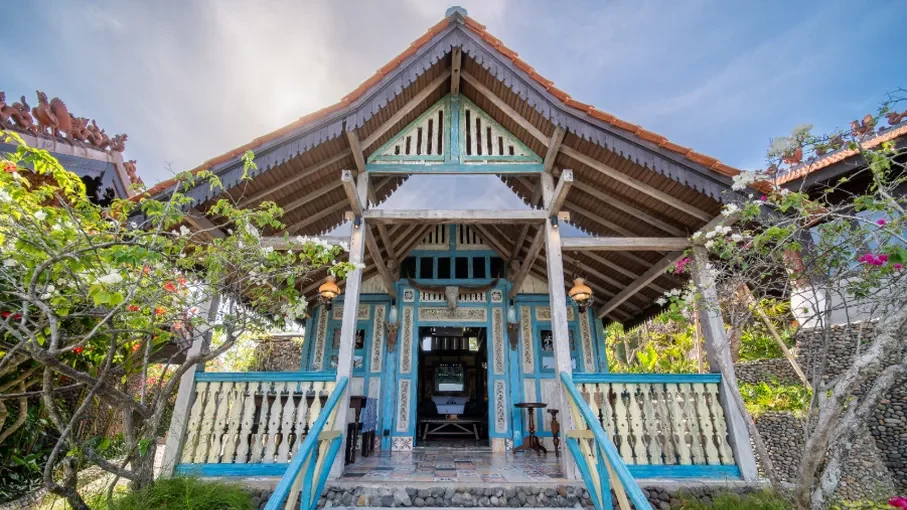
Uluwatu sits on the elevated terrain of the Bukit Peninsula, which makes two main roads especially important: Jalan Raya Uluwatu and Jalan Labuansait, both of which connect to the Bali Mandara Toll Road, the key toll highway linking the southern part of the island with the airport and Nusa Dua. The smaller access roads leading to beaches such as Bingin, Padang Padang, Suluban, and Balangan are narrow and, in some sections, effectively single-lane. Around sunset and on weekends, these routes often become local bottlenecks. According to regulations and transport guidelines issued by the Indonesian Ministry of Transportation, the priority in tourist zones is road safety and speed control; in practice, average travel speeds during peak hours often fall to just 15–25 km/h.
| Route | Distance | Travel Time (Off-Peak / Peak) | Estimated Cost |
|---|---|---|---|
| Ngurah Rai Airport → Uluwatu (Pecatu) | 15–22 km | 35–50 min / 45–75 min | Taxi/private transfer: $15–25 |
| Uluwatu → Jimbaran | 7–12 km | 20–30 min / 30–45 min | Taxi: $6–12; scooter fuel: approx. $1 |
| Uluwatu → Nusa Dua | 12–18 km | 25–40 min / 35–55 min | Taxi: $8–15 |
| Uluwatu → Canggu | 28–36 km | 50–80 min / 70–110 min | Taxi: $18–30 |
- Scooter rental: $60–120/month, depending on engine size and insurance
- Car rental: $25–45/day without a driver, or $35–60/day with a driver for 8 hours
- Fuel (Pertalite/Pertamax): approx. $0.90–1.10 per litre
- Beach parking: $0.50–1 for a scooter or car
- Taxi apps such as Grab and Gojek, as well as official taxi services, are generally reliable, although wait times tend to increase during the evening rush
Important: Peak traffic periods in Uluwatu are typically 8:00–10:00 a.m. and 4:30–7:00 p.m., especially around sunset. When heading to the airport, it is wise to allow an additional 20–30 minutes, particularly during high season.
Schools, Hospitals, and Everyday Services
Within Uluwatu’s cliffside zone itself, international schools and major medical facilities are relatively limited. Most family-oriented infrastructure is concentrated in Jimbaran and Nusa Dua, both around 15–35 minutes away by car, as well as in Denpasar and Sanur, which are typically 45–75 minutes away. International-standard medical care is available in Jimbaran and Nusa Dua, while specialist consultations and scheduled procedures are more commonly handled in Denpasar and Sanur. According to data from Statistics Indonesia (BPS), South Bali—particularly Badung Regency—continues to account for a significant share of the island’s service infrastructure.
- General practitioner consultation: $20–40; emergency care: $80–150; health insurance is strongly recommended for expats
- Preschools and schools, mainly in Jimbaran and Nusa Dua: $400–1,200/month depending on curriculum and grade level
- Groceries and household essentials: supermarkets such as Pepito, Frestive, and smaller convenience stores; a weekly grocery basket for a couple typically costs $50–80; 19-litre water refill: $1.50–2.50; 12 kg gas cylinder: $14–18
- Utilities: electricity for an average household with two air conditioners, a water heater, and a pool typically ranges from $60–180/month; private waste collection: $7–15/month; pool and garden maintenance: $60–120/month
Key point: For families with children, day-to-day logistics are usually built around the “home–school–activities” route through Jimbaran and Nusa Dua. When choosing a villa, it is important to factor in morning traffic near access points to Jalan Raya Uluwatu.
Internet and Remote Work Conditions
Fiber-optic internet is available in Uluwatu, though coverage remains uneven. That said, service from providers such as IndiHome/Telkom, Biznet, Iconnet/PLN, and XL Home continues to expand. In houses and villas located outside the more densely developed parts of Bingin, Padang Padang, and Pecatu, there may still be pockets with reduced speeds or occasional latency issues. Communications policy and infrastructure development are overseen by the Ministry of Communication and Informatics (Kominfo); 4G coverage is available across most of the Bukit Peninsula, while 5G is only selectively available in major tourism corridors.
- Home internet packages: $20–45/month for 50–150 Mbps FTTH, with installation fees of $30–80
- Backup connection: mobile 4G/5G (Telkomsel/XL) at $8–15/month for 20–40 GB
- Coworking spaces and cafés: typically offer stable 50–100 Mbps connections; coworking memberships range from $120–250/month, with day passes around $8–15
- Power supply: brief outages do occur; for remote work, an uninterruptible power supply (UPS) or inverter ($150–400) plus a mobile hotspot is strongly recommended as backup
For digital nomads, the combination of fiber internet, a mobile backup connection, and a UPS virtually eliminates the risk of downtime. Choosing the right micro-location within Uluwatu—ideally closer to main roads and provider infrastructure—can also result in more stable speeds and lower latency.
A few additional notes on daily life and safety:
- Water supply in the cliffside area often depends on wells or tanker delivery; for drinking water, home filtration or reverse osmosis systems are recommended, typically costing $150–300 per house
- Delivery services for groceries, water, gas, and medicine generally take between 15 and 60 minutes via local apps; some cliffside locations may carry an additional delivery surcharge of $1–3
- Road safety is an important consideration: if you ride a scooter, a helmet and proper footwear are essential. Accident rates on tourist routes are one reason many residents prefer a more powerful scooter and avoid riding after dark. Road safety standards and related programs are overseen by the Indonesian Ministry of Transportation
Bottom line: Uluwatu’s infrastructure is well suited to full-time living and remote work, provided you choose the right micro-area and plan for reliable internet and electricity backup. Proximity to Jimbaran and Nusa Dua largely solves the question of schools and healthcare, while travel across the island remains reasonably predictable as long as you plan around peak traffic hours.
Uluwatu Real Estate Market Overview
Property Types: Villas, Apartments, and Land Plots
The Uluwatu real estate market is defined primarily by villas—both completed and off-plan—alongside apartments and lofts in low-density developments, as well as land plots for bespoke residential projects. Supply is concentrated in Pecatu, Bingin, Padang Padang, Balangan, and Ungasan. The premium villa segment acts as the pricing benchmark for the entire area, as this is where buyers are most willing to pay a premium for ocean views and privacy.
| Category | Description | Indicative Price (USD) | Comments |
|---|---|---|---|
| Villas (without ocean view) | 2–3 bedrooms, 2–4 are plots, private pool | $250,000–$600,000 | A highly marketable format for rentals and family living |
| Villas (ocean view / glimpse view) | 3–4 bedrooms, 3–6 are plots, panoramic terraces | $450,000–$1,200,000 | Stronger capital appreciation potential and higher average rental rates |
| Cliff-front, first-line properties | Signature villas, 4–6 bedrooms, large land plots | $1,200,000–$4,000,000+ | Rare trophy assets; pricing depends on topography and frontage width |
| Apartments / lofts | 1–2 bedrooms, 35–90 m², boutique-scale developments | $110,000–$350,000 | Service charges of $100–250/month; popular among buy-to-let investors |
| Land (freehold), inland location | 2–10 are, with access road | $12,000–$22,000 per are | Pricing depends on road width and zoning |
| Land (freehold), closer to the ocean | View plots near cliffs or coves | $22,000–$35,000 per are | Cliffside sites require case-by-case valuation; premiums can be multiple times higher |
| Land (leasehold) | 25–30 years with extension options | $25,000–$90,000 per are for the full term | Equivalent to roughly $1,000–$3,000 per are per year, depending on micro-location |
Key point: The scarcity of land with view value is one of the market’s main pricing drivers. Even outside the cliff-front segment, plots with a guaranteed ocean glimpse and quality road access consistently trade at a premium.
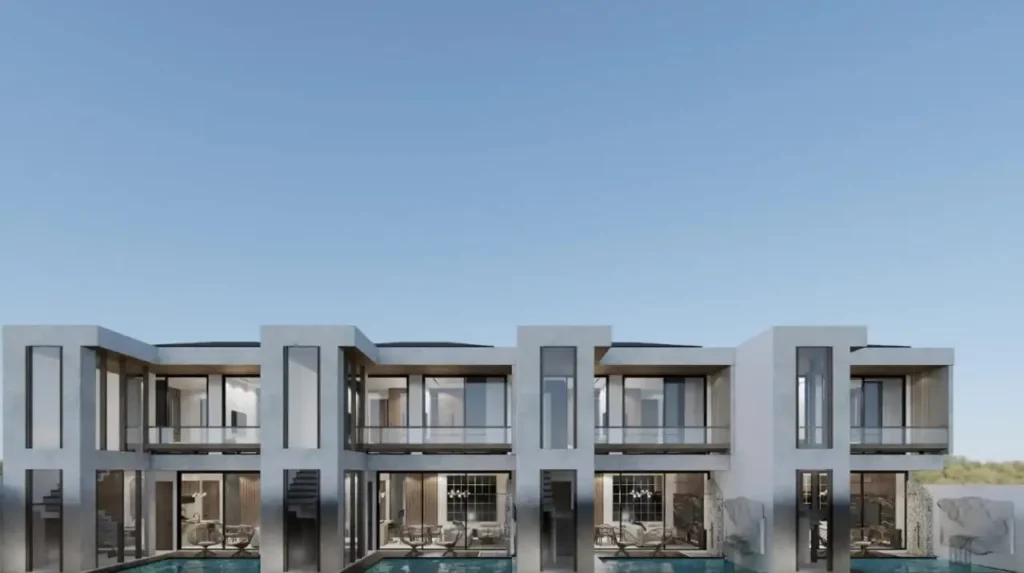
Residential complexes in Bali
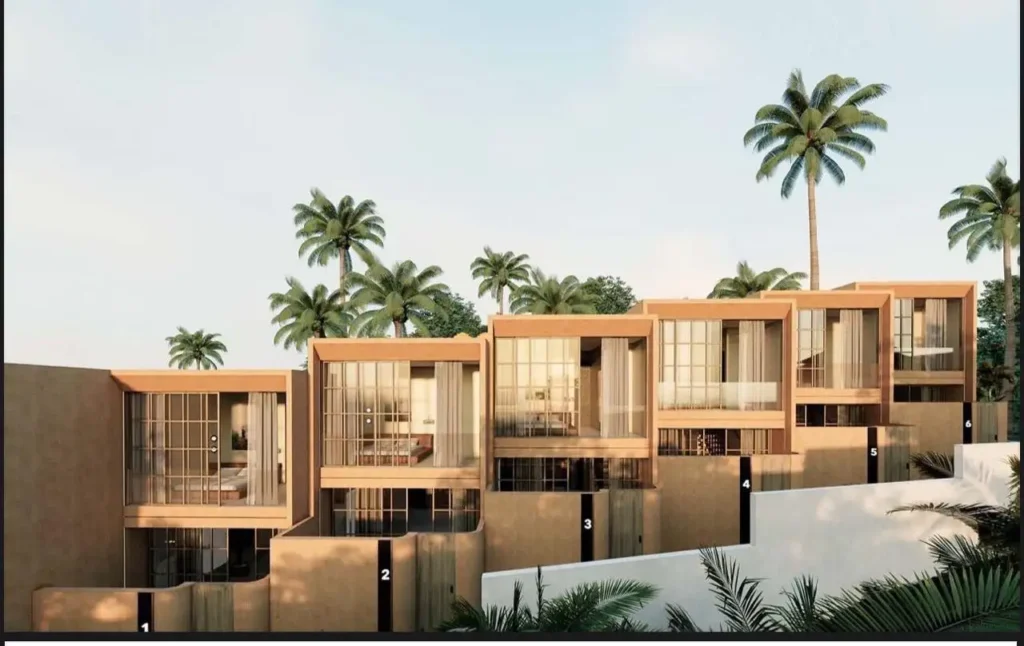

 Bali,Pererenan
 from 100м²
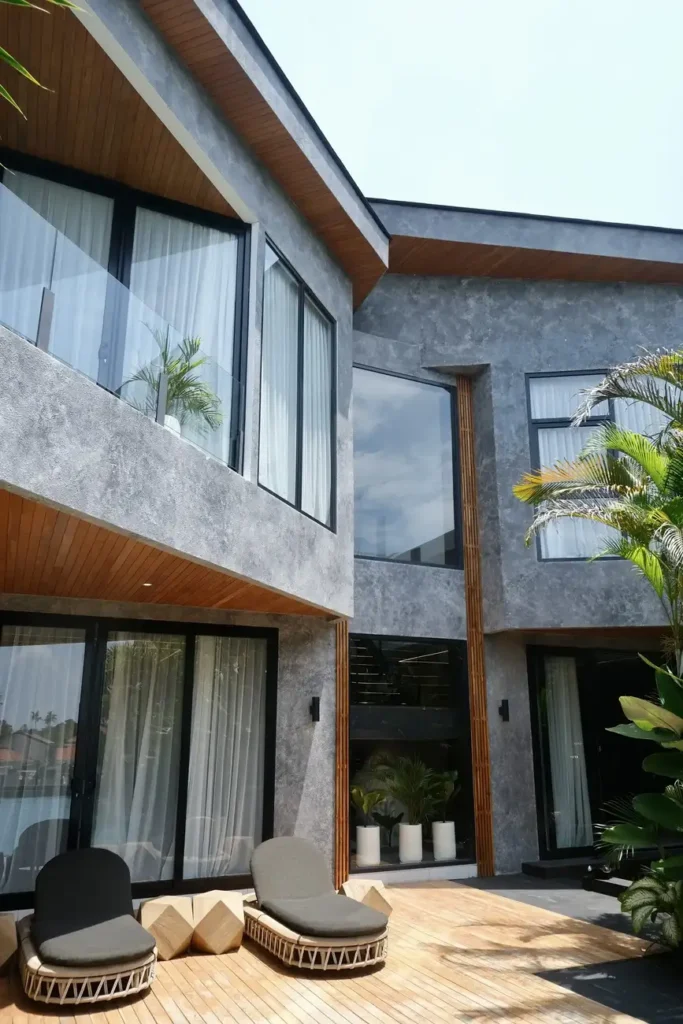
 Bali,Canggufrom 102м²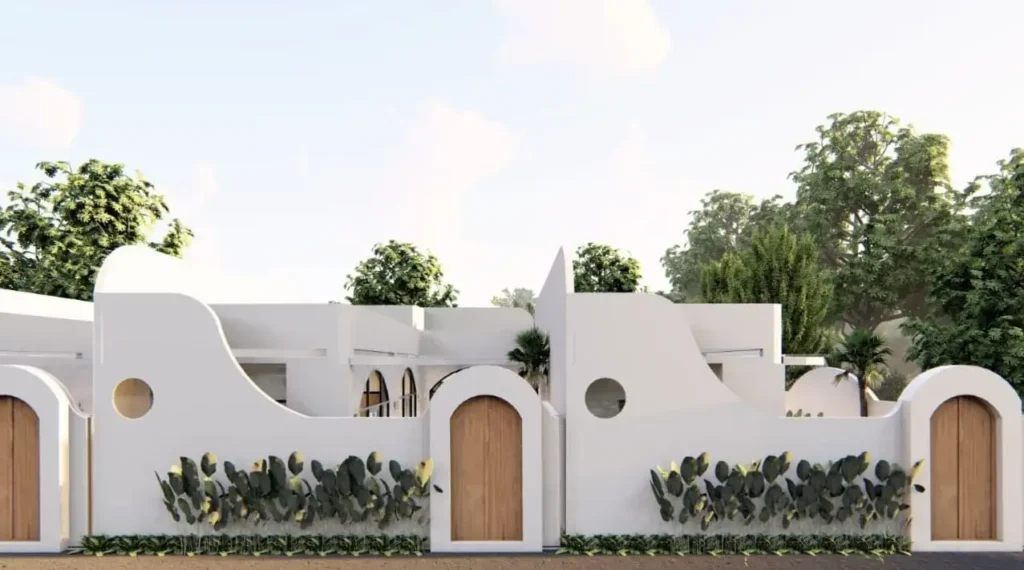
Freehold vs. Leasehold in Bali: What’s the Difference?
The legal ownership structure in Indonesia directly affects pricing, liquidity, and exit strategy. The core land and building rights framework is regulated by the Ministry of Agrarian Affairs and Spatial Planning / National Land Agency; see the official guidance published by ATR/BPN. For foreign investors, the key ownership formats are as follows:
- Freehold (Hak Milik): full ownership rights, available only to Indonesian citizens. Foreigners cannot directly acquire Hak Milik.
- Hak Pakai / Hak Guna Bangunan (HGB): limited proprietary rights that allow the holder to use or build on land; these can be accessed through a foreign-owned company structure (PT PMA), regulated through the Ministry of Investment (BKPM).
- Leasehold: a long-term lease, typically for 25–30 years, often with extension clauses that can bring the total term to 50–80 years. This is the most common and predictable structure for a rental villa strategy.
The financial aspects of a transaction typically include:
- Notary / PPAT fees: 1–2% of the transaction value, depending on title complexity and the scope of due diligence
- Registration and administrative costs: charged in accordance with ATR/BPN tariffs; required documents and applicable fees depend on the type of asset and legal structure
- Transaction taxes: purchase, sale, and rental taxes are calculated under current regulations and cadastral values; the exact obligations of each party should be confirmed with the PPAT before signing
Key takeaway: For foreigners looking to buy property in Bali, the two most transparent routes are a PT PMA structure with HGB or Hak Pakai rights for ownership, and leasehold for an income-oriented rental model. The right choice depends on your investment horizon, income strategy, and resale plans.
Market Trends and Price Dynamics
The main demand drivers in Uluwatu are limited ocean-adjacent land supply, the growth of premium tourism, and the relocation of some digital nomads and families away from more congested parts of Bali. Arrival and overnight stay statistics for Badung Regency and Bali as a whole continue to confirm the sector’s recovery and the high share of international visitors; see the aggregated data published by Statistics Indonesia (BPS).
Current market trends include:
- Steady price growth for view plots and ocean-view villas; cliffside projects are released in limited numbers and tend to sell quickly
- A growing share of off-plan developments with phased payment structures; early-stage discounts compared to completed properties typically range from 8% to 15%
- Expansion of the apartment and loft segment within a 1–3 km radius of Bingin and Padang Padang beaches, targeting short-term rental demand and a lower entry price point
- Increased emphasis on legal due diligence, including title verification, road access requirements (minimum 4 meters), zoning compliance, and utility connection capacity
Observed pricing dynamics based on recent transactions and listings:
- Villas without ocean view: price growth in mature micro-locations is moderate; the key value drivers are build quality and management standards
- Villas with ocean or glimpse views: demand is stronger, price growth is faster, and quality inventory remains limited
- Freehold land near the ocean: pricing is highly sensitive to asset rarity, and exceptional plots may command offers well above average market benchmarks
Conclusion: Uluwatu property investment remains attractive because it is fundamentally tied to a rare asset class—view land and premium villas. For a more conservative strategy, it is generally wiser to prioritize location quality and legal clarity rather than simply chasing the lowest entry price.
Investment Potential: Is Uluwatu Worth Investing In?
Tourism Growth and Rental Demand
Rental demand in Uluwatu, Bali is driven by a combination of steady international tourism and the area’s premium positioning—world-class surf, dramatic cliffside views, and a vibrant beach club scene. According to publicly available data from the Indonesian Ministry of Tourism (Kemenparekraf) and statistics published by Statistics Indonesia (BPS), inbound tourism continues to recover at a healthy pace, while Bali remains the country’s leading destination in terms of overnight stays and average tourist spending. This directly supports both occupancy and short-term rental rates in the private pool villa segment.
- Average daily rate (ADR) for villas in Uluwatu: $220–420 for a 2–3 bedroom property without an ocean view; $450–900 for villas with ocean or glimpse views, with higher rates during peak season
- Occupancy: approximately 58–72% on an annual average basis; 75–90% during peak months
- Management fees: 15–25% of revenue; housekeeping, laundry, and utilities typically account for another 12–18% of gross income
Key point: The scarcity of view plots and guests’ strong willingness to pay for ocean-facing properties are what underpin gross short-term rental yields of approximately 10–16% per year, provided the asset is professionally managed and priced dynamically according to the season.
Short-Term vs. Long-Term Rental
Below is a broad comparison of the two main monetization models for Uluwatu property investment, based on a typical 2–3 bedroom villa on a 2–4 are plot. The ranges are indicative averages and will vary depending on micro-location (Bingin, Padang Padang, Pecatu), the quality of the renovation, marketing execution, and guest reviews.
| Parameter | Short-Term Rental (STR) | Long-Term Rental (LTR) |
|---|---|---|
| Pricing | ADR of $220–900/night, depending on season | $2,500–5,000/month for a 2–3BR villa without ocean view; $4,500–8,000/month with ocean or glimpse views |
| Occupancy | 58–72% annual average | 10–12 months/year on a fixed basis |
| Management | Professional operator: 15–25% of revenue | Fixed lease structure, with lower agency fees of around 8–12% |
| Gross Rental Yield | ~10–16% annually | ~6–10% annually |
| Net Yield After OPEX | ~6–10%, assuming disciplined cost control | ~5–8%, with lower operational risk |
| Key Risks | Seasonality, guest reviews, marketing performance, competition | Vacancy risk between tenants, pricing discounts on longer contracts |
Model comparison: STR offers higher upside but is significantly more management-intensive, while LTR provides more stable cash flow with less day-to-day operational complexity. In practice, a hybrid strategy—such as a 6–8 month long-term contract combined with nightly rentals during peak season—can often produce the most balanced outcome.
Yield Example (Pro Forma)
Case study: a 3-bedroom villa without an ocean view in Pecatu or Bingin. Total acquisition cost: $380,000, including $25,000 for furnishings and a $10,000 reserve for final improvements.
- ADR and occupancy (base case): $320/night at 65% occupancy → gross annual income of $75,920
- Operating expenses: management at 20% ($15,184), utilities/cleaning/pool/garden at approximately 15% ($11,388), miscellaneous costs such as marketing and minor capex at around 5% ($3,796)
- Total OPEX: approximately $30,368
- Net income: approximately $45,552
That results in a gross yield of about 12.0% and a net yield of roughly 8.0%, based on the full cost structure.
Under the base scenario, cash-flow payback is typically in the range of 10–12 years, with faster returns possible for properties with ocean or glimpse views and stronger nightly pricing.
Scenario analysis for a 2–3 bedroom format:
- Conservative: ADR $260, occupancy 60% → gross income of approximately $56,000–60,000; net yield around 6–7%
- Base case: ADR $300–340, occupancy 62–68% → gross income of approximately $68,000–80,000; net yield around 7–9%
- Aggressive (ocean/glimpse view): ADR $450–650, occupancy 65–75% → gross income of approximately $107,000–160,000; net yield around 9–12%, with correspondingly higher marketing and service expectations
Exit Strategy: Resale Potential
Liquidity in Uluwatu is determined by three primary factors: micro-location (including beach or cliff access and a road width of at least 4 meters), view quality, and legal clarity of the asset, including title, boundaries, and easements. The ocean-view and glimpse-view segment tends to transact faster and commands a stronger exit premium. For foreign investors, PT PMA structures and long-term leasehold arrangements remain the most relevant legal frameworks; the broader investment regime and company registration procedures are outlined by the Ministry of Investment (BKPM).
Recommended exit considerations:
- 3–7 year holding period: focus on land appreciation and “proven income,” meaning clear operating statements, occupancy history, ADR performance, and guest reviews
- Refinancing against operating history: can reduce weighted average cost of capital (WACC) and improve the project’s internal rate of return (IRR)
- Capital improvements 12–18 months before sale: cosmetic upgrades, professional photo/video content, energy-efficient systems, smart locks, and landscaping can add 5–12% to resale value
- Exit multiple: typically 9–14x annual net income for liquid villa assets; unique cliffside or view-driven properties may justify an additional premium
Important: Selling the asset “as a business”—including branding, OTA accounts, ratings, and the operating team—can command a meaningful premium over a vacant or non-operational property. Clean P&L reporting and transparent service agreements also accelerate the sales process and broaden the pool of potential buyers.
Risks and How to Factor Them Into the Model
- Seasonality and competition: use dynamic pricing, increasing rates by 10–15% during peak periods and offering promotions in the low season
- Infrastructure constraints (water and electricity): backup systems such as water tanks, filtration, UPS units, or generators costing around $1,500–3,500 should be treated as essential capital expenditure
- Legal risk (road access, zoning, title): conduct full due diligence through a PPAT or legal advisor, verify records through ATR/BPN, and ensure easements are explicitly documented in the contract
- FX risk: if income is generated in USD but expenses are paid in IDR, exchange-rate exposure should be actively managed and operator pricing terms aligned accordingly
- Off-plan construction risk: mitigate through staged payments, bank guarantees or escrow arrangements, and milestone-based disbursements
Bottom line: Investing in Uluwatu makes strategic sense when three conditions are met: the right micro-location, clear legal status, and professional management. Under those conditions, investors can realistically target gross STR yields of 10–16% (or net yields of 6–10%), while also benefiting from long-term capital appreciation driven by the limited supply of view-oriented land.
Pros and Cons of Buying Property in Uluwatu
Advantages: Price Growth, Ocean Views, and a Premium Market Segment
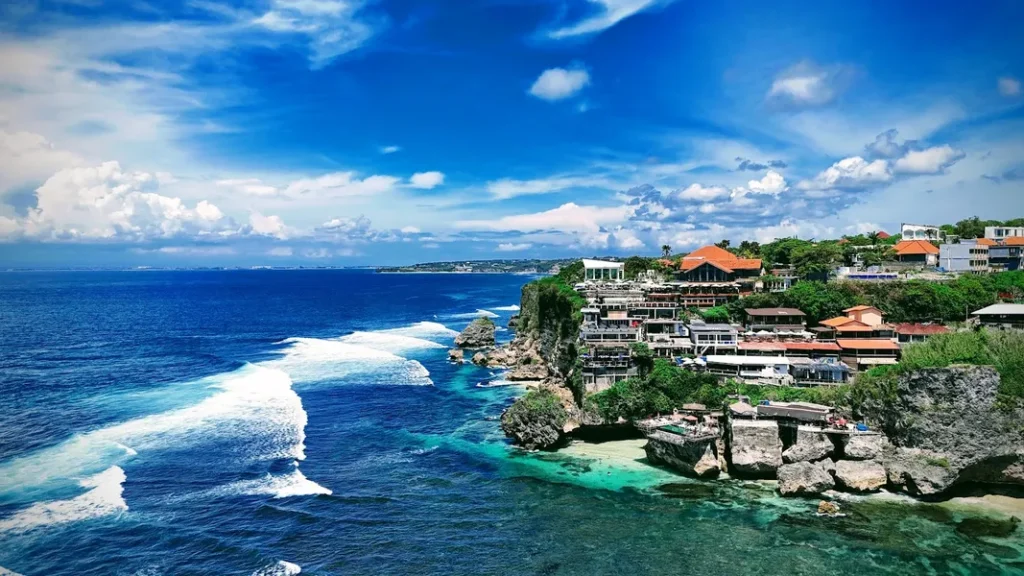
Uluwatu commands what can best be described as a “scarcity premium.” A limited supply of cliffside land, combined with a steady flow of international tourism, continues to support both property values and rental demand. According to data from Statistics Indonesia (BPS), Bali consistently ranks among the top destinations for international arrivals, which directly correlates with strong occupancy levels in Uluwatu’s short-term rental market. For buyers and investors, this translates into higher liquidity and more predictable returns.
- Entry prices: 2–3 bedroom villas without ocean views range from approximately $250,000 to $600,000; properties with ocean or glimpse views range from $450,000 to $1,200,000; prime cliff-front villas start at $1,200,000 and can exceed $4,000,000
- Rental income: gross yields of approximately 10–16% annually under a short-term rental model (with professional management fees of 15–25% of revenue)
- Cost of ownership: pool and garden maintenance $60–120/month; utilities $60–180/month; home insurance $400–800/year; reserve for minor capital expenditures $1,500–3,000/year
- Legal clarity: property registration and title verification are governed by ATR/BPN (the National Land Agency); for foreign buyers, ownership structures typically include PT PMA (HGB/Hak Pakai rights) or long-term leasehold arrangements regulated through the Ministry of Investment (BKPM)
Key point: The primary drivers of value are view characteristics and road access of at least 4 meters. These two factors have the greatest impact on both liquidity and resale pricing.
Disadvantages: Infrastructure, Utilities, and Seasonality
Despite its premium positioning, Uluwatu is not without its practical limitations. In certain micro-locations, infrastructure and logistics can present challenges, while the seasonal nature of tourism places higher demands on operational performance in the rental market.
- Infrastructure and utilities: occasional disruptions in electricity or water supply may occur. Standard solutions include UPS systems or generators ($1,500–3,500), water storage tanks and filtration systems ($800–2,500), or drilling a private well ($2,500–6,000)
- Seasonality: occupancy and rental rates tend to decline during the low season, increasing the importance of effective marketing and dynamic pricing strategies
- Everyday infrastructure: the cliffside zone offers fewer schools and medical facilities; many essential services are located in Jimbaran or Nusa Dua, typically a 15–35 minute drive
- Legal risks: zoning compliance, easements, and road access are critical due diligence points. Verification is conducted through a notary (PPAT) and official records via ATR/BPN
- Leasehold horizon: long-term leases (typically 25–30 years) require carefully structured extension options; capitalization rates are generally lower compared to freehold
Key point: The cost of ownership in Uluwatu includes a “quality-of-infrastructure premium.” Investment in backup systems and professional maintenance enhances ADR and guest ratings, but requires upfront capital.
Key Factors at a Glance
| Factor | Advantage | Disadvantage | Impact on Price / Yield |
|---|---|---|---|
| Location & Views | Ocean or glimpse views, proximity to top beaches | Limited supply of cliffside plots | +15–40% premium on price and ADR; higher resale liquidity |
| Tourism Demand | Strong and stable international inflow (BPS) | Seasonal fluctuations | STR gross yield ~10–16%; pricing flexibility required in low season |
| Infrastructure | Modern systems improve guest experience and ratings | Backup investment of $2,500–6,000+ | Higher ADR and occupancy can offset capex within 1–3 seasons |
| Ownership Structure | PT PMA / HGB / Hak Pakai via BKPM | Leasehold requires extensions and legal safeguards | Freehold (via structures) involves higher entry cost; leasehold has a lower exit multiple |
| Operations & Management | Professional management (15–25%) ensures stability | Self-management increases performance risk | Net yield ~6–10% with disciplined cost control |
Conclusion: Uluwatu justifies its price premium when a property meets two key criteria: a strong ocean view and impeccable legal clarity. Everything else ultimately comes down to budget allocation—for infrastructure, professional management, and effective marketing.
Real Investment Case Studies in Uluwatu
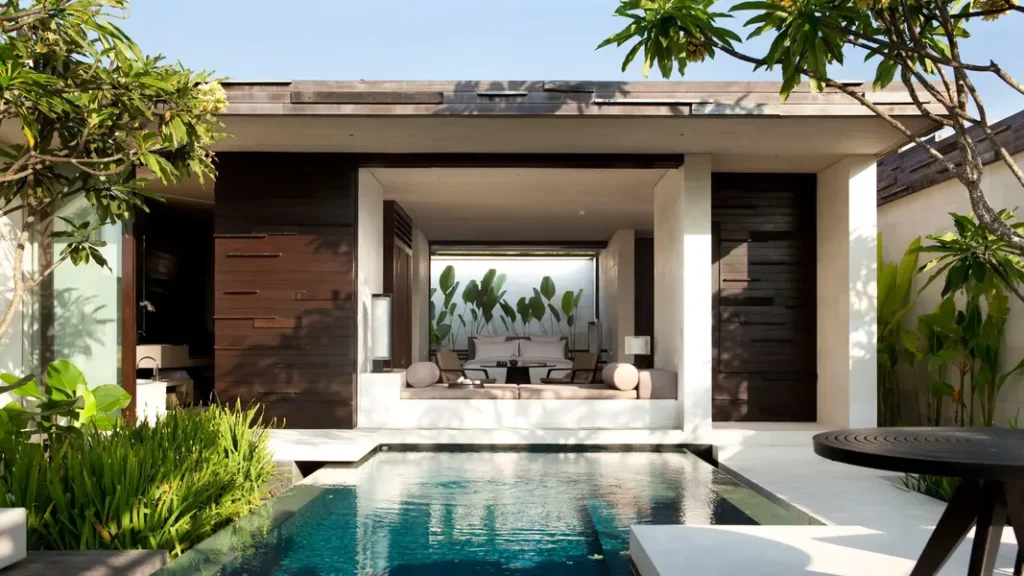
Case 1: 3-Bedroom Villa for Short-Term Rental (STR), Pecatu/Bingin
Property overview and deal structure:
- Ownership format: 30-year leasehold with an extension option; title and boundary verification conducted through official registries and procedures via ATR/BPN, with the agreement formalized through a notary/PPAT
- Location: Pecatu, 1.9 km from Bingin Beach, 4-meter access road, land plot of 3.2 are
- Construction: design-and-build contract, 10-month timeline, with a 12-month contractor warranty
Total investment (CAPEX):
- Land (leasehold for full term): $195,000
- Construction (turnkey): $210,000
- Furniture, appliances, and décor: $28,000
- Soft costs (architect, engineering, landscaping, legal): $22,000
- Contingency reserve (5%): $22,000
- Total CAPEX: approximately $477,000
Operating model (first full year):
- ADR (average daily rate): $320 (peak season $420–520; low season $220–260)
- Occupancy: 64% annually (based on tourism trends in Bali; see aggregated data from BPS and Kemenparekraf)
- Gross revenue: $320 × 233 nights ≈ $74,560
- Management fee: 20% → $14,912
- Utilities, cleaning, pool, garden, consumables: ~$10,800/year
- Marketing, OTA platforms, content: ~$3,500/year
- Maintenance and minor capex: ~$2,500/year
- Total OPEX: ~$31,700
- Net income: ≈ $42,860
- Net yield on CAPEX: approximately 9.0% annually
Operational improvements (second season):
- Implementation of dynamic pricing, upgraded photo/video content, and an enhanced kitchen setup
- ADR increased to $345; occupancy rose to 67%
- Gross revenue: ~$84,300
- Net income: ~$50,000 after OPEX and 20% management
- Net yield: approximately 10.5%
Key takeaway: For the STR model, three metrics are critical—road access width of at least 4 meters, clearly documented “ocean access” in listings, and an OTA rating of 4.7 or higher. These factors directly drive ADR and booking conversion rates.
Risk management:
- Seasonality: flexible minimum stay requirements and premium pricing for long weekends
- Infrastructure: installation of UPS and water storage systems ($3,200) eliminated negative reviews related to outages
- Legal: leasehold agreement included extension options and a formalized road access easement
Case 2: 4-Bedroom Villa Flip with Ocean Glimpse, Padang Padang (18-Month Horizon)
Structure and entry:
- Legal framework: via a PT PMA company with HGB rights for the building; company registration and foreign investment requirements governed by the Ministry of Investment (BKPM)
- Location: Padang Padang, second line from the cliff, with an 18° view corridor above surrounding development; land plot of 5.1 are (freehold under the landowner, HGB under the PMA structure)
- Deal format: off-plan acquisition at excavation stage with a 12% discount to market price; milestone-based payments (30/30/30/10)
Investment structure:
- Land and legal structuring: $365,000
- Construction (concrete, steel, engineering): $290,000
- Interiors, furniture, lighting, landscaping: $85,000
- Design, supervision, legal, system commissioning: $30,000
- Total CAPEX: approximately $770,000
Exit:
- Timeline: 14 months construction + 4 months stabilization and staging (professional media, test stays, off-season bookings)
- Exit price: $1,050,000 (sold as an income-generating asset, including OTA accounts and operational team)
- Transaction costs (legal, marketing, staging, seller taxes): ~$55,000–$65,000
- Net profit: approximately $215,000
- Estimated IRR: ~22–26% annually, factoring in staged payments and an 18-month holding period
Value drivers:
- Legally documented view corridor and secured road easement
- Energy-efficient systems (solar water heating, VRF air conditioning), resulting in lower OPEX and higher guest ratings
- Sale as a “business package,” including branding, website, social media, and professional media—buyers pay a premium for predictable cash flow
Flip strategy insight: Early-stage off-plan entry combined with a clearly documented view narrative and a business-ready exit can generate a premium of 18–28% over total project cost—but requires strict construction quality control and fully transparent documentation.
Mini Case 3: 1-Bedroom Apartment in Bingin (Income Rental with Lower Entry Budget)
- Purchase price: $165,000 (completed unit, 48 m², complex with a shared pool)
- HOA / service fee: $150/month
- ADR: $120–160; occupancy: 68–72%
- Annual gross revenue: ~$33,000–$38,000
- Management (20%) + OPEX (utilities, cleaning, wear and tear): ~$10,000–$11,500
- Net income: ~$22,000–$26,000 → net yield: 6.5–7.5%
Pros: lower entry cost, highly liquid asset class
Cons: strong competition, high sensitivity to guest reviews
Important: All figures above are indicative and depend on micro-location, management quality, market conditions, and legal clarity. Always align local tourism trends (based on data from BPS and Kemenparekraf) and ownership structures (regulated by ATR/BPN) with your specific investment model and holding horizon.
Looking to Invest in Uluwatu? Get Expert Guidance
We provide end-to-end support for investors and property buyers—from location selection to full legal due diligence.
How to Get Started
- Submit a consultation request and specify your budget and investment horizon
- Receive a curated shortlist of Uluwatu property investment opportunities within 48–72 hours
- We conduct full due diligence, define the optimal ownership structure, and align on the transaction timeline
- We prepare a detailed pro forma (ROI scenarios) and a step-by-step roadmap for launching your rental strategy (STR or LTR)
Bottom line: The initial consultation is free, and the typical timeframe from inquiry to launching your property on the rental market ranges from 4 to 10 weeks. We operate transparently and in full compliance with government regulations.
 Real estate in Georgia
 Real estate in Cyprus
 Real estate in the UAE
 Real estate in Montenegro
 Real estate in Thailand
 Real estate in Spain
 Real estate in Saudi Arabia
 Real estate in Turkey
 Real estate in Zanzibar
 +62 895 001 924 667
 hello@ulu-homes.id
 Tibubeneng, Canggu, Kuta Utara, Badung Regency, Bali 80361, Indonesia


 Get catalogue of TOP-7 objects